
Key Takeaways
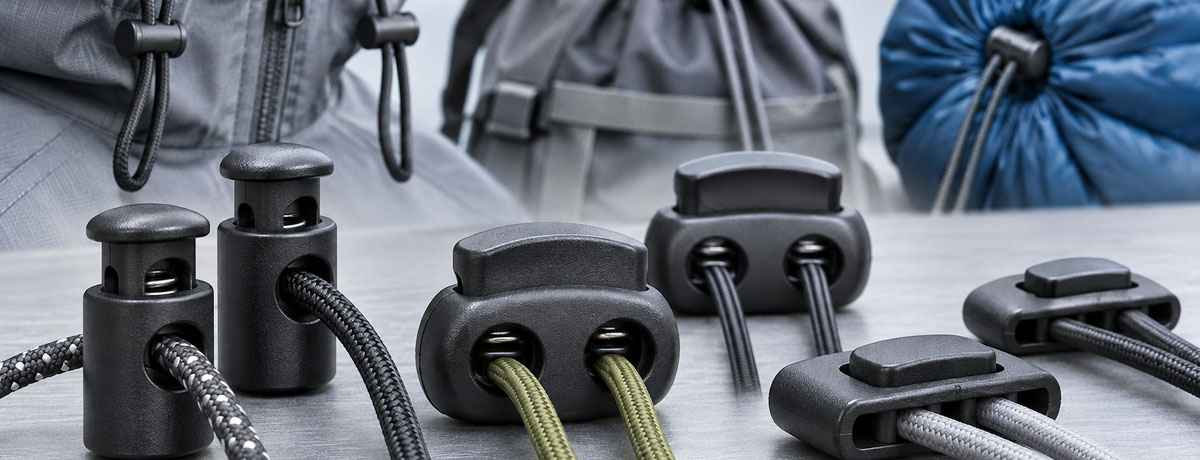
Cord locks and cord stoppers are spring-loaded or friction-based fasteners that secure drawstrings and elastic cords without knots, used across clothing, bags, and outdoor gear.
MH is a make-to-order supplier of plastic cord locks and related garment accessories (bungee cord, elastic, tapes), built for bulk orders from global factories and wholesalers.
Plastic cord locks outperform metal in corrosion resistance and weight; metal cord locks suit heavy-duty or premium applications requiring higher durability.
Selecting the right cord lock depends on cord thickness, application needs, environmental exposure, and compliance requirements for your target export market.
MH consolidates cord locks with sewing thread, zippers, buttons, and other trims into one shipment, reducing logistics costs for multi-category procurement.
Introduction to Cord Locks
Cord locks are hardware fasteners that fix the position of one or more cords or drawstrings without knots. They are commonly used in clothing and outdoor gear applications, from jackets and sportswear to backpacks and sleeping bags. A cord lock functions using a spring mechanism that grips the cord when released, allowing easy adjustments for tension control across garments, bags, and technical equipment. Cord locks allow easy adjustments without knots, which is why they became standard trim components as synthetic drawstrings and elastic cords spread through the apparel industry from the 1990s onward.
This article is written for factory sourcing managers and wholesale buyers, not retail consumers. It covers plastic cord lock types, application selection, and supply chain planning for bulk procurement. MH (Ningbo MH Industry Co., Ltd.) is a vertically integrated garment accessories manufacturer with nine factories, over 3,000 workers, and partnerships with 1,500 to 2,000 manufacturers globally, supplying products from sewing thread to zippers to cord locks under one roof.
Types of Cord Locks and Their Structures
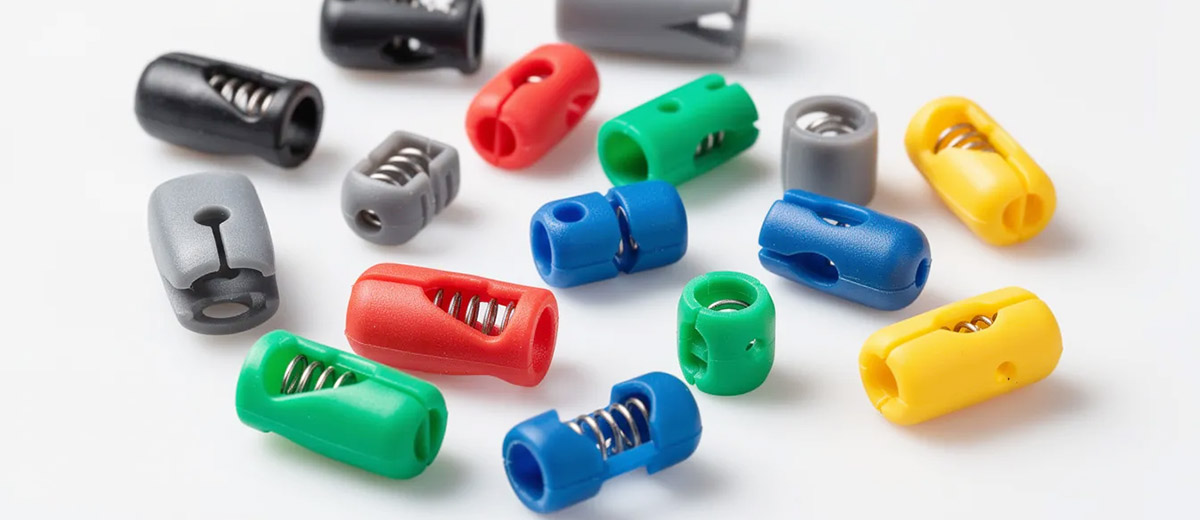
Cord locks can be made from materials like plastic, nylon, and metal, and they vary by mechanism, hole configuration, and shape. Plastic cord locks come in various styles for different uses. Below is a breakdown of the main categories procurement teams encounter.
Hole configuration. Single-hole cord locks provide one passage for a cord, typically sized between 3 mm and 7 mm internal diameter. Barrel cord locks are designed for single cords and are common on hem adjustments. Double hole cord locks accommodate two cords or loops, used when two drawstring tails must remain separate, as on jacket hoods or bag openings. Oversized holes reduce holding power; undersized holes damage the cord.
Mechanism. Spring-loaded toggle cord locks use a metal or plastic spring inside a barrel. Press the toggle button to release the cord; letting go engages the spring for a reliable hold. Non-spring friction stoppers rely on internal geometry and elastic pressure. Spring locks cost more but deliver consistent grip; friction stoppers suit low-cost promotional bags where tension demands are lower.
Feature | Spring-loaded | Friction (non-spring) |
|---|---|---|
Grip strength | Higher; adjustable | Lower; geometry-dependent |
Cost | Moderate to high | Low |
Metal content | Usually yes (spring) | Can be metal-free |
Typical use | Ski jackets, outdoor gear | Drawstring bags, school items |
Shape. Common trade shapes include barrel, cylinder, rectangle, wedge, and low-profile flat locks. Round cord locks can be used for various applications and offer good grip feel. Flat locks reduce bulk under fabric layers; barrel shapes provide a natural branding area for logo placement and resist snagging.
Plastic vs metal. Plastic cord locks secure drawstrings and elastic cords at lower weight and with full corrosion resistance. Metal cord locks, such as zinc alloy models, are designed for heavy-duty applications requiring higher durability, and they offer a premium finish suited to fashion hoodies, jewelry-style hardware on leather goods, or crafts projects.
Color and finish. Standard black is the most common stock color. Custom color matching to Pantone or fabric lab dips is available on make-to-order runs. Translucent, matte, and glossy finishes influence how the cord lock reads against retail garments, and batch consistency matters for brand appearance.
Typical Applications in Garments, Bags, and Outdoor Gear
Cord locks are essential for adjusting and securing drawstrings in apparel, bags, and technical equipment. Here is how different product categories use them.
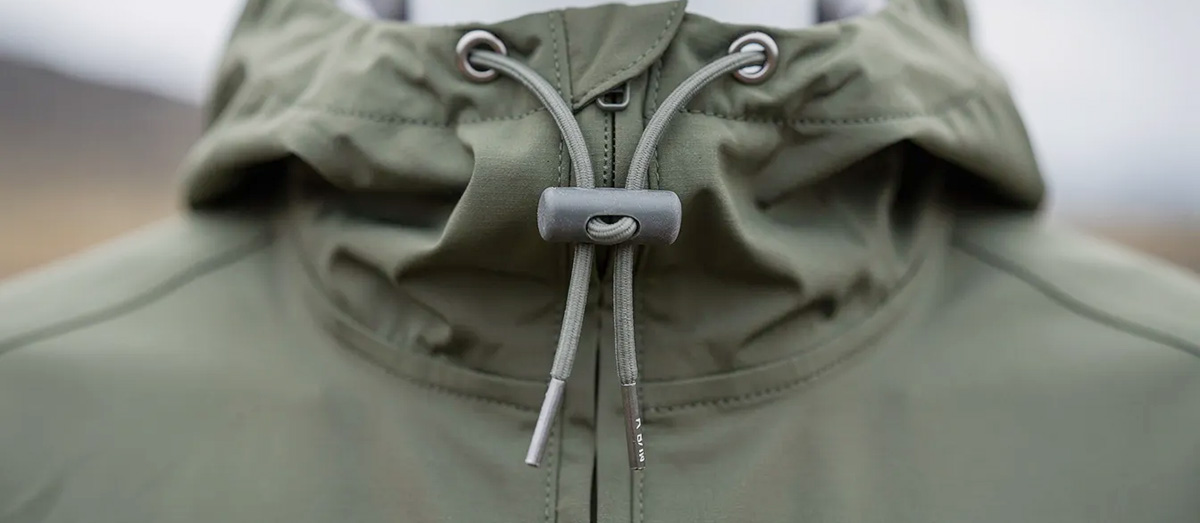
Apparel. Hood and hem drawcords on jackets, parkas, and rainwear rely on spring-loaded cord stoppers for a secure fit. Cord locks are used in ski jackets where the wearer needs one-hand adjustment, often while wearing gloves. Sportswear, workwear, and uniforms also use them on waist channels and sleeve cuffs, often paired with waistband gripper tape and waistband lining to stabilize waist areas and improve fit. Children's wear requires metal-free, breakaway-compliant designs to meet safety regulations in the EU and US. Cord locks allow easy adjustments on elastic cords, making them standard across casual and performance outerwear alike.
Bags and luggage. Cord locks secure drawstrings on backpacks, gym sacks, shoe bags, and laptop cases. On travel bags, they control tension on compression cords, mesh pockets, and flat drawstring cord closures as part of broader bag and luggage accessories systems that also include zippers, webbing, and hardware. Buyers in this category value abrasion resistance and UV stability because locks are often exposed.
Outdoor gear. Cord locks can be added to stuff sacks for closure, and they appear on tents, sleeping bags, and camping chair straps. These items demand performance at low temperatures (below -20 °C) and under UV exposure. POM-bodied locks with stainless steel springs are a common specification here because POM offers dimensional stability (tensile strength around 60 to 70 MPa) while stainless springs resist corrosion in humid or marine conditions.
Specialty and industrial. Medical garments, PPE, safety vests, and arts or technical workwear may require fully metal-free plastic cord locks for passage through metal detectors or sterilization processes.
A hiking backpack manufacturer, for example, might pair a dual-hole flat cord lock (5 mm hole) with a braided polyester bungee cord to control compression straps rated for 20 to 30 kg of pull force.
MH Cord Lock Supply Capabilities & B2B Service Model
MH is a make-to-order supplier. We do not hold ready stock of cord stoppers or related accessories. Every order is produced against confirmed specifications, which means each shipment matches your exact requirements for size, color, material, and branding.
Integrated product range. Beyond plastic cord locks, MH supplies matching cords, bungee cord, elastic rope, wholesale polyester sewing thread, zippers, buttons, and trims. Consolidating these items under one order reduces freight costs and simplifies vendor management for garment factories running multiple production lines.
Manufacturing capacity. MH operates multiple factories across three industry zones in China, equipped with automated injection molding lines for plastic cord locks, stable tooling for repeat orders, and flexible capacity to handle both large seasonal programs and continuous basics.
Customization. B2B clients can request logo engraving or embossing on cord locks, custom Pantone-matched colors, and tailored hole sizes to find the right fit for specific drawcords. Custom mold development typically takes four to six weeks; sampling adds one to two weeks.
Quality assurance. MH's production follows ISO-based management systems. Raw materials carry certification documentation. In-house and third-party testing covers dimensional tolerances, spring retention force, and functional cycle counts, aligned with the rigorous standards applied to polyester sewing thread production. Test reports and AQL-based final inspections are available for buyers exporting to Europe, North America, and other regulated markets.
Logistics. MH handles multi-country export shipments and consolidates cord locks with other trims in one container, reducing per-unit shipping costs. Typical lead times for repeat products run three to six weeks after order confirmation.
Contact MH's sales team with your specifications, reference samples, or technical drawings to receive a quotation and begin development.


FAQ
Can MH develop custom-designed cord locks with brand logos?
Yes. MH produces custom plastic cord lock designs with embossed or debossed logos and unique shapes. The development flow runs: design confirmation, tooling (four to six weeks), sampling (one to two weeks), buyer approval, then bulk make-to-order production.
How does MH ensure consistent quality across large production runs?
MH's quality control covers incoming material inspection, in-process dimensional checks, functional tests on spring strength, and final random inspection based on international AQL standards. Third-party inspection agencies can be arranged at the buyer's request, and test reports are provided on demand.
What information should buyers provide to get an accurate quotation?
Send these details: cord lock type (single or double hole, spring type), material preference, required color, estimated order quantity, target application (garment, bag, or outdoor gear), and any compliance standards to meet. If you are replacing an existing supplier, sending physical samples or technical drawings speeds up matching and costing.
Can MH ship cord locks together with other trims and accessories?
MH consolidates cord locks with sewing thread, embroidery thread, zippers, buttons, tapes, and other trims in one shipment. The sales team can plan shipment combinations and packing to suit different production locations and timelines, reducing logistics costs for factories and wholesalers managing multiple projects.