
Crepe Materials for Textile Professionals
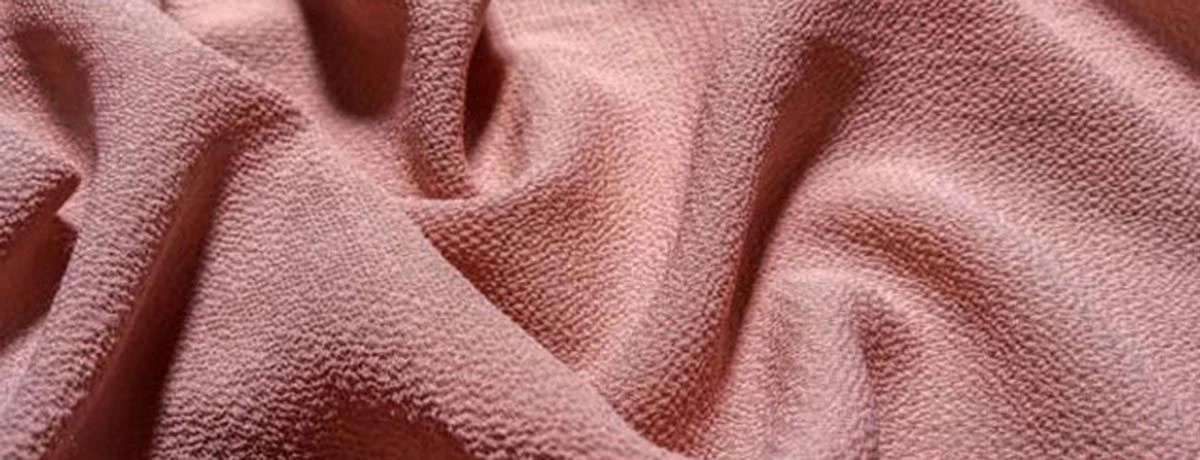
Crepe is not one fabric but a family of textiles that share a crinkled, pebbled surface, created either by high-twist crepe yarns, a crepe weave, or an embossed finish. The word covers everything from a 14-momme silk crepe de chine blouse fabric to a 250 GSM scuba crepe knit.
Key Takeaways
- Crepe = texture, not a single fiber. The pebbled hand comes from hard-twisted yarn, a crepe weave or a finish — and can be built in silk, wool, viscose, polyester or a poly/spandex knit.
- Weight is the first sourcing number: silk crepes run about 12–19 momme (≈50–85 GSM); woven poly, rayon and cotton crepes about 90–160 GSM; wool and moss crepes 180–260 GSM; bonded scuba crepe 180–280 GSM.
- Crepe de chine drapes; georgette is sheer and crisp; moss crepe is structured. Twist level and yarn count separate them more than the fiber does.
- Only scuba crepe (and other spandex-blended knits) stretch. Classic woven crepes have little to no stretch and are cut on a fluid drape.
What is Crepe Fabric?
Crepe fabric, or crepe material fabric as many buyers will see it listed, is a family of textiles with a crinkled, grainy, or pebbled surface rather than a smooth flat face. The surface is a construction effect, not a fiber, which is why crepe is such a versatile fabric for clothing across different types and various types of dresses, blouses, skirts, and occasionwear.
Crepe is often lightweight, drapes beautifully, and is valued because it does not crease easily.
The crinkle is produced in one of three ways, and knowing which one a mill used tells you how the fabric will behave when you are sourcing for a specific garment:
-
Hard-twist crepe yarn: yarns twisted to roughly 2,000–3,600 turns per metre, alternating S and Z, pull the cloth into a fine grain after finishing. This is the durable, "true" crepe used in crepe de chine and georgette.
-
Crepe weave: an irregular float weave scatters the interlacings so the surface reads as pebbled even with ordinary yarn. Common in moss crepe and many polyester crepes.
-
Crepe finish: the texture is embossed or chemically set. The cheapest route, and the one most likely to relax out with washing—worth checking on a sample before you commit a bulk order.
Most fashion crepe is woven, but knit crepes exist too: scuba crepe fabric is a bonded double-knit with a crepe face and built-in stretch, and crepe knit fabric covers the softer single-knit versions used for jersey dresses.
Types of Crepe Fabric: Weight, Construction & Use
The table below is the fast way to match a crepe type to a line, from more plain constructions to specialty options used for different garments and buying needs. Less-common names include Aerophane crepe for its gauze-like texture, Canton crepe, which originated in China and remains popular, and crepe de sante, a rough undyed type. Plisse crepe is chemically treated to create a puckered texture.
| Crepe type | Usual fiber | Typical weight | Hand & drape | Common end uses |
|---|---|---|---|---|
| Crepe de chine | Silk or polyester | 12–19 momme (≈50–85 GSM) | Soft, fluid, fine pebble, semi-matte | Blouses, dresses, linings, scarves |
| Crepe georgette | Silk or polyester | 40–90 GSM (6–12 momme) | Sheer, dry, crisp, grainy | Gowns, overlays, veils, scarves |
| Moss crepe (double georgette) | Polyester or blend | 120–180 GSM | Spongy, structured, deep pebble | Structured dresses, suiting, trousers |
| Wool crepe | Wool or wool blend | 180–260 GSM | Matte, springy, resilient | Tailored suits, trousers, dresses |
| Viscose / rayon crepe | Viscose | 100–150 GSM | Soft, supple, fluid drape | Dresses, skirts, wide-leg trousers |
| Polyester crepe | 100% polyester | 90–150 GSM | Firm, wrinkle-resistant, easy-care | Workwear, uniforms, volume dresses |
| Cotton crepe | Cotton or blend | 100–160 GSM | Breathable, soft, crinkled | Summer dresses, kidswear, casual tops |
| Scuba crepe | Polyester / spandex knit | 180–280 GSM | Structured, stretchy, smooth crepe face | Bodycon dresses, blazers, skirts |
Typical ranges. 1 momme ≈ 4.34 g/m². Twist level, yarn denier and finish shift the weight and hand of any named type; always confirm on a sealed sample.
Individual guides go deeper on the busiest types: silk crepe fabric, crepe fabric polyester, crepe wool fabric, crepe rayon fabric, cotton crepe fabric and scuba crepe fabric.
What Is Crepe de Chine, and How Is It Different from Georgette?
Crepe de chine and georgette start from the same idea — hard-twisted crepe yarns — but they land in very different places. Crepe de chine (CDC) twists the yarn in the weft only, giving a soft, fluid, opaque cloth with a fine pebble. It suits situations where a soft hand is wanted, and while georgette is drier and crisper to the touch, CDC is also less glossy than satin. Georgette twists both warp and weft, which makes it lighter, sheer and drier to the touch, with a crisp grain that holds volume in a gown, including bridal layers or even ball gowns, where designers often combine it with polyester satin fabric for bridal and evening wear to add smooth, lustrous structure underneath.
Moss crepe (also sold as double georgette or "sable") takes the same route further, with a heavier crepe weave that reads as a deep, sponge-like pebble and enough body to tailor. If your line needs a sheer overlay, georgette is the answer; if it needs a fluid blouse or lining, crepe de chine, which is also softer against the skin while georgette feels crisper and more airy; if it needs a structured shift dress, moss crepe. For the sheer end of the family, our crepe georgette guide and heavy georgette guide break down the weights in detail.
How Do You Choose a Crepe by End Use?
Work backward from the garment to the finished garments and clothing. The drape, opacity and care requirements of the finished piece point to a fiber and a weight band; the table below maps the most common briefs and shows crepe’s versatility across apparel and selected interiors, including where crepe fabric suitable for warm-weather clothing depends on a breathable fiber and light weight.
| You are making | Best crepe | Why it fits |
|---|---|---|
| Luxury blouses & dresses | Silk crepe de chine, 14–16 momme | Fluid drape, semi-matte sheen, opaque; works well for designers seeking elegant pieces with fluid drape |
| Evening gowns & overlays | Silk or poly georgette, 40–90 GSM | Sheer, airy volume, holds gathers; shawls are another common drapey use |
| Volume workwear & uniforms | Polyester crepe, 90–150 GSM | Wrinkle-resistant, low-care, consistent |
| Tailored suits & trousers | Wool crepe or moss crepe, 180–260 GSM | Body, matte finish, tailors cleanly; also used for jumpsuits |
| Fluid skirts & wide-leg pants | Viscose crepe, 100–150 GSM | Soft supple drape at a mid price; common in high fashion clothing |
| Bodycon dresses & blazers | Scuba crepe, 180–280 GSM | Structure plus four-way stretch |
| Summer casual & kidswear | Cotton crepe, 100–160 GSM | Breathable, soft, washable; also useful for simple accessories and scarves |
Lighter crepes are also used for curtains in decorative applications.
They are also used for pillows where a soft, airy finish suits the room, and can coordinate visually with bag and luggage accessories such as straps, zippers and hardware when brands want a unified material story across product lines.
Heavier, stronger crepes can work for light upholstery when the construction and durability suit the use, while lighter, sheer options such as chiffon fabric for dresses and overlays are better suited to airy garments and occasion pieces.
Is Crepe Fabric Stretchy?
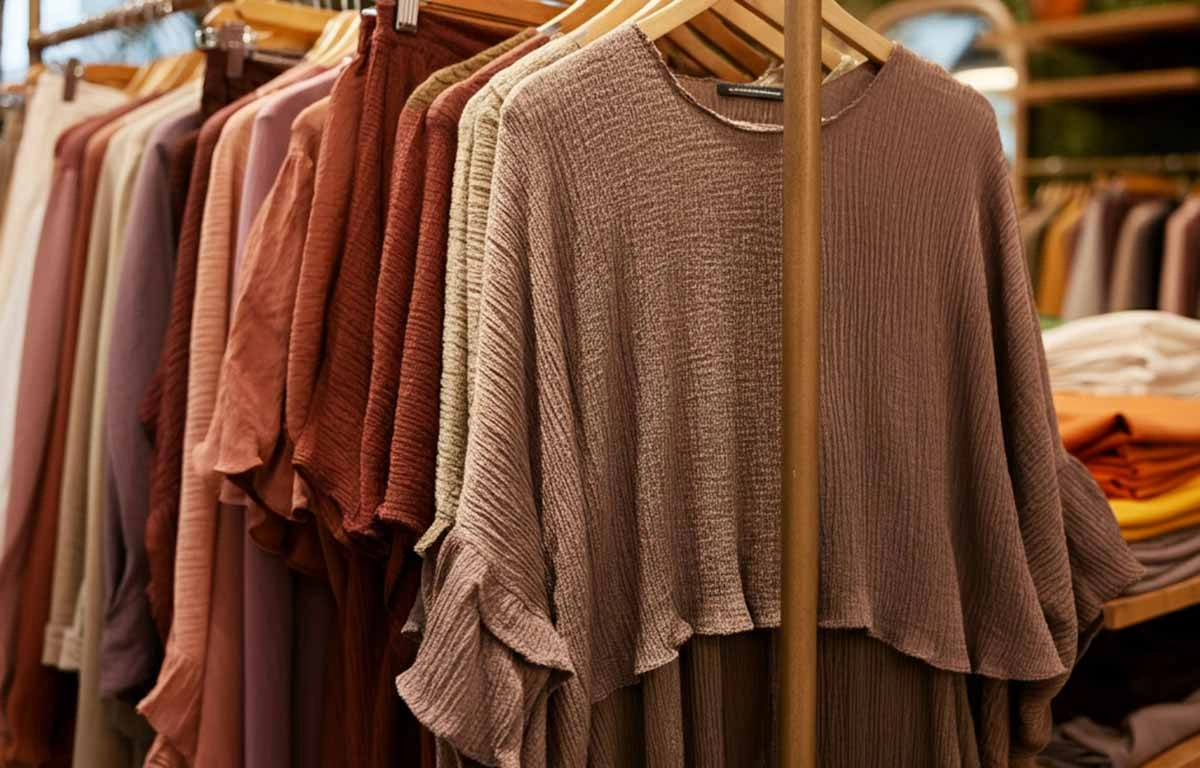
Most crepe is not. Classic woven crepes — crepe de chine, georgette, moss, wool and viscose crepe — have only the slight mechanical give of a high-twist weave, so they are cut on the drape and often on the bias for movement, not stretched.
The exception is any crepe blended with spandex/elastane: scuba crepe and stretch crepe knits, with a textured surface that still reads cleanly for color and detail, add roughly 3–8% elastane for two- or four-way stretch, similar in concept to four-way polyester spandex stretch woven fabric for tailoring.
If a tech pack calls for recovery, specify the spandex content explicitly; the word "crepe" alone does not imply stretch.
Sourcing Crepe from MH: One Catalog for the Cloth and Everything Around It
Founded in 1999 and shipping to buyers in more than 150 countries, MH is a leading supplier of garment accessories and tailoring materials and keeps woven and knit crepes in the same catalog as the parts that finish them: matching linings, sewing thread for mass-production garment factories, interfacing, lace and closures, drawn from roughly 10,000 tailoring materials and fabrics. Some buyers now compare crepe options through the lens of sustainable fabrics and natural textiles.
Scale is what keeps a crepe consistent from sample to bulk to reorder. With 9 factories across about 350,000 m², a 3,000+ strong workforce and 2,000+ partner manufacturers, MH can hold a 14-momme crepe de chine or a 200 GSM scuba crepe to the same weight, twist and shade when a collection comes back for its next season. China is the world's largest producer of synthetic textiles, which matters when evaluating polyester crepe supply at scale. Dress, occasion-wear and suiting makers can browse related crepe cloth materials, compare performance options like polyester Dri-Fit moisture-wicking fabric for active uniforms, or specify coordinating embroidery thread from MH’s dedicated factory, or contact MH for a quote built on quality, fiber, momme/GSM, width and finish.
Request a crepe fabric quote →
Frequently Asked Questions
What is crepe fabric made of?
Crepe can be made of almost any fiber — silk, wool, viscose/rayon, cotton, polyester or a polyester/spandex knit. "Crepe" describes the crinkled, pebbled surface, which comes from hard-twisted yarn, a crepe weave or a crepe finish, not from a specific raw material.
What is the difference between crepe and georgette?
Georgette is a lighter, sheer type of crepe, twisted in both warp and weft for a crisp, dry, semi-transparent cloth (about 40–90 GSM). Crepe de chine twists the weft only, giving a heavier, opaque, fluid fabric (about 12–19 momme). Both are crepes; georgette is the sheer end of the family.
Is crepe fabric stretchy?
Classic woven crepes have little stretch and are cut on the drape or bias. Only crepes blended with spandex/elastane — such as scuba crepe and stretch crepe knits, usually with 3–8% elastane — offer two- or four-way stretch.
What weight is crepe fabric?
It depends on the type. Silk crepes run about 12–19 momme (roughly 50–85 GSM); woven polyester, viscose and cotton crepes about 90–160 GSM; wool and moss crepes 180–260 GSM; and bonded scuba crepe 180–280 GSM. Always confirm the exact momme or GSM on a sealed sample. Lightweight crepes are easier to handle if you cut with weights and close pinning, use a new 70/10 or 60/8 needle, and pin thin crepe to paper for support; once stabilized, it is generally easy to sew by machine.
Which crepe is best for dresses?
For fluid, opaque day and occasion dresses, the best options are usually lightweight and drapes beautifully in silk or polyester crepe de chine (14–16 momme). For structured shift and sheath dresses, moss crepe or scuba crepe. For sheer overlays, georgette; for wedding dresses and gowns that need a sleek, fluid fall, choose the weight band to match the silhouette you are cutting.
Does crepe fabric wrinkle?
Polyester and scuba crepes are wrinkle-resistant and easy-care. Whether crepe can be washed or machine washed depends on the fiber and finish. Poor dyeing or finishing can make dark shades show crocking or apparent fading sooner than lighter shades.
Resources Page
- Comprehensive Guide to Georgette Polyester Fabric for Garment and Textile Professionals
- The Ultimate Guide to Crepe Knit Fabric for Garment
- The Ultimate Guide to Hard Net Crinoline Fabric for Garment Makers
- A Comprehensive Guide to French Crepe Cloth for Garment Manufacturers
- All You Need to Know About Pure Crepe Fabric
- Top Georgette Fabric Black: Your Guide to Elegance and Versatility
- A Guide to Georgette Fabric White for Garment
- A Comprehensive Guide to Heavy Moss Crepe Fabric
- The Versatility of Printed Silk Crepe Fabric in Garment Manufacturing
