
Suede Upholstery Fabric: The B2B Buyer's Complete Guide
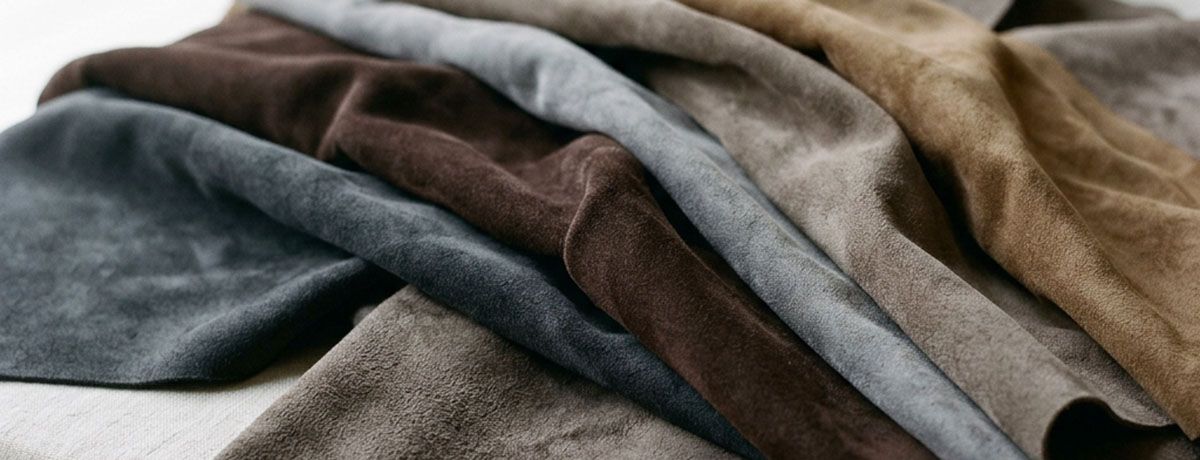
Quick answer: Suede upholstery fabric—available in microfiber and genuine-feel synthetic variants—offers a cost-effective, high-performance alternative to leather for commercial, hospitality, automotive, and contract seating applications. For B2B buyers and industrial purchasers managing large-volume upholstery fabric procurement, the key is matching fabric type, composition, and performance specifications to the end use. This guide focuses on suede upholstery fabric types, technical specs, application fit, cleaning and compliance standards, customization options from MH, how these materials compare with retail-grade fabrics, and what to check in a reliable supply partner before placing volume orders.
What Types of Suede Upholstery Fabric Are Available for Industrial Buyers?
Microfiber Suede vs. Genuine-Feel Synthetic Options
Two primary product types dominate the commercial suede upholstery category:
-
Microfiber suede — Made from ultra-fine polyester or polyester-nylon blends, microfiber suede replicates the texture and hand-feel of genuine suede at a fraction of the cost. It delivers consistent quality across large roll quantities, making it the preferred choice for contract seating, hospitality, and high-volume furniture manufacturing.
-
Genuine-feel synthetic suede — A broader category that includes bonded constructions and surface-treated wovens engineered to approximate the aesthetic of natural suede. These options offer greater design flexibility and can be configured with various backing materials to meet specific application requirements.
Typical Compositions, GSM Ranges, and Widths
Standard commercial suede upholstery fabric compositions include, and can be specified alongside artificial leather upholstery materials where appropriate, such as:
-
100% polyester microfiber
-
Polyester-nylon blends (typically 80/20 or 75/25)
-
Polyester with polyurethane (PU) surface treatment for enhanced durability
GSM (grams per square meter) typically ranges from 180 GSM to 380 GSM, depending on intended use. Lighter weights (180–250 GSM) suit decorative and light-duty seating applications; heavier weights (280–380 GSM) are specified for contract and commercial environments with higher traffic demands.
Standard widths run at 54 inches (137 cm) and 60 inches (152 cm), with bespoke widths available on request for MTO orders.
Backing and Finish Options
Backing configurations include:
-
Knit-backed (soft, flexible, ideal for curved furniture profiles)
-
Foam-backed (added cushioning and dimensional stability)
-
Non-woven backed (cost-efficient, suitable for flat panel applications and compatible with a wide range of premium upholstery fabric constructions)
Available surface finishes include brushed, embossed, printed, and laminated variants. Commercial suede fabrics are designed to withstand wear and tear with ease, especially when paired with the right backing and finish.
What Are the Key Applications for Suede Upholstery Fabric?
Contract Seating, Hospitality, and Commercial Furniture
Microfiber suede is widely specified for:
-
Hotel lobby and guest room seating
-
Restaurant booth and banquette upholstery
-
Office and contract chair upholstery
-
Cinema and auditorium seating
It adds a touch of luxury to hospitality and commercial interiors, with a soft, supple hand and a luxurious, sophisticated look for lounges, lobbies, and guest rooms.
Automotive and Marine Applications
Synthetic suede is an established material in:
-
Automotive headliners, door panels, and seat inserts
-
Marine cabin upholstery, where resistance to humidity and UV exposure is critical; in some programs this is paired with waterproof, abrasion-resistant Oxford fabric for bagged cushions or protective covers
Buyers sourcing for automotive or marine applications should specify enhanced UV resistance and moisture repellency in their MTO brief.
Industrial Cleaning Standards for Commercial Installations
Commercial suede upholstery fabrics should be specified with cleanability in mind, and paired with suitable nonwoven interlining materials where additional structure or barrier performance is required. Industry-standard cleaning protocols include:
-
W (water-based cleaners): Safe for most microfiber suede
-
S (solvent-based cleaners): For water-sensitive constructions
-
WS (either method): Dual-rated fabrics for maximum flexibility in commercial environments
What Customization Options Does MH Offer for Suede Fabric?
MH's MTO model supports full-project customization, including:
-
Custom color matching: Pantone or physical sample-based color matching for consistent brand or design specification compliance; faux suede is budget-friendly for upholstery and offered in a wide variety of colors, with classic black and brown as standard reference points to help buyers find the perfect match
-
Backing and lamination: Knit, foam, or non-woven backing; PU lamination for enhanced waterproofing, often coordinated with durable polyester base fabrics like Mini Matt in mixed-material projects
-
Bespoke widths and roll lengths: Non-standard widths and custom roll lengths available for high-volume orders
-
Digital printing and embossing: Pattern and texture customization for differentiated product lines or licensed design requirements, especially when coordinating with lightweight chiffon fabrics in decorative elements
Vibrant hues are also available through MH's color-matching process.
All customization requests are handled through MH's project intake process, with samples submitted for buyer approval before full production commences.
How Does MH's Industrial Suede Compare to Retail-Grade Alternatives?
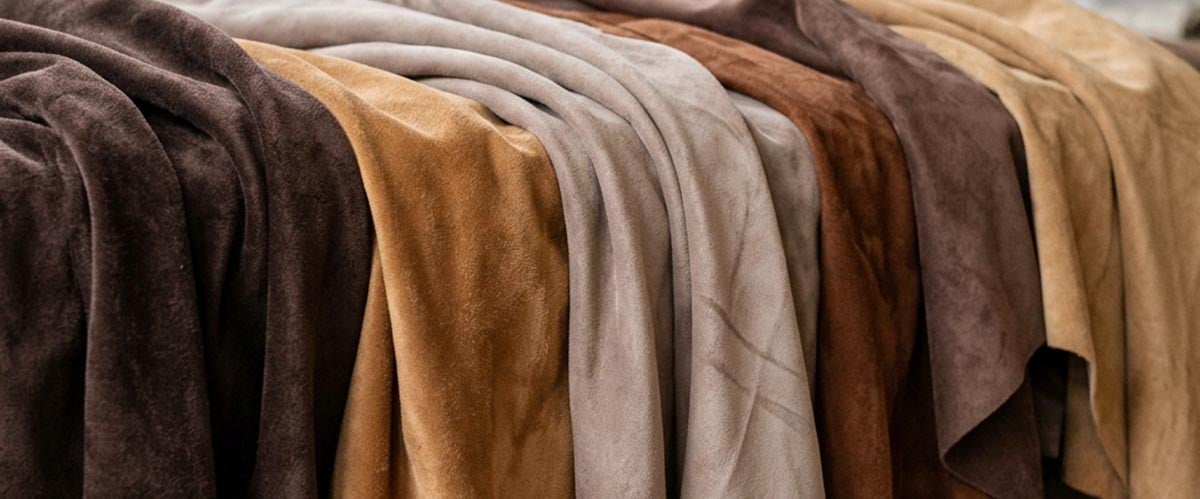
The difference between industrial-grade and retail-grade suede upholstery fabric matters significantly at volume: industrial suede has a distinctively plush, velvety nap that feels exceptionally soft and can add a warmer appearance than smoother leathers, while retail-grade products are engineered for consumer durability expectations—typically 15,000–25,000 Martindale cycles—and are not consistently tested against commercial flammability or chemical compliance standards.
MH's industrial-grade suede upholstery fabric is specified, tested, and documented for commercial and contract environments, and can be integrated into broader programs that also use school-uniform-grade woven fabrics. For large-volume buyers, this distinction directly affects product liability exposure, end-client satisfaction, and long-term reorder reliability.
Economies of scale are built into MH's MTO pricing structure, which also applies across complementary polyester-spandex stretch woven fabrics for apparel and soft seating accents. Buyers committing to higher minimum order quantities benefit from reduced per-unit costs, priority production scheduling, and dedicated account management.
Partner with MH for Reliable Suede Upholstery Fabric Supply
Procurement decisions in the upholstery fabric category are rarely one-time transactions. Long-term supply relationships depend on consistent quality, reliable lead times, and a supplier capable of growing with your volume requirements.
MH's integrated manufacturing and trading model, combined with established export infrastructure and a fully MTO production approach, provides B2B buyers with the reliability, documentation support, and customization flexibility required for sustained procurement at scale. Contact MH's sales team to initiate a project brief, including matching components or accessories when needed for a broader product program—such as bag and luggage hardware and fittings—and request technical data sheets. You can also request material by the yard for sampling or approval before placing larger MTO orders for your next suede upholstery fabric order.


Frequently Asked Questions About Suede Upholstery Fabric
Does MH hold ready stock of suede upholstery fabric?
No. MH operates exclusively as a Make-to-Order (MTO) supplier. All suede upholstery fabric is produced to buyer specifications, ensuring consistent quality and eliminating the risk of receiving non-conforming stock.
Which flammability certifications can MH's suede upholstery fabric meet?
MH can produce suede upholstery fabric to meet Cal TB 117-2013, EN 1021-1/2, and BS 5852, among other market-specific standards. Buyers should specify the required standard in their MTO brief.
Can MH match a custom color for a large upholstery order?
Yes. MH offers Pantone-based and physical sample color matching for custom orders. Lab dip samples are submitted for buyer approval before full production begins.
What abrasion resistance level should commercial seating fabric meet?
In multi-category programs, buyers may also specify workwear-grade twill fabrics that align with similar durability benchmarks.
For standard commercial seating, a minimum of 30,000 Martindale cycles or 30,000 Wyzenbeek double rubs is recommended. Heavy-duty contract environments typically specify 50,000+ cycles. MH can produce to either standard on request.
