
What Is Bias Tape and How Is It Used in Garment Manufacturing?
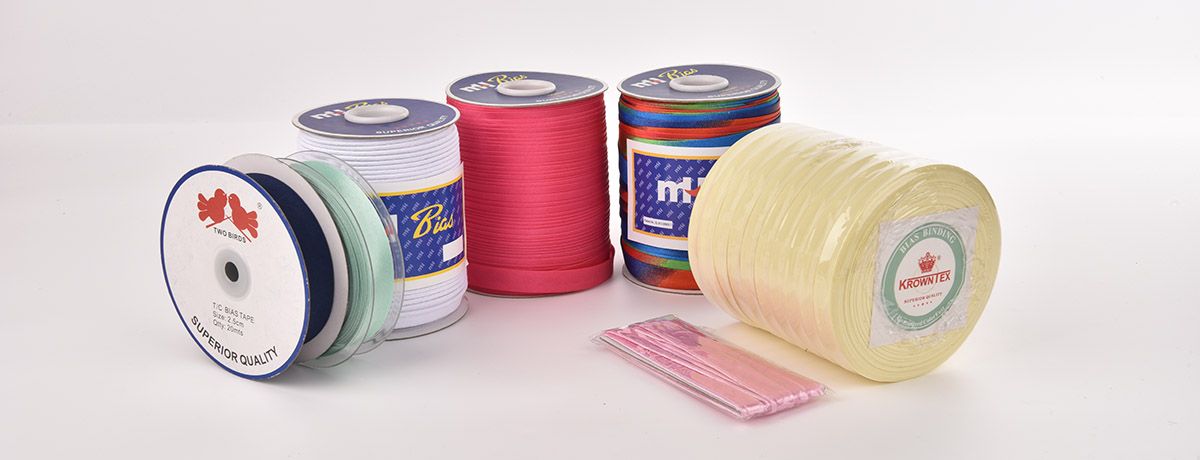
In garment manufacturing and sewing projects, finishing raw fabric edges neatly is essential for durability and appearance. One of the most effective solutions is bias tape, also known as bias binding.
Don’t worry about making bias tape from scratch—creating bias tape is approachable with the right tools and techniques, and there are plenty of resources to guide you.
Bias tape is widely used to bind raw edges, curved seams, armholes, necklines, hems, and quilt edges. Because it is made from bias cut fabric at a 45 degree angle to the fabric grain, it provides flexibility and stretch that straight-cut fabric strips cannot achieve. A key bit of what makes bias tape unique is this stretch and flexibility, which comes from being cut on the bias. Bias tape is created by cutting fabric strips on the bias and folding them, and there are helpful links and resources available for learning more about the process.
For garment manufacturers, textile wholesalers, and sewing product distributors, understanding the materials, types, folding styles, and applications of bias tape helps improve product quality and production efficiency.
Bias tape is categorised by how it is folded and pressed, including single-fold and double-fold varieties.
What Is Bias Tape?
Bias tape is a narrow strip of woven fabric cut diagonally across the fabric grain, usually at a 45 degree angle. This bias cut structure allows the tape to stretch slightly and follow curves and curved edges smoothly.
To make bias tape, first position the fabric so the wrong side is facing up. Fold the fabric diagonally at a 45-degree angle to the selvage edge to find the bias edge. Adjust the position of your ruler along the fold, then measure and mark the desired width of your strips. Cut along the bias edge to create strips. For best results, work with one piece or continuous strips for smooth application. For example, fold the fabric so the selvage and cut edge align, then measure the length of the strip you need before cutting.
To create single fold bias tape, fold the strip of bias cut fabric in half lengthwise with the wrong side inside and press it flat with an iron. For double fold bias tape, take the single fold tape, fold it in half again, and press it flat. Each fold should be pressed to set the shape and ensure neat edges.
Unlike straight strips cut along the selvage edge or fabric grain, bias tape easily adapts to complex shapes such as:
-
Necklines
-
Armholes
-
Curved seams
-
Quilt edges
-
Decorative fabric edges
Because of this flexibility, bias tape is commonly used to bind raw edges, cover seams, and reinforce fabric edges in garments and textile products.
Key advantages include:
-
Flexibility for curved seams and curved edges
-
Strong edge binding and seam protection
-
Clean and professional finishing
-
Improved durability of garments
This makes bias tape an essential accessory in clothing production, quilting, sewing patterns, and textile manufacturing, and it is often paired with lightweight fabrics such as chiffon used in dresses, shirts, and scarves.
Materials of Bias Tape
Different sewing applications require different bias tape materials. Choosing the correct material helps ensure compatibility with the base fabric and improves the final product.
Polyester Bias Tape
Polyester bias tape is widely used in industrial garment production, especially alongside stretch woven polyester-spandex fabrics for suits, coats, and trousers.
Advantages include:
- Strong and durable woven fabric structure
- Resistant to wrinkles and shrinkage
- Good color consistency
- Cost-effective for bulk production
It is commonly used for:
- Workwear garments
- Uniforms
- Bags and accessories
- Industrial sewing products
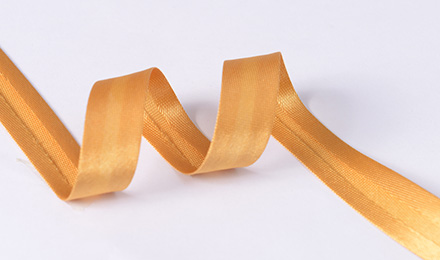
Cotton Bias Tape
Cotton bias tape provides a natural and soft texture.
It is often used in:
- Fashion clothing
- Quilts and patchwork
- Home textile products
- Handmade sewing projects
Cotton bias tape works particularly well with natural fabrics and helps maintain breathability and comfort.
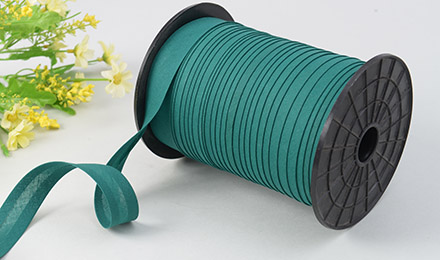
Polyester-Cotton Bias Tape
Polyester-cotton blended bias tape combines the benefits of both materials.
Benefits include:
- Better durability than pure cotton
- Improved comfort compared with pure polyester
- Balanced performance and cost
This type is commonly used in mass garment production and clothing manufacturing, where choosing reliable industrial sewing thread supplies is equally important for seam quality.
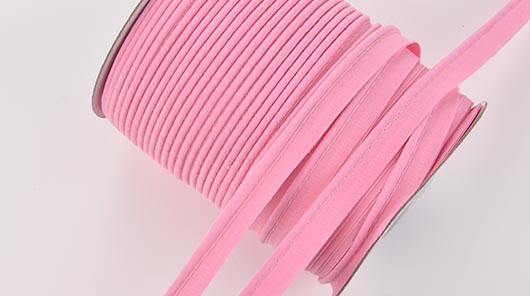
Types of Bias Tape
There are several types of bias tape depending on the folding structure and sewing method.
Understanding these types helps garment factories choose the best option for their production line.
Single Fold Bias Tape
Single fold bias tape is made by folding the strip of bias cut fabric in half lengthwise and pressing it flat, so both edges are folded toward the center line.
Characteristics include:
-
Lightweight structure
-
Suitable for binding internal seams
-
Often used where the tape is not visible on the outside of the garment
Single-fold bias tape is primarily used on one side of a project as a hem or facing, and can be used to hem curved edges and lay flat around necklines. To create single fold bias tape, fold the strip in half lengthwise and iron it flat. Single-fold bias tape is mainly for finishing one side, while double-fold bias tape is used for binding or encasing a fabric edge.
Single fold bias tape is commonly used in sewing patterns and interior garment seams.
Double Fold Bias Tape
Double fold bias tape is made by first creating single fold bias tape, then folding it in half again and pressing it flat. This allows it to wrap completely around the fabric edge, sandwiching the edge and finishing it off with a crisp, clean look.
Advantages include:
-
Fully covers raw edges
-
Strong seam protection
-
Clean and professional finishing
-
Acts as a lightweight facing in garment construction, providing a clean edge without adding bulk
Double fold bias tape is widely used in:
-
Necklines
-
Armholes
-
Decorative hems
-
Quilt edges, where it is commonly used to finish raw edges and provide a durable, decorative frame
Because of its durability and appearance, double fold bias tape is the most popular option in garment production.
Bias Binding Rolls
For industrial sewing operations, bias tape is often supplied in long rolls.
This allows factories to run continuous sewing operations, reducing downtime and improving production efficiency.
Bias binding rolls are commonly used by garment factories that also need interlining and woven waistbands for trousers construction:
-
Large garment factories
-
Textile processing plants
-
Sewing production lines
Applications of Bias Tape
Bias tape is widely used in different textile and sewing industries and is essential for a wide range of sewing and quilting projects, such as finishing the edges of garments, tote bags, and home décor items. Whether you are working on a small craft or a large quilting project, planning and measuring your bias tape accurately ensures a professional finish. There are many tutorials available online that provide step-by-step guidance on how to make, join, and apply bias tape for various projects.
Bias tape is often used on the edges of quilts, placemats, and bibs, and around armhole and neckline edges instead of a facing.
Bias tape can be purchased from various online retailers and local fabric stores. It is typically sold in meter or roll lengths by haberdashers, and pre-made bias tape is available in fabrics such as cotton and satin. Suppliers like WAWAK offer a variety of bias tapes in different colors and sizes, and Pacific Trimming in New York City is a well-known physical store where you can find bias tape and other sewing supplies.
Garment Manufacturing
In clothing production, bias tape is used to bind fabric edges and seams, including:
-
Necklines
-
Armholes
-
Hem edges
-
Decorative trims
Bias tape is often used around armhole and neckline edges instead of a traditional facing, providing a clean, professional finish. It acts as a lightweight facing in garment construction, offering a neat edge without adding bulk.
It helps control fabric fraying and improves garment durability.
Quilting and Home Textiles
Bias tape is frequently used in quilting projects and home textile products such as:
-
Quilts
-
Bedding
-
Curtains
-
Tablecloths
It reinforces quilt edges and provides a clean finishing line.
Bags and Accessories
Bias binding is also used in garments that incorporate waistband gripper tape and waistband lining as part of their construction, as well as in:
-
Bags
-
Backpacks
-
Storage baskets
-
Projects that require strong seams sewn with heavy duty high tenacity polyester sewing thread
-
Sewing accessories
It strengthens seams and prevents fabric edges from fraying, and in non-apparel contexts similar edge control can be achieved with durable nylon and polyester fishing twine.
Sewing and Craft Projects
Bias tape is popular in sewing tutorials and craft projects because it is easy to apply and improves edge finishing. Here are some helpful tips for using bias tape: try sewing flat bias-bound seams for a neat look, and use bias strips for curved edges.
Typical uses include:
-
DIY clothing
-
Decorative trim
-
Sewing patterns
-
Handmade textile products
-
Piping: Piping bias tape has a cord inside the fold to create a raised, decorative ridge along seams, perfect for finishing raw fabric edges and adding a decorative touch.
-
Fusible bias tape: This type features a heat-activated adhesive for quick, no-sew applications, making it ideal for fast and easy projects.
Why Choose MH as Your Bias Tape Supplier
When sourcing bias tape for large-scale production, choosing a reliable supplier is essential.
Ningbo MH is an experienced supplier of garment accessories and sewing materials serving customers in more than 150 countries worldwide.
MH provides a wide range of bias tape products designed for garment manufacturers, textile wholesalers, and sewing product distributors.


Key advantages include:
Wide Range of Materials
MH supplies multiple bias tape materials including:
-
Polyester bias tape
-
Cotton bias tape
-
Polyester-cotton bias tape
-
Decorative satin bias tape
Multiple Folding Styles
Available folding structures include:
-
Single fold bias tape
-
Double fold bias tape
-
Center fold bias tape
-
Customized folding styles
Rich Color Options
MH offers hundreds of color options and can provide custom color matching for clothing manufacturers.
Stable Production Capacity
With strong manufacturing and supply capabilities, MH supports large-volume orders and long-term cooperation with global buyers.
Conclusion
Bias tape is a versatile sewing accessory used to bind raw fabric edges, curved seams, quilt edges, and decorative trims. Because it is cut at a 45 degree angle to the fabric grain, it provides the flexibility needed for complex garment structures.
By selecting the right material, folding style, and tape width, garment manufacturers can improve production efficiency and product quality.
For businesses looking for a reliable bias tape supplier or bias tape maker, MH offers a wide range of bias binding solutions with stable quality and global export experience.
