
The best thread for a Bernina sewing machine is a well-made, even thread of the right size for the needle, not a particular brand. For everyday sewing that means a Tex 27-30 thread, such as 40/2 spun polyester or a long-staple cotton, on a size 75-90 needle. Embroidery runs on 40-weight (120D/2, Tex 27) polyester or rayon with a size 75 needle and a finer bobbin thread. Bernina's domestic machines take standard 130/705 H household needles, so the usual thread-to-needle rules apply.
Key Takeaways
A Bernina has no special thread requirement: thread quality and size decide stitch quality, not the label on the spool.
For general sewing, Tex 27-30 (40/2 spun polyester, ticket 120) on a 75-90 needle covers most fabrics.
For machine embroidery, 120D/2 (Tex 27) thread on a size 75 needle is the standard; polyester is about 1.8× stronger than rayon at the same count in MH’s test data.
Heavier threads need bigger needles: Tex 40 → 90-110, Tex 60 → 100-120.
What Thread Does a Bernina Sewing Machine Use?
A Bernina uses ordinary sewing-machine thread. There's no proprietary thread system: the machine forms a lockstitch with a top thread and a bobbin thread, like any other domestic machine, and its needles are the standard 130/705 H household system. So the question "which thread is best for a Bernina?" really comes down to three choices: fiber, size and quality, even though dealers commonly recommend Mettler and Gutermann rather than requiring one of those brands.
What makes Bernina owners particular about thread is the machine's precision. A well-adjusted machine shows up thread faults that a looser machine hides: slubs that snag in the tension discs, lint that packs into the bobbin area, and uneven twist that makes the top thread loop. A cheap thread doesn't damage the machine on its own, but bargain thread often sheds fibers and lint that create tension issues and more errors in sewing machines, so quality thread is easier to keep balanced.
It also helps sewn items last longer.
For dealers, quilt shops and notions wholesalers stocking thread for these customers, that's the useful takeaway. A new BERNINA sewing machine is typically supplied with a Mettler thread set, and sewing machines are tested before sale at the factory with high-quality Mettler threads. Bernina owners buy by spec and by reputation for smoothness, and they'll notice a lint-heavy or uneven thread on the first bobbin.
Which Thread Fiber Works Best on a Bernina?
Spun polyester is the all-round choice, because it's strong, stretches slightly with the fabric and doesn't shrink or rot; this is the usual advice for Bernina owners who want reliable everyday results. Long-staple cotton is preferred for quilting and for cotton garments that will be dyed or pressed hot, and better cotton threads made from quality cotton fibers create very low lint, while lower-grade cotton can contribute to skipped stitches or tension problems. Embroidery uses filament polyester or viscose rayon for their shine.
Thread type | Typical size | What it’s good at | Best Bernina use | Watch-outs |
|---|---|---|---|---|
40/2, Tex 30 | Strong, slight stretch, colorfast | Garments, home décor, general sewing | Shinier than cotton on matte fabric; especially durable in laundering and can withstand washing up to 95°C | |
50/2 to 20/2 | Matte finish, takes heat, dyes with cotton fabric | Quilting, piecing, cotton garments; Aurifil is a popular choice for quilting and piecing on Bernina machines | Weaker than polyester; produces more lint | |
120D/2, Tex 27 | High sheen, bleach-resistant, strong | Machine embroidery, logos, linens | Needs a lighter bobbin thread | |
120D/2, Tex 27 | Softest luster | Decorative embroidery on fashion items | Lower strength; not for chlorine bleach | |
150D/3 to 250D/3 | Very strong, low stretch | Heavy topstitching, bags, light leather | Heavy sizes are meant for industrial machines |
Sizes and properties from MH product data; behavior on a specific fabric depends on needle, tension and stitch length.
What about wool, silk and acrylic? They exist as sewing threads, but they're specialty products, and regular sewing-machine thread is different from thread made for an embroidery machine or a serger. Silk is used for fine hand finishing and tailoring, and wool-blend threads for decorative topstitching. For a stocked Bernina thread range, poly and cotton cover almost all demand, though quality brands matter for smooth sewing.
How Do Thread Size and Needle Size Match?
The needle eye has to fit the thread. A thread that's too thick for the needle shreds and breaks; one that's too thin for the needle leaves loose, uneven stitches. A needle that's too small is a common cause of thread break, and the thread should glide easily through the eye. MH's spun polyester data shows the pairing clearly: Tex 30 thread runs on a 75-90 needle, while Tex 60 needs a 100-120.
Thread (spun polyester) | Tex | Ticket | Avg. strength | Recommended needle (Metric / Singer) |
|---|---|---|---|---|
60/2 | 18 | 180 | 666 cN | 65-75 / 9-11 |
50/2 | 24 | - | 850 cN | 65-75 / 9-11 |
40/2 | 30 | 120 | 1,020 cN | 75-90 / 11-14 |
30/2 | 40 | 80 | 1,340 cN | 90-110 / 14-18 |
20/2 | 60 | 50 | 2,081 cN | 100-120 / 16-19 |
Source: MH 40/2 spun polyester sewing thread technical data. Needle sizes are a starting point; adjust for fabric.
Needle point matters too, and it follows the fabric, not the thread fiber. Use a universal point for wovens, the right needle for stretchy fabrics—specifically a stretch needle—a sharp microtex needle for fine wovens and silks, and a stiff, sharp jeans needle for denim and canvas. Metallic and embroidery threads run best through embroidery or metallic needles, which have a larger, polished eye. These all come in the 130/705 H system a Bernina uses; see MH's sewing machine needles. Change needles after every major sewing project.
What Thread Should You Use for Bernina Embroidery?
Bernina embroidery modules run on the same 40-weight embroidery thread used across the industry: 120D/2, Tex 27, on a size 75/11 needle. Compared with normal sewing thread, these thread types are made with less twist, which improves coverage and sheen when embroidering. The top thread is the decorative one. Underneath, a finer bobbin thread keeps the back of the design flat and lets the top thread pull slightly to the back for clean edges.
The bigger choice is polyester or rayon. In MH's data for the same 120D/2 count, polyester averages 962 cN of strength against 522 cN for viscose rayon, roughly 1.8 times stronger. Polyester also resists chlorine bleach, so it's the safer pick for uniforms, towels and linens. Rayon gives a softer, silkier luster that many decorative embroiderers prefer. Isacord is a high-quality polyester option often used for machine embroidery patterns.
Polyester embroidery thread | Viscose rayon embroidery thread | |
|---|---|---|
Count / Tex | 120D/2, Tex 27 | 120D/2, Tex 27 |
Average strength | 962 cN | 522 cN |
Elongation | 18-22% | 14-26% |
Needle | 75 / 11 | 75 / 11 |
Bleach resistance | Yes | No |
Stock colors at MH | 400+ | 400 |
Typical use | Workwear, caps, linens, children’s wear | Fashion embroidery, decor, gifts |
Source: MH product pages for 120D/2 polyester and 120D/2 rayon embroidery thread.
Metallic thread can be a problem, so use slower speed, suitable settings, and carry out a test first to avoid breakage.
For the bobbin, use a dedicated embroidery bobbin thread in white or black rather than a second spool of top thread. Mettler Metrosene is highly recommended for regular sewing on BERNINA machines, while embroidery uses dedicated embroidery thread and bobbin thread. It's lighter, so the bobbin holds more and the design stays flexible.
Supplying Thread for Bernina Owners: MH as Your Thread Source
MH (Ningbo MH) makes and supplies that thread across a full ladder of sizes, from 60/2 fine spun polyester through 20/2 cotton and 120D/2 embroidery thread to high-tenacity 250D/3, in OEKO-TEX certified grades.
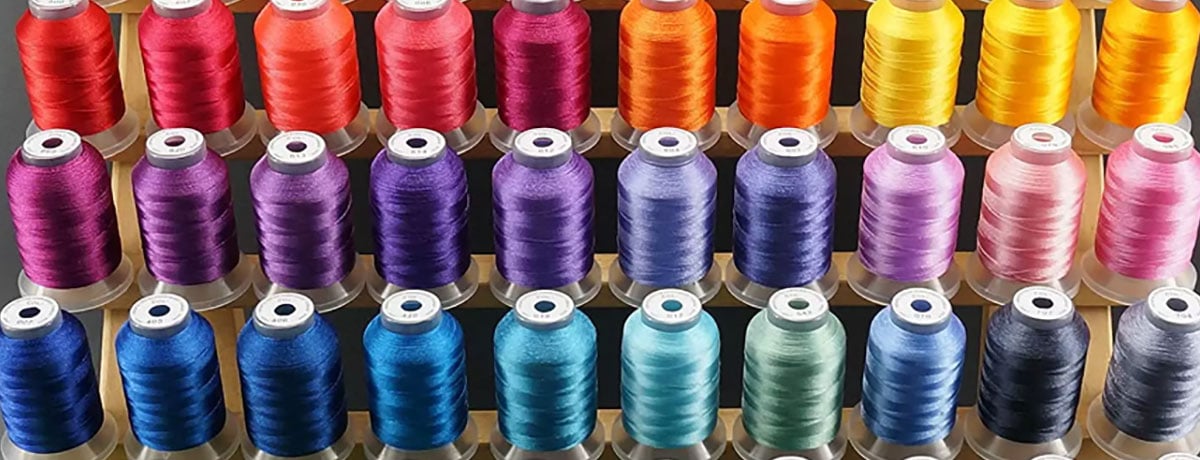
Color depth is where a thread range lives or dies on a shop wall. MH carries more than 800 stock shades in spun polyester, 400+ in polyester embroidery and 400 in rayon embroidery, with color matching to a buyer's swatch or Pantone reference. Thread ships in retail spools, kits and industrial cones with private-label packaging, and it can sit on the same order as sewing machine needles, bobbins, presser feet and other machine parts.
Behind it is a company founded in 1999 that runs 9 factories on about 350,000 m² with 3,000+ employees, works with 2,000+ partner manufacturers and offers around 10,000 tailoring materials and fabrics in 150+ countries. Trading as the "Kingdom of Sewing" under the MH and TWO BIRDS marks, MH is recognized as a "Top 500 China Service Industry" company and an "AAA Trustworthy Company".
Browse MH's sewing threads and embroidery threads, read more about MH, or contact MH with the fiber, size, put-up and color card you need for a quote.


Frequently Asked Questions
What is the best thread for a Bernina sewing machine? A good-quality spun polyester or long-staple cotton thread of Tex 27-30, such as 40/2 spun polyester, suits most Bernina sewing. Pair it with a size 75-90 needle. For embroidery, use 120D/2 (40-weight) polyester or rayon thread on a size 75 needle. Bernina machines don't require a specific brand.
Can you use any brand of thread on a Bernina? Yes. Bernina machines use standard 130/705 H needles and form a normal lockstitch, so any well-made machine thread works, though some models are a bit fussier about thread types and a little testing can help you figure out what runs best.
What weight thread should I use on a Bernina? For general sewing, use about 50-40 weight, or Tex 24-30, with a 70-90 needle. For quilting and visible topstitching, Tex 40 (30/2) on a 90-110 needle is common. Heavier threads like Tex 60 need a 100-120 needle and are best kept to topstitching on thick fabric.
Is polyester or cotton thread better for a Bernina? Polyester is stronger and has slight stretch, so it's the better general-purpose choice, especially on knits and synthetics. Cotton gives a matte finish, takes high heat and dyes with cotton fabric, so quilters and cotton-garment makers prefer it.
What thread do you use for Bernina embroidery? Use 120D/2 embroidery thread (40-weight, Tex 27) on top with a size 75/11 embroidery needle, and a lighter dedicated bobbin thread underneath. Polyester embroidery thread is stronger and bleach-resistant; MH's data shows 962 cN average strength versus 522 cN for rayon at the same count. Rayon gives a softer shine. Matching the upper thread and bobbin color can improve the reverse side, while bobbinwork is stitched on the wrong side.