
Brushed Back Fleece: A Practical Guide for B2B Textile Buyers

Key Takeaways
-
Brushed back fleece is a circular-knitted fleece fabric with a smooth jersey face and a mechanically brushed inner surface that delivers superior warmth and a premium handfeel-ideal for hoodies, sweatpants, and home textiles in autumn/winter collections.
-
Brushing parameters such as machine type, number of passes, pile height, and GSM directly impact bulk, pilling resistance, and production yield, making them critical levers for B2B cost and quality control.
-
Understanding the difference between brushed fleece, standard fleece fabric, and French terry helps buyers select the right fleece type for sportswear, fashion basics, uniforms, and blankets.
-
MH operates as a make-to-order partner, enabling customized composition, GSM, color, and finishing with stable lead times and strong export capacity for large programs to Latin America and beyond.
Introduction to Brushed Back Fleece for Professional Buyers
Brushed back fleece has been a core material in global hoodie, jogger, and loungewear programs since the early 2000s athleisure boom. For apparel brands, wholesalers, and garment factories placing bulk orders, the priorities are clear: price–performance, batch consistency, and reliable shipping timelines-not individual retail projects.
MH operates as an integrated manufacturing and trading company specialized in MTO fleece fabric solutions, producing all brushed fleece against confirmed purchase orders rather than holding ready stock, and is part of Ningbo MH’s global garment accessories and tailoring materials group.
What Is Brushed Back Fleece Fabric?
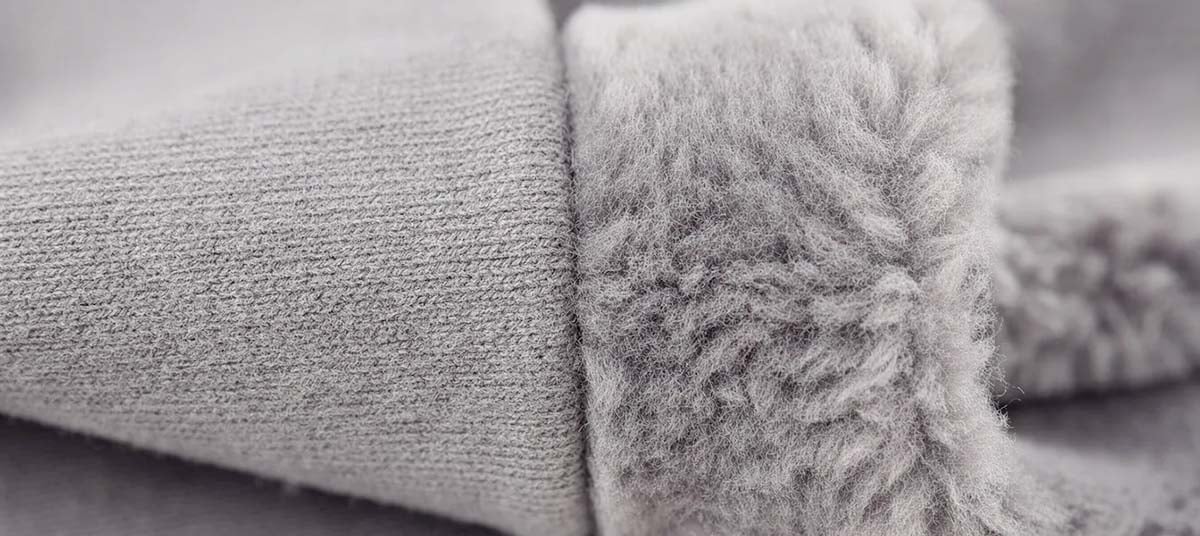
Brushed back fleece is a circular-knitted fabric that starts with knitting the base structure, after which the outer side remains a clean jersey surface and the inner side goes through the brushing process, a finishing process that raises short fibers into a soft, insulating pile and shapes the final handfeel. The result is a soft, velvety texture that feels gentle against the skin and effectively traps warmth, making it ideal for cooler climates. It is commonly made from cotton, polyester, or blends of both, offering a practical combination of fiber options to balance performance and cost.
Brushed fleece provides excellent insulation and comfort across a range of constructions while supporting moisture management, remaining breathable, and offering good durability with resistance to pilling.
Typical fiber systems for export programs include:
|
Blend |
Best For |
Trade-offs |
|---|---|---|
|
100% polyester |
Cost-sensitive styles, moisture management |
Less natural hand, lower breathability |
|
65/35 or 60/40 cotton/poly |
Core hoodies, sweatshirts, joggers |
Balanced warmth, printability, durability |
|
80/20 CVC (higher cotton) |
Premium streetwear, elevated basics |
Softer handfeel, higher cost |
Common GSM ranges for bulk production span 220–240 gsm for lightweight pieces, 260–300 gsm for core hoodies and sweatpants, and 320–360 gsm for heavyweight streetwear and colder-climate uniforms, with fabric weight helping determine overall thickness and warmth. The brushed inner side creates micro air pockets that trap warm air, making this construction suitable for autumn–winter apparel and selected home textiles like blankets and throws.
Brushed Fleece vs. Other Fleece Fabrics
Unbrushed fleece retains loops on the back for a more structured feel. While this offers better breathability, it delivers lower perceived warmth and softness per GSM. Cotton fleece is breathable and moisture-absorbing, and cotton-poly fleece blends are commonly chosen because they are durable and affordable; cotton fleece also feels softer over time compared to brushed fleece-but brushed fleece provides better insulation than cotton fleece across equivalent weights.
Fully synthetic polar fleece (often double-sided brushed polyester) differs from brushed back sweatshirt fleece in both aesthetics and application: higher loft and insulation, but a more technical, outdoor look versus the cleaner surface many designers prefer for casualwear, making brushed back fleece a perfect fabric for buyers who prioritize warmth over maximum airflow.
Matching fabric type to target market:
-
Brushed back fleece → casualwear, fashion basics, warm clothing programs
-
Polar-type fleece → outerwear, jackets, workwear in extreme cold where harder-wearing PVC/PU coated Oxford fabric for shells and bags is often used alongside
-
Unbrushed fleece → transitional-season layering, cost-sensitive sweat sets
Brushed Fleece vs. French Terry
French terry is a loopback knit fabric with unbrushed loops on the inner side and a smooth jersey face. It is often the go-to for spring/summer sweats, athletic wear, and fashion basics where breathability and moisture absorption matter more than thermal insulation, especially when paired with lightweight, drapey wholesale chiffon fabric for dresses and layering pieces. Brushed fleece starts from a similar loopback structure, but the loops are mechanically brushed into a soft, compact pile, significantly increasing warmth and perceived value.
|
Parameter |
French Terry |
Brushed Back Fleece |
|---|---|---|
|
Typical GSM |
200–280 gsm |
280–360+ gsm |
|
Warmth |
Moderate |
High |
|
Breathability |
Higher |
Moderate |
|
Best season |
Spring/Summer |
Autumn/Winter |
|
Style fit |
Training sets, summer joggers |
Premium sweaters, winter wear |
Select French terry for lightweight hoodies, activewear, and children's clothing in warmer regions, while specifying 100% polyester Dri-Fit fabric for more technical sportswear and uniform tops that require enhanced moisture management. Choose brushed back fleece for autumn/winter capsule collections, uniform programs, airport and travel sets, and premium streetwear where a richer handfeel and volume justify a higher FOB price.
Applications in Apparel and Home Textiles
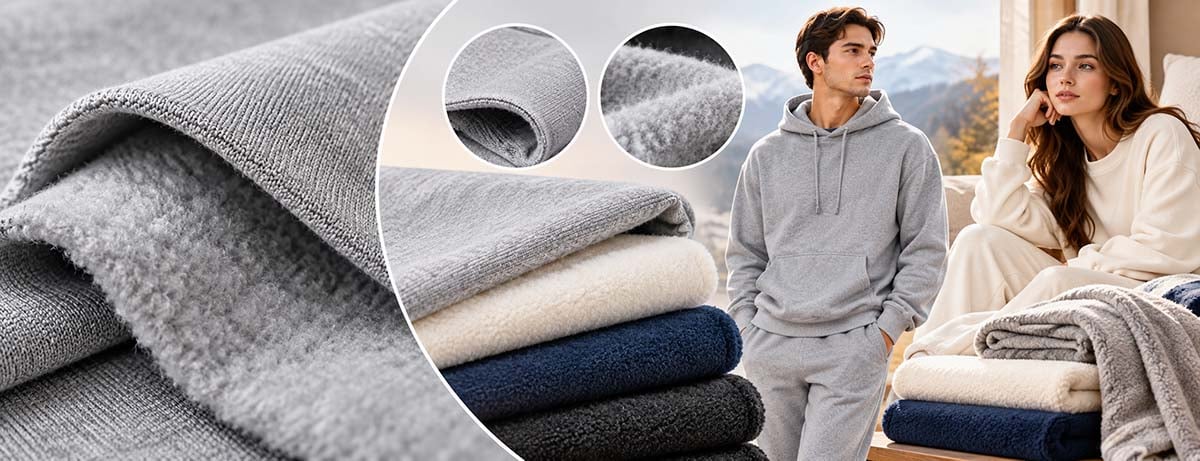
Brushback fabric is ideal for sweatshirts and hoodies, as well as crewneck sweats, joggers, and leggings with fleece backing. Brushed fleece is often used for loungewear and activewear, and brushback fabric is valued in sportswear for its good elasticity as well as comfort; it is also ideal for cold-weather garments such as school and corporate uniforms and teamwear where complementary polyester–spandex stretch woven fabrics may be used for outer shells or trims. It retains warmth well, making it suitable for winter loungewear. Children's clothing brands use brushback fabric for its comfort, and it is often used in pajamas due to its soft texture. Brushed back fleece has a soft, fuzzy inner surface that makes it a versatile choice across many categories.
Brands targeting North and South American markets-including Latin America-rely on mid- to heavyweight brushed fleece for domestic programs thanks to its balance of warmth, cozy handfeel, and manageable FOB costs. The versatility of this material extends to home textiles: it is often utilized in home goods like blankets and cushion covers, especially in mass-market programs requiring high volume and consistent color.
The smooth exterior of brushed back fleece is suitable for screen printing and embroidery, especially when paired with high-quality polyester and rayon embroidery threads from MH. MH can support customers in aligning fabric specifications with downstream processes such as digital printing, embroidery, and heat-transfer logos. When print accuracy or embellishment quality is critical, buyers should run a test before full production and ensure that consumables such as 120D/2 polyester embroidery thread are evaluated on the same production machines.
MH as Your Make-to-Order Brushed Fleece Partner
MH operates strictly on an MTO basis for brushed fleece-no ready stock-allowing buyers to customize composition, GSM, width, color, and finishing according to brand standards, while using MH’s website to review product details or inquiry information before ordering. With an industrial area of approximately 350,000 m² and around 3,000 technical personnel, MH can support seasonal orders, NOS programs, and multi-country shipments with particular experience in Latin America and Europe.
MH manages the complete supply chain from yarn sourcing to finishing, enabling stable lead times, batch-to-batch color control, and coordinated deliveries that are supported by its global sewing thread factory network. Professional buyers are invited to collaborate on fabric development, lab dips, and pre-production yard runs before committing to bulk, ensuring the final brushed fleece fabric matches technical and commercial expectations. Contact MH through the website to start your next project, request a sample or swatch to validate quality before your date of bulk commitment, and confirm shipping details before checkout.


Frequently Asked Questions about Brushed Back Fleece (B2B Focus)
Can MH support custom colors and special finishes for brushed fleece?
MH offers custom solid colors based on Pantone or brand color standards, with lab dips submitted for approval before bulk production. Additional finishes-silicone softening, anti-pilling treatments, moisture-management finishes for activewear variants-can be developed according to buyer specifications, similar to how TC poly cotton twill fabrics for uniforms and workwear are engineered for durability and appearance retention.
Is brushed back fleece suitable for high-coverage printing and heavy embellishment?
The smooth face side of brushed fleece is generally suitable for screen printing and heat-transfer applications, but very heavy ink coverage or large solid prints may affect drape and perceived softness. Run strike-off tests on production-quality fabric-including after washing-to validate print opacity, handfeel, and adhesion before approving designs for bulk runs. Embroidery requires stabilizer backing, and factories may need to trim pile in embellishment areas to avoid distortion of the denim-like crisp finish some brands pursue on contrast panels, especially when specifying 150D/2 rayon embroidery thread for high-sheen logos.
