
Closure Button: Types, Uses & How to Choose the Right One
Key Takeaways
-
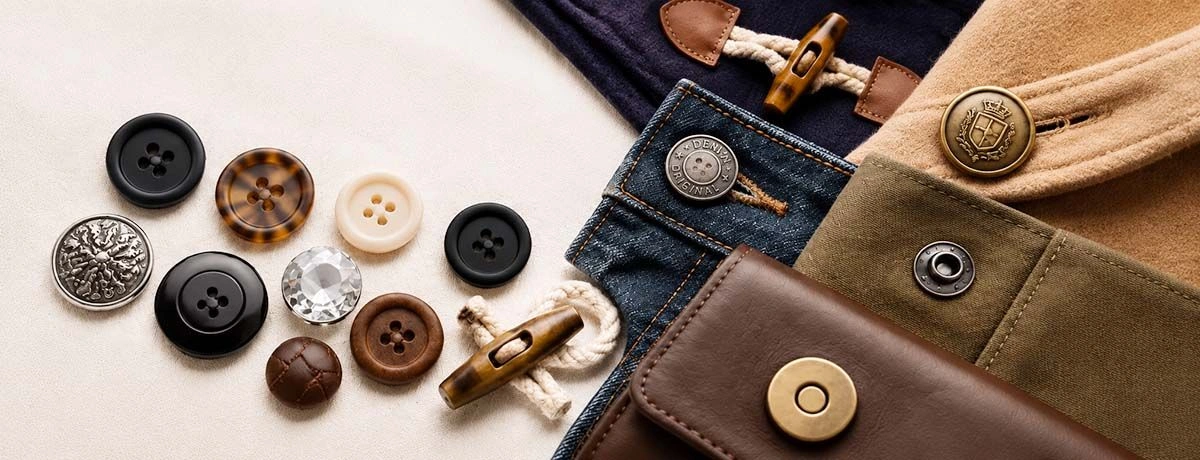
Closure buttons secure garments like coats, jackets, bags, and knitwear while adding visual character. They are available from stock in a wide range of sizes, colors, and materials to suit nearly any project.
-
The main closure button types are sewn-on flat buttons, shank buttons, toggles, snap closures, and specialty decorative options. Each type works best for specific fabrics and garment categories.
-
Common closure button materials include metal (brass, zinc alloy, stainless steel), polyester, resin, leather, and natural options like corozo and wood. Buttons can be made from metal, polyester, crystal, and leather depending on the application.
-
Choosing the right closure button depends on fabric weight, garment type, frequency of use, and your desired aesthetic-whether that is classic, luxury, casual, or sporty.
-
This article gives concrete selection tips for manufacturers, tailors, and DIY sewists, plus a FAQ covering care, replacement, and sizing for closure buttons of all types.
What Is a Closure Button and Why It Matters
A closure button is any button or button-like fastener designed to open and securely close parts of garments, bags, and accessories. Unlike purely decorative buttons, a closure button must withstand the repeated stress of daily use while keeping fabric layers properly aligned.
Clothing fastenings include buttons, zippers, and snaps among others, but the closure button remains the most versatile and widely used option across the industry. The distinction between a closure button and a decorative button is simple: closure buttons are engineered to handle pull forces, resist coming undone, and allow smooth opening and closing without damaging the fabric underneath.
You will find closure buttons on a broad range of products:
-
Outerwear: duffle coats, trench coats, wool overcoats
-
Tailored garments: blazers, uniforms, cardigans
-
Casual wear: denim jackets, shirts, knitwear
-
Accessories: handbags, backpacks, belts made with genuine or artificial leather for bags and apparel
-
Home textiles: cushion covers, pillow shams
Every closure button works with a counterpart-whether that is a buttonhole, a fabric or cord loop, a frog closure, or a snap socket. The design of this pairing determines how smoothly the garment opens and closes, and how securely it stays fastened.
Modern closure buttons combine function and fashion, influencing the overall look of a garment as much as the fabric itself. A polished brass shank button on a navy blazer says something entirely different from a matte corozo toggle on a duffle coat.
Types of Closure Buttons and How to Choose Them
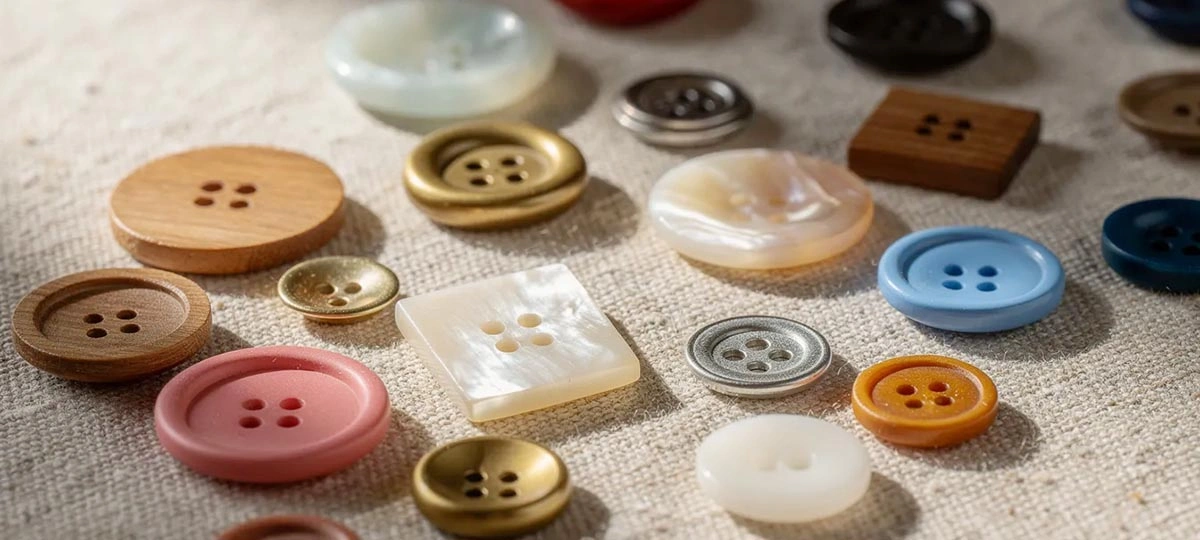
This section covers the main closure button types, the most common materials and finishes, and practical selection tips you can use to find the right option for different garments and fabrics. Different button styles work better for different fabrics and garment types, so understanding each category will save you time and prevent costly mistakes.
Sewn-On Flat Buttons (2-Hole and 4-Hole)
Classic sewn-on flat buttons with holes through the face are the workhorses of garment closures. Available as 2-hole or 4-hole designs, they distribute stress across multiple thread paths, which makes them reliable for shirts, knitwear, and light- to medium-weight garments.
Flat buttons are typically used on lightweight to medium-weight garments where the fabric does not create excessive bulk between the button and the facing layer. They are the most affordable closure option, the easiest to machine-sew in large production runs, and come in virtually any color or pattern.
If you are working with thicker fabrics, create a thread shank-a small stem of wrapped thread between the button and the fabric-to prevent puckering and give the layers room to sit comfortably.
Shank Buttons
Shank buttons have a loop or post on the back instead of holes through the face. This design lifts the button away from the garment surface, creating space for thick cloth and lining layers to sit neatly without compression. Shank buttons sit on top of thick fabrics and prevent pulling, which is why they are the standard choice for coats, blazers, and heavy outerwear.
Fabric weight influences the choice between flat and shank buttons directly. If your fabric is heavier than a medium-weight cotton-think melton wool, boucle, or cashmere blends-a shank button will almost always perform better. The shank height should match the combined thickness of the fabric and interfacing so the closure lies flat when buttoned.
Shank buttons cost more to manufacture due to their extra components and mould complexity, but they deliver a cleaner face appearance since there are no visible holes or thread on the front.
Toggle Closures and Toggle Buttons
Toggle buttons are commonly used for fastening duffle coats, and they are among the most recognizable closures in outerwear design. A toggle closure pairs an elongated bar-shaped piece-made from wood, horn, or synthetic material-with a loop of cord, leather, or fabric.
Toggles are versatile closures for various outerwear applications and are available in horn and PU leather styles, giving designers flexibility between rustic, nautical, and modern aesthetics. Beyond clothing, toggles can be used for clothing, upholstery, and jewelry making, making them one of the more adaptable closure types on the market.
Toggle closures are particularly easy to fasten with gloves, which is a practical advantage for winter coats. Their casual, statement-making look works well on children's outerwear and bags, too. The trade-off is that the loops are a wear point-cord or leather loops can degrade over time and may need replacement before the toggle itself shows signs of aging.
Snap-Style Closure Buttons
Snap closures consist of two interlocking parts that lock together when pressed, making them the fastest closure type to open and close. A complete snap set has four components: cap, socket, stud, and post. Each component must match the same size series, so verify compatibility before ordering.
Snap buttons are quick to open and close for convenience, which makes them the go-to choice for:
-
Babywear and children's clothing (safety and ease)
-
Sportswear and activewear (speed)
-
Denim and workwear (durability when using heavy-duty metal snaps)
-
Small leather goods and bags (clean look, fast action)
Types of snap closures include spring snaps, prong snaps, and magnetic snaps. Magnetic buttons attract each other to hold material closed and are often used in bags, purses, and luxury accessories where a seamless exterior matters.
Once snaps are fitted, they are difficult to remove without damaging the fabric, so placement precision is critical, and using a dedicated snap button press machine for garment production helps ensure accurate, repeatable results.
Tack Buttons and Metal Closures
Tack buttons are commonly found on denim jeans and jackets. These heavy-duty metal buttons are attached via a tack or nail driven through the fabric-no sewing required. Metal buttons are used for durability on denim jackets and jeans, and they are built to withstand years of washing and wear.
Beyond tack buttons, the broader category of metal closures includes rivets and studs, which are decorative metal closures that reinforce stress points on denim and workwear. Hook and eye closures are used for flat closures on waistbands, offering a nearly invisible fastening solution at the top of trousers and skirts.
Specialty and Decorative Closure Buttons
Decorative buttons enhance the aesthetic of garments and may serve functional purposes at the same time. This category includes:
-
Crystal-embellished buttons for eveningwear and bridal designs
-
Metal crest buttons for uniforms, blazers, and military-inspired fashion
-
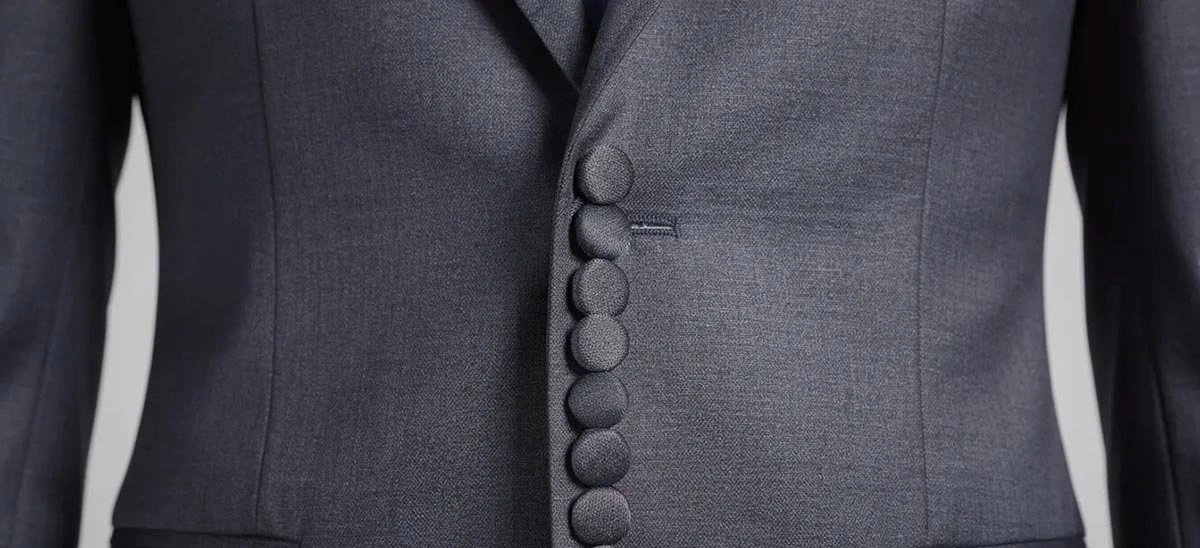
Covered buttons that match the garment fabric for a seamless, tailored appearance
Covered buttons create a seamless look and are used in formal wear, where the button should blend into the garment rather than stand out. These are more delicate, require careful handling, and may degrade if exposed to harsh cleaning chemicals or heavy abrasion.
Materials at a Glance
Button closures can be made from metal, polyester, or leather-among many other options. Here is a quick comparison to help you sort through the choices and coordinate with other garment accessories like zippers, threads, and tapes:
|
Material |
Best For |
Advantages |
Watch Out For |
|---|---|---|---|
|
Metal (brass, zinc alloy, steel) |
Denim, outerwear, uniforms |
Durability, premium finishes, plating options |
Tarnish, weight, potential nickel allergen |
|
Polyester / Resin |
Shirts, knitwear, mass production |
Wide colors, consistent quality, low cost |
Less premium feel than natural materials |
|
Leather / Faux leather |
Bags, premium outerwear |
Tactile, rich look |
Needs conditioning, water sensitivity |
|
Natural (corozo, wood, horn, shell) |
Luxury, sustainable fashion |
Unique grain, eco-friendly |
Brittle at large sizes, variable appearance |
Buttons come in various sizes, colors, and shapes, so the material choice is only one dimension of the decision. Finishes matter just as much-coordinating tone-on-tone buttons for a subtle, tailored look, using contrasting buttons for statement pieces, choosing matte finishes for casual wear, and selecting glossy or plated metal for luxury or formal items.
Practical Selection Guidelines
Here is a straightforward process to discover the right closure button for your project:
-
Match size to fabric weight. Heavier wool and cashmere coats need larger, stronger buttons (25–45 mm). Lightweight silk or cotton uses smaller, flatter styles (9–15 mm). Refer to the button sizing chart by Buttonology for ligne-to-millimeter conversions.
-
Test the feel. Before committing to a full production run, test how the closure button feels in the hand and how easily it passes through the buttonhole or loop-especially for outerwear that will be used with gloves.
-
Plan for durability. High-wear garments like daily coats, work uniforms, and school blazers benefit from reinforced stitching, quality metal or high-grade polyester buttons, and possibly extra spare buttons included with the garment.
-
Verify stock availability. Buyers planning bulk production should verify that the chosen closure button is available as ongoing stock to avoid mismatches when reordering or scaling up orders. A problem loading your production schedule because a button style was discontinued mid-run is avoidable with upfront supplier communication.
-
Coordinate hardware. If your garment also has zippers, buckles, or rivets, make sure the button finish matches so the overall look stays cohesive.
FAQ
How do I sew a closure button securely on a heavy coat?
Mark the button position precisely, then use extra-strong polyester thread, doubled and ideally waxed, for maximum hold. Sew multiple passes through the button holes-at least six per hole pair. For thick fabric, create a thread shank by wrapping thread between the button and the garment surface five or six times before knotting off. Finally, add a small flat backing button on the inside of the garment to distribute the load across a wider area and prevent the thread from tearing through the outer fabric.
What size closure button should I use for different garments?
Use these approximate diameter ranges as a starting point:
|
Garment Type |
Recommended Button Size |
|---|---|
|
Shirts and blouses |
9–14 mm (14–22L) |
|
Cardigans and casual knits |
14–18 mm (22–28L) |
|
Jackets and blazers |
18–25 mm (28–40L) |
|
Heavy outerwear (duffle coats, wool coats) |
25–35 mm+ (40–54L) |
The ligne measurement system is an old French unit where 1 ligne equals approximately 0.635 mm. It remains the industry standard for button sizing worldwide.
How do I care for garments with metal or leather closure buttons?
Close all buttons before washing to prevent snagging and uneven stress. Use a gentle cycle and place garments with metal or decorative buttons in a mesh laundry bag. Avoid prolonged soaking and harsh detergents, which can damage metal plating or strip finishes. For garments with real leather buttons, occasional conditioning with a leather balm prevents cracking and keeps the surface supple. When in doubt, follow dry-cleaning symbols on the care label-refreshing delicate garments this way is safer than risking damage in a machine wash.
What if my chosen closure button is out of stock?
Start by checking with your supplier for restock dates or alerts-many website pages and supplier site portals offer notification features. If the exact style is unavailable, look for the same product line in a close size or finish. When a match cannot be found, select a new button style and replace the full set on the garment so all closures match visually. Replacing only one or two buttons from a different batch often creates noticeable inconsistencies in color or sheen that undermine the finished product.
Can I replace closure buttons with snaps or a zipper?
It is often possible, but the scope of changes varies. Replacing shirt buttons with snaps is relatively simple: reinforce the placket edges, mark positions carefully, and press-fit the snap components. The garment pattern usually does not need to change.
Switching a coat from buttons to a zipper is a more extensive alteration. It may require changing the placket width, reinforcing the facing edges, adjusting the lining, and possibly resizing the front panels. A sample or muslin trial is recommended before you add the alteration to your cart of production changes.
In either case, the key is testing fit and function on a sample before committing to a full run-a few extra minutes of prototyping can prevent hours of rework.