
Which Corduroy Fabric Are Best for Apparel and Industrial Applications?
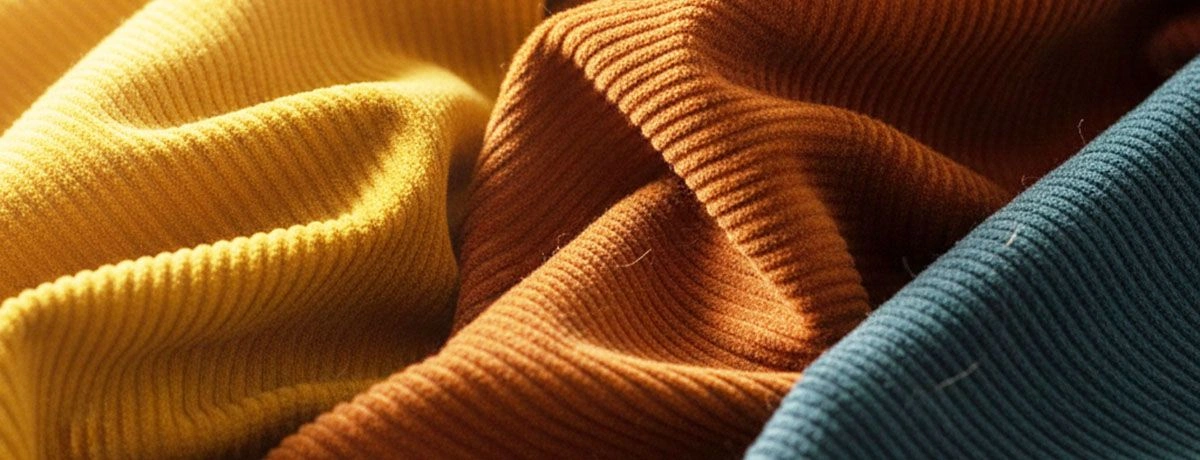
Corduroy remains one of the most recognizable woven textiles in global garment manufacturing. Its distinctive ribbed surface, consistent performance characteristics, and adaptability across fiber compositions make it a reliable choice for buyers sourcing fabric for apparel, uniforms, and upholstery applications.
This guide covers what sourcing managers and textile buyers need to know about corduroy—from construction and wale structure to fiber options, weight ranges, and quality control parameters relevant to bulk purchasing decisions.
What Is Corduroy Fabric?
Corduroy is a woven pile fabric characterized by longitudinal ridges called wales, created by cutting pile floats on a ground weave. The word “corduroy” has disputed origins—some sources trace it to France as “corde du roi” (cord of the king), while others point to England where the fabric gained popularity for workwear and casual garments during the industrial era.
The fabric is typically produced on industrial looms using a base weave (usually plain or twill) combined with an extra set of pile yarns that are later cut and brushed. This three-yarn construction system—warp, weft, and pile—distinguishes corduroy from simpler woven structures like chiffon fabric and contributes to its characteristic durability and texture.
MH supplies corduroy primarily for B2B applications including garment factories, wholesalers, uniform producers, and upholstery converters. We provide bulk rolls rather than yard corduroy fabric for retail sewing projects.
Key technical features for wholesale buyers:
-
Abrasion resistance suitable for repeated wear and industrial laundering
-
Dimensional stability when properly finished, with controlled shrinkage parameters
-
Consistent wale appearance across production lots for uniform cutting results
-
Common GSM ranges from approximately 180–240 gsm for lightweight pinwale shirting up to 320–450 gsm for standard and wide-wale bottom-weight or upholstery grades
-
Available in a variety of fiber compositions to meet different performance and price targets
Corduroy Construction and Wale Structure
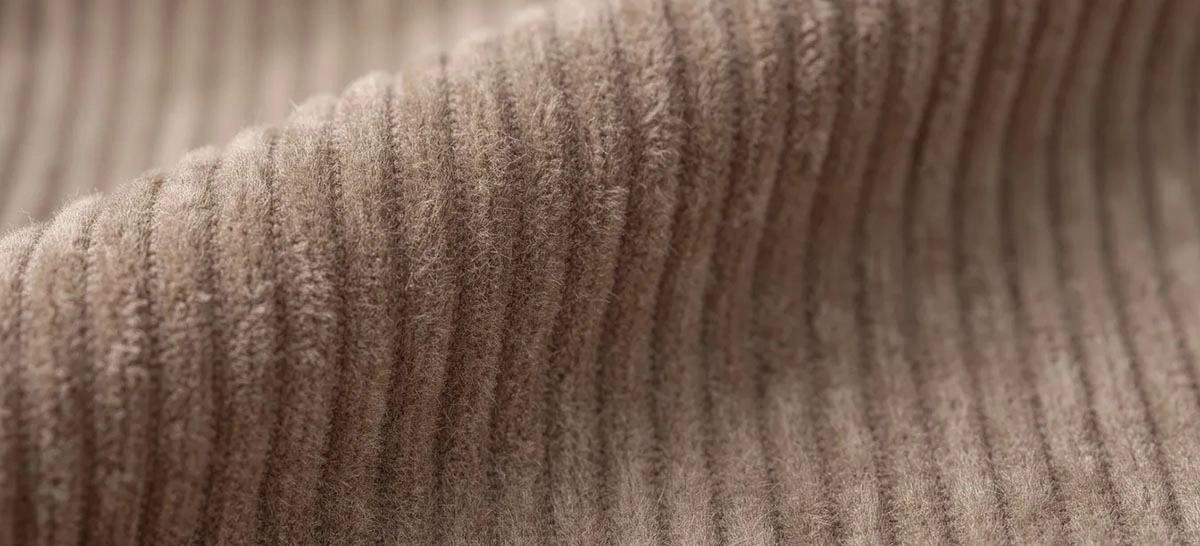
Corduroy is woven with three yarn systems working together: warp yarns running lengthwise, weft yarns running crosswise, and additional pile yarns that form the raised ribs after cutting. The base cloth—usually a tightly constructed plain or twill weave—stabilizes the pile and controls shrinkage and skew during finishing processes.
The term “wale” refers to the vertical rib formed after pile cutting. Wale count measures the number of ribs per inch across the fabric surface. This single specification significantly impacts the fabric’s appearance, weight, and application suitability.
Wale count ranges and typical applications:
|
Wale Type |
Wales per Inch |
Typical Applications |
|---|---|---|
|
Wide/Elephant |
4–6 |
Outerwear, workwear, upholstery |
|
Standard |
8–14 |
Trousers, uniforms, casual jackets |
|
Pinwale/Fine |
16–21 |
Shirts, dresses, children’s garments |
For apparel pants and trousers, buyers often specify 8–11 wales per square inch. Fine shirting and children’s wear typically require 14–21 wales per inch for a softer hand. When selecting tailoring materials, upholstery applications generally use heavier 4–8 wale constructions with thicker yarns.
What sourcing managers should verify in tech packs:
-
Consistent wale height across the fabric width
-
Uniform wale density (no gaps or bunched ribs)
-
Proper wale alignment parallel to the selvage
-
Absence of broken or missing wales from cutting defects
These quality parameters directly impact cutting yield and appearance in finished garments.
Manufacturing Process: From Greige to Finished Corduroy
Understanding corduroy manufacturing helps buyers evaluate supplier capabilities and anticipate lead times. The process involves multiple precision steps, each affecting final fabric quality.
Production sequence overview:
-
Yarn preparation – Cotton or blended yarns are selected based on strength and texture requirements, then dyed and wound onto spools
-
Weaving – Warp, weft, and pile yarns are woven together on industrial looms to create greige (unfinished) fabric
-
Back-sizing/glueing – Adhesive is applied to stabilize pile floats before cutting, preventing shifted or broken wales
-
Pile cutting – Specialized rotary knives cut the pile yarn loops to create distinct ribs
-
Brushing and singeing – The cut pile is brushed to raise fibers, then singed to remove loose ends
-
Dyeing/printing – Piece dyeing, pigment dyed corduroy finishes, or printed patterns are applied
-
Finishing – Mechanical sanforization for shrinkage control, plus optional treatments for crease resistance or water repellency
-
Final inspection – Verification against buyer specifications before shipping
MH can work with ring-spun or open-end yarns depending on price and performance targets. Ring-spun yarns typically offer better pilling resistance and surface clarity, while open-end yarns provide cost advantages for certain applications.
The back-sizing step deserves special attention—this temporary glueing stabilizes pile floats so cutting blades can pass cleanly between the base weave and pile yarn. Proper adhesive application and removal directly affects wale uniformity. The result of incomplete adhesive removal can affect fabric handle and washing performance.
Additionally, batch consistency requires careful control throughout production. Shade control, wale height uniformity, and controlled residual shrinkage (typically within ±3% after standard ISO wash tests) are critical parameters for B2B garment production where cut parts from different rolls must match in finished items.
Fiber Composition, Weight Ranges, and Technical Specifications
Fiber selection determines corduroy’s performance characteristics, price point, and application suitability. Modern corduroy is produced in numerous compositions to serve different types of end-use requirements.
Common fiber options:
-
100% cotton – Breathable, comfortable, traditional appearance; most common for casual apparel
-
Cotton/polyester blends (e.g., 80/20, 60/40) – Enhanced durability, wrinkle resistance, and colorfastness
-
Cotton/spandex blends (e.g., 97/3, 98/2) – Stretch recovery for fitted garments and improved mobility
-
Polyester-rich blends – Higher strength, abrasion resistance; used for upholstery and demanding workwear applications
-
Cotton/wool blends – Less common, used for premium outerwear requiring warmth and unique textures
How fiber blends affect performance:
|
Component |
Primary Benefits |
|---|---|
|
Cotton |
Comfort, breathability, soft hand |
|
Polyester |
Strength, colorfastness, wrinkle resistance |
|
Spandex |
Stretch recovery, shape retention |
Weight brackets for B2B reference:
-
Lightweight pinwale: 180–220 gsm (~5.3–6.5 oz/yd²) for shirts and children’s garments
-
Medium-weight standard wale: 240–320 gsm (~7–9.5 oz/yd²) for uniforms, skirts, and casual trousers
-
Heavy wide wale: 340–450 gsm (~10–13 oz/yd²) for workwear, overalls, and upholstery
Standard fabric widths:
-
Apparel grades: 142–150 cm usable width
-
Upholstery grades: 145–160 cm for furniture and commercial seating
-
Width specifications impact marker efficiency and cutting room yield calculations
Key test parameters for B2B buyers:
-
Tensile and tear strength (ISO methods)
-
Abrasion resistance (Martindale cycles—typically 15,000+ for apparel such as 85% polyester 15% spandex fabrics, 30,000+ for upholstery)
-
Pilling grade (ISO 12945)
-
Colorfastness to washing, rubbing, and light
-
Dimensional stability after washing
MH produces corduroy conforming to ISO test methods and can supply Oeko-Tex Standard 100 certified fabric for human-ecological safety where required, particularly for children’s wear and school uniforms.
Performance Characteristics for Industrial Use
When evaluating corduroy for manufacturing programs, buyers need to learn how the fabric performs under production conditions and end-use demands. The following characteristics are considered most relevant for sourcing decisions.
Durability
Corduroy is recognized as a durable fabric with good abrasion resistance—a direct result of its three-yarn construction and pile structure. The pile absorbs surface wear while the base weave maintains structural integrity. This makes corduroy suitable for items requiring extended service life, from workwear to furniture upholstery. You may be surprised to learn that properly constructed corduroy can outperform many flat-woven fabrics in abrasion testing.
Dimensional stability
-
Pile construction creates inherent shrinkage potential that must be managed during finishing
-
Pre-shrinking treatments (sanforization) minimize residual shrinkage
-
Controlled finishing reduces torque and seam puckering in mass production
-
Buyers should specify shrinkage tolerances (e.g., ±3%) and verify through wash testing
Appearance considerations
-
Pile creates directional nap that shows shading when panels are cut in different directions
-
Cutting rooms must align nap consistently across all pattern pieces to avoid shade differences in finished garments
-
Piece-dyed corduroy offers deep, uniform colors with good wash fastness
-
Pigment-dyed options provide unique colors and vintage-style surface effects but may show more variation
Care and maintenance
-
Machine washable when properly finished; washed corduroy typically becomes softer over time
-
Industrial laundering compatibility depends on fiber blend and finishing
-
For uniforms and workwear, buyers should test against their specific laundry protocol before committing to large orders
Color performance expectations:
|
Application |
Colorfastness to Washing |
Colorfastness to Rubbing |
|---|---|---|
|
Casual apparel |
Grade 4+ |
Grade 3-4 |
|
Workwear/uniforms |
Grade 4-5 |
Grade 4 |
|
Upholstery |
Grade 4-5 |
Grade 4+ |
Types of Corduroy for Different Applications
Buyers typically choose corduroy type based on wale count, weight, and stretch properties, with each configuration aligned to specific end uses. Understanding these categories helps specifiers select the right construction for their product programs.
Standard / Regular Wale Corduroy
-
Wale count: Approximately 8–13 wales per inch
-
Typical weight: 260–340 gsm
-
Fiber options: 100% cotton or cotton/poly blends
-
Applications: Trousers, skirts, casual jackets, school uniforms
-
Notes: The most versatile category; balances surface texture with production efficiency
Wide / Elephant Wale Corduroy
-
Wale count: Approximately 1–6 wales per inch
-
Typical weight: 340–450 gsm
-
Fiber options: Cotton or cotton/poly with heavier yarns
-
Applications: Outerwear, workwear jackets, some upholstery
-
Notes: More pronounced ribs create bold style; requires careful pattern matching at seams
This type should not be confused with bedford cord, which features similar raised ribs but is constructed differently without a cut pile.
Pinwale / Fine Wale Corduroy
-
Wale count: Up to 16–21 wales per inch
-
Typical weight: 180–220 gsm
-
Fiber options: cotton or cotton/spandex blends
-
Applications: Shirts, dresses, children’s garments
-
Notes: Soft hand and refined appearance; low weight makes it perfect for shirting
Stretch Corduroy
-
Composition: Cotton-rich blends with 2–5% spandex or elastane
-
Wale options: Various counts available
-
Applications: Fitted pants, uniforms requiring movement, fashion-forward silhouettes
-
Notes: Spandex content must be balanced to maintain wale structure and pattern stability during cutting and sewing
Upholstery-Grade Corduroy
-
Fiber options: Polyester or poly/cotton blends with high abrasion ratings
-
Typical weight: 350–450+ gsm
-
Width: Often 145–160 cm for furniture applications
-
Treatments: Stain-resistant, water-repellent, or flame-retardant finishes as specified
-
Applications: Sofas, armchairs, cushions, commercial seating, pillows
-
Notes: Must meet high Martindale abrasion standards (typically 30,000+ cycles)
Industrial and Commercial Applications
Corduroy’s versatility across weight and wale options makes it suitable for numerous B2B sectors. The following applications represent common sourcing scenarios organized by industry segment.
Garment Manufacturing
|
Product Category |
Typical Corduroy Spec |
Key Considerations |
|---|---|---|
|
Men’s/women’s pants and chinos |
8–11 wale, 260–320 gsm |
Shrinkage control, consistent shade |
|
Children’s garments |
14–21 wale, 180–240 gsm |
Oeko-Tex certification, soft hand |
|
Casual jackets |
6–10 wale, 280–380 gsm |
Good seam strength, pattern matching |
|
School uniforms |
8–14 wale, 240–300 gsm |
Colorfastness, controlled shrinkage |
Corduroy remains a popular choice for casual trousers where comfort and durability matter. The fabric’s texture adds visual interest while maintaining good drape for tailored items.
Workwear and Protective Clothing
-
Robust wide-wale or dense standard-wale corduroy serves industrial applications
-
Polyester blends increase abrasion resistance for demanding environments
-
Suitable for workshop coats, utility trousers, and tool aprons
-
Over time, properly specified corduroy maintains appearance through repeated industrial laundering
Home Textiles and Upholstery
-
Heavy cotton or polyester-blend corduroy meets Martindale abrasion standards for furniture
-
Textured surface provides warmth and visual interest
-
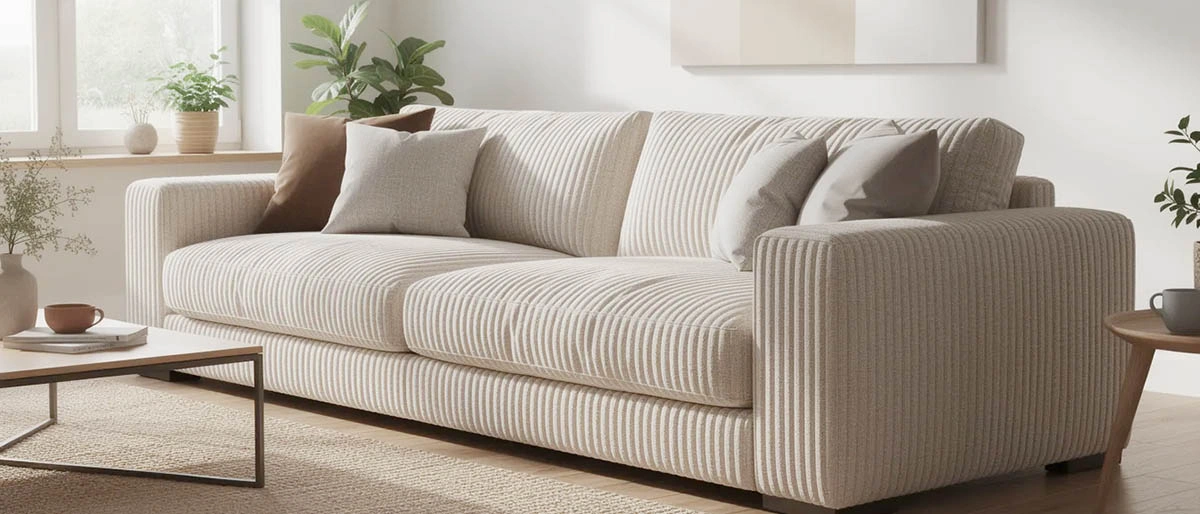
Applications include residential sofas, hospitality seating, and commercial interiors
-
Must pass specified performance tests for contract applications
Accessories
-
Heavier or reinforced corduroy works well for bags, backpacks, and caps
-
Good seam strength prevents failure at stress points
-
Pile structure resists surface wear in high-contact areas
-
Used as lining material in leather goods where a soft, durable piece is needed
MH supplies corduroy in bulk rolls suitable for cutting room operations. We coordinate with buyers on technical specifications including GSM, wale count, finishing, and testing requirements for each application group, such as school uniform fabric.
Sourcing Corduroy Fabric from MH
MH operates as a B2B manufacturer and exporter, supplying corduroy fabric and other garment materials in bulk quantities to international buyers. Our focus is on stable quality, reasonable pricing, and reliable delivery for long-term sourcing partnerships.
Typical order parameters:
-
Minimum order quantities vary by color and construction (contact us for specific requirements)
-
Lead times depend on greige availability plus dyeing and finishing requirements
-
Custom GSM, wale count, and fiber composition available according to buyer specifications
-
Standard and specialty finishes including water repellent, wrinkle resistant, and flame retardant options
MH’s vertically integrated supply chain and partnerships with 1,500–2,000 manufacturers support stable long-term programs. We maintain repeatable shade standards and scalable capacity for volume orders across different sizes and specification requirements.


Corduroy fabric continues to serve manufacturers across apparel, workwear, and upholstery sectors where durability, texture, and batch consistency matter. Whether you’re sourcing standard wale for uniform programs, pinwale for children’s items, or heavy upholstery-grade material for commercial furniture, understanding construction parameters and performance specifications positions your sourcing team to make informed decisions.
Read more about fabric options and garment materials on our site, or click to contact MH with your technical requirements for corduroy and other textile needs.
