
Curtain Tie Backs for Professional Projects: A B2B Buyer's Guide

Key Takeaways
-
Curtain tiebacks, curtain holdbacks, and curtain ties are functional accessories that manage light, privacy, and drape shaping in commercial and residential curtain installations.
-
MH supplies curtain tiebacks and decorative curtain holdbacks on a Make-to-Order (MTO) basis, optimized for bulk purchasing rather than retail pieces-MH does not keep ready stock.
-
Buyers should specify materials, finishes, load requirements, testing standards, and packaging in their RFQs to reduce sampling rounds and accelerate order confirmation.
-
MH is positioned as a long-term manufacturing partner for wholesalers, distributors, and curtain workrooms seeking OEM and ODM curtain holder solutions.
Why Curtain Tiebacks Matter in B2B Curtain Programs
Tie backs can complete a window treatment by controlling how curtains are positioned across windows, helping shape both natural light and the mood of the space, yet they are among the most under-specified items in bulk curtain programs. Pulling back fabric lets in more daylight while revealing more of the curtain material and surrounding decor, so the right tie back can better showcase the textile and complement the room. Whether you are assembling a coordinated collection for a hotel chain, a multi-tower residential development, or a regional wholesale catalog, curtain tiebacks, curtain ties, and curtain holdbacks directly impact the perceived value of the full curtain set.
Curtain Tiebacks, Curtain Holdbacks, and Curtain Holders
Getting terminology right prevents miscommunication across international supply chains.
-
Curtain tiebacks are flexible bands-fabric, cord, rope, or braided yarn-used to gather curtain panels to the side. Curtain tie backs are flexible and can wrap around curtain panels to fasten them to a wall hook, so they are often best for decorative panels that rarely close.
-
Curtain holdbacks are rigid hardware pieces (metal, resin, or wood) mounted to the wall; curtains are draped behind them rather than tied. Holdbacks are rigid hardware that hold curtains in an open position and are better for functional curtains used daily because they allow quicker opening and closing.
-
Curtain ties and tie backs are commonly used synonyms in international trade documentation, HS codes, and packing lists. In hardware catalogs, rigid versions are often listed as curtain holders.
Professional buyers typically split these into two product-line categories: soft accessories (textile tiebacks) and decorative hardware (rigid holdbacks). This distinction matters for assortment planning, inventory management, and cost structure, since textile items and metal fabrication follow different pricing and customs classification logic.
Common B2B Types of Curtain Tiebacks and Decorative Holdbacks
|
Type |
Description |
Strongest B2B Demand |
|---|---|---|
|
Cord tiebacks with tassels |
Cord tiebacks with tassels offer a traditional look; available in twisted or braided constructions with varying tassel fullness. |
Upscale hotels, rustic boutique properties |
|
Fabric tiebacks |
Can match the curtain's fabric for a cohesive look. Fabric tiebacks can feature beaded trim for elegance. |
Workrooms producing coordinated sets |
|
Rope tiebacks |
Thicker, textured bands suited for heavy drapes and natural-fiber decor programs. |
Coastal resorts, eco-themed hospitality |
|
Magnetic tiebacks |
Magnetic tiebacks require no hardware for installation-easy to deploy in rental or staging projects. |
Short-term hospitality, model-home staging |
|
Metal holdbacks / hooks |
Rigid wall-mounted hardware in a variety of finishes and head shapes. |
Modern apartments, office fit-outs |
Decorative curtain holdbacks are a profitable add-on for distributors: various head shapes, finishes, and backplate designs can match existing curtain rod lines and curtain eyelet rings, creating upsell opportunities across the catalog.
Materials and Construction: What Professional Buyers Need to Specify
Choose curtain tie backs based on the material, style, and finish that best match the room’s decor, especially when coordinating with lightweight sheers and chiffon fabric for drapery accents. Here is what to consider for each category:
Soft tiebacks: Polyester and rayon blends dominate for color retention and UV stability. Cotton and natural fibers (linen, jute) deliver warmer aesthetics but fade faster and are more susceptible to mildew in humid climates. Buyers may also request custom looks inspired by DIY concepts such as ribbon, beads, chains, or feathers for themed projects. Cord diameter (8–15 mm+), core composition, and tassel strand count should be specified in every RFQ.
Rigid holdbacks: Common base metals include zinc alloy (cost-effective die-casting), iron or steel (high strength), brass (premium corrosion resistance), and aluminum (lightweight, ideal for minimalist hardware). Coordinate tie-back hardware finishes with existing room accents for a consistent result. Metal thickness and mounting hardware types-including screws, wall plugs, and backplate dimensions-determine whether the holdback can support heavy drapes, especially when coordinated with custom zippers for cushion covers or bedding in the same project. Heavy drapes require substantial hardware like thick rope or metal tie backs, often paired with durable oxford fabric for blackout or lining, while lightweight curtains work best with delicate ties or subtle metallic hooks.
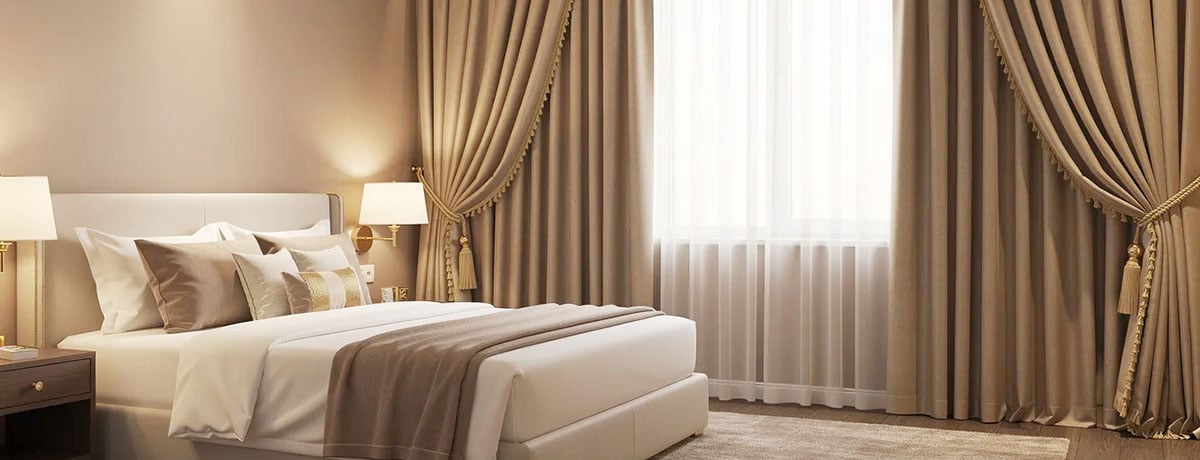
Choosing MH as Your Curtain Tieback Manufacturing Partner
MH is a long-term partner for professional buyers of curtain accessories-not a place to order a single pair of holdbacks. The focus is on consistent quality, reliable delivery, and flexible design capability across integrated garment accessories manufacturing expertise and large-scale capacity.
Whether you are building a coordinated window-treatment line for wholesale or sourcing accessories for a 500-room hotel, MH's proven export record and MTO flexibility, along with experience in bag and luggage accessories for hospitality projects, make the difference between a smooth roll-out and a supply headache.
Contact MH with your project brief or collection concept to start the sampling process and maximize supply-chain efficiency from day one.


FAQ: B2B Questions About Curtain Tiebacks and Holdbacks
What minimum order quantities (MOQs) should I expect for curtain tiebacks?
MOQs vary by design complexity. Standard braided curtain ties and plain metal curtain holders usually carry lower MOQs than custom, multi-color tassel tiebacks with bespoke finishes. Container-optimized volumes are preferred for international shipments, but MH can support mixed-model orders within one production run for wholesalers managing a broad assortment, including trouser waistband accessories and waistband gripper tapes and linings and other garment components.
Can MH match tieback colors to my existing curtain fabric collections?
Yes. MH matches colors using physical swatches, Pantone TCX, or other textile color systems, subject to lab-dip approval. The process works as follows: the buyer submits references, MH develops trial samples, the buyer approves, and bulk production follows the approved standard.
How long is the production lead time for bulk orders?
Indicative lead times run 4–8 weeks from deposit and sample approval for standard designs, though exact timing depends on order volume, season, and customization level. During planning, measure placement early, since the placement of tie backs can alter the perceived height and width of a window.
Can I order curtain tiebacks together with other textile accessories from MH?
MH, as an integrated textile supplier, can consolidate curtain tiebacks with other trimmings, polyester sewing threads, tapes, and related textile accessories in one shipment across end-use spaces such as bedrooms, living rooms, and kitchen areas, where tieback and holdback needs often differ. Tiebacks are often chosen for decorative panels that rarely close, and they can add personality, architectural interest, texture, and a polished, intentional look by shaping drape folds. Holdbacks are better for functional curtains used daily because they secure panels in place and allow for quick opening and closing. This delivers reduced freight cost per unit, simplified customs clearance, and synchronized delivery for full curtain programs.
