
How to Source Denim Fabric Material in Bulk for Manufacturing or Distribution?
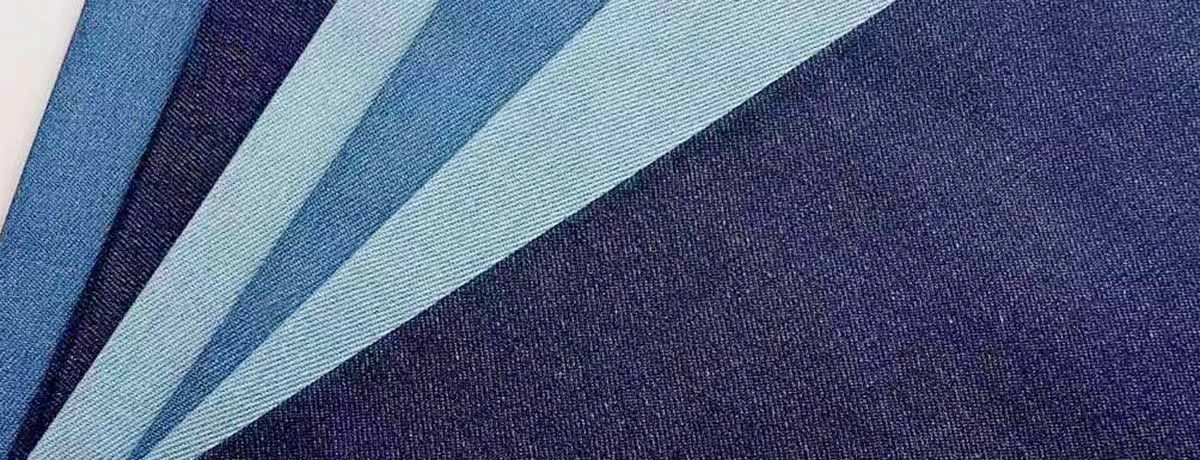
The global denim market represents one of the most significant segments in textile manufacturing, with annual production exceeding billions of yards worldwide. For apparel manufacturers and distributors, understanding denim fabric material specifications, sourcing requirements, and quality standards is essential for successful commercial operations.
As a leading B2B textile manufacturer, MH recognizes that denim fabric material encompasses far more than the traditional blue jeans most consumers recognize. From lightweight denim suitable for summer shirts to heavyweight bull denim designed for industrial applications, this versatile textile offers manufacturers extensive opportunities across multiple market segments.
What is Denim Fabric Material?
Denim fabric material is a durable cotton warp-faced twill textile characterized by its distinctive diagonal ribbing pattern created through specialized weave construction. Unlike plain weave cotton fabrics, denim utilizes a twill interlacement where colored warp threads (traditionally indigo-dyed) float over undyed or differently colored weft threads, producing the characteristic contrast between fabric face and back.
The primary composition consists of 100 cotton denim or cotton blends incorporating elastane (1-3%) for enhanced stretch properties. This natural fiber base provides breathability and comfort while the twill weave structure delivers superior tensile strength compared to equivalent plain weave constructions.
Commercial denim fabric material typically ranges from 8oz to 21oz per square yard, accommodating applications from lightweight summer garments to heavyweight workwear and upholstery. The weight classification directly impacts durability, drape characteristics, and end-use suitability.
The key differentiator from other cotton fabrics lies in denim’s distinctive twill weave construction combined with the indigo dyeing process that creates ring-dyed yarns. This unique combination enables the characteristic fading behavior that transforms wear and laundering into design features rather than defects.
Material Composition and Construction
Cotton Fiber Specifications
The foundation of quality denim fabric material begins with cotton fiber selection. Short-staple cotton (fiber length under 1.125 inches) provides the rugged, irregular character associated with heritage denim, while long-staple cotton (exceeding 1.375 inches) delivers superior strength, reduced hairiness, and cleaner surface appearance for premium applications.
Ring-spun cotton yarn remains the standard for denim warp construction, utilizing high twist levels that enhance tensile strength while creating the slightly irregular surface texture that contributes to authentic fading patterns. The spinning process concentrates stronger fibers in the yarn core while leaving less twisted fibers in the sheath, optimizing both performance and aesthetic properties.
Twill Weave Structure
The dominant weave construction is 3x1 right-hand twill, where each weft yarn passes under one warp thread and over three warp threads in a repeating pattern. This creates the diagonal rib slanting from lower left to upper right on the fabric face, distinguishing denim from plain weave cotton materials.
Alternative twill variations include:
-
2x1 twill for lighter weights and softer hand feel
-
3x1 left-hand twill offering different abrasion characteristics
-
Broken twill patterns reducing leg twist in finished garments
Yarn Specifications
Warp Thread Composition: Ring-spun cotton yarn dyed with indigo or sulfur dyes, typically featuring higher twist levels (3.5-4.5 turns per inch) for enhanced strength and dye penetration control.
Weft Thread Specifications: Natural cotton or cotton-polyester blends in white, ecru, or lightly tinted shades that influence overall fabric cast when indigo layers abrade during wear.
Elastane Integration
Modern stretch denim incorporates spandex or lycra content at specific percentages to achieve targeted performance characteristics:
-
1% elastane: Minimal stretch for comfort enhancement without significant shape change
-
2% elastane: Moderate stretch suitable for slim-fit applications with good recovery
-
3% elastane: High stretch for skinny fits and athletic garments requiring maximum mobility
Core-spun construction wraps elastane filaments with cotton fibers, maintaining cotton-rich surface characteristics while integrating stretch properties throughout the fabric structure.
Types of Denim Fabric for Commercial Applications
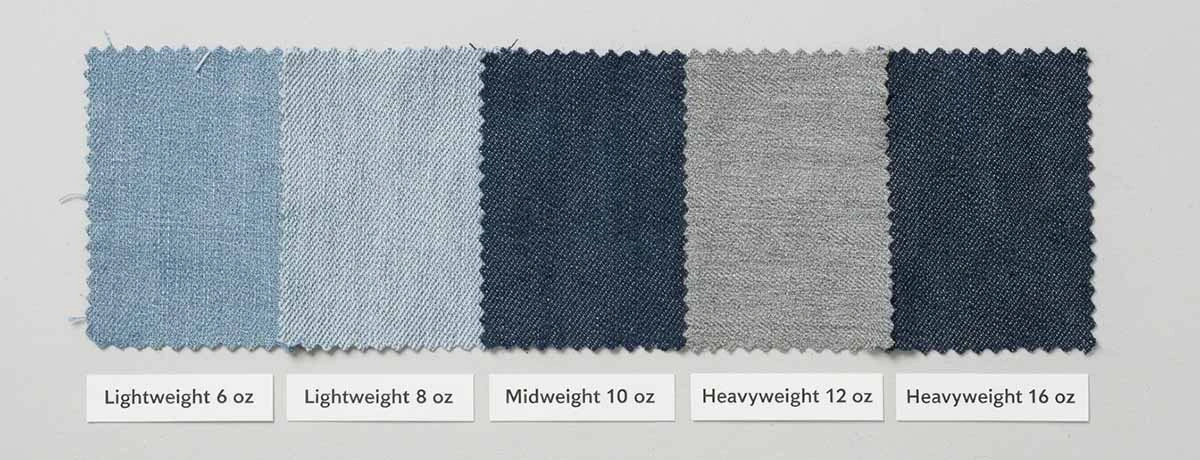
Weight Classifications
Lightweight Denim (8-12oz per square yard)
Lightweight denim serves applications in shirts, dresses, and summer apparel where comfort and drape take precedence over durability. These fabrics typically feature finer yarn counts and lower cover factors, resulting in softer hand feel and improved breathability.
Key specifications include:
-
Yarn counts: 10s to 14s (warp and weft)
-
Construction density: 70-85 ends per inch
-
Applications: Chambray shirts, summer dresses, lightweight jackets
Midweight Denim (12-16oz per square yard)
Midweight denim represents the mainstream commercial segment, encompassing standard jeans, casual jackets, and general apparel manufacturing. This weight category balances durability with comfort, making it suitable for the broadest range of applications.
Technical characteristics:
-
Yarn counts: 8s to 12s cotton
-
Construction density: 80-95 ends per inch
-
Applications: Five-pocket jeans, casual outerwear, fashion denim
Heavyweight Denim (16-21oz per square yard)
Heavyweight denim targets workwear, upholstery, and heavy-duty applications requiring maximum durability and abrasion resistance. These fabrics utilize coarser yarns and higher cover factors to achieve superior tensile strength.
Performance specifications:
-
Yarn counts: 6s to 10s cotton
-
Construction density: 90+ ends per inch
-
Applications: Work clothing, upholstery, industrial uses
Construction Variants
Selvedge Denim
Selvedge denim features shuttle loom production with self-finished edges, eliminating the need for overlocked seams. The narrower fabric width (typically 28-32 inches) and traditional manufacturing methods command premium pricing while appealing to heritage-conscious consumers.
Production characteristics include slower weaving speeds, specialized loom maintenance requirements, and limited daily output compared to projectile loom alternatives. However, the perceived authenticity and premium positioning often justify higher pricing structures.
Stretch Denim
Stretch denim incorporates elastane blends with specific recovery specifications for fitted garments. The elastane content affects both comfort and shape retention, requiring careful balance based on target applications.
Performance parameters:
-
1-2% elastane: Comfort stretch for relaxed fits
-
2-3% elastane: Moderate stretch for slim profiles
-
3%+ elastane: High stretch for athletic and skinny fits
Recovery specifications ensure garments return to original dimensions after stretching, preventing permanent deformation during wear.
Raw Denim
Raw denim (also called unwashed denim) reaches garment manufacturers without pre-washing treatments, allowing customized finishing processes. This untreated material provides maximum flexibility for achieving specific aesthetic effects through controlled shrinkage, fading, and surface treatments.
Raw denim requires specialized handling during cutting and sewing operations due to potential dimensional changes during initial washing cycles.
Bull Denim
Bull denim features uniform dyeing throughout both warp and weft yarns, creating solid color appearance without the ring-dyed fading characteristics of traditional indigo denim. This construction suits workwear applications where consistent color retention takes precedence over fashion aesthetics.
Typical applications include:
-
Industrial workwear and uniforms
-
Protective clothing requiring durability
-
Upholstery and heavy-duty accessories
Commercial Applications and Target Markets
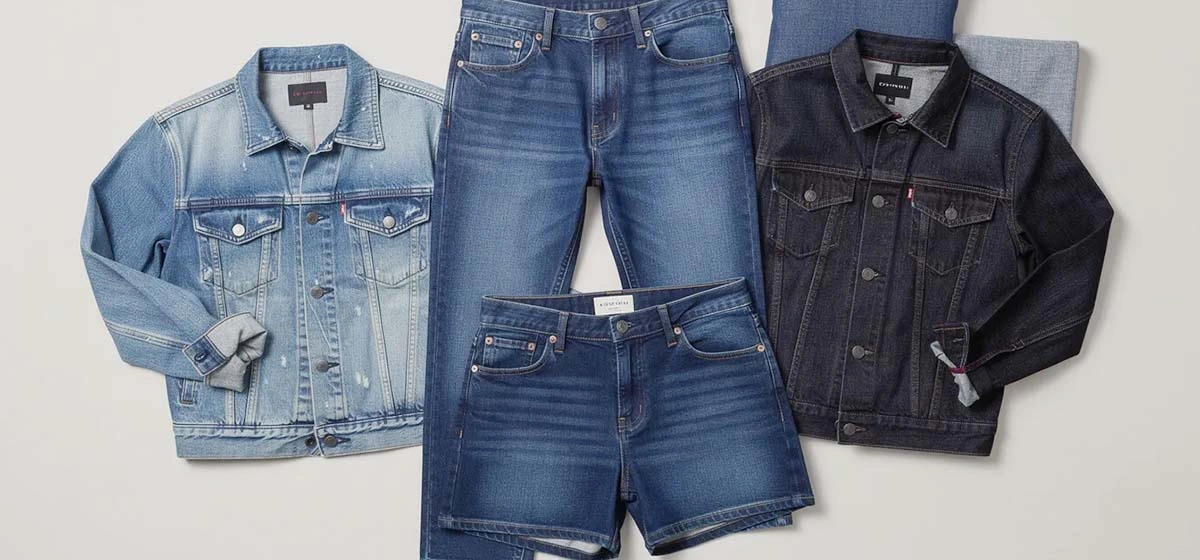
Apparel Manufacturing
Jeans and Casual Wear
The largest commercial segment utilizes midweight denim (12-16oz) with specific stretch and recovery characteristics for different fit profiles:
-
Skinny fits: 2-3% elastane for mobility and shape retention
-
Slim fits: 1-2% elastane balancing comfort with structure
-
Relaxed fits: 100% cotton or minimal stretch for traditional aesthetics
Weight specifications align with seasonal requirements and target demographics, with lighter weights favoring warm climates and younger consumers.
Outerwear Applications
Denim jeans manufacturers increasingly incorporate denim into structured garments requiring specific performance characteristics:
-
Jackets and vests: 12-16oz weights providing durability without excessive stiffness
-
Coats and heavy outerwear: 16-20oz weights for weather protection
-
Fashion blazers: 8-12oz lightweight constructions emphasizing drape and comfort
Construction specifications accommodate design requirements for pockets, seaming, and hardware attachment points.
Workwear Segment
Industrial and utility clothing demands heavyweight denim (16-21oz) optimized for durability and safety:
-
Enhanced abrasion resistance for high-wear applications
-
Reinforced stress points accommodating heavy use
-
Color options beyond traditional indigo for industry-specific requirements
Bull denim constructions provide consistent color retention essential for uniform applications and professional appearance standards.
Non-Apparel Applications
Upholstery and Furniture
Heavyweight denim serves residential and commercial upholstery applications requiring durability and aesthetic appeal:
|
Application |
Weight Range |
Key Requirements |
|---|---|---|
|
Residential seating |
14-18oz |
Comfort, colorfastness |
|
Commercial furniture |
16-20oz |
Abrasion resistance, cleanability |
|
Decorative applications |
10-16oz |
Drape, color variety |
Specialized finishing treatments enhance stain resistance and cleanability for upholstery applications.
Accessories Market
Denim fabric material extends into accessories requiring moderate durability with fashion appeal:
-
Handbags and luggage: 12-16oz weights balancing structure with weight considerations
-
Footwear applications: 8-12oz lightweight constructions for comfort
-
Fashion accessories: Variable weights based on specific design requirements
Color options expand beyond traditional indigo to accommodate diverse fashion requirements.
Home Textiles
Emerging applications in home textiles utilize denim’s durability and casual aesthetic:
-
Bedding and linens: 8-12oz lightweight constructions prioritizing comfort
-
Curtains and window treatments: 10-14oz weights providing appropriate drape
-
Decorative pillows and cushions: Variable weights supporting design requirements
Specialized finishing treatments may enhance softness and reduce initial stiffness for home textile applications.
Bulk Sourcing Considerations for B2B Buyers
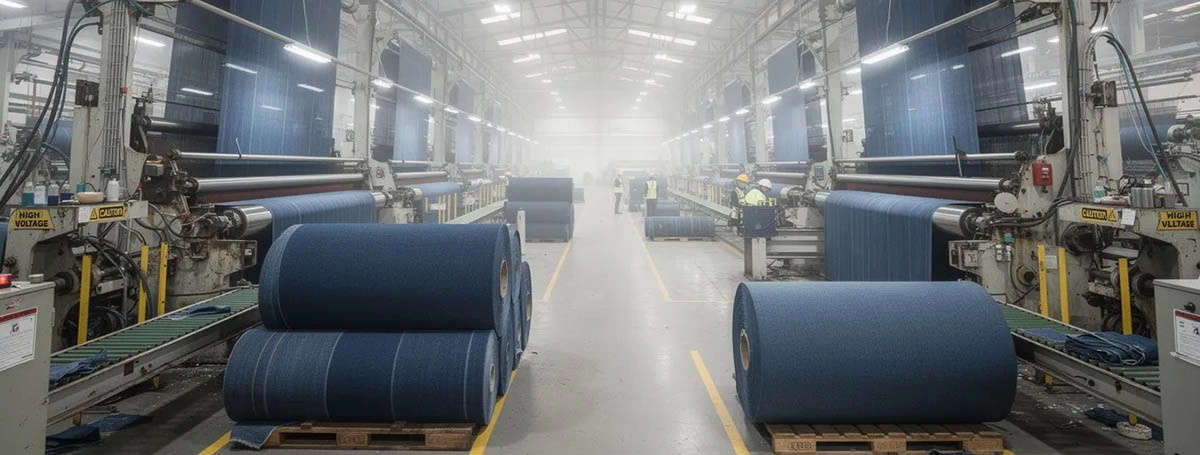
Minimum Order Quantities
Commercial denim production operates on economies of scale requiring substantial minimum orders to achieve competitive pricing:
Standard MOQ Ranges:
-
Basic constructions: 1,000-2,000 yards per colorway
-
Custom specifications: 3,000-5,000 yards minimum
-
Premium selvedge: 500-1,000 yards due to specialized production
MOQ requirements reflect setup costs, dye lot minimums, and production efficiency considerations. Larger orders typically achieve better unit pricing through improved manufacturing utilization.
Customization Options
B2B customers increasingly require customized solutions supporting brand differentiation:
Available Customizations:
-
Private label development with exclusive specifications
-
Custom colorways matching brand color standards
-
Weight modifications for specific applications
-
Special finishing treatments for enhanced performance
Customization capabilities support premium positioning while strengthening long-term customer relationships.
At MH, our expertise in denim fabric material manufacturing combines technical innovation with commercial reliability. Our comprehensive capabilities in cotton sourcing, specialized dyeing processes, advanced weaving technologies, and quality control systems position us as a trusted partner for apparel manufacturers and distributors seeking high-performance denim solutions.
Whether your requirements involve standard constructions for mainstream applications or customized specifications for specialized markets, our technical team provides the expertise and manufacturing capability to support your business objectives. From initial concept development through large-scale production delivery, MH delivers the consistency, quality, and service that B2B customers require in today’s competitive marketplace.
Contact our technical sales team to discuss your specific denim fabric material requirements and discover how our manufacturing capabilities can support your next project with reliable, high-quality solutions tailored to your exact specifications.