
Difference Between Polyester and Spandex for Professional Garment Manufacturing

Choosing between polyester and spandex-or more accurately, choosing how to combine them-is one of the most consequential decisions in garment manufacturing.
Key Takeaways
-
Polyester provides strength, dimensional stability, abrasion resistance, and moisture management, while spandex delivers high stretch (400–800% elongation) and elastic recovery. Together, they form the backbone of modern performance textiles. This functional separation is the foundation for every sourcing decision involving polyester spandex fabric.
-
Polyester and spandex fibers are almost never used alone in performance garments. Mills and factories combine them in polyester spandex blends, nylon spandex, or cotton spandex systems depending on end-use requirements and price positioning; an 85% polyester 15% spandex construction is especially common for stretch swimwear fabric where chlorine resistance and recovery are critical. Spandex is typically blended in small percentages with other fibers to enhance elasticity-commonly 5–25% of the total composition.
-
Polyester excels in durability, colorfastness, and cost efficiency in bulk orders. It resists chemical breakdown and holds color well across repeated wash cycles. Spandex is a costlier functional fiber used specifically to engineer fit, compression, and comfort in garments and elastic tapes.
-
MH supplies make-to-order (MTO) elastic textile solutions for global garment factories and brands. Every order is manufactured to client specifications-no ready stock. The focus is on reliable supply, technical consistency, and long-term cooperation.
-
Selecting the right fabric system should be based on application. Hot yoga, team sports, everyday wear, and intimates each demand different fiber combinations, and downstream finishing requirements (sublimation printing, garment washing, chlorine exposure) further narrow the optimal choice.
What Is the Core Difference Between Polyester and Spandex?
Polyester is a strong, semi-rigid synthetic fiber based on polyethylene terephthalate (PET). Think of it as the skeleton of the fabric-it provides structure, dimensional stability, and surface quality, reflecting its role in fabric construction. Spandex, also known as elastane, is a highly elastic polyurethane fiber that behaves like microscopic springs woven into the structure. Spandex is exceptionally elastic, designed for high stretch and recovery in garments, and it possesses multi-directional elasticity and recovery ideal for skin-tight apparel.
Polyester offers abrasion resistance, wrinkle resistance, and excellent color retention, while spandex offers 400–800% stretch and near-complete recovery but poor standalone strength. Polyester is also common in everyday clothing because it resists wrinkles, shrinking, and fading. Spandex is primarily used in tight-fitting garments like athletic wear and swimwear, always combined with a stronger carrier fiber. This is the functional separation that drives sourcing decisions:
-
Polyester = structure, durability, and print surface
-
Spandex = stretch, compression, and body-conforming fit
For B2B buyers, this plays out in practice constantly. An 88/12 polyester spandex legging relies on the polyester component to carry the sublimation print and resist pilling, while the 12% spandex provides the body-hugging fit across different body shapes. Compare that to a 90/10 cotton spandex basic T-shirt, where the cotton delivers softness and breathability associated with natural fibers, but the garment sacrifices quick-drying performance.
Key Performance Properties: Polyester vs Spandex
Large-scale garment programs depend on predictable performance across breaking strength, elongation, pilling, colorfastness, and dimensional stability. For example, a 93% polyester 7% spandex four-way stretch woven is often used in suit separates and uniforms that must balance comfort with a crisp appearance. Polyester and spandex contribute to these metrics in fundamentally different ways.
-
Polyester delivers high tensile strength (up to 8.8–9.1 g/denier in high-tenacity varieties), resists wrinkles, resists shrinkage, and provides high UV and chemical resistance, with moisture wicking abilities when engineered for apparel and gear applications. Polyester holds its shape well against environmental exposure. Polyester is significantly more resistant to chlorine degradation than most other synthetic fabrics.
-
Spandex delivers extreme stretch and elastic recovery through hundreds of wear-wash cycles, but it is sensitive to high heat (safe only up to ~150–200°C), chlorine, UV, and oils. Spandex also repels water well but depends on the blending fiber for moisture-wicking performance. Spandex degrades faster when exposed to body oils, chlorine, and heat, and is often blended with stronger fibers to protect it.
-
Polyester fabric maintains color and print quality after repeated industrial laundering. In swimwear and sportswear, matt 85% polyester 15% spandex swimsuit fabric leverages this print stability while providing comfortable stretch in and out of the water. Spandex has no meaningful color contribution but determines whether the garment keeps its fit or bags out.
-
Elastic fibers like spandex have a slightly lower stretch capacity when compared to pure rubber, but their recovery, lightweight profile, and compatibility with textile processing make them the industry standard.
Pure spandex is rarely exposed at the outer surface of a fabric. It sits wrapped or plated by polyester, nylon, or cotton fibers to protect it from abrasion, UV, and chemicals-especially in elastic tapes and waistbands. For high-stress zones such as waistbands, cuffs, and sports bras underbands, mills combine strong polyester filaments with spandex inside covered yarns. This engineering balances strength and spandex elasticity for industrial wash cycles while keeping the outer surface smooth and printable.
Polyester Spandex Blends in Modern Apparel
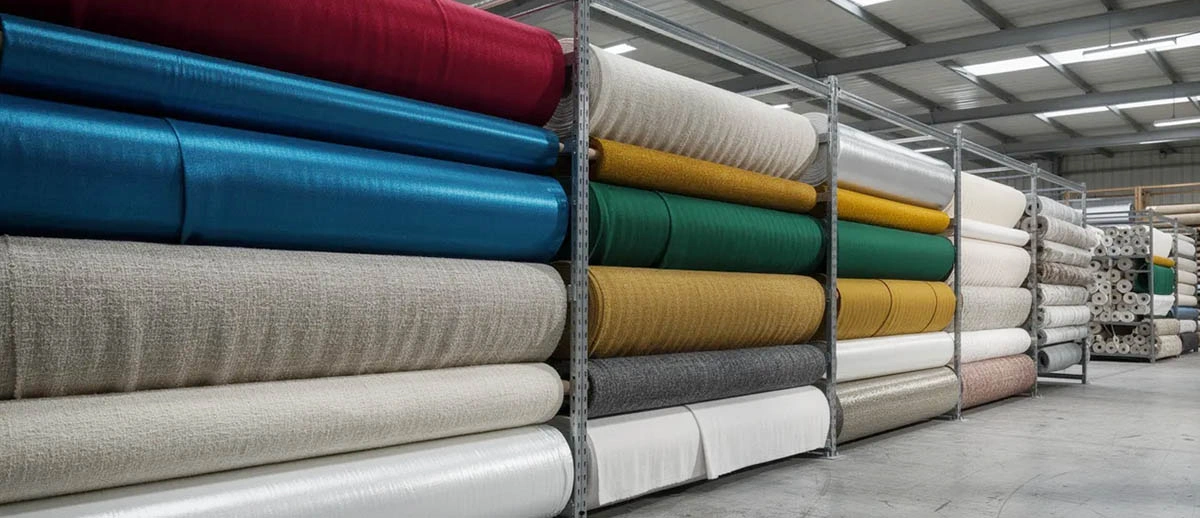
Polyester spandex blends are now the dominant choice for performance activewear, team uniforms, shapewear, and many elastic tape products. This blend works because each fiber contributes differently to the fabric construction, affecting stretch, durability, and end-use performance. Performance fabrics often blend polyester and spandex to combine durability and stretch, and blending polyester and spandex creates fabrics that balance durability with flexibility-which is exactly what makes polyester spandex stretch fabrics generally the workhorse of modern athletic apparel.
Typical construction ranges for professional buyers:
-
80–90% polyester / 10–20% spandex for yoga leggings, polyester leggings, and performance tights
-
90–95% polyester / 5–10% spandex for team jerseys, training tops, and T shirts
-
70–85% polyester / 15–30% spandex for compression garments, elastic tape, and high-power waistbands
What makes polyester spandex the default for so many programs? Polyester spandex excels in color retention and print vibrancy-sublimation printing bonds directly to polyester's surface, delivering vivid, wash-stable graphics. Polyester spandex holds color vibrancy better than nylon spandex, which matters enormously for branded teamwear and printed leggings. Polyester also provides excellent moisture wicking when engineered in microfiber constructions. The blend also supports athletic performance by allowing unrestricted movement while maintaining recovery. It handles repeated industrial laundering without significant degradation.
Applications in Garment Categories and Elastic Tape
Polyester and spandex play specific roles across the main apparel categories that B2B buyers handle: sportswear, underwear, shapewear, uniforms, kidswear, and accessories like elastic tape and waistbands. Polyester is used for outerwear, dress shirts, activewear, everyday clothing, and home furnishings beyond apparel, and in non-apparel it appears in coated polyester oxford fabrics for durable, water-resistant products, but in garment manufacturing the polyester-spandex pairing is where the volume lives.
Specific applications by blend:
-
Polyester spandex for performance leggings, team jerseys, training tops, everyday apparel, and printed high performance activewear that are typically assembled with polyester sewing threads engineered for apparel production
-
Nylon spandex for premium yoga pants, swimwear, shapewear, and sports bras where optimal stretch and recovery matter most, often complemented by lightweight chiffon fabrics for overlays, linings, and fashion details
-
Cotton spandex for T shirts, innerwear, loungewear, and kidswear for sensitive skin
-
Polyester-based elastic tape with spandex core for waistbands, cuffs, hem bands, and shoulder straps in garment accessories
In sportswear and everyday apparel, recycled polyester can be a sustainable alternative to virgin polyester, including in polyester-spandex programs, while yarn-dyed checked uniform fabrics remain a staple for school and workwear categories.
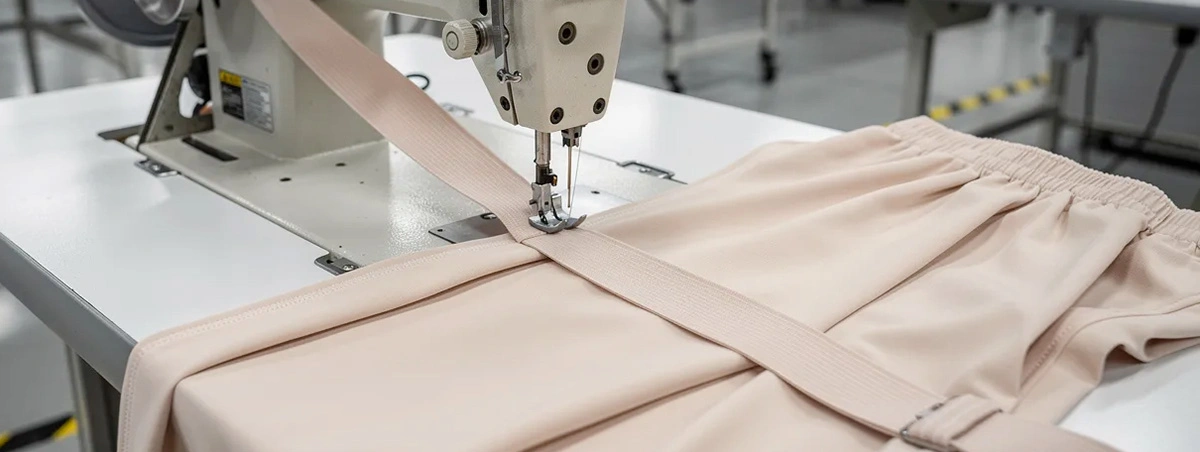
For elastic tape used as garment accessories, the polyester provides surface durability and print/color hold, while the spandex in the core delivers required elongation and recovery for waist, hem, and strap applications. Related solutions include waistband gripper tape and structured waistband linings that stabilize trousers and skirts while improving fit. The tape must survive sewing tension, heat from pressing, and dozens of industrial wash cycles without losing its stretch and recovery properties.
MH's capability includes engineering make-to-order elastic solutions-custom width, GSM, stretch percentage, power, color, and design-suited to automated sewing and high-speed garment lines, supported by in-house polyester embroidery thread production for branding and decorative stitching.
MH as Your Make-to-Order Polyester and Spandex Partner
MH is a professional B2B partner specializing in make-to-order textile solutions based on polyester, spandex, nylon, and cotton blends, with particular depth in elastic tape and related accessories for garments, backed by global MH garment accessories manufacturing operations.
MH does not keep ready stock. Every order is engineered according to client specifications-composition, width, GSM, stretch percentage, color, and finishing-to align with brand standards and factory machinery requirements.
Engage with MH at the development stage, before committing to bulk, for sampling, lab testing, and optimization of polyester and spandex configurations that match your product roadmap.


FAQs About Polyester and Spandex for B2B Buyers
What polyester/spandex ratio is best for leggings and yoga pants in mass production?
Widely used blends for yoga leggings and performance leggings range from 80–88% polyester and 12–20% spandex. This range balances four-way stretch, opacity, and cost. Higher spandex content (18–20%) supports more compression and a premium fit suitable for premium leggings and shapewear. A 10–12% spandex ratio is suitable for mainstream everyday apparel where moderate stretch is sufficient. The right ratio depends on target GSM, required compression force, and price positioning within your product portfolio.
How does spandex content affect sewing and production on factory lines?
Higher spandex content increases fabric elasticity. Elastic tapes must be engineered to maintain consistent elongation during high-speed automatic waistband attachment. If the spandex power is inconsistent, factories will see wavy seams, seam cracking, or distorted elastic application.
Which blend is better for garments exposed to chlorine, such as swimwear or poolside uniforms?
Polyester spandex is ideal for swimwear and poolside uniforms due to chlorine resistance. Polyester is significantly more resistant to chlorine degradation than nylon, and specialized chlorine-resistant spandex grades can further extend garment life; when laundering them, avoid chlorine bleach because it can damage elastic fibers. Wash in cold water, skip strong fabric softeners, and air dry or use low heat to help preserve spandex elasticity.
Can polyester and spandex-based elastic tapes be used in garments for sensitive skin?
Yes. When engineered with soft covering yarns (brushed or microfiber polyester wraps over the spandex core) and manufactured using certified dyes and chemicals, polyester/spandex elastic tapes can be suitable for sensitive-skin applications including intimates and children's garments, though they may still bother people with very sensitive skin. The spandex core remains fully enclosed, so skin contact is only with the outer covering fiber, but some buyers may still prefer cotton or other natural fibers because they can feel more breathable against the skin.
