
How Are Elastic Button Holes Used in Garment Manufacturing?
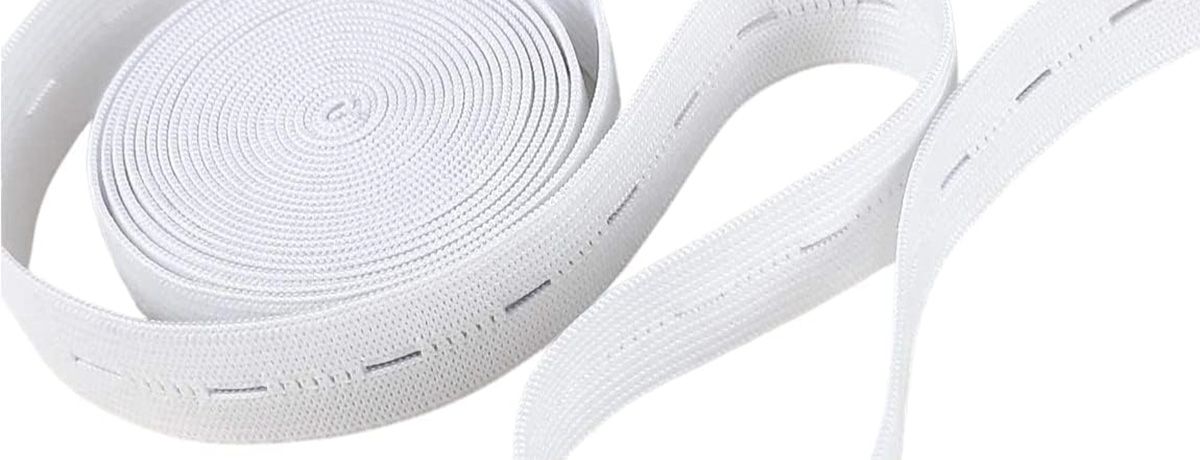
Buttonhole elastic provides adjustable fastening solutions for waistbands, cuffs, and closures across garment manufacturing applications. This specialized elastic features pre-formed or custom-cut holes at regular intervals, allowing buttons to secure through the openings for adjustable sizing. Buttonhole elastic is commonly used to customize the fit of various clothes, including pants and skirts, and can even be retrofitted into existing garments that are too large in the waist. MH supplies buttonhole elastic on a make-to-order basis to wholesalers, garment factories, and B2B buyers requiring bulk quantities for large-scale production.
Overview of Buttonhole Elastic
Buttonhole elastic is a woven or knit elastic band with evenly spaced holes designed to accommodate button fasteners. The holes are either factory-formed during manufacturing or can be cut and reinforced post-production. This elastic type differs from standard continuous elastic by offering multiple adjustment points rather than a fixed circumference.
Standard elastic provides consistent tension across its entire length and requires sewing into a closed loop. Buttonhole elastic, by contrast, remains open-ended with button-and-hole closures that allow wearers to select from several size options. This adjustability reduces returns and accommodates size variations in ready-to-wear garments.
Common applications include adjustable waistbands for kids' clothing, pants, skirts, children’s clothing, maternity wear, adaptive garments for elderly populations, and sportswear requiring flexible sizing. Uniform manufacturers also specify buttonhole elastic for cost-effective size accommodation across diverse body types.
Children's clothing, maternity wear, and adjustable garments are ideal uses for buttonhole elastic. The technique for making adjustable waistbands with buttonhole elastic can be applied to various types of garments, including shorts, pants, and skirts.
Sizes and Measurements
Buttonhole elastic is available in multiple widths to suit different garment applications. The most common width is 3/4 inch (approximately 19mm), suitable for standard waistband casings and medium-weight fabrics. Other standard widths include 1/2 inch, 5/8 inch, and 1 inch, selected based on garment type and fabric weight.
When specifying buttonhole elastic for production orders, calculate the required hole spacing by measuring the distance between button positions on the finished garment. Standard hole spacing ranges from 1 inch to 1.5 inches, with buttonholes spaced at regular intervals along the elastic. For precise placement, mark a straight line on the fabric to guide where each buttonhole and elastic feed will be positioned. Custom spacing can be manufactured to order.
For waistband applications, measure the minimum and maximum waist circumferences required, then add 4 to 6 inches for button overlap and seam allowances. This calculation ensures adequate adjustment range across the intended size spectrum. Buttonhole elastic can stretch to a long length, providing flexibility for adjustable waistbands and integrating smoothly with trouser waistband constructions. Each buttonhole measures about 1/4" and can stretch to roughly 3/4" long.
Buttonhole elastic is sold by the yard or in rolls and is often paired with polyester spandex stretch woven fabric for tailored trousers, skirts, and structured garments that still require ease and mobility.
Sewing Buttonhole Elastic into Waistbands
Mark casing placement on the garment interior, positioning the elastic channel to align with the natural waistline. To create an adjustable waistband, you need to sew buttonholes into the waistband casing to allow the elastic to feed through. Apply fusible interfacing behind each planned buttonhole location and ensure it adheres firmly to the fabric by following the manufacturer's instructions, reinforcing the fabric and preventing tearing during use.
Before sewing, make sure the waistband is turned wrong side out. Sew vertical buttonholes through the waistband casing at marked places using a buttonhole foot attachment. Use a high-performance spun polyester sewing thread to ensure clean, durable buttonholes. Each buttonhole should measure slightly larger than the button diameter to allow smooth passage without fabric strain.
Feed the elastic through the waistband casing by putting it in with a safety pin or bodkin, ensuring the elastic remains flat and untwisted. Mark points along the waistband where buttons will be attached, and position buttons at these places on the opposite end of the waistband, aligning each button with its corresponding hole.
Secure elastic ends with a reinforcing stitch, such as bar tack stitching or box stitching, at the anchor point to prevent pull-through during wear, using robust spun polyester sewing threads suitable for high-stress seams. Trim excess elastic, leaving approximately 1/2 inch beyond the final securing stitches.
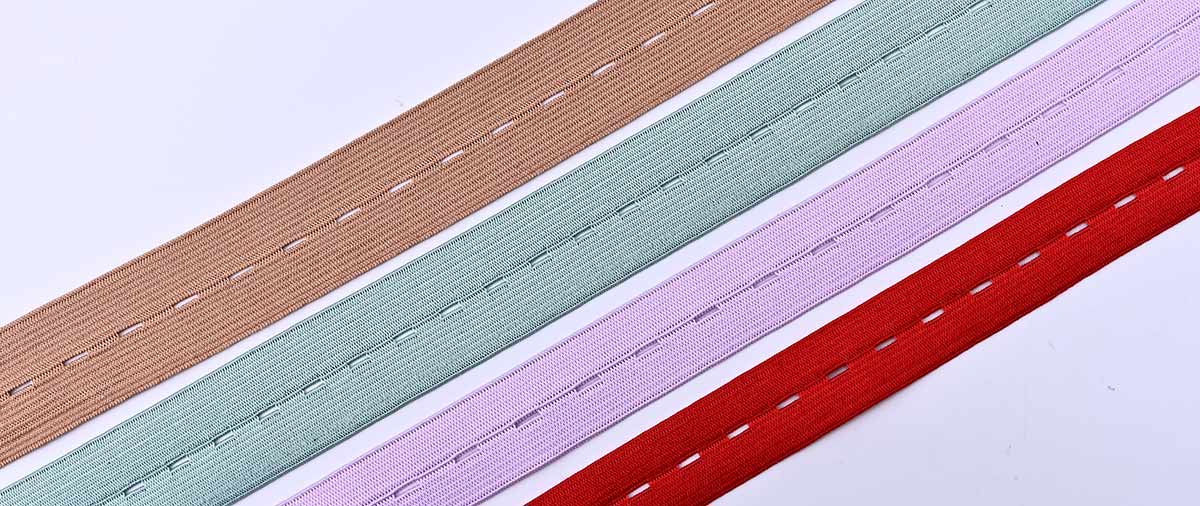
DIY Making Buttonhole Elastic
This tutorial will show you how to make buttonhole elastic for adjustable garments. This method will work for a variety of projects, including waistbands on shorts, pants, and skirts made from durable T/C 80/20 twill workwear fabric, providing versatility and ease of use.
For custom hole spacing or emergency repairs, select knit elastic with horizontal ribs that create natural cutting guides. Use sharp fabric scissors to cut a small slit between ribs—this allows for easy access to adjust the fit by moving the button or elastic to different positions, enabling size changes.
Note: Make the slit smaller than the desired final hole size, as the elastic will stretch with use.
Note: Avoid stitching full buttonholes in elastic, as this can weaken the elastic threads and reduce durability.
Reinforce each cut hole with hand bar tacks using matching thread. Position stitches around the hole perimeter without piercing the main elastic threads that provide stretch and recovery. This reinforcement prevents hole enlargement during button engagement and works well alongside custom zipper installations in garments that combine multiple adjustable closures.
Test each custom hole with the intended button before proceeding to additional cuts. Proper hole sizing allows the button to pass through with light resistance while maintaining secure closure.
Buying and Sourcing Buttonhole Elastic
MH operates as a make-to-order supplier for buttonhole elastic, manufacturing custom specifications based on bulk order requirements. Orders are produced to meet precise width, color, hole spacing, and material composition specifications without maintaining ready stock.
Pricing varies based on order volume, material composition, and customization requirements. Bulk orders benefit from volume pricing structures that reduce per-yard costs for large-scale production runs. Request detailed quotations that specify lead times, minimum order quantities, and shipping terms.
Verify material composition before finalizing purchase orders. Request material certifications for orders destined for regulated markets or applications requiring specific fiber content declarations. MH provides comprehensive material documentation to support compliance requirements.
Buttonhole elastic can also be used to gather specific areas of a garment and is ideal for creating "one size" clothing, making it a versatile choice for various applications such as uniform and workwear fabric programs that must fit a broad range of body types.
If you have any questions about sourcing or using buttonhole elastic, feel free to reach out for more information or assistance.
Product Comparison: 3/4-Inch Buttonhole Elastic Options
|
Specification |
Knit Polyester |
Woven Cotton-Poly Blend |
Braided Elastic |
|---|---|---|---|
|
Width |
3/4 inch (19mm) |
3/4 inch (19mm) |
3/4 inch (19mm) |
|
Stretch Recovery |
Excellent |
Good |
Very Good |
|
Durability |
High |
Medium-High |
Medium |
|
Recommended Use |
Activewear, uniforms |
Casual garments |
Children's wear |
|
Bulk Pricing |
Competitive for 10,000+ yards |
Standard for 5,000+ yards |
Economy option |
Roll quantities typically begin at 1,000 yards for standard specifications, while custom color matching or hole spacing may require increased minimum order quantities. Per-yard pricing decreases significantly at volume thresholds above 5,000 yards, which aligns well with bulk purchasing of wholesale chiffon fabric for fashion garments.
Partner with MH for Reliable Supply
MH delivers buttonhole elastic solutions backed by integrated manufacturing capabilities and extensive global export experience, supported by complementary bag and luggage accessories for garment-related product lines. Our make-to-order production model ensures specifications align precisely with garment manufacturing requirements while maintaining competitive pricing for bulk procurement. Contact MH to discuss your buttonhole elastic requirements and receive customized quotations for your next production run.