
How Do B2B Buyers Source Elastic in Clothing Production?
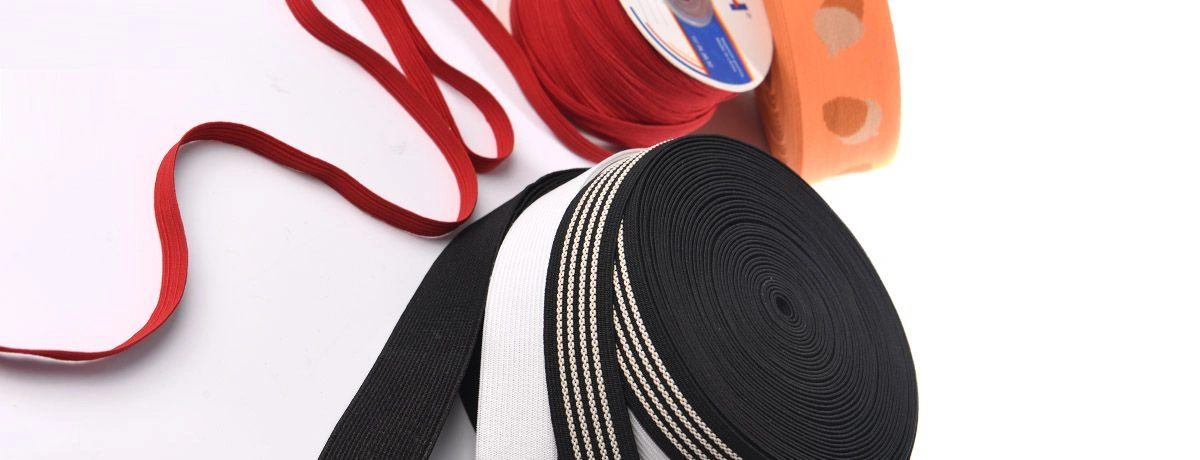
Elastic provides recoverable stretch in garments, serving as a critical component in commercial apparel manufacturing. Typically made from rubber, spandex, or polyurethane cores wrapped with textile covers, elastic determines the fit, comfort, and longevity of finished garments. Selecting the correct construction method directly impacts behavior under stretch, sewing tolerance, and overall garment quality on the production line.
For professional buyers, wholesalers, and garment factory owners, securing reliable, high-volume sourcing is essential for maintaining operational efficiency. Choosing the wrong type of elastic can lead to manufacturing delays, needle breakage, or premature garment failure. Understanding the precise industrial applications of different elastic types allows production managers to optimize their assembly processes. The evolution of elastic has transformed the design and comfort of modern clothes, making elastic a key innovation in the fashion industry. Additionally, elastic sourcing supports small businesses and entrepreneurs in the clothing industry by providing access to affordable, high-quality elastic supplies tailored to their needs.
MH operates as a leading B2B integrated manufacturing and trading textile company, specializing in Make-to-Order (MTO) production. We do not keep ready stock; instead, we manufacture tailoring materials to meet exact industrial specifications. This guide outlines the major construction methods and applications of elastic in clothing to help wholesalers and manufacturers optimize their procurement and achieve their business goals.


Major Construction Methods Overview
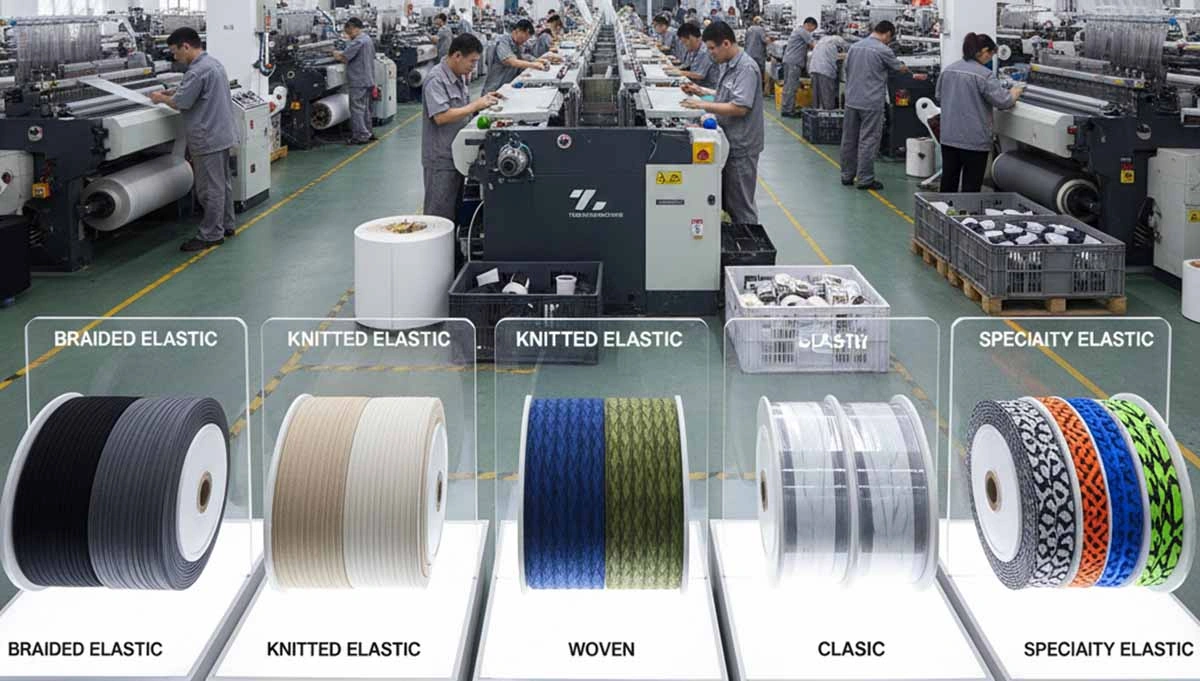
The fundamental construction method determines how an elastic behaves on the sewing machine and on the final garment. Elastic in clothing comes in various forms, such as braided, knitted, woven, and transparent, each affecting elasticity, durability, and use cases. Braided, knit, and woven constructions produce distinct behaviors regarding width-change, pierce tolerance, and roll resistance. Transparent polyurethane elastics behave differently from covered elastics, stretching much further with specific durability characteristics. Additionally, the combination of different fibers or structures in elastic materials can be tailored to achieve specific qualities like stretchability and durability.
Braided Elastic
Distinct parallel ribs along the length indicate a braided construction and a textured surface. Braided elastic narrows as it stretches, significantly reducing its width under tension.
Stitching or piercing braided elastic commonly reduces its recovery and overall resiliency. When pierced by a sewing needle, braided elastic can lose its stretch and reusability, as the needle may sever the inner elastomer cores. Because of this, typical commercial uses include encased waistbands, sleeve casings, leg bands, and hems, where the elastic is not sewn directly to the fabric. Braided elastic is especially suitable for finishing edges like hems. It is a highly cost-effective and versatile option for garments requiring simple casing channels, and it comes in various widths, usually available in black or white.
Knit Elastic (Knitted Elastic)
Knit or knitted elastic features a smooth face and remains the exact same width when stretched. This structural stability makes it highly versatile for large-scale garment manufacturing.
Piercing knitted elastic generally does not impair its ability to return to its original length. Sewing operators can stitch directly through the material without destroying its recovery properties. Knit elastic can be attached directly to garments without losing its stretch or recovery, making proper attachment essential for maintaining its function. Knit elastics are lightweight and highly suitable for lightweight to medium-weight fabrics, as well as garments worn directly next to the skin.
Woven Elastic (No-Roll Elastic)
Woven or “no-roll” elastic shows both horizontal and vertical ribs that resemble small rectangles. Woven elastic maintains its width when stretched and heavily resists rolling or folding under physical stress.
Because it is firmer and thicker than other variants, woven elastic provides unparalleled performance and durability for heavy fabrics. Garment factories prefer this type for tailored trousers, heavy outerwear, and fitted waistbands that require maximum structural integrity, often pairing it with specialized trousers waistband materials and gripper waistbands for a stable finish.
Specialty Elastic
Specialty elastic covers variants derived from base constructions, optimized for highly specific manufacturing uses like lingerie, swimwear, decorative trim, and transparent stabilization. There are various styles of specialty elastics, such as plush-backed, lace, and decorative elastics, each tailored for specific uses to achieve desired comfort, durability, or visual appeal. Manufacturers engineer many specialty elastics for precise properties such as chlorine resistance, plush backing, or foldability, and pair them with high-strength polyester sewing thread for bulk production to ensure seam durability. These specialty elastics can also be used to create gathers, decorative finishes, or unique garment features in modern apparel design.
Fold Over Elastic
Fold over elastic (FOE) features a central ridge allowing it to be folded neatly in half along its length, creating a neat edge finish. FOE serves as a highly efficient binding for raw edges, necklines, and lingerie where a clean, finished edge is mandatory. Fold-over elastic is commonly used to finish raw edges on garments and is especially popular for lingerie and bodysuits. Fold-over elastic is usually knitted-based, offering softness against the skin and the ability to sew directly onto garments without casing.
Clear Elastic
Clear elastic is usually made from polyurethane and can stretch three to four times its length with excellent recovery. Clear elastic becomes narrower as it stretches but typically maintains its resiliency when sewn. Garment manufacturers utilize clear elastic for stabilizing shoulder seams, creating discreet gathers, and reinforcing necklines on knit fabrics without adding bulk or visible color contrast.
Lingerie Elastics
Lingerie elastics are often knitted and designed exclusively for direct skin contact, prioritizing softness and low irritation. These elastics are specifically engineered for providing comfort, ensuring a secure hold without causing irritation to the skin. Soft elastics provide a secure hold without causing irritation, improving comfort compared to hard closures. Industrial variants include plush-backed, picot-edge, and micro-elastic trims tailored for brassieres, underwear, and babywear. Lingerie elastics come in narrow widths and specialized finishes to prevent digging or visible lines under garments, meeting strict consumer quality expectations.
Swim Elastic
Swim-specific elastic is chemically formulated to resist chlorine and saltwater degradation compared with standard apparel elastics. Many swim elastics rely on a braided base and therefore narrow when stretched, requiring encasement or careful sewing techniques during assembly. Fiber composition—such as coated rubber cores combined with polyester, nylon, or cotton covers—directly differentiates the longevity and performance of commercial swim elastics, especially when paired with polyester spandex stretch woven fabrics used in modern swim and activewear. Cotton, valued for its natural qualities and versatility, is sometimes blended into swim elastic to enhance comfort and washability, though it may affect stretch retention over time. Notably, in 1908, a Frenchman named Paul Dubois patented a 'striated elastic band' made of rubber threads woven into a cotton or silk fabric, marking an early innovation in elastic fiber combinations for clothing.
Choosing the Right Elastic
Matching elastic width and stretch percentage to fabric weight and intended garment silhouette ensures proper fit and recovery. Pattern instructions often dictate the type and width of elastic to be used in different parts of a garment, so it's important to follow these guidelines for optimal results. Elastic allows garments to contour to different body shapes and sizes, accommodating weight fluctuations and providing a customized, form-fitting feel without rigid closures. It also enhances comfort by replacing restrictive traditional fasteners, allowing freedom of movement. Factory owners and procurement managers must align their material selection with their specific machinery and production methods, as using the wrong type of elastic can cause it to lose its stretch or the waistband to roll and twist during wear.
For direct sewing to fabric, choose knitted elastics to prevent structural damage to the stretch core. For encased applications, braided elastic provides an acceptable and economical solution for bulk manufacturing. Use no-roll woven elastic where preventing band roll is critical, such as fitted waistbands or trouser tops. Select chlorine-resistant or coated elastics for swimwear and moisture-exposed garments to extend lifespan and maintain industrial quality standards.
Typical Applications by Elastic Type
To streamline your procurement process, refer to these standard industrial applications for each major elastic category:
Elastic is widely used in waistbands, cuffs, hems, sleeve casings, necklines, shoulder seams, bra straps, lingerie, swimwear, underwear, and maternity wear. Elastic straps are essential in bras, lingerie, and swimwear, providing support, shape, and stretch, with different widths tailored for specific garments. Sewing elastics are available in a range of widths, from 1/4 inch to 3 inches and beyond, to suit various needs, and are frequently paired with wholesale chiffon fabric for dresses and linings in fashion production. There are also different styles of elastic, such as plush-backed, lace, and decorative elastics, designed for comfort, durability, and aesthetic appeal in modern apparel, and they are commonly combined with custom clothing zippers for reliable garment closures. John Howard Company is a major supplier of elastics and elastic webbing products, offering a wonderful selection in various colors and strengths.
-
Braided elastic: Encased waistbands, cuffs, and leg bands where elasticity without direct sewing is acceptable.
-
Knit/knitted elastic: Lingerie, underwear, and sewn-in waistbands where softness and pierce tolerance are required.
-
Woven (no-roll): Heavy outerwear waistbands, upholstery, and applications needing structural stability.
-
Fold over elastic: Edge finishing on knits, decorative bindings, and babywear trims.
-
Clear elastic: Discreet stabilization and gathering on knit garments without visible contrast.
Optimizing Your Manufacturing Supply Chain
The construction method determines the sewing tolerance, width-change behavior, and best-use scenarios for elastic in clothing. Choosing the correct elastic by application—prioritizing knitted for comfort, woven for structure, and specialty variants for specific environments—ensures optimal garment quality and streamlined factory operations, just as selecting the right bag and luggage accessories for wholesale manufacturing is critical for durable soft-goods production.
MH understands the rigorous demands of bulk procurement and large-scale apparel production. As a Make-to-Order (MTO) supplier, we manufacture elastic to meet exact client specifications, ensuring consistent industrial quality rather than relying on varied ready stock. Our robust supply chain reliability, massive production capacity, and global export expertise empower factories worldwide. We possess a particularly strong export presence across Latin America, delivering dependable textile solutions to major manufacturing hubs.
Partnering with MH guarantees access to top-tier tailoring materials engineered for the demands of modern garment manufacturing. We invite professional B2B buyers and wholesalers to explore our custom manufacturing capabilities and secure a reliable supply chain for all industrial elastic requirements.
