
Elastic Material and Its Impact Across Industries
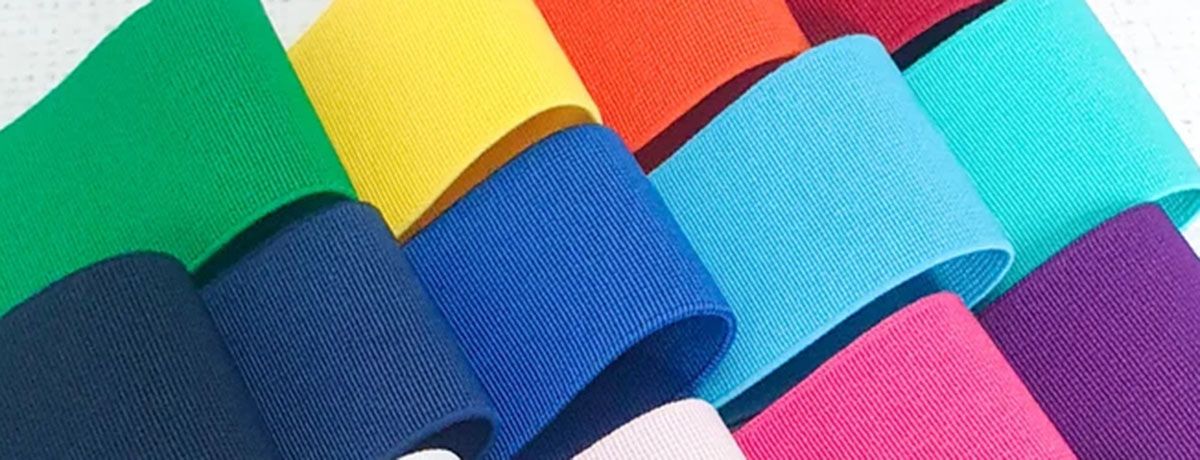
Elastic material is any textile or component that stretches under load and returns to its original shape when the load is released.
That usually means two product groups you should not mix up: stretch fabrics (woven or knitted cloth with spandex content) and elastic trims (woven, knitted, or braided elastic tape and bands).
Getting that distinction right helps you specify stretch and recovery correctly for fit, comfort, and repeatable production, and avoid common sourcing mistakes across orders.
Key Takeaways
- “Elastic material” splits into two buy categories: stretch fabric (spandex-blended cloth) and elastic trim (tape, band, binding).
- Stretch comes from an elastomeric fiber (spandex/Lycra®, or rubber in some tapes); the base fiber (cotton, polyester, nylon) sets hand and cost.
- Buyers specify by spandex %, elongation %, recovery, width/denier, weave type, and MOQ, not just “elastic”.
- 2-way vs 4-way stretch and woven vs knitted vs braided elastic decide the end use.
What Does "Elastic Material" and Its Material Properties Mean for a Buyer?
For a purchasing team, elastic material is defined by function, not chemistry: it must stretch on demand and recover without going baggy. That behavior comes from an elastomeric component: in fabrics and tapes, the elastic behavior usually starts with a polymer base, while in rubber-like materials it is tied to stretched polymer chains that help the material recover, and large-scale suppliers like Ningbo MH for garment accessories and tailoring materials engineer these properties across many product lines.
The base fiber decides softness, breathability, and price; the elastomer decides how far the material stretches and how well it snaps back. In technical terms, that behavior is described by the stress-strain relation, where stress is force per unit area measured over a surface or cross section, and the standard SI unit used in this measurement is the pascal (Pa). Young's modulus is a measure of a material's resistance to elastic deformation and helps buyers compare elastic properties.
Stretch Fabric vs Elastic Trim: Which Do You Actually Need?
The single most common sourcing error is ordering "elastic" without saying whether you mean cloth or trim. They serve different roles on the same garment: a stretch fabric forms the body panel, while an elastic trim controls a waistband, cuff, or edge; for close-fitting garments this usually means choosing a 4-way stretch knit fabric that can move with the body. In simple models, Hooke's law says force is proportional to deformation, or to the change in length within the elastic range.
| Stretch fabric | Elastic trim (tape/band) | |
|---|---|---|
| What it is | Woven or knitted cloth with spandex blended in | Narrow woven/knitted/braided band with elastic core |
| Stretch source | Spandex fiber in the yarn (2–10%+) | Rubber or spandex core threads |
| Sold by | Meter/kg, by width and GSM | Meter/roll, by width (mm) and elongation |
| Typical use | Leggings, activewear, swimwear body panels | Waistbands, cuffs, bra straps, edge binding |
| MH examples | TR suiting, TC twill blends | Y-fold binding elastic, picot lingerie elastic |
If a customer says "I need elastic for a waistband," they mean trim. If they say "I need 4-way stretch for leggings," they mean fabric. Confirming this before quoting avoids the most frequent re-order we see.
What Are the Main Types of Elastic Material and Their Elastic Modulus?
Elastic materials divide by where the stretch comes from. For sourcing, the practical split is natural elastomers (rubber-based) versus synthetic elastomers such as spandex, polyurethane, silicone, and synthetic rubber, because the two differ in stretch, aging, and cost.
Manufacturers use a combination of these elastomers with other fibers or components to achieve different stretch and recovery targets. Common examples include rubber, spandex, silicone, and even metals like steel, but their elastic modulus values differ greatly.
These materials also appear in automotive, aerospace, consumer goods, construction, and medical applications, and in apparel they are commonly formulated into polyester spandex stretch swimsuit fabric that combines high recovery with durability and comfort.
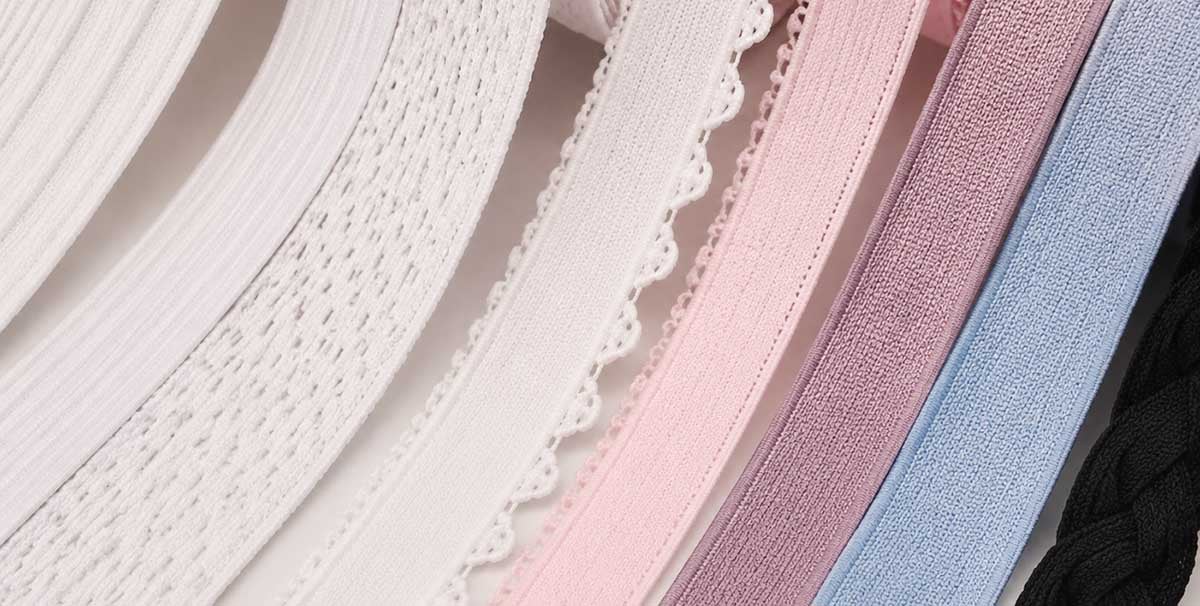
| Elastic type | Stretch source | Hand & performance | Common B2B uses | Relative cost |
|---|---|---|---|---|
| Natural rubber | Latex threads | High stretch, strong recovery, ages/yellows over time | Waistband elastics, budget bands | Low |
| Spandex / Lycra® blends | Elastomeric fiber (2–10%+) | Consistent 4-way stretch, chlorine/heat options | Activewear, swimwear, shapewear | Mid |
| Polyurethane (PU) elastomers | PU film/coating | Flexible, robust, waterproof-friendly | Coatings, bonded seams, tapes | Mid |
| Silicone elastomers | Silicone | Biocompatible, grippy | Medical bands, non-slip trims | High |
| Cotton/spandex blends | Spandex in cotton yarn | Soft, breathable, moderate stretch | Comfort apparel, breathable fabric | Low–Mid |
Elastomer-based object designs are often modeled as hyperelastic materials, and the same approach is used for biological materials such as soft tissues.
In advanced mechanics, the stress-deformation relationship takes a specific form, geometry can affect material behavior, and analysis often extends to three dimensions.
2-Way vs 4-Way Stretch: What's the Difference?
The short answer: 2-way stretch materials bend and extend mainly along one axis (usually weft/crosswise), while 4-way stretch materials can be stretched in both directions and still recover toward their initial shape. Four-way stretch needs spandex in both the warp and weft, so it costs more but is required for close-fit garments. In material terms, stiffness is commonly described with Young's modulus, and when comparing strain the material’s original size or dimensions provide the reference point; lower values generally mean less force is needed to deform the fabric than with rigid materials.
| 2-way stretch | 4-way stretch | |
|---|---|---|
| Stretch axes | One direction | Both directions |
| Spandex placement | One yarn direction | Both directions |
| Typical use | Basic apparel, linings | Leggings, swimwear, compression |
| Relative cost | Lower | Higher |
For activewear and shapewear, always confirm 4-way; a typical construction might be a 93% polyester 7% spandex four-way stretch woven fabric that balances structure with elastic recovery. For a relaxed-fit top or a lining, 2-way is often enough and saves cost.
Where Is Elastic Material Used?
Elastic material appears in daily life across apparel, medical products, home textiles, and many applications where controlled recovery improves comfort and fit, though every elastic material has an elastic limit beyond which it cannot return to its original shape. For a sourcing buyer, the useful point is that a single supplier relationship can cover fabric and trim for the same garment.
Brittle materials resist deformation but may fracture under excess stress instead of recovering.
-
Apparel & activewear — spandex-blend fabrics for leggings, sportswear, and shapewear, often using 100% polyester Dri-Fit fabric with moisture management for breathability and quick-drying performance.
-
Intimates — soft picot and lingerie elastics for bras, briefs, and edges.
-
Medical & compression — bands and tapes whose ability to apply steady, measured pressure while returning to shape makes them useful, similar in behavior to polyester spandex woven 4-way stretch Maserati fabric used in performance garments.
-
Home textiles — elastic corners on fitted sheets and slipcovers.
-
Consumer goods & structure — stretch suiting fabric, TC 65/35 twill fabric for durable uniforms, and fusible interlinings that add give without losing shape.
Sourcing Elastic Material from MH (Supplier Overview)
For B2B buyers evaluating an elastic supplier, the facts that matter are scale and consistency, because production methods and finishing operations affect consistency and end-use performance. That footprint is what lets a buyer consolidate stretch fabric, elastic tape, thread, zippers, and trims under one supplier instead of managing a dozen, even when sourcing workwear staples like T/C 80/20 twill fabric for uniforms.
For garment manufacturers, importers, and intimates or activewear brands, working with a supplier at this scale means:
-
Consistent lots — spandex-blend fabrics and elastics woven to repeatable width, stretch, and recovery across reorders, from basic knits to polyester Super Poly Sportock fabric for sportswear.
-
One-stop materials — pair stretch fabric with matching elastic tape, thread, and trims from the same source, including coated options like 600D*600D PU coated waterproof Oxford fabric and nonwoven components like ES hot-air cotton.
-
Custom specs — spandex %, base fiber, elongation/recovery, width, and finish specified to your production needs; suppliers may also define the polymer system and finishing used to produce the target hand, stretch, and recovery, with MOQ discussed up front, whether you are sourcing waistband elastics or trousers waistbands and interlining waist tapes.
-
Performance finishing — finish options can also include abrasion resistance for harder-wearing performance uses.
If you’re comparing elastic quotes, ask any supplier for the spandex content, base fiber, elongation and recovery, width/denier, construction, finish, MOQ, and lead time in writing. MH’s team quotes against those same variables so you can compare like-for-like.
Browse the binding elastic range →


Frequently Asked Questions
Is spandex the same as elastic? Not exactly. Spandex (elastane/Lycra®) is the elastomeric fiber that provides stretch. "Elastic" is the broader term for any material or trim that stretches and recovers. Most modern elastic fabrics and tapes use spandex as the stretch fiber, though some tapes still use natural rubber cores.
What is the difference between elastic fabric and elastic tape? Elastic fabric is woven or knitted cloth with spandex blended in, sold by width and GSM for garment body panels and can range from sturdy stretch wovens to fluid wholesale chiffon fabric for dresses and linings. Elastic tape (or band) is a narrow trim with an elastic core, sold by width in mm and elongation, used for waistbands, cuffs, and edge binding, including specialized sewing waistband gripper tape and waistband linings.
What does 4-way stretch mean? Four-way stretch means the fabric stretches and recovers in both the lengthwise and crosswise directions, because spandex runs in both yarn directions. In the ordinary sense of elasticity, it can change shape when force is applied and then return to its original form after the load is removed. It's required for close-fit garments like leggings and swimwear. Two-way stretch pulls in only one direction and costs less.
