
What Is Fabric Dyeing and How Does It Impact Textile Quality in Bulk Production?
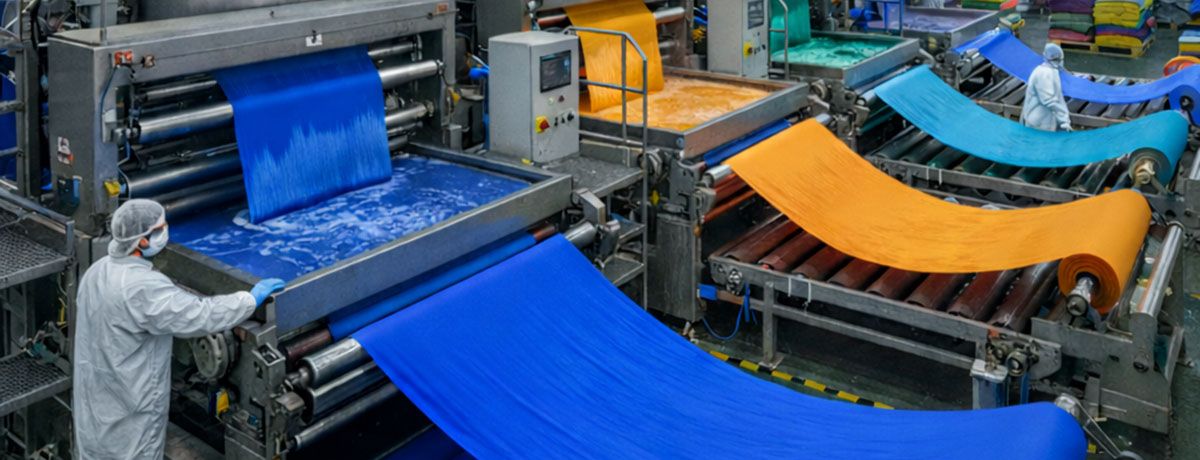
Introduction to Fabric Dyeing in Textile Manufacturing
Fabric dyeing is the industrial process used to add color to fibers, yarns, and fabrics across apparel, home textiles, and technical textile applications. In mill-level production, this controlled process transforms raw or greige materials into commercially viable products that meet specific color standards, fastness requirements, and performance expectations.
This article is written for B2B buyers—wholesalers, garment manufacturers, and importers—who source dyed fabrics in bulk. Whether you’re ordering T-shirt jerseys, workwear twills, bed linen, or curtain fabrics, understanding how the dyeing process works helps you make informed sourcing decisions and avoid costly quality issues.
Stable, repeatable color is critical when running large programs or multi-season orders. A single shade variation between shipments can result in product rejections, customer claims, and lost repeat business. MH operates as a professional wholesale supplier focused on bulk fabrics and garment materials, emphasizing consistent quality across repeated orders and long-term supply cooperation.
Key questions this article will answer:
-
How does the dyeing method affect colorfastness and shade stability?
-
What should buyers check in lab dips and bulk production approvals?
-
What impacts lead time, MOQ, and long-term reproducibility?
-
How do dye classes relate to fiber types and end-use performance?
What Is Fabric Dyeing? (Industrial Perspective)
Fabric dyeing is the controlled application and fixation of dyes or pigments on textile substrates—whether fiber, yarn, fabric, or finished garment—conducted under mill conditions with automated, recipe-controlled systems.
Four main stages where dyeing can occur:
|
Stage |
Description |
Example Products |
|---|---|---|
|
Fiber/Stock Dyeing |
Color applied to raw fibers before spinning |
Dyed polyester staple for nonwovens |
|
Yarn Dyeing |
Yarns colored before weaving/knitting |
Yarn-dyed shirting, flannel checks |
|
Piece Dyeing |
Full fabric rolls dyed after formation |
Jersey T-shirts, fleece, bed sheeting |
|
Garment Dyeing |
Finished garments dyed after sewing |
Pigment-dyed tees, washed chinos |
Industrial mills use two primary approaches: exhaust dyeing (fabric circulates through a dye bath in a dye vessel) and continuous dyeing (fabric passes through application and fixation stations in a linear process). Exhaust methods offer flexibility for smaller batches, while continuous methods deliver superior consistency for high-volume single-color runs.
Large mills typically operate automated systems with dosing equipment, data logging, and spectrophotometric measurement to minimize shade variation between lots. The fiber type—cotton, polyester, viscose, or blends—fundamentally determines which dye classes and process conditions are required.
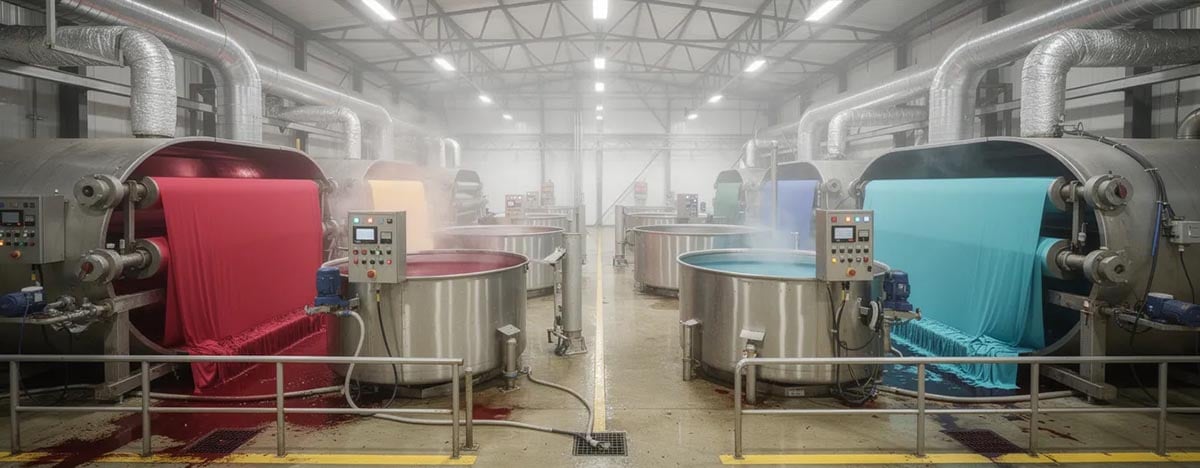
Common Industrial Dyeing Methods and Their Applications
Different industrial dyeing methods are selected based on fiber composition, product type, production volume, and required colorfastness. Understanding the method helps buyers anticipate lead time, MOQ, shade stability, and performance in end use.
This section covers the major methods you’ll encounter on technical sheets: piece dyeing, yarn dyeing, solution dyeing, and garment dyeing.
Piece Dyeing (Fabric Dyeing After Weaving/Knitting)
Piece dyeing means coloring full-width fabric rolls after they are woven or knitted. This is the most common approach for basics like jersey, fleece, poplin, twill, and lining fabrics.
Exhaust methods include jet dyeing (fabric driven through liquor via high-velocity nozzles), overflow dyeing, and winch dyeing. Continuous methods include pad-steam, pad-dry-cure, and cold-pad-batch systems. Exhaust methods work well for medium batches; continuous methods suit high-volume production with tighter shade control.
Typical use cases:
-
Solid-colored T-shirt fabrics and sweatshirts
-
Chinos and casual pants
-
Bed sheeting and plain-dyed fashion fabrics
Sourcing implications:
-
MOQs typically 500–2,000 meters per color
-
Lead time 2–4 weeks for approved recipes
-
Good for flexible color assortments with relatively fast changeovers
-
Batch-to-batch variation manageable with proper QC and controlled recipes
When working with piece-dyed fabrics, consistent recipes and controlled liquor ratios keep shade tolerances within commercial grading standards.
Yarn Dyeing for Patterns and Stripes
Yarn dyeing colors yarns before fabric formation, typically via package dyeing (yarns wound on perforated cylinders) or hank dyeing in industrial settings. This method is essential when color pattern is built into the weave structure.
Common products:
-
Yarn-dyed shirting with checks and stripes
-
Oxford cloth and flannel checks
-
Jacquards and knitted stripes
-
Elastic tapes and webbings
Sourcing impact:
-
Lead times of 8–12 weeks (yarn must be dyed, dried, then woven/knitted)
-
Higher MOQs per color combination (typically 2,000–5,000+ meters)
-
More complex shade control across warp and weft yarns
-
Requires earlier seasonal color commitment (10–14 weeks advance)
Buyers working with yarn-dyed programs should lock in color palettes early and expect to work in the same dye pot approach for consistent warp-weft matching.
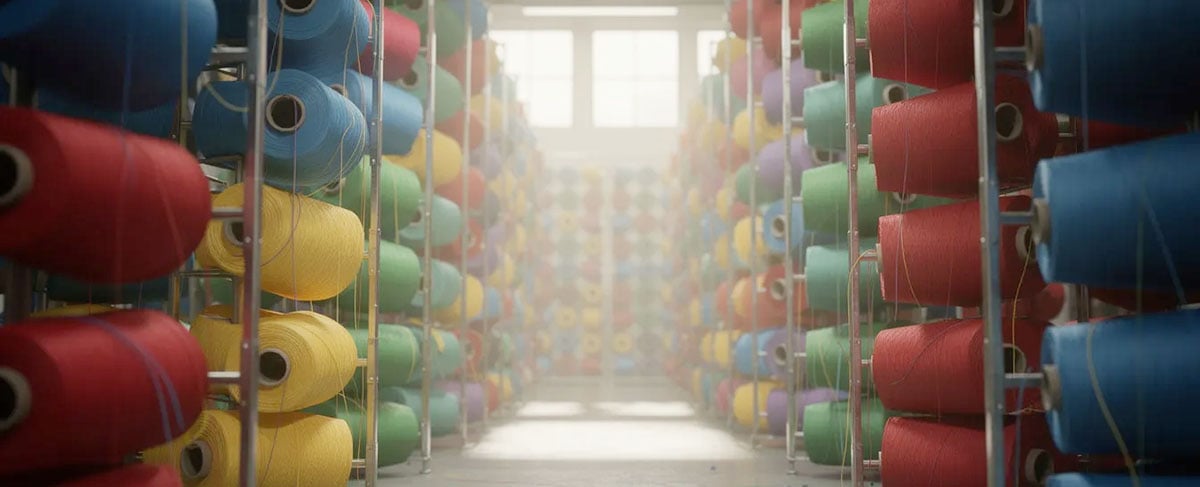
Solution Dyeing (Dope Dyeing) for High Colorfastness
Solution dyeing adds pigment to the polymer melt before extruding synthetic filaments, embedding color throughout the fiber cross-section. This creates permanent coloration that cannot wash out or fade significantly.
Common applications:
-
Outdoor furnishings and awnings
-
Automotive textiles
-
Workwear with high lightfastness requirements
-
Polyester upholstery for hospitality
Performance advantages:
-
Excellent lightfastness (ISO grades 6–8)
-
Chlorine resistance
-
Very low shade variation between lots
-
Minimal water consumption compared to exhaust dyeing
Sourcing effects:
-
Higher initial MOQs (5,000–15,000+ kg of fiber)
-
Limited color palette from spinners
-
Lead times of 12–16 weeks for custom colors
-
Extremely stable long-term supply once color is registered
Solution-dyed yarns are particularly valuable for brands building long-running core color programs where re-order stability is critical.
Garment Dyeing for Fashion Flexibility
Garment dyeing colors fully made garments—T-shirts, sweatshirts, chinos—instead of fabric. This approach creates the casual, vintage, or laundered appearance popular in fashion basics.
Examples:
-
Pigment-dyed T-shirts with soft, washed hand
-
Garment-dyed chinos with varied seam shading
-
Small-batch fashion capsules
Sourcing considerations:
-
Allows late-stage color decisions and smaller color quantities
-
Introduces more shade variation between individual pieces
-
Requires dye-compatible sewing threads, labels, zippers, and trims
-
Less suitable for strict corporate color matching
-
Acceptable where a muted colors or washed look is part of brand identity
Garment dyeing offers endless possibilities for fashion-forward collections but creates challenges for programs requiring consistent color across all pieces.
Key Dye Classes Used in Bulk Fabric Production
Buyers need to know which dye classes are typically used for their main fibers and what that means for performance. Mills choose dye classes balancing cost, colorfastness, and process conditions.
Reactive Dyes for Cellulosic Fibers
Reactive dyes form covalent bonds with cellulose fibers like cotton, modal, viscose, and linen, providing good overall colorfastness and bright shades. They are the industry standard for natural fibers like cotton in piece dyeing.
Typical uses: T-shirts, jerseys, bed linens, casual shirts, kidswear
Performance characteristics to confirm:
-
Washing fastness (ISO Grade 4–5 at 40–60°C)
-
Perspiration fastness
-
Chlorine resistance (if required)
Buyers should specify targeted fastness grades in technical specs, particularly for export markets using ISO or AATCC test methods.
Disperse Dyes for Polyester and Synthetic Blends
Disperse dyes are the main dye class for hydrophobic fibers such as polyester and acetate. The dye solution requires elevated temperatures (130°C in HT dyeing) for proper dye absorption into the fiber.
Examples: Sportswear, polyester linings, flags, brushed fleece, performance T-shirts
Key considerations:
-
Colorfastness to sublimation and heat pressing
-
Migration resistance during heat setting
-
For poly-cotton blends, mills use two-step processes (disperse then reactive) or one-bath systems
Buyers should verify that selected polyester fabrics meet fastness requirements for ironing, heat transfer printing, and garment pressing.
Vat and Sulfur Dyes for Heavy-Duty Cotton
Vat dyes (including indigo) and sulfur dyes serve heavy-duty applications where wash and lightfastness are critical. These dye types deliver exceptional durability for industrial textiles.
Product examples:
-
Denim (indigo-dyed warp)
-
Workwear twills and canvas
-
Industrial uniforms for construction and logistics
Vat dyes give excellent washing fastness (ISO Grade 5) and good lightfastness. Sulfur dyes achieve darker colors like blacks and navies at cost effective pricing but require proper afterwashing.
Buyers seeking uniform fabrics or industrial laundering performance should confirm whether vat or sulfur dyes are used and review lab reports for repeated wash cycles.
Direct and Other Dyes for Economical Applications
Direct dyes offer lower cost but also lower wet fastness compared with reactive or vat dyes. They may be acceptable for fashion items with short lifecycles or fabrics not subject to frequent washing.
When direct dyes might apply:
-
Trend-driven fashion basics
-
Interlinings
-
Items cleaned with mild detergent or occasional dry cleaning
Pigment dyeing—common in garment dyeing—creates a film on the fabric surface rather than penetrating the fiber. This produces soft hand and more muted colors but lower wash fastness.
Buyers should align dye selection with actual use conditions rather than choosing solely on initial color appearance. If very low prices are quoted for bright cotton fabrics, confirm the dye class to understand potential color bleeding.
Buyer Considerations When Sourcing Dyed Fabrics in Bulk
Selecting fabric involves more than construction and weight. The dyeing route and process capability of the mill strongly influence long-term supply reliability.
Aligning Fabric, Dye System, and End Use
Begin with end-use requirements and work backward to choose suitable fiber and dye systems.
|
End Use |
Fiber |
Dye System |
|---|---|---|
|
Everyday T-shirts |
Cotton jersey |
Reactive dyes |
|
Sportswear |
Polyester |
Disperse dyes |
|
Industrial workwear |
Cotton twill |
Vat or sulfur dyes |
|
Outdoor furnishings |
Solution-dyed polyester |
Embedded pigment |
Match expected washing conditions with the fastness level offered by the dye system. Communicate market destination and typical consumer care practices clearly—these vary by region and impact performance expectations.
Quality Control, Testing, and Documentation
Systematic QC includes lab dips for color approval, bulk swatches from first production rolls, and standardized test reports.
Key documents to request:
-
Dyeing process description (dye class, method)
-
Internal quality standards
-
Third-party test reports (fastness, dimensional stability)
-
Certificates for restricted substances (OEKO-TEX Standard 100)
Establish clear acceptance criteria for shade (visual and instrumental), defects per 100 meters, and fastness grades before bulk production starts. Keep records of approved standards so later shipments can be evaluated consistently.
The Role of Dyeing in Stable Long-Term Supply
For B2B buyers, the real challenge is not first delivery but maintaining consistent shade and performance across multiple seasons and reorder cycles. Dyeing is central to this stability because color is what consumers notice first.
Recipe Management and Batch-to-Batch Control
Industrial mills save detailed dyeing recipes—dye ratios, auxiliaries, process curves—for each approved shade. Controlled parameters including temperature profile, pH, and dyeing time are kept within narrow tolerances.
Questions to ask suppliers:
-
How are recipe libraries managed?
-
Who can modify recipes and how are changes documented?
-
What happens when auxiliaries must be substituted?
For critical colors, periodic re-checks (annually) against original standards help prevent drift over time. Resources like a dye journal or documented process histories from the dye company support long-term reproducibility.
Managing Color Programs Across Multiple Products and Sites
Many brands use the same color standard across multiple fabric types—a corporate navy on polyester suits, cotton shirts, and blended polos. Different fibers require different dye classes, making perfect matching technically challenging.
Recommendations:
-
Consolidate products at mills that can manage multi-fiber color matching
-
Share physical color standards and digital color data across production sites
-
Define “acceptable variation” differently for close-to-body garments versus outerwear
-
Use cold water or cool water rinse tests to verify colorfastness before approving
When production splits across different factories, shared standards become critical to avoid visible differences on store shelves.
Risk Management: Substitutions, Raw Material Changes, and Seasonality
Common risks affecting dyeing consistency include changes in fiber suppliers, yarn spinning parameters, dye brand availability, or environmental regulations.
Mitigation strategies:
-
Request notification when mills switch dye ranges or auxiliaries
-
Understand that seasonality (humidity, temperature) impacts process stability
-
Maintain approved base qualities and shades to reduce constant re-development
-
Avoid assuming other dyes will produce identical results without testing
Strong communication between buyer and mill—sharing forecasts, product roadmaps, and technical requirements—matters as much as the dyeing equipment itself.
Whether working with protein fibers like wool and silk, or fibers like cotton and linen, or synthetic materials like polyester and nylon, the principles remain consistent: specify requirements clearly, document approvals thoroughly, and build partnerships that support stable supply through various stages of your business growth.
Buyers who invest in understanding how to dye fabric at industrial scale—and the step by step instructions mills follow—position themselves for reliable, long-term supply cooperation that serves both sewing projects and large-scale manufacturing programs alike.