
What Are the Best Fabrics for Drapery and Curtain Window Treatments?
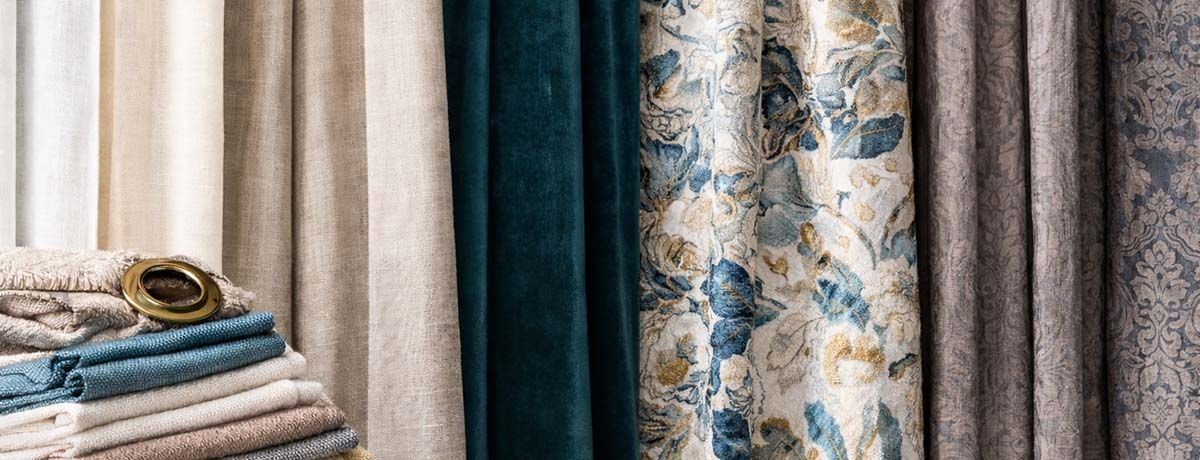
Choosing the right fabrics for drapery is one of the most important decisions for interior decoration and textile sourcing. Drapery fabrics not only define the style and texture of curtains, but they also affect light control, privacy, durability, and overall window treatment performance. The choice of fabric matters for both the look and function of curtains, drapes, and other window treatments.
For fabric wholesalers, curtain manufacturers, interior designers, and project contractors, understanding different types of curtain fabrics helps ensure the right material is selected for each project. When you select a fabric, consider the intended purpose and the specific requirements of the space.
From luxurious velvet and damask drapery fabrics to lightweight sheer materials and functional blackout fabrics, the global curtain fabric market offers thousands of options available by the yard or in bulk wholesale supply. Buyers can select from a wide range of patterns, including traditional options like toile, as well as floral, stripe, check, and paisley.
This guide explores the most popular drapery fabrics, their patterns, textures, and applications, helping buyers find the perfect fabric for curtains, drapes, and decorative window treatments. The best fabrics for drapery include cotton, linen, silk, velvet, and polyester.
What Are Drapery Fabrics?
Drapery fabrics refer to textile materials used to produce curtains and drapes that cover windows as part of interior decoration. These fabrics are selected based on several important characteristics:
-
Weight and drape quality
-
Light filtering ability
-
Texture and patterns
-
Durability and maintenance
-
Interior design style
Unlike upholstery fabrics used for furniture, curtain fabrics are designed to hang smoothly and create elegant folds.
Many drapery fabrics are also used for decorative purposes, including pillows, wall panels, and room dividers, making them versatile materials for interior design projects.
Blackout Curtain Fabrics for Window Treatments
One of the most demanded materials in the curtain industry is blackout curtain fabric. These fabrics are designed to block sunlight and improve comfort in residential and commercial spaces.
Blackout fabrics are commonly used in:
-
Hotels
-
Bedrooms
-
Apartments
-
Office buildings
-
Hospitality projects
Popular types of blackout drapery fabrics include:
3-Pass Blackout Fabric
A multi-layer fabric construction that blocks 90–100% of light while maintaining good drape quality.
4-Pass Blackout Fabric
A heavier fabric designed for stronger insulation and improved thermal performance.
Coated Blackout Curtain Fabric
A fabric with a blackout coating applied to the back side for effective light blocking.
Dimout Fabric
Allows some light to pass through while still reducing brightness significantly.
These fabrics are widely used in large interior projects and hotel installations where light control matters.
Heavy Drapery Fabrics: Velvet, Chenille and Luxury Materials
For decorative interiors, heavy drapery fabrics provide a luxurious and elegant appearance. These materials are thicker and create dramatic folds when used for curtains and drapes. Velvet, in particular, is thick and heavy, making it great for insulation and noise reduction, and it offers a cozy look, especially when you choose Holland velvet fabric for luxurious upholstery and curtains. Heavy fabrics like velvet can also add a pop of luxury or color to a room, making them a striking focal point in your interior design.
Some of the most popular heavy drapery fabrics include:
Velvet Drapery Fabric
Velvet is one of the most iconic materials used for curtains. Its rich texture reflects light beautifully and creates depth in interior spaces.
Velvet curtains are commonly used in:
-
Luxury homes
-
Theaters
-
Hotels
-
Formal living rooms
Chenille Fabric
Chenille fabrics have a soft, plush texture and excellent drape performance. They are widely used in both curtain fabrics and upholstery applications.
Suede and Velour Fabrics
These fabrics provide a soft surface similar to velvet but often come with improved durability, and stretch blends such as 93% polyester 7% spandex woven fabric can be used for coordinated decorative elements like tailored pelmets or accessories.
Heavy drapery fabrics are especially popular in European, Middle Eastern, and luxury residential markets.
Jacquard and Damask Drapery Fabrics with Decorative Patterns
For interiors that require decorative patterns and textures, jacquard and damask drapery fabrics are widely used.
Unlike printed fabrics, jacquard fabrics are woven using specialized weaving machines that create patterns directly within the fabric structure.
Common jacquard curtain fabrics include:
-
Damask drapery fabric
-
Floral pattern fabrics
-
Geometric designs
-
Paisley prints
-
Medallion patterns
-
Waverly-inspired designs
-
Stripe and abstract patterns
-
Toile patterns
Jacquard fabrics feature complex woven patterns that add visual interest and a formal feel to spaces, and certain polyester base cloths such as Katrina fabric suitable for uniforms and curtains can also be adapted for structured drapery projects. You can find a wide selection of patterned curtain fabrics, including floral, paisley, toile, stripe, check, and solid color designs.
These decorative fabrics are often used in:
-
Formal interior projects
-
Hotel curtains
-
Luxury apartments
-
Decorative room treatments
The woven patterns ensure durability and long-lasting design quality.
Linen Look Drapery Fabrics: Modern Interior Trend
In recent years, linen-look drapery fabrics have become a major trend in modern home decoration.
These fabrics imitate the natural appearance of linen but are often made from polyester or blended fibers, offering better durability and easier care.
Key advantages include:
-
Natural texture
-
Lightweight drape
-
Minimalist style
-
Easy maintenance
Linen-look fabrics are particularly popular in Scandinavian and modern interior designs where neutral colors and simple patterns dominate.
They are widely used for living room curtains and light window treatments.
Cotton and Printed Curtain Fabrics
Cotton curtain fabrics are valued for their natural feel and breathable structure, while lightweight synthetics like chiffon fabric for fashion and event decoration are often used for layered window treatments, swags, and decorative sheers. While not as heavy as velvet or chenille, cotton fabrics are excellent for decorative drapery applications.
Popular cotton drapery fabrics include:
-
Printed cotton fabric
-
Cotton canvas
-
Cotton twill fabric
-
Floral curtain prints
-
Tropical patterns
These fabrics are commonly used in:
-
Casual home interiors
-
Children's rooms
-
Decorative curtains
-
Light drapes
Cotton fabrics are often sold by the yard, making them suitable for both small home projects and large fabric orders.
Sheer Drapery Fabrics for Light Filtering
Sheer fabrics are lightweight materials used to filter natural light while maintaining privacy.
Common sheer curtain fabrics include lightweight polyester options such as Mini Matt fabric for home textiles, which can be used where a bit more body and durability are needed alongside translucency:
-
Voile fabric
-
Organza fabric
-
Mesh curtain fabric
-
Embroidered sheer fabrics
Sheer curtains are typically layered with heavier drapes to create a complete window treatment system.
These fabrics allow sunlight to enter the room while softening the brightness, creating a warm and comfortable interior atmosphere.
Functional Drapery Fabrics for Commercial Projects
In commercial environments, functional curtain fabrics are increasingly important.
Examples include functional drapery fabrics as well as coordinated curtain accessories such as rods, rings, and hardware:
Flame Retardant Curtain Fabric
In some commercial spaces, durable technical textiles like Oxford fabric with PU or PVC coating are also specified for accessories, linings, or adjacent soft furnishings that must meet similar safety standards.
Used in hotels, hospitals, and public buildings to meet safety regulations.
Thermal Insulation Fabric
Helps maintain room temperature and reduce energy consumption.
UV Protection Curtain Fabric
Protects interior furniture and decorations from sunlight damage.
Soundproof Drapery Fabric
Reduces noise levels in conference rooms, theaters, and offices.
These fabrics are widely used in large construction and interior design projects, often alongside coordinated upholstery fabric for sofas and furniture to create a consistent look and performance across the space.
How to Choose the Right Curtain Fabric
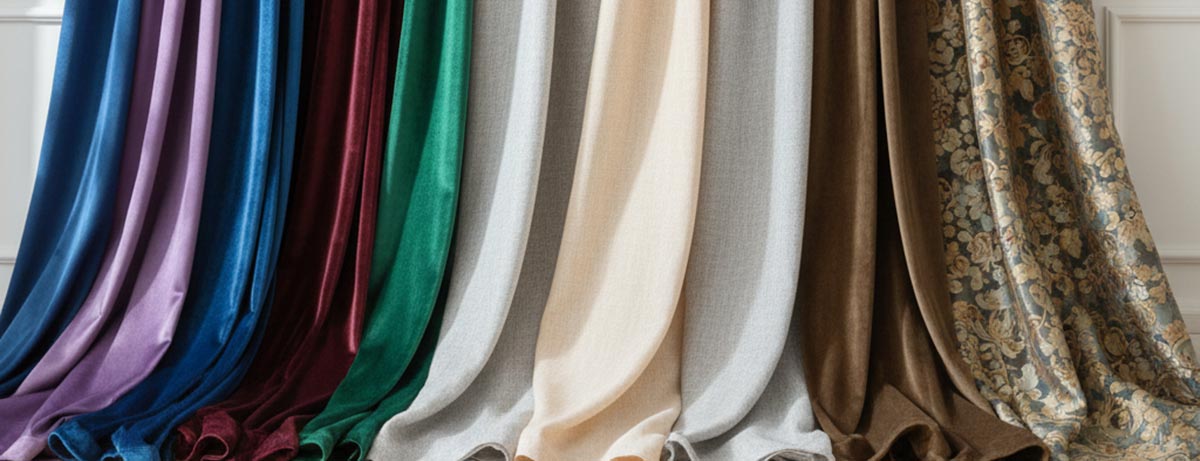
Selecting the perfect drapery fabric depends on several important factors. When updating window treatments, choosing the right fabric can transform both the look and function of a room.
Fabric Weight
Heavier fabrics provide better light blocking and insulation, while lighter fabrics create a softer appearance.
Texture and Patterns
Decorative patterns such as floral, paisley, geometric, and stripe designs can enhance the style of a room.
Light Control
Blackout fabrics are ideal for bedrooms and hotels, while sheer fabrics are suitable for living rooms.
Market Demand
Different markets prefer different materials. For example:
-
Velvet and chenille are popular in luxury interiors.
-
Linen-look fabrics dominate modern European designs.
-
Blackout fabrics are essential for hospitality projects.
Understanding these factors helps buyers choose fabrics that meet both functional and aesthetic requirements.
Why Choose MH as Your Drapery Fabric Supplier
Ningbo MH is a global supplier specializing in textile materials and garment accessories, serving customers in more than 150 countries worldwide.
Since its establishment in 1999, MH has built a strong supply network with more than 2,000 partner factories, ensuring stable production capacity and competitive pricing.
MH provides a wide range of drapery fabrics including:
-
Blackout curtain fabrics
-
Velvet drapery fabrics
-
Jacquard and damask fabrics
-
Linen-look curtain fabrics
-
Sheer curtain fabrics
-
Decorative upholstery fabrics
With decades of export experience, MH supports fabric wholesalers, curtain manufacturers, and project buyers by offering reliable quality, consistent stock availability, and flexible purchasing options, and also supplies complementary materials like high-quality embroidery thread in extensive color ranges for detailed curtain embellishments.
Whether buyers need fabric by the yard or bulk wholesale orders, MH provides efficient supply solutions for global curtain and interior decoration markets, including fashion-forward materials such as Paradise satin fabric for evening and bridal wear that can coordinate with drapery in event venues and hospitality spaces.


Conclusion
Drapery fabrics are essential materials for creating beautiful and functional window treatments. From luxurious velvet curtains to lightweight sheer fabrics and modern linen-look materials, the variety of curtain fabrics available today allows designers and buyers to create unique interior styles.
For fabric wholesalers, curtain manufacturers, and project contractors, understanding the different types of fabrics for drapery helps ensure the right material is selected for each application.
By partnering with experienced suppliers like MH, businesses can access high-quality drapery fabrics, stable supply chains, and professional support for curtain and textile projects around the world.
