
What Is Fusible Interfacing Double Sided and How Is It Used in Industrial Garment Manufacturing?

In modern garment manufacturing, achieving consistent quality and efficient production requires the right interlining solutions. As global demand for structured apparel continues growing, factories need reliable technical textiles that streamline production while maintaining superior performance. Double-sided fusible interfacing represents a critical advancement in industrial textile technology, offering manufacturers enhanced bonding capabilities and improved production efficiency.
MH, with over two decades of experience serving garment manufacturers across 150+ countries, specializes in supplying high-quality fusible interfacing double sided solutions for industrial applications. Our comprehensive product range addresses the evolving needs of modern apparel production, from precision shirting to heavy-duty workwear applications.
This technical guide provides factory managers, procurement specialists, and production engineers with essential knowledge for selecting, specifying, and implementing double-sided fusible interfacing systems in industrial garment manufacturing operations.
What is Double-Sided Fusible Interfacing
Double-sided fusible interfacing is an industrial textile substrate featuring thermoplastic adhesive coatings on both surfaces, designed specifically for bonding two fabric layers simultaneously during the fusing process. Unlike traditional single-sided interfacing that bonds to only one fabric layer, this advanced material creates a three-layer laminated structure that enhances dimensional stability and structural performance. In single-sided interfacing, only one side is coated with adhesive, while the other side remains non-fusible, helping users identify the correct application method.
The core construction consists of a base substrate - whether nonwoven, woven, or knitted - with precisely applied adhesive coatings on each face. When subjected to controlled heat, pressure, and time in industrial fusing equipment, these adhesive layers activate simultaneously, creating permanent bonds with both the outer garment fabric and inner facing or lining materials. For smaller-scale or sample production, a standard iron can be used to activate the adhesive layers and bond the fabrics together.
Key functional differences distinguish double-sided systems from standard interfacing:
-
Dual bonding capability: Forms simultaneous adhesive connections with two separate fabric layers
-
Structural reinforcement: Provides enhanced stiffness and shape retention compared to single-sided applications
-
Production efficiency: Eliminates multiple fusing steps by bonding all layers in one pass
-
Dimensional stability: Locks fabric layers together, preventing shifting during garment construction and use
Primary industrial applications include waistband construction, collar assembly, cuff reinforcement, and technical textile laminations where precise layer control and consistent performance are essential. The material serves as both a bonding agent and structural reinforcement, making it invaluable for high-volume production environments requiring reproducible results.
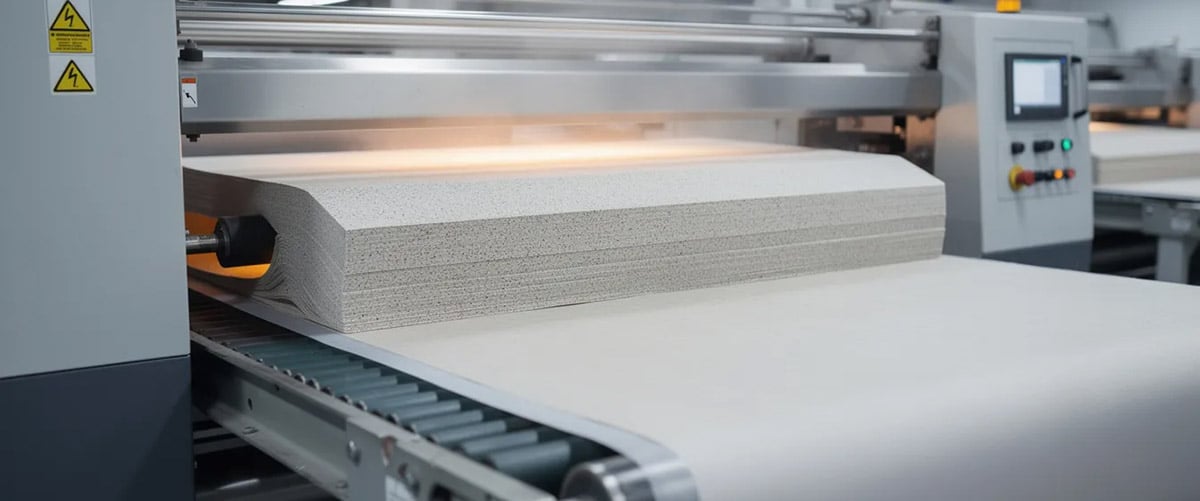
Factory verification processes must confirm proper adhesion on both surfaces before proceeding with bulk production. This dual-bonding characteristic requires careful attention to fusing parameters, as insufficient heat or pressure can result in incomplete bonding on either surface, leading to delamination issues during garment use.
Material Options and GSM Specifications
Industrial fusible interfacing double sided products require precise GSM specifications matched to specific end-use requirements. MH’s comprehensive product range accommodates applications from lightweight fashion garments to heavy-duty workwear constructions.
Non-woven Polyester Base Systems
Standard GSM ranges from 25-100 GSM accommodate diverse application requirements:
-
25-40 GSM: Lightweight dress shirts, blouses, and delicate fabrics requiring minimal stiffness addition
-
45-65 GSM: General-purpose applications including casual shirts, light jackets, and standard garment facings
-
70-100 GSM: Heavy-duty applications such as waistbands, belts, structured outerwear, and workwear reinforcements
Standard widths of 90cm, 112cm, and 150cm align with common fabric widths and cutting efficiency requirements. Custom width slitting capabilities enable optimization for specific pattern layouts and material utilization.
The nonwoven construction provides consistent cross-directional properties essential for automated cutting and handling systems. Chemical bonding ensures dimensional stability under fusing temperatures, preventing shrinkage that could cause garment distortion.
Woven Cotton Substrates
Cotton-based systems ranging 40-80 GSM offer premium performance for natural fiber compatibility and enhanced drape characteristics. These substrates excel in applications where the final garment requires natural fiber content or specific tactile properties.
Woven construction provides controlled stretch and recovery properties, particularly beneficial in structured garments requiring shape retention over extended wear periods. The yarn orientation enables predictable behavior under stress, reducing the risk of permanent deformation in critical areas.
Plain weave constructions dominate industrial applications due to balanced warp and fill properties, while specialized weave patterns accommodate specific performance requirements in premium garment categories.
Tricot Knit Bases
Stretch-compatible substrates ranging 30-60 GSM address the growing demand for performance apparel and activewear applications. These materials maintain elasticity after fusing, enabling garment movement without compromising structural integrity.
Polyamide and polyester fiber constructions provide excellent recovery characteristics and resistance to repeated stretching cycles. The knit structure accommodates both longitudinal and transverse stretch, making these substrates ideal for complex garment shapes and body-conforming designs.
Total Weight Calculations
Understanding total product weight requires adding base substrate GSM plus adhesive coating weights on both sides:
|
Base GSM |
Adhesive/Side |
Total GSM |
Application Range |
|---|---|---|---|
|
25 |
15 |
55 |
Lightweight shirts |
|
40 |
20 |
80 |
Standard applications |
|
60 |
25 |
110 |
Structured garments |
|
80 |
30 |
140 |
Heavy-duty workwear |
Color Options and Customization
Standard color offerings include white, black, charcoal, and natural beige to accommodate diverse shell fabric requirements. White provides optimal performance with light-colored fabrics, preventing show-through while maintaining color integrity. Black and charcoal options suit dark garments where contrast must be minimized.
Custom color matching capabilities enable brand-specific requirements and specialized applications. OEM customers can specify exact color parameters to complement proprietary fabric collections or meet specific design requirements.
The material selection process should prioritize compatibility between substrate properties and intended application performance, ensuring optimal balance between functionality and cost-effectiveness for each specific garment category.
Industrial Applications and Performance Requirements
Modern garment manufacturing relies on fusible interfacing double sided systems for diverse applications requiring precise layer control and consistent performance outcomes. Understanding specific application requirements enables optimal material selection and processing parameters.
Garment Construction Applications
Collar stiffening represents one of the most demanding applications for double-sided systems. The interfacing bonds simultaneously to upper and under collar fabrics, creating a unified structure that maintains crisp appearance through repeated wear and laundering cycles. Temperature control during fusing is critical - excessive heat can cause fabric glazing on dress shirt collars, while insufficient temperature results in poor adhesion and collar distortion during use.
Cuff reinforcement applications require materials that provide stiffness without compromising comfort or flexibility. Double-sided systems eliminate the need for separate operations to attach interfacing to both cuff layers, reducing labor costs while improving consistency. The bond strength must withstand the mechanical stress of buttoning and frequent laundering without delamination.
Placket stabilization in both men’s and women’s shirts benefits from the dimensional control provided by double-sided bonding. The system prevents button stand buckling and maintains straight placket lines throughout the garment lifecycle. Careful adhesive selection ensures compatibility with lightweight shirt fabrics while providing adequate support structure.
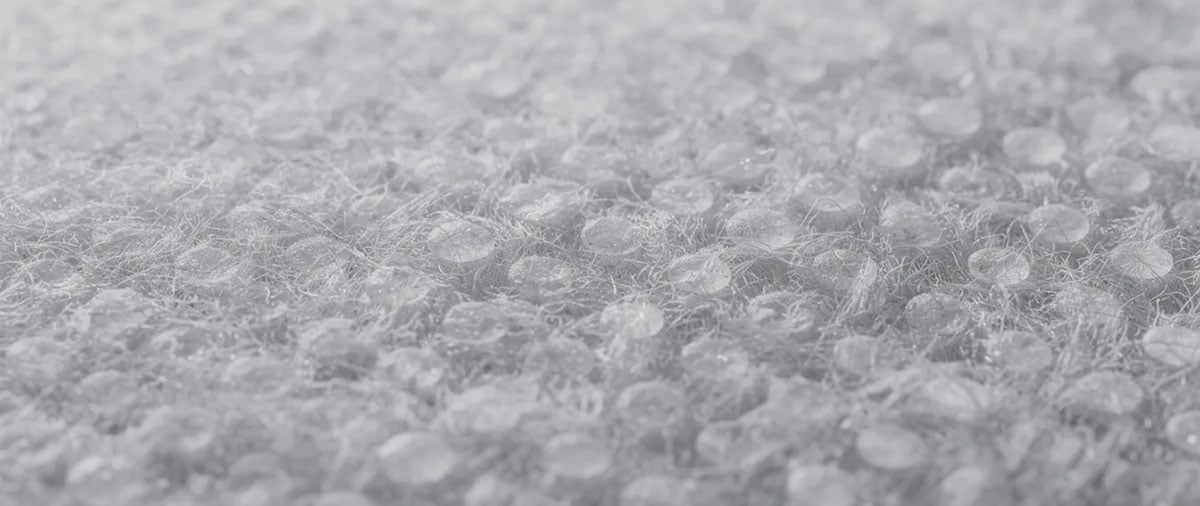
Waistband construction in trousers, skirts, and jeans requires heavy-duty double-sided systems capable of withstanding significant stress during wear. The interfacing creates a three-layer laminate that distributes stress evenly and prevents localized fabric failure at belt contact points. GSM selection typically ranges 80-140 total weight depending on garment category and intended use intensity.
Appliqué and Decorative Element Attachment
Industrial appliqué applications in workwear, uniforms, and fashion garments benefit from the clean finishing enabled by double-sided bonding. The system eliminates visible stitching while providing secure attachment that withstands industrial laundering. Many users love the secure attachment and ease of use provided by double-sided fusible interfacing for sewing and applique projects. Adhesive selection must account for both decorative element material and base garment fabric to ensure compatible thermal processing.
Corporate uniform applications demand consistent appearance and durability under frequent cleaning cycles. Double-sided systems enable attachment of logos, patches, and reinforcement panels without visible attachment methods that could detract from professional appearance. Bond strength testing at 60°C wash temperatures ensures performance under commercial laundering conditions.
Technical Textile Applications
Automotive interior applications require flame-retardant compatible adhesive systems that maintain bond integrity under temperature cycling. The double-sided bonding enables lamination of decorative face fabrics to structural backing materials while meeting automotive industry safety standards.
Protective equipment manufacturing utilizes double-sided systems for attaching reflective elements, reinforcement panels, and comfort liners to shell fabrics. These applications demand superior wash durability and resistance to chemical exposure while maintaining flexibility for worker comfort.
Performance Requirements and Testing Standards
Wash durability testing involves multiple cycles at relevant temperatures with appropriate detergent formulations. Standard protocols include:
-
40°C domestic wash testing for consumer garments
-
60°C commercial wash simulation for uniforms and workwear
-
75°C industrial wash testing for protective equipment
Dry cleaning compatibility requires adhesive systems that maintain bond strength through perchloroethylene exposure and thermal cycling. Professional cleaning environments typically involve temperatures up to 80°C with chemical exposure that can compromise inferior adhesive formulations.
Dimensional stability assessment measures substrate and bond line behavior under controlled temperature and humidity conditions. Shrinkage exceeding 2% in either direction typically indicates inadequate substrate selection or improper fusing parameters.
Bond strength testing measures both initial adhesion and retention after environmental exposure. Minimum peel strength requirements typically range 8-15 N/cm depending on application severity, with shear strength requirements 50-100% higher than peel values.
Quality standards must address strike-through prevention, ensuring adhesive remains contained within the interfacing structure rather than penetrating to garment surfaces where it could affect appearance or hand feel.
MH’s Double-Sided Fusible Interfacing Solutions
MH’s comprehensive fusible interfacing double sided product portfolio addresses the complete spectrum of industrial garment manufacturing requirements, from lightweight fashion applications to heavy-duty workwear constructions. Our 25-year manufacturing experience and global supply chain expertise enable us to deliver consistent quality and reliable performance across diverse application demands.
Comprehensive Product Range
Our standard product line encompasses multiple GSM options from 55 total weight (25 GSM base + 15 GSM adhesive per side) for lightweight shirt applications to 140 total weight (80 GSM base + 30 GSM adhesive per side) for heavy-duty waistband construction. This range addresses virtually all commercial garment categories without requiring custom development.
Non-woven polyester substrates form the foundation of our high-volume product lines, offering isotropic strength characteristics and excellent dimensional stability. These materials provide consistent performance across machine direction and cross-direction, enabling efficient automated cutting and handling in high-volume production environments.
Woven cotton substrates serve premium applications requiring natural fiber content and enhanced drape characteristics. Our cotton-based systems deliver superior hand feel and compatibility with natural fiber garments while maintaining the structural performance demanded in professional and luxury garment categories.
Tricot knit substrates address the growing activewear and performance apparel markets, providing controlled stretch and recovery properties that accommodate body movement without compromising bond integrity. These specialized substrates maintain elasticity after fusing, enabling comfortable fit in form-fitting garment designs.
Standard Width and Configuration Options
Standard production widths of 90cm, 112cm, and 150cm align with common fabric widths and optimize cutting efficiency in industrial production environments. Custom width slitting capabilities enable optimization for specific applications, including narrow waistband strips and specialized technical applications.
Roll lengths typically range from 100-500 meters based on substrate weight and customer handling capabilities. Heavy substrates require shorter roll lengths to maintain manageable weight, while lightweight materials can accommodate longer rolls for reduced roll changes during production.
Core diameter options include 3-inch and 6-inch standards compatible with most industrial unwinding equipment. Consistent core specifications reduce setup time and enable seamless integration with existing production equipment.
OEM/ODM Customization Capabilities
Custom stiffness development enables optimization for specific hand feel requirements and garment performance targets. Our technical team works closely with customers to achieve precise stiffness levels that complement garment design objectives while maintaining production efficiency.
Adhesive dot pattern customization addresses specific bonding requirements and fabric compatibility challenges. Modified dot density, size distribution, and coating weight enable optimization for difficult-to-bond fabrics or special performance requirements.
Custom color development supports brand-specific requirements and aesthetic objectives. Our color matching capabilities enable precise coordination with garment fabric colors while maintaining optimal bonding performance and production efficiency.
Roll length and packaging customization accommodates diverse production equipment and material handling systems. Custom packaging solutions optimize material utilization and reduce handling costs in high-volume production environments.
Quality Control and Consistency Assurance
Our ISO 9001 certified manufacturing processes ensure consistent quality across production batches through systematic quality management and continuous improvement initiatives. Statistical process control monitoring maintains tight tolerances on critical performance parameters.
Incoming raw material inspection verifies compliance with specifications before production, preventing quality issues and ensuring consistent performance. Our supplier qualification and monitoring programs maintain approved supplier status for all critical raw materials.
In-process monitoring throughout production tracks key parameters including coating weight, dot pattern uniformity, and dimensional characteristics. Real-time process control enables immediate correction of any deviations before they affect product quality.
Final inspection protocols verify all performance characteristics before shipment, including bond strength, dimensional stability, and visual appearance. Our comprehensive testing procedures ensure customer satisfaction and minimize field performance issues.
Global Export Experience and Logistics Support
Our established export operations serve customers in over 150 countries with proven logistics reliability and documentation expertise. Extensive international experience enables smooth customs clearance and minimizes transportation delays that could affect production schedules.
Regional distribution partnerships in key markets provide local inventory support and reduced lead times for urgent requirements. These partnerships enable rapid response to customer needs while maintaining cost-effective pricing through efficient logistics.
Container load optimization reduces transportation costs and improves delivery efficiency for large-volume customers. Our logistics team coordinates shipments to minimize costs while ensuring adequate inventory levels for uninterrupted production.
Documentation expertise ensures compliance with diverse international trade requirements and customer specifications. Our experienced export team handles all necessary paperwork and certifications to facilitate smooth international transactions.
For garment manufacturers, industrial sewing producers, and wholesalers seeking reliable fusible interfacing double sided solutions, MH offers comprehensive product range, technical expertise, and global supply capability. Contact our technical sales team to discuss your specific requirements and arrange sample evaluation for your applications.
Contact MH today for bulk orders, sample testing verification, and OEM/ODM customization of double-sided fusible interfacing systems. Our wholesale partnership approach and technical support capabilities provide the foundation for successful long-term relationships in the demanding world of industrial garment manufacturing.