
What Is a Guipure Lace Wedding Dress and Why Do Bridal Gown Manufacturers Prefer It?
Introduction: Guipure Lace Wedding Dress for Professional Buyers
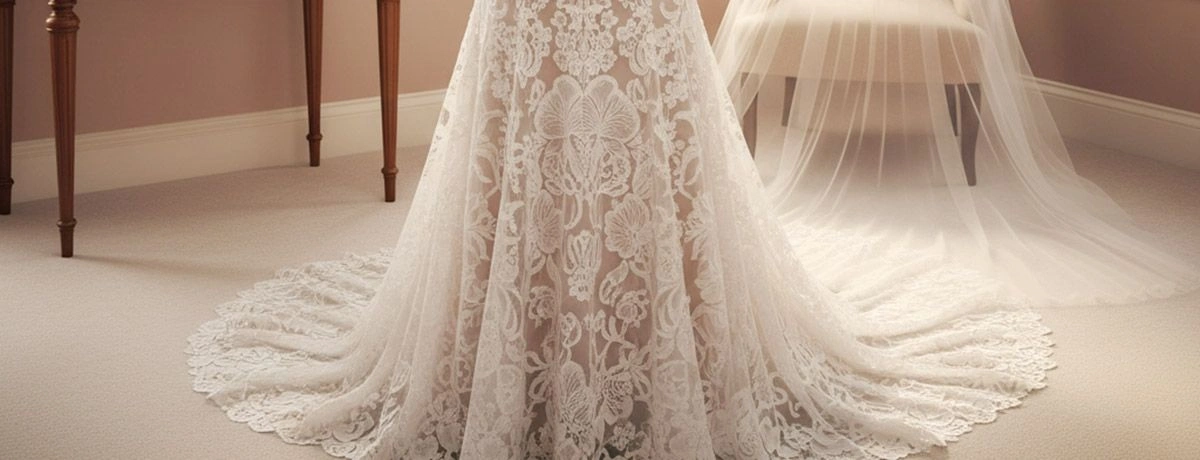
A guipure lace wedding dress starts with the fabric itself—a heavy, sculptural lace characterized by bold embroidery and complete absence of a net background. From a production standpoint, guipure lace offers manufacturers a material that combines visual drama with structural stability, making it one of the most sought-after textiles for luxury bridal gowns and formal eveningwear.
This article is written for wedding dress manufacturers, bridal gown factories, eveningwear producers, and lace wholesalers sourcing fabrics in bulk. If you are a retail bride looking for personal style advice or shopping guidance for your wedding day, this content is not designed for you. Instead, we focus on the technical, commercial, and production considerations that matter when building collections for the next one to three seasons.
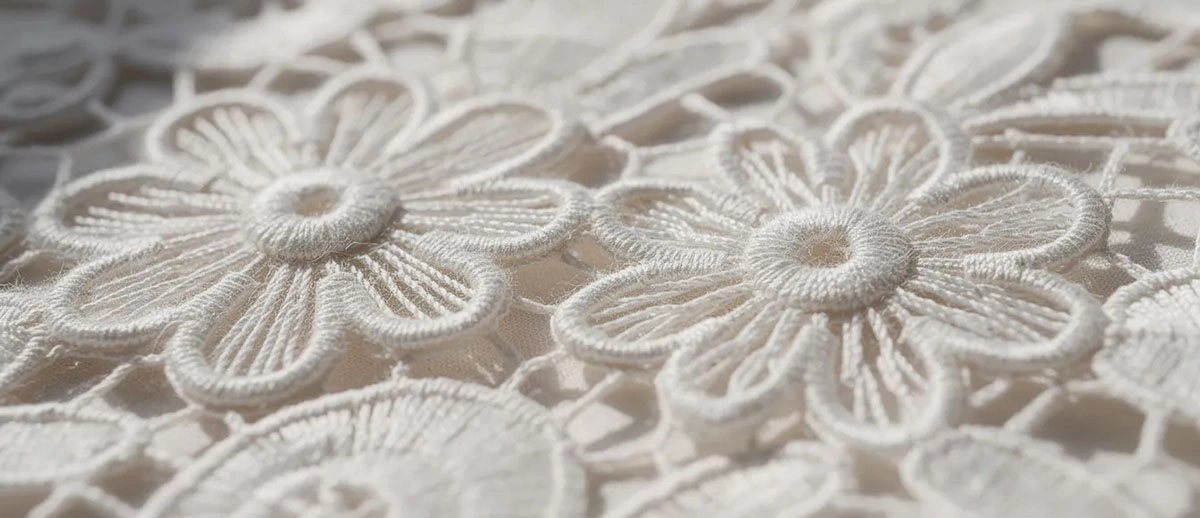
Guipure lace—also called chemical lace or venetian lace in some markets—is defined by its freestanding motifs connected by bars rather than mesh. This construction creates the bold, architectural look that works exceptionally well for lace wedding dresses and lace wedding gowns at premium price points. MH supplies guipure lace fabrics in bulk to factories worldwide, with consistent quality, competitive factory pricing, and established export experience across Africa, the Middle East, Latin America, Southeast Asia, and Eastern Europe.
What Is Guipure Lace and Why It Works for Wedding Dresses
Guipure lace is manufactured through a process that gives it distinct advantages over other bridal laces. Understanding how this fabric is made helps sourcing teams communicate more effectively with suppliers and pattern cutters.
How Guipure Lace Is Made
Modern guipure lace production follows these core steps:
-
A temporary base fabric (typically water-soluble or chemically dissolvable material) is mounted on embroidery machines
-
The desired pattern is digitized and embroidered directly onto this base with dense, continuous stitching
-
The base fabric is dissolved through chemical treatment or water wash
-
Only the embroidered motifs and their connecting bars remain, creating a freestanding lace without any backing fabric
This construction method is why guipure is frequently called chemical lace in B2B trade circles.
Key Characteristics for Production Teams
|
Feature |
Production Implication |
|---|---|
|
No net background |
Motifs read as graphic and defined from distance; ideal for photography and runway |
|
Heavy embroidery |
Weight ranges roughly 150–400 g/m² depending on pattern density |
|
Bold floral or geometric designs |
Creates sculptural surface texture with clear negative space |
|
Strong structure |
Provides inherent body, reducing need for heavy boning in some bodice constructions |
|
Connected by bars (brides) |
Durable joins that resist tearing better than fine tulle |
Comparison With Other Bridal Laces
For manufacturers choosing between lace types, here are the key differences:
-
Chantilly lace: Built on fine tulle ground; lightweight, delicate, and soft-draping; more prone to snags; suited for romantic overlays and veils rather than structural elements
-
Alençon lace: Also tulle-based with corded outlines; delicate nature requires careful handling; traditionally used for classic, soft gowns
-
Tulle-based embroidered lace: Sheer base contributes airiness but offers less stability; requires backing and stabilization during production
-
Guipure lace: No net base means motifs are clearly cut out; thicker, more defined, and sculptural; provides inherent structure suitable for statement bodices, sleeves, and full-lace panels
From a manufacturing perspective, guipure is more architectural, less fragile at joins, and better for designs where the lace must hold its shape without extensive internal support.
Note that guipure lace is also marketed as venetian lace in certain sourcing markets. Being aware of this terminology helps avoid confusion when communicating with international suppliers.
Key Advantages of Guipure Lace for Bridal Gown Production
Production managers and technical designers evaluate fabrics based on how they perform across the entire manufacturing process. Guipure lace delivers measurable benefits at each stage.
Visual Impact for Marketing and Sales
-
Dense motifs and 3D-like texture create a bold appearance that photographs exceptionally well
-
Clear pattern outlines read strongly on stage during bridal shows, in lookbooks, and across digital marketing
-
The fabric’s shine and depth add perceived luxury value, supporting higher retail price points
-
Motif clarity allows designers to create unforgettable visual signatures for their collections
Structural Benefits in Construction
-
Fabric weight and inherent stiffness make guipure ideal for corseted bodices that must hold their shape
-
Fitted sleeves maintain their silhouettes without excessive interfacing
-
Appliqué panels stay in position during multiple fittings without distortion
-
Less reliance on heavy boning can reduce internal structure costs in some designs
-
Edge stability means cleaner seam finishing compared with delicate tulle-based laces
Durability Across Production and Wear
-
Resistance to snagging compared with ultra-fine tulle reduces damage during cutting and sewing
-
Better handling characteristics allow faster throughput on production lines
-
Withstands repeated pressing and steaming without losing pattern integrity
-
Suitable for long production runs where fabric consistency is critical
-
Creates heirloom-quality gowns that boutiques can confidently market for durability
Versatility in Application
Guipure lace supports multiple construction approaches within a single collection:
-
Full-lace wedding dresses where the entire gown is constructed from guipure
-
Overlays on satin, mikado, or crepe base fabrics for contrast
-
Guipure appliqués hand-placed on soft tulle skirts for dimensional interest
-
Detachable guipure trains and capes that expand the SKU range without new pattern development
-
Coordinating bridal accessories using the same lace family
Efficiency Benefits for Factories
-
Clear motif boundaries allow easy placement for pattern matching across panels
-
Good cutting yield due to defined motif edges—less waste compared with irregular net laces
-
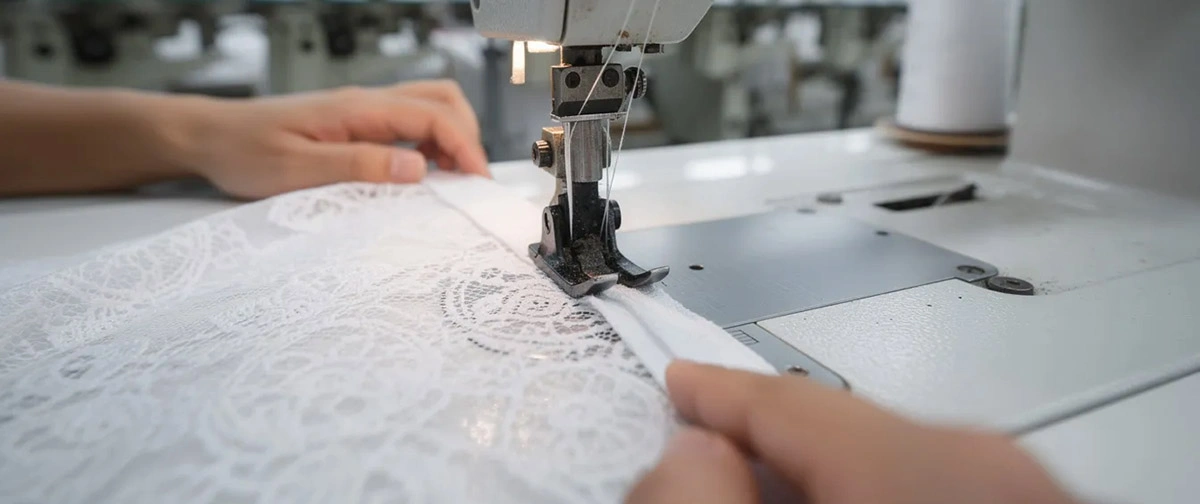
Stable behavior on high-speed industrial sewing machines reduces thread breakage
-
Pattern digitization enables high repeatability between orders for ongoing styles
-
Consistent quality supports long-term production programs without batch-to-batch variation
MH Guipure Lace Specifications for Wedding Dress Manufacturing
MH operates as a wholesale guipure lace supplier focused exclusively on bulk orders for bridal and eveningwear factories. There is no service for individual retail buyers or small-quantity purchases.
Product Parameters
|
Specification |
Options Available |
|---|---|
|
Width |
Full widths (130–150 cm+), narrower galloons and borders for trims |
|
Weight |
Lighter qualities for sleeves and overlays; heavier grades for full skirts and structured bodices |
|
Fiber content |
Polyester (high durability, wrinkle resistance), cotton-poly blends (softer hand), rayon blends |
|
Edge treatment |
Single-scalloped, double-scalloped, straight-cut for maximum cutting flexibility |
|
Pattern repeat |
Regular repeats (typically 10–40 cm) engineered for efficient marker planning |
Available Motifs and Design Directions
-
Classic florals: Roses, daisies, and vine patterns suited for traditional bridal markets worldwide
-
Geometric designs: Circles, triangles, and modern patterns for contemporary, fashion forward gowns
-
Mixed floral-scroll designs: Ornate combinations favored in Middle Eastern and African markets
-
Small-scale motifs: Intricate patterns for fitted bodices and delicate sleeves
-
Large-scale motifs: Statement patterns for trains, overskirts, and dramatic panels
Standard Color Offer
For wedding dresses, MH stocks and produces guipure lace in:
-
Bridal white (optical brighteners for crisp appearance)
-
Soft ivory (warm undertones, flatters most skin tones)
-
Off-white and natural white variations
-
Dye-to-order shades for large MOQs: champagne, blush, pale gold, and custom colors
MH supports complete OEM development for brands requiring exclusive patterns:
-
Development of proprietary guipure designs under NDA
-
Logo-motif integration for signature branding
-
Thickness and weight adjustment to match specific silhouettes
-
Special edge treatments for hem borders, sweeping train applications, and vintage-inspired scallops
-
Pattern repeat engineering to optimize cutting yield for client size ranges
How to Choose the Right Guipure Lace for Your Wedding Dress Line
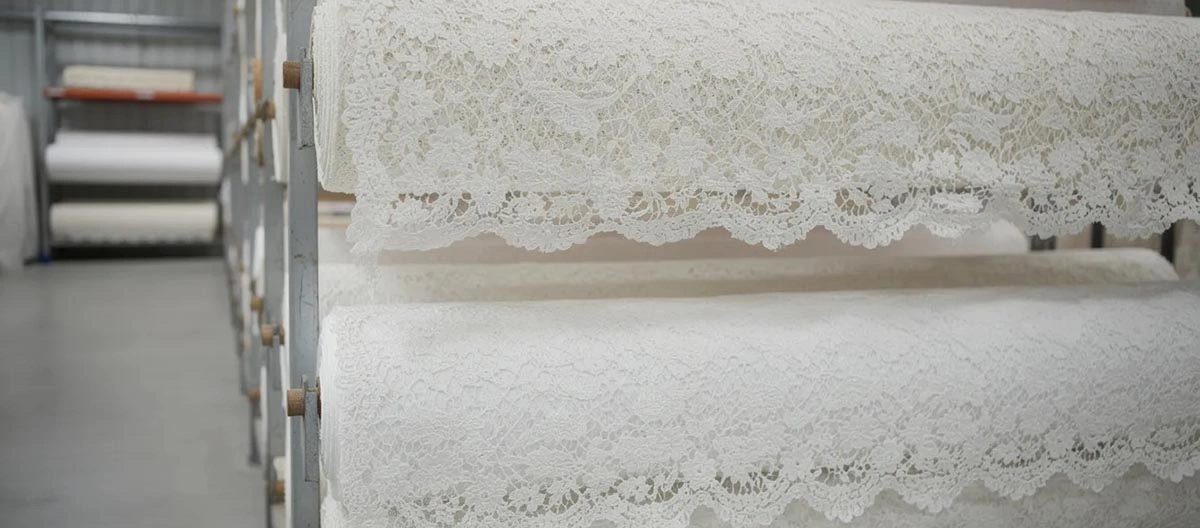
Selecting the correct guipure lace requires matching fabric specifications to design intent, target market, and production capabilities. Here is a decision framework for head designers and sourcing managers.
Match Lace Weight to Silhouettes
|
Silhouette |
Recommended Weight |
Reasoning |
|---|---|---|
|
Slim sheath, mermaid |
Lighter grades |
Allows body-conscious fit without excessive stiffness |
|
Fitted A-line |
Medium weight |
Provides structure while maintaining movement |
|
Ball gown |
Medium to heavy |
Supports volume and sculptural drama |
|
Structured corset bodice |
Heavy grades |
Creates shape without additional boning layers |
Select Motif Scale by Application
-
Small-scale motifs: Best for intricate bodices, fitted sleeves, and curved panels where the pattern must conform to the body
-
Medium-scale motifs: Suited for all-over gowns where pattern continuity matters across multiple panels
-
Large-scale motifs: Ideal for statement panels, trains, overskirts, and areas where bold visual impact is the priority
Consider Hand-Feel and Drape
The stiffness of guipure lace vary depending on fiber content and embroidery density:
-
Stiffer guipure: Works for sculptural, modern designs where the fabric should hold geometric shapes
-
Softer, more flexible guipure: Better for romantic, flowing lines where the gown should move with the bride
-
Balance structure with comfort by testing sample yardage on a dress form before committing to bulk
Plan Lining and Base Fabric Strategy
From a construction perspective, lining choices affect both appearance and production workflow:
-
Nude linings create illusion effects where skin shows through openwork areas
-
Ivory or white linings provide modesty while maintaining pattern visibility
-
Consider how seam allowances will read through the lace when selecting lining opacity
-
Lined bodices versus unlined sleeves can create intentional contrast within a single dress
Pre-Bulk Testing Protocol
Before confirming bulk orders, request and evaluate:
-
Lab dips in your typical bridal shades (white, ivory, off-white) to check color consistency
-
Strike-offs showing stitch density and pattern clarity at actual production scale
-
Shrinkage tests after steam pressing to predict finished garment dimensions
-
Drape tests on mannequins to assess how the fabric behaves in realistic garment conditions
Applications of Guipure Lace in Different Bridal and Formal Styles
Manufacturers apply guipure lace differently based on regional preferences, market segments, and production strategies.
Regional Market Applications
Different types of bridal markets favor distinct approaches to guipure lace, which is also popular in various decorative applications such as curtain fabric accessories:
-
Latin America: Full-lace mermaid gowns are popular; guipure’s sculptural quality flatters body-conscious silhouettes with built-in structure
-
Africa and Middle East: Bold pattern bodices and sleeves; elaborate designs adorned with beading or sequins over guipure base; rich textures suited for large venue weddings
-
Eastern Europe: Clean, graphic motifs with modern design sensibility; geometric guipure for contemporary brides; traditional florals for classic wedding ceremonies
-
Southeast Asia: Lighter, more open guipure designs to balance beauty with comfort in humid climates; guipure often used selectively on bodices while keeping skirts lighter
Product Segment Applications
Guipure lace works across multiple price tiers:
|
Segment |
Typical Application |
|---|---|
|
Premium couture bridal |
Full guipure gowns with exclusive patterns; extensive hand-finishing |
|
Mid-range bridal collections |
Guipure bodices with satin or tulle skirts; appliqué accents |
|
Ready to wear collection |
Standardized guipure patterns across multiple styles for efficiency |
|
Eveningwear (bridesmaids, reception) |
Coordinating guipure in colors beyond white; shorter hemlines |
Pattern Placement From a Cutting Perspective
-
All-over yardage: Complete coverage from bodice to skirt; requires careful pattern matching at seams
-
Border edges: Scalloped guipure for hemlines, trains, and neckline finishing
-
Motif cutting for appliqué: Individual motifs cut from yardage and applied to tulle, organza, or crepe bases; requires patterns with clearly defined motif boundaries
Expanding SKU Range With One Fabric Family
Using guipure lace across multiple product categories increases collection cohesion and reduces sourcing complexity:
-
Matching bridal capes that complement the gown
-
Detachable overskirts for ceremony-to-reception transformation
-
Boleros and modesty toppers for venue requirements
-
Gloves, headpieces, and other accessories
-
Mother of the bride dress accents using the same motif family
MH Wholesale Services and Global Supply Capability
MH operates as a long-term wholesale partner for bridal gown factories and fabric distributors, focusing on operational stability and consistent supply rather than one-time transactions.
Established Export Experience
MH serves customers across major bridal production and consumption markets:
-
Africa: Familiar with documentation requirements and port logistics for West and East African destinations
-
Middle East: Experience with regional preferences for ornate patterns and specific color variations
-
Latin America: Understanding of silhouette trends and sizing requirements for local markets
-
Southeast Asia: Capability to support both local manufacturing and export-oriented factories
-
Eastern Europe: Established relationships with factories producing for both domestic and Western European brands
Core B2B Services
|
Service |
Description |
|---|---|
|
Bulk stock programs |
Fast-moving designs available for quick delivery |
|
Production against order |
Custom patterns and colors manufactured to specification |
|
OEM development |
Exclusive guipure designs developed under NDA |
|
Customer-exclusive designs |
Pattern protection for brands requiring differentiation |
|
Sample support |
Swatch cards and yardage samples for approval process |
Order Framework
-
Minimum order quantities apply for custom colors and exclusive patterns
-
Standard lead times for sampling and bulk production (discuss specific timelines based on complexity)
-
Pre-production yardage available for test runs before committing to full bulk
-
Flexible delivery scheduling to align with production calendars
-
Standard packaging for shipping protection; custom packaging available on request
MH’s focus is on being a reliable supplier that factories can depend on season after season, with consistent materials, competitive pricing, and responsive communication.
Key Takeaways
-
Guipure lace is a heavy, net-free fabric with bold embroidery that creates sculptural wedding dresses with inherent structure
-
Unlike chantilly lace and other tulle-based options, guipure offers durability, cutting efficiency, and reduced need for internal support
-
MH supplies guipure lace in bulk with multiple patterns, weights, widths, and colors including ivory, white, and off-white
-
Match lace weight and motif scale to your target silhouettes and regional market preferences
-
Quality control at receiving, cutting, sewing, and pressing stages ensures consistent finished garments
-
MH’s export experience covers Africa, Middle East, Latin America, Southeast Asia, and Eastern Europe
-
Start your guipure project 6–9 months ahead of selling season for optimal results
Conclusion
Selecting the right guipure lace for your wedding dress collection is a decision that affects everything from production efficiency to final retail value. The fabric’s combination of visual drama, structural integrity, and manufacturing versatility makes it a smart choice for brands targeting the luxury and premium bridal segments.
For manufacturers and wholesalers seeking a stable supply of quality guipure lace, MH offers the product range, customization capability, and global logistics experience to support your production needs season after season. Whether you require stock patterns for immediate purchase or exclusive OEM designs for your signature collections, the process starts with clear communication about your specific requirements.
Reach out to MH with your project details, request sample materials, and plan your guipure lace wedding dress development with the lead time your special day collections deserve.