
How Are Hook and Loop Dots Used in Industrial and Commercial Applications?
Introduction to Hook and Loop Dots
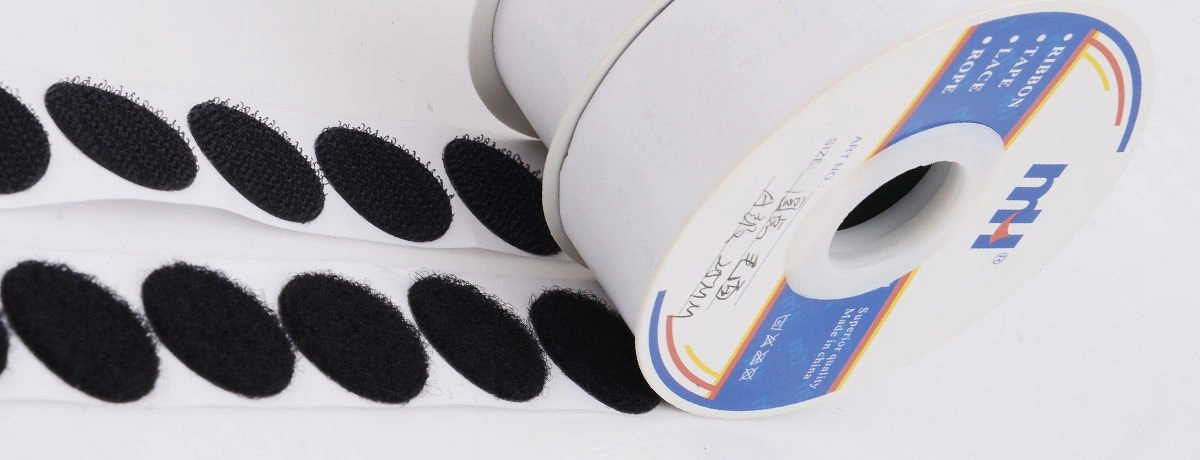
Hook and loop dots are pre-cut circular fasteners consisting of mated or separate hook and loop components, designed for industrial and commercial applications where discrete, standardized fastening points are required. These fasteners deliver reliable, reusable closure in a compact format suitable for automated and manual assembly processes across garment manufacturing, packaging, and industrial product sectors.
From a procurement perspective, dots offer distinct advantages over continuous strips or loop tape. Pre-cut to standardized diameters, dots eliminate the need for on-site cutting, reduce labor in assembly lines, and ensure consistent piece dimensions across production runs. Unlike strips that require manual measurement and cutting, hook and loop coins arrive ready for immediate application, whether by hand or through automated dispensing equipment. This standardization translates to faster throughput, reduced material waste, and more predictable quality outcomes in high-volume manufacturing.
What Are Hook and Loop Dots and How Do They Work?
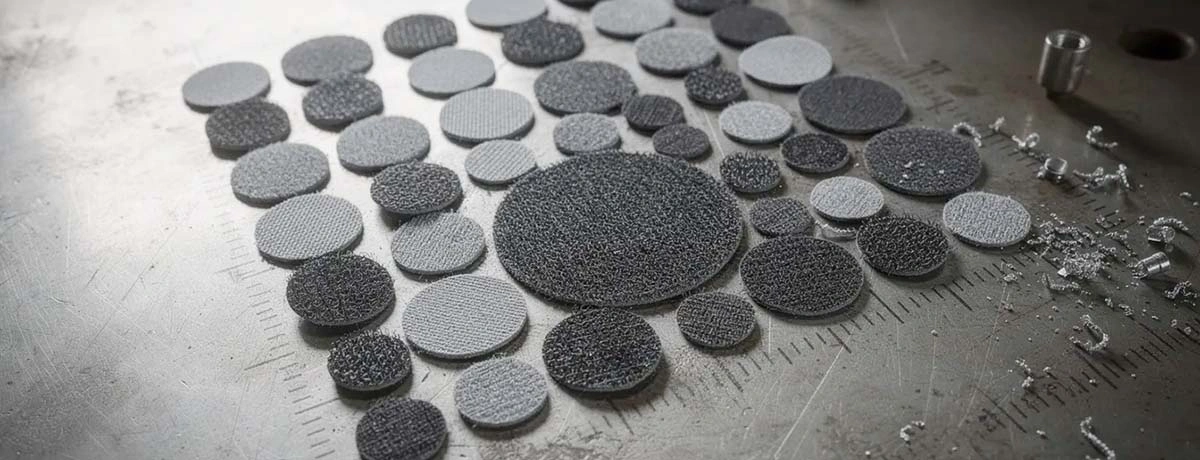
Hook and loop dots are small circular pairs of hook and loop components, supplied either mated together or as separate hook-side and loop-side pieces. Common diameters available for industrial sourcing include 10 mm, 15 mm, 19 mm, 22 mm, and 25 mm, though custom sizes can be produced to match specific application requirements. These dimensions correspond to typical fastening needs across garment closures, packaging, and equipment panel attachment.
The hook and loop mechanism operates through mechanical interlocking. One side features a surface covered with tiny, stiff hooks arranged in a two-dimensional pattern. The opposing side presents a fabric of soft, flexible loops. When pressed together, the hooks engage with the loops, creating a secure hold that can withstand both shear forces (loads parallel to the fastened surface) and peel forces (loads pulling the edges apart). Shear strength is typically higher than peel strength, making orientation and load direction important considerations when specifying dots for particular applications.
Dots are available in two primary constructions for industrial use. Adhesive-backed dots feature pressure-sensitive adhesive on the back surface, covered by a release liner for storage and handling. These are designed for quick application to rigid or semi-rigid substrates such as metal panels, plastic housings, and coated paperboard. Sew-on or non-adhesive dots consist of plain-woven hook and loop tape die-cut into circular shapes, intended for integration into garments, soft goods, and technical textiles where mechanical stitching provides the attachment method.
For factory integration, dots can be supplied as continuous rolls with dots spaced at regular intervals, as sheets with multiple dots per sheet, or as individual pieces in bulk. Custom die-cut formats are available to match automated application equipment, reducing manual handling and enhancing production consistency. Industrial use cases include panel fixation in electronics enclosures, temporary display attachment for retail environments, badge and name tag mounting on workwear, and closure points in reusable packaging systems.
Materials, Backing Types, and Construction Methods
This section provides procurement teams with a reference to material options and their implications for performance and cost. Understanding the base materials and adhesive systems available helps buyers specify dots that meet application requirements without over-engineering or creating compatibility issues.
Base Materials
The hook and loop tape used to produce dots is typically constructed from nylon, polyester, or blended fiber constructions.
|
Material |
Durability |
Temperature Resistance |
Cost Position |
|---|---|---|---|
|
Nylon |
High abrasion resistance, excellent cycle life |
Moderate (degrades above ~120°C) |
Mid-range |
|
Polyester |
Good UV and moisture resistance |
Higher than nylon |
Slightly higher |
|
Blends |
Balanced performance |
Application-dependent |
Variable |
Nylon offers strong hook engagement and consistent loop performance over thousands of cycles, making it the standard choice for most garment and general industrial applications. Polyester provides better resistance to UV exposure and moisture, suitable for outdoor or humid environments. Blended constructions can be engineered to optimize specific performance characteristics.
Adhesive-Backed vs. Non-Adhesive Dots
Adhesive-backed dots are produced by coating pressure-sensitive adhesive (PSA) on the back of the hook and loop tape, then die-cutting into circular shapes. The adhesive is protected by a release liner until application. This construction enables fast, tool-free installation on various surfaces without sewing infrastructure.
Non-adhesive dots are die-cut from plain-woven tape and are designed for attachment through sewing or mechanical fixation. These are the preferred choice when dots will be integrated into textiles that undergo laundering, autoclaving, or high-friction use.
Adhesive Types
Different adhesive systems suit different substrates and operating conditions:
-
Acrylic adhesive provides strong bonds to metals, painted surfaces, certain plastics, and surfaces exposed to higher temperatures or UV environments. Acrylic systems offer good aging stability and are commonly specified for industrial and outdoor applications where long-term adhesion is critical.
-
Rubber-based adhesive represents an economical option for indoor, low-temperature applications on smooth surfaces such as cardboard, some plastics, and coated paperboard. Initial tack is typically higher than acrylic, but long-term durability and temperature resistance are lower.
-
Hot-melt and solvent-based coatings address heavy-duty industrial demands where extreme bond strength or specific substrate compatibility is required. These are typically custom-specified for particular applications.
Release Liners and Packaging
Adhesive dots are supplied on silicone-coated paper or film liners. Liner selection affects automated dispensing performance—stiffer film liners feed more consistently through mechanical applicators, while paper liners may be preferred for manual application or cost-sensitive projects. Liner type also influences storage stability, particularly in humid environments.
MH’s position as a vertically integrated supplier enables coordination of tape weaving, adhesive coating, and die-cutting operations. This integration supports consistent quality across large production runs and provides flexibility to adjust specifications without managing multiple vendors.
Adhesive-Backed vs. Sew-On / Non-Adhesive Hook and Loop Dots
Selecting between adhesive-backed and non-adhesive dots depends on substrate type, application environment, and production infrastructure. This section contrasts the two formats from a sourcing and application-engineering viewpoint.
Adhesive-Backed Dots
Adhesive dots are designed for application on rigid substrates where sewing is not feasible or practical. Typical substrates include:
-
Metal panels and aluminum housings
-
Plastic components (ABS, PVC, polycarbonate)
-
Coated paperboard and corrugated packaging
-
Painted and powder-coated surfaces
Advantages for production:
-
Fast installation without specialized tools or sewing equipment
-
Compatible with both manual application and automatic dispensing systems
-
Consistent placement when using positioning guides or templates
-
No thread, needles, or stitching patterns required
Considerations for specification:
-
Surface preparation affects bond strength—clean, dry surfaces are essential
-
Adhesive curing time varies by type; full bond strength may require 24–72 hours
-
Operating temperature limits depend on adhesive chemistry (rubber-based typically lower than acrylic)
-
Textured or low-energy surfaces may require specialized adhesive formulations
Sew-On / Non-Adhesive Dots
Non-adhesive dots are engineered for textile integration where mechanical attachment through stitching is required. Applications include:
-
Uniforms and workwear closures
-
Technical fabrics and soft packaging
-
Children’s apparel and sports gear
These dots withstand repeated laundering cycles, autoclaving (for medical applications), and high-friction use when combined with proper stitching patterns. The sewn attachment method distributes stress across multiple stitch points, reducing the likelihood of fastener detachment under load.
Sourcing Guidance
When placing bulk orders for hook and loop dots, buyers should specify:
|
Parameter |
Options to Define |
|---|---|
|
Diameter |
10 mm, 15 mm, 19 mm, 22 mm, 25 mm, or custom |
|
Hook/loop pairing |
Mated sets, separate rolls, or mixed configurations |
|
Base fabric |
Nylon, polyester, or blended construction |
|
Adhesive type |
Acrylic, rubber-based, or none (sew-on) |
|
Target application surface |
Substrate material, texture, and environmental exposure |
Providing this information upfront enables suppliers to recommend appropriate specifications and avoid compatibility issues during production.
Typical Industrial and Commercial Applications
Hook and loop dots are widely used across garment manufacturing, industrial products, and packaging because they offer removable yet reliable fastening at discrete points. Application requirements vary by industry, and specifications should be matched to the specific demands of each use case.
Garment and Textile Industry
The garment industry uses hook and loop dots for small closure points where zippers or buttons are impractical or undesirable. Common applications include:
-
Children’s wear closures for ease of dressing
-
Workwear badge and name tag attachment
-
Medical garment closures requiring frequent access
-
Sports apparel accessory mounting
-
Protective gear and uniform accessories
These applications demand laundering resistance, dimensional stability through wash cycles, and skin-safe materials. Sew-on dots with nylon or polyester construction are standard, with Oeko-Tex certification often required for products contacting skin.
Packaging and Display
Packaging applications leverage adhesive dots for temporary or semi-permanent mounting:
-
POS (point-of-sale) display assembly and mounting
-
Sample attachment in presentation kits
-
Closure points in rigid and semi-rigid packaging
-
Reusable shipping containers and protective cases
Consistent adhesive strength on coated paperboard and plastics is essential. Acrylic adhesive systems are typically specified for displays that must maintain attachment over weeks or months, while rubber-based adhesives may suffice for short-term promotional applications.
Industrial Products and Electronics
Electronics and industrial equipment manufacturers use hook and loop dots for:
-
Securing lightweight access panels and covers
-
Cable identification tags and bundling
-
Removable labels inside equipment housings
-
Component mounting in service-accessible areas
Temperature resistance and flame-retardant properties may be required depending on the end product and applicable safety standards. Buyers should specify environmental requirements when sourcing for these applications.
Automotive, Transport, and Furniture
These sectors require dots that withstand vibration, temperature cycling, and mechanical stress:
-
Trim piece attachment in vehicle interiors
-
Small cushion and headrest mounting
-
Removable seat covers and protective liners
-
Interior panel and accessory fixation
Higher shear strength, vibration resistance, and stable adhesion on textured plastics and foams are critical. Specialty adhesive formulations may be required for low-energy surfaces common in automotive interiors.
Sourcing Hook and Loop Dots from MH: Specifications and Customization
MH operates as a vertically integrated B2B supplier providing standardized and customized hook and loop dots for international buyers. With production capacity spanning tape weaving, coating, and die-cutting, MH supports both stock products and custom specifications for bulk orders.
Standard Specification Options
MH stocks hook and loop dots in commonly requested configurations:
|
Specification |
Standard Options |
|---|---|
|
Diameters |
10 mm, 15 mm, 19 mm, 22 mm, 25 mm |
|
Colors |
Black, white, and selected colors matching common garment tones |
|
Base materials |
Nylon and polyester constructions |
|
Adhesive types |
Rubber-based (indoor/packaging), acrylic-based (industrial/demanding surfaces) |
|
Supply formats |
Rolls, sheets, mated sets |
Standard items typically ship with shorter lead times and lower minimum order quantities than custom specifications.
Customization Capabilities
For applications requiring non-standard specifications, MH provides customization across multiple parameters:
-
Custom diameters and shapes — round, oval, or special contours to match product design requirements
-
Custom colors — color matching to brand standards or product aesthetics with sufficient quantity
-
Tailored adhesive systems — formulations optimized for specific substrates, temperature ranges, or performance requirements
-
Custom roll layouts — spacing and arrangement designed to match automated applicators and production equipment
-
Printing and marking — indicator marks, positioning lines, or identification codes on release liners
Custom orders require additional lead time for tooling and production setup. Buyers should provide application details early in the sourcing process to receive accurate pricing and delivery timelines.
Order and Supply Considerations
MH serves international buyers with export-focused operations and established logistics capabilities:
-
Minimum order quantities — MOQs vary by product type and customization level; contact for specific guidance
-
Lead times — standard items typically 2–4 weeks; custom items 4–8 weeks depending on complexity
-
Packaging formats — rolls on cores, die-cut sheets, mated sets, or custom packaging per buyer specification
-
Consolidated shipments — hook and loop dots can be combined with other garment accessories and materials (thread, zippers, interlining, ribbons, buttons) in consolidated orders to optimize shipping costs
Volume discounts are available for large quantity orders. MH’s experience with long-term supply contracts supports buyers requiring consistent, scheduled deliveries.
Next Steps for Buyers
To receive a quote for hook and loop dots, buyers should share the following application details:
-
Substrate material — what surface will the dots attach to?
-
Operating environment — temperature range, humidity, UV exposure, chemical contact
-
Required cycle life — how many open/close cycles are expected?
-
Preferred diameter — standard or custom size requirements
-
Quantity — estimated annual usage or per-order volume
-
Adhesive vs. sew-on — attachment method for the application
Contact MH with these specifications to receive product recommendations, pricing, and sample availability. Whether sourcing standard stock items or developing custom specifications, MH’s technical and sales teams respond with quick response times to support your procurement timeline.


Start your sourcing process by reaching out with your application requirements—MH is prepared to support buyers from specification through delivery with the quality, consistency, and supply reliability that industrial applications demand.
