
How to Source High-Performance Microfiber Fabric for B2B Applications?
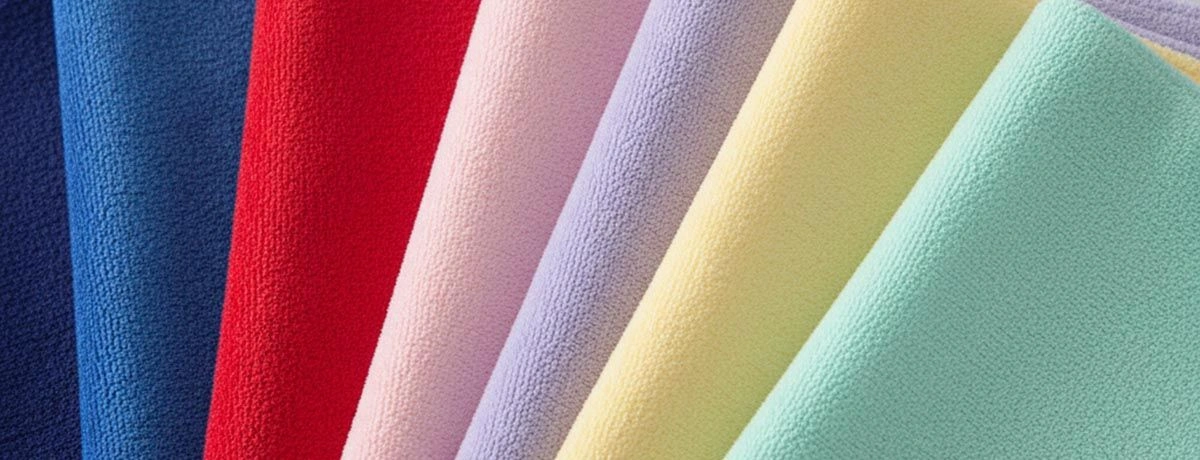
Microfiber has fundamentally shifted the textile landscape, offering a synthetic solution that outperforms natural fibers in durability, absorbency, and versatility. For garment factories, commercial upholsterers, and industrial cleaning distributors, sourcing high-quality microfiber is a critical operational decision. In industry terminology, 'fibre' refers to the basic unit of textile materials, and microfiber is a synthetic fabric composed of extremely fine fibers, usually polyester and nylon, that are significantly thinner than a strand of silk. The term 'microfibre' is also commonly used in the industry as an alternative spelling.
As a synthetic fiber finer than one denier—significantly smaller than a strand of silk—microfiber offers unique properties that drive its demand across multiple sectors. From high-performance sportswear to heavy-duty industrial cleaning cloths, the applications are vast. Microfiber fabric is a synthetic plush fabric that is absorbent and covered in fine, raised fibers. MH, a leading integrated industrial and trade company, specializes in the mass production and wholesale supply of these technical fabrics. This guide provides professional buyers with the essential technical knowledge required to source the right microfiber specifications for large-scale manufacturing and distribution.
Introduction to Microfiber
Microfiber is a cutting-edge synthetic fiber engineered from extremely fine threads, each with a diameter of less than ten micrometers—much finer than a human hair. This unique construction gives microfiber its signature smooth texture, unparalleled softness, and impressive durability, making it a standout choice for a wide range of applications.
Microfiber upholstery fabric, for example, is highly sought after in the furniture and automotive industries for its stain resistant properties, ability to withstand heavy use, and luxurious feel. In the world of athletic wear, microfiber’s quick drying properties and moisture-wicking capabilities have made it a staple in performance clothing, from cycling jerseys to running shorts. Its maximum absorbency and soft touch also make it ideal for cleaning products and outdoor equipment, where both comfort and functionality are essential. Whether used in clothing, upholstery, or home essentials, microfiber delivers a perfect blend of softness, durability, and high performance.
Microfiber Upholstery Fabric: Durability Meets Design
In the commercial furniture sector, microfiber upholstery fabric is a preferred choice due to its exceptional resilience. Defined by its tight weave and synthetic composition, it provides a barrier against moisture and staining that natural weaves cannot match.
For contract furniture manufacturers supplying hotels, offices, and public spaces, the primary benefit is longevity. Microfiber resists abrasion and holds its dye well, maintaining appearance even in high-traffic environments. It replicates the soft hand-feel of suede or velvet but offers superior tensile strength, making it an ideal cost-effective alternative for mass-market furniture production.
Synthetic Fibers and Construction Mechanics
Understanding the composition of microfiber is essential for procurement managers. The most common commercial microfiber is a bicomponent blend, typically consisting of polyester and polyamide (nylon).
-
Polyester: Provides the structural backbone, offering durability and scrubbability.
-
Polyamide: Adds density, absorbency, and softness to the hand.
Common blend ratios found in the wholesale market include 80/20 or 70/30 (polyester to polyamide). The ratio dictates the fabric's end-use performance; a higher polyamide content generally yields a softer, more absorbent fabric suitable for premium cleaning or apparel applications.
How Industrial Microfibers Are Made
The manufacturing process determines the quality grade of the final roll. Production begins with extrusion, where the polyester and polyamide are combined into a single filament.
-
Extrusion: The polymers are melted and forced through spinnerets to create long, continuous filaments.
-
Splitting: This is the crucial step for "split" microfiber. Chemical processes split the bicomponent filaments, increasing the surface area exponentially. This splitting creates the "channels" that trap dirt and moisture.
-
Finishing: The fabric undergoes dyeing and texturing. MH operates on a make-to-order basis, allowing buyers to specify exact colorfastness levels, brushing techniques, and finishings to meet specific market requirements.
Types of Microfiber Fabric
Procurement teams must distinguish between weave types to ensure the correct fabric is selected for the intended product line. Compared to other types of fabrics, microfiber fabric offers superior cleaning effectiveness, absorbency, and compatibility with delicate surfaces, making it a specialized choice for many applications.
Microfiber fabric is also available in a variety of colors, patterns, and styles, allowing for a wide range of design options to suit different preferences and uses.
Split-Weave vs. Flat-Weave
-
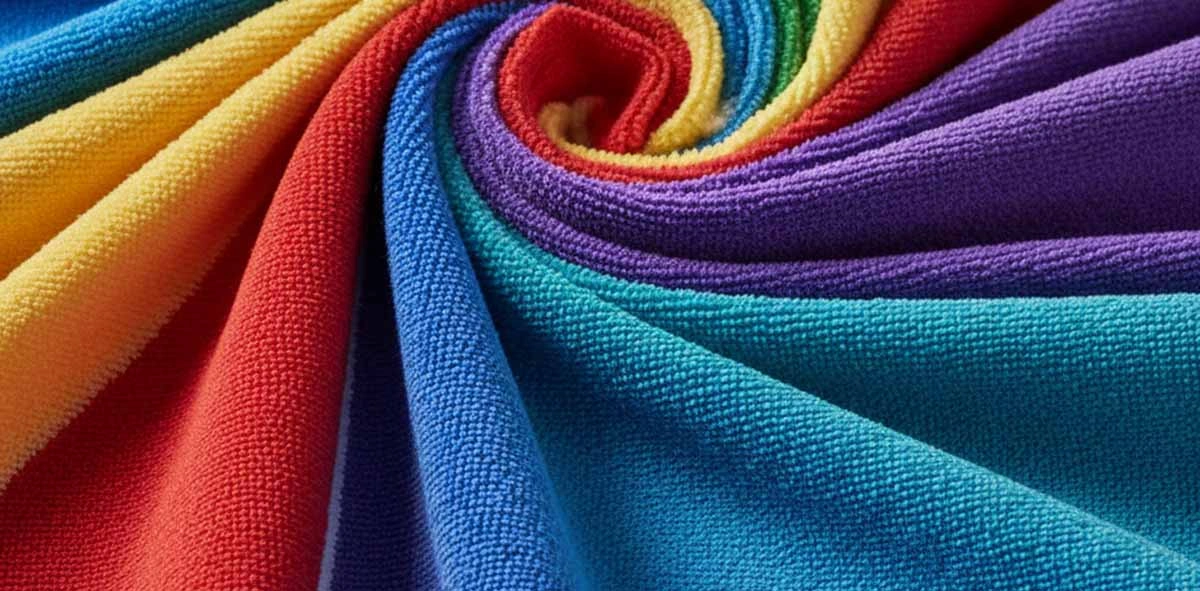
Split-Weave: The fibers are chemically split during production to create open spaces within the fiber. Split-weave microfibre features fibers that are split during production, resulting in a surface with tiny loops that enhance absorbency. This type is highly absorbent and possesses a positive electrostatic charge that attracts dust. It is the standard for cleaning cloths, mops, and towels.
-
Flat-Weave: The fibers remain unsplit. This results in a smoother, less absorbent fabric with high durability. Flat-weave is primarily used for apparel, bed sheets, and upholstery where liquid repellency is preferred over absorption.
Specialized Microfiber Types for Manufacturing
Beyond standard weaves, manufacturers order specialized variations for niche markets:
-
Ultrasuede: A non-woven fabric that mimics genuine suede. It is widely used in fashion accessories, footwear, and luxury upholstery. Ultrasuede is known for its soft, plush texture, providing a velvety and luxurious feel.
-
Terry Microfiber: Features a looped pile, similar to a cotton towel but with the performance of synthetic split fibers. This construction gives terry microfiber a plush, absorbent surface, making it ideal for automotive detailing and bath products.
-
Chenille and Waffle-Weave: These textured weaves increase surface area for specific cleaning applications or aesthetic depth in home textiles. Other notable options include taffeta fabric, known for its crisp texture and versatility in clothing and upholstery.
Cleaning Cloths and Commercial Hygiene
For distributors supplying the janitorial and sanitation (JanSan) market, split-fiber microfiber is the gold standard. The mechanics of the split fiber allow the cloth to lift and trap bacteria and particulate matter rather than spreading it, a key selling point for hospitals and commercial cleaning services.
Microfiber is used in cleaning products because it can pick up more dirt and grime than other types of cloth. Microfiber cloths are also effective for cleaning scratch-prone surfaces such as display devices, glass, and lenses.
When sourcing for this sector, verify the “grams per square meter” (GSM). Higher GSM generally indicates a denser, more absorbent cloth suitable for heavy-duty commercial use.
Care Instructions for Commercial End-Users
While MH supplies the raw material, understanding the maintenance lifecycle helps manufacturers create accurate care labels for finished goods.
-
Washing: Commercial laundering should avoid fabric softeners and bleach, as these clog the micro-fissures in split fibers, reducing efficacy.
-
Drying: Low heat is mandatory. The synthetic polymer has a melting point lower than cotton; high heat can fuse the fibers, destroying the soft texture and absorbent capabilities.
Applications Across Industries
MH supports a diverse range of industrial applications through customized production. Microfiber fabric is lightweight, making it suitable for a wide range of applications:
-
Homewares: Bedding sheets, towels (including bath sheets, kitchen towels, and washcloths), decorative pillows, blankets, mats, and tablecloths. Microfiber blankets and mats are valued for their softness, absorbency, and durability, while microfiber tablecloths repel liquids, resist staining, and are easy to clean. Microfiber is also used for home cleaning tools and personal care items due to its absorbency and ease of maintenance.
-
Apparel: Athletic wear, jackets, skirts, bathrobes, swimwear, and accessories requiring moisture-wicking properties. Microfiber is commonly used to make skirts, jackets, bathrobes, and swimwear because of its softness, lightweight feel, and ability to wick moisture.
-
Accessories: Microfiber is used to make book covers and shoes, as well as wallets, handbags, and backpacks. Its durability, water resistance, and lightweight nature make it a practical and versatile substitute for leather in these products.
-
Industrial: Filtration systems, insulation materials, and protective packaging for delicate electronics. Microfiber is used in industrial filtration due to its electrostatic properties, and its high fiber density and thermal properties make it effective for insulation in construction and outdoor gear. Microfiber is also used in healthcare essentials.
Buying Guide: Specifications for B2B Orders
When placing make-to-order requests with MH, buyers should define the following specifications to ensure product accuracy:
-
Denier: Confirm the fineness required.
-
GSM (Weight): Specify the weight class suitable for the end product (e.g., 200 GSM for sheets vs. 350 GSM for cleaning towels).
-
Composition: Define the Polyester/Polyamide ratio.
-
Weave: Specify split vs. flat, or specialized textures.
Since MH does not maintain retail stock, all orders are customized. This allows for precise control over color matching (Lab Dips), hand-feel, and technical finishes.
Processing Microfiber in Garment Factories
Factory managers must adjust production lines when working with microfiber.
-
Cutting: Sharp, high-speed cutters are necessary to prevent fraying, although knit microfibers are naturally resistant to unraveling.
-
Needles: Use sharp, fine points (Microtex needles) to penetrate the dense weave without causing puckering.
-
Heat: Pressing stations must operate at lower temperatures to prevent glazing or melting the fabric surface.
Certifications and Standards
For international trade, documentation is vital. MH ensures compliance with key industry standards:
-
Oeko-Tex Standard 100: Guarantees the fabric is free from harmful substances, a requirement for apparel and home textiles entering the European market.
-
GRS (Global Recycled Standard): Verifies the recycled content and tracks the chain of custody for sustainable product lines.
Procurement officers should always request current certificates during the negotiation phase to ensure supply chain transparency.
Troubleshooting and FAQs
Q: Why does some microfiber pill during commercial abrasion testing?
A: Pilling can occur if the fiber length is short or the twist is low. Specify high-tenacity fibers or anti-pilling finishes during the ordering process to mitigate this.
Q: Can microfiber be printed on?
A: Yes. Polyester-based microfiber is excellent for sublimation printing, yielding vibrant, durable colors suitable for sportswear and branded merchandise.
Q: How do we prevent static buildup in the final product?
A: Microfiber is naturally prone to static. Anti-static finishes can be applied during the dyeing and finishing stage at the MH facility upon request.
Partnering for Production Success
Sourcing the right microfiber fabric requires a balance of technical specification and reliable partnership. Whether the requirement is for high-absorbency split weaves for the cleaning industry or luxurious flat weaves for home furnishings, understanding the nuances of fiber construction ensures a superior final product.
MH stands ready to support global manufacturers and wholesalers with customized, large-scale textile solutions. By leveraging extensive production capabilities and strict quality control, MH delivers fabric that meets the rigorous demands of the professional market.