
Mini Matt Fabric Supplier: How B2B Buyers Choose the Right Partner?
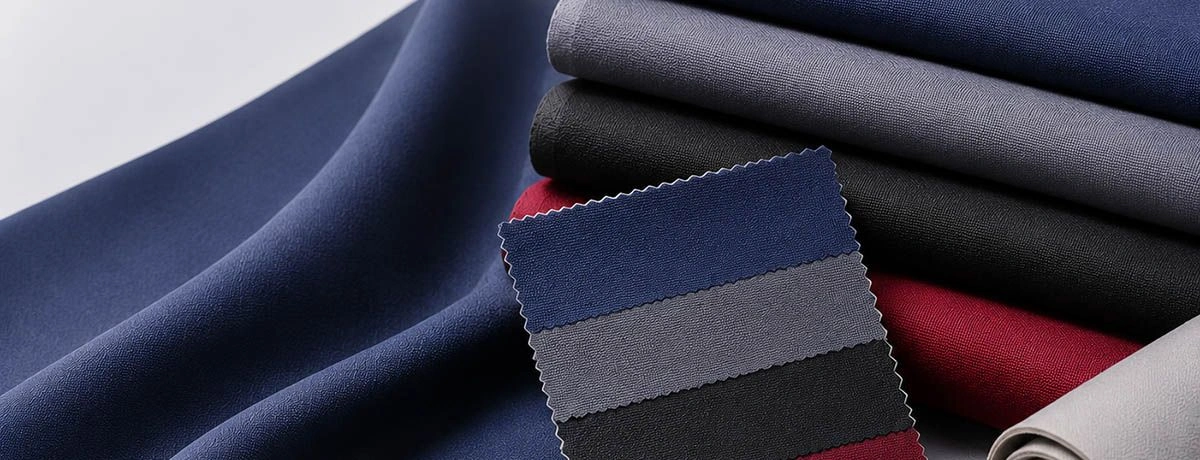
- In 2025, 28% of B2B buyers named fabric quality inconsistency their top sourcing frustration — the single biggest risk when picking a mini matt fabric supplier.
- The right supplier is judged on five things: certifications, batch-to-batch color consistency, MOQ flexibility, lead time reliability, and custom capability — not unit price alone.
- MH supplies OEKO-TEX® certified polyester mini matt from China with MOQ 5,000 m/color, Delta E < 1.0 color matching, and full printing, dyeing, and stretch options.
- Total cost of ownership, not the per-meter quote, decides which supplier is actually the cheapest over a multi-year uniform contract.
The B2B Sourcing Problem: Why Supplier Choice Is the Real Risk
In 2025, 28% of B2B buyers cited fabric quality inconsistency as their top frustration with bulk orders. For mini matt, that risk lands squarely on supplier choice. The fabric itself is forgiving — the supplier behind it is where orders succeed or fail.
You know the failure mode. You approve a sample, place a 50,000-metre order, and the rolls arrive a half-shade off, two grams lighter, or a week past the date your cutting room was booked. The problem was never the weave. It was a supplier who couldn't hold a spec at scale, which is what keeps bulk orders cost-effective in B2B buying.
This guide is for procurement managers, uniform and workwear manufacturers, garment factories making garments, and importers who need to find a mini matt fabric supplier that can meet bulk sourcing needs. You'll get a clear picture of what these suppliers sell, the criteria that separate reliable partners from cheap ones, and why printed mini matt is lightweight and easy to sew, making it practical for efficient production, plus a five-point selection framework and full details on MH as a certified source.
What a Polyester Mini Matt Fabric Supplier Actually Sells
A capable mini matt fabric supplier offers a product family, not a single SKU, with a smooth, matte appearance rather than a single SKU. The standard catalogue spans four categories, each mapped to a different buyer need and price point.
-
Standard 100% polyester mini matt — the institutional workhorse, 160–300gsm, plain 1/1 weave, typically 58–60 inches wide, in stock colors like navy, grey, black, and white. Lowest price, fastest lead time, and wrinkle-resistant in daily use, with detailed mini matt specifications and certifications available.
-
Stretch mini matt — polyester blended with 3–5% spandex for movement, used in modern fitted workwear and activewear-adjacent uniforms, similar in concept to polyester spandex stretch woven fabrics for tailored garments.
-
Printed mini matt — sublimation or pigment printing for branded uniforms, camo, and patterned schoolwear, with buyers able to select printed patterns such as geometric and floral designs.
-
Custom-dyed mini matt — color matched to a Pantone or physical swatch for corporate identity programs, with documented ΔE tolerance.
A trader typically resells whatever a mill happens to run. A manufacturer-supplier produces all four to spec — which matters when your order doesn't fit a stock color card.
Features That Separate a Reliable Supplier from a Cheap One
In 2025, 47% of businesses commissioning bulk uniforms specified easy-care, consistent fabric as a mandatory procurement criterion. Meeting that bar isn't about the fabric type — it's about supplier capability across four features.
Batch-to-Batch Color Consistency
This is the feature that separates serious suppliers from the rest. A reliable supplier holds dye lots within a ΔE tolerance of under 1.0 per roll — the industry benchmark for institutional uniform programs. Ask for the supplier's documented ΔE spec before you order. If they can't quote one, they aren't measuring it.
Certification and Compliance
OEKO-TEX® Standard 100 certification confirms the fabric is free from harmful substance levels, which is increasingly important for schools ordering uniforms and for EU/US imports. A reliable supplier should provide current certificates, samples, and responsive service on request — not a screenshot of an expired one. Compliance documentation is a sourcing gate, not a nice-to-have.
MOQ Flexibility
Minimum order quantity defines who a supplier actually serves. Mill-direct MOQs typically start at 3,000–5,000 metres per color. A supplier who can split MOQ across colors, or hold stock for repeat smaller pulls, fits buyers who can't absorb a single 50,000-metre commitment.
Lead Time Reliability
A quoted lead time means nothing without a track record of hitting it. Standard mini matt ships in 7–15 days from stock; custom-dyed or printed runs for uniforms, tablecloths, or other programs that require date certainty take 25–35 days. The reliable supplier commits to a date and holds it — because a slipped fabric delivery stalls your entire cut-make-trim line, making that performance suitable for buyers managing fixed event or contract deadlines.
Applications: What Buyers Source Mini Matt For
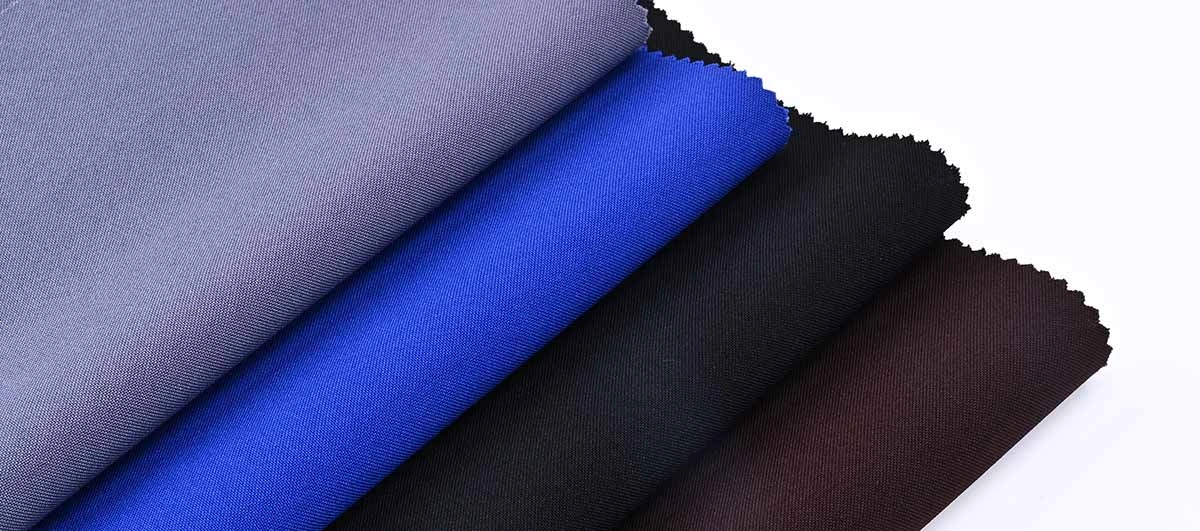
Mini matt is a versatile fabric used across school uniforms, corporate workwear, professional apparel, and selected non-apparel products, where low maintenance, consistent appearance, and bulk availability directly drive procurement decisions.
-
School uniforms — the highest-volume application, often combined with checked fabrics for shirts, skirts, and trims. Navy, grey, black, and burgundy in 160–200gsm for trousers, skirts, blazers, and waistcoats. Multi-year contracts make re-order color consistency non-negotiable.
-
Corporate and industrial workwear — 240–300gsm for durable performance against industrial laundering and daily wear, and suitable for heavier-duty products such as bags when buyers need more robust fabric or water-resistant oxford fabric for outdoor and luggage use.
-
Hospitality and healthcare uniforms — easy-care, quick-dry properties suit operators running laundry twice daily between shifts.
-
Promotional and branded apparel — printed mini matt for events, teams, and corporate identity programs, including technical textiles such as tablecloths, while polyester spandex matt swimsuit fabrics cover more body-contouring active and swim pieces in the same campaigns.
-
Home decor and decorative uses — mini matt is also used for home decor applications, including decorative cushions, while lighter wholesale chiffon fabric options suit curtains, overlays, and decorative event textiles.
The application defines the spec; the spec defines which supplier can serve you. A supplier strong in stock workwear colors may be the wrong fit for a Pantone-matched corporate program.
Why Source from MH?
MH is a China-based manufacturer-supplier of polyester mini matt fabric, serving uniform and workwear buyers with certified, consistency-controlled production, and helping buyers find the right mini matt program for uniforms, garments, and related accessories, as part of Ningbo MH’s global garment accessories and tailoring materials operation. We manufacture the fabric we sell — dyeing, weaving, and finishing under one roof — which is what makes batch-to-batch reliability possible at industrial scale.
From our production floor: The orders that go wrong almost never fail on the loom — they fail in dyeing, when a lot drifts off-shade between runs. We control dyeing in-house specifically to hold ΔE < 1.0 across re-orders, because a school that specified "navy" in year one needs the identical navy in year three.
What MH offers B2B buyers:
- OEKO-TEX® Standard 100 certified polyester mini matt, with current certificates available on request.
- MOQ 5,000 m/color, with flexibility to split across colors for mixed programs.
- Full product range — standard, stretch, printed, and custom-dyed mini matt, 160–300gsm; plain mini matt can also be used as lining in garments, complemented by polyester spandex woven 4-way stretch Maserati fabric for performance-focused styles.
- Selected garment accessories available alongside fabric for better purchasing efficiency, including wholesale polyester sewing thread supply.
- Documented ΔE < 1.0 color tolerance per roll and across re-orders.
- Custom color matching to Pantone or physical swatch, plus sublimation and pigment printing.
- Direct factory pricing 25–35 days for custom runs.
For quotes, product details, physical samples, and export service support, contact MH.


Supplier Selection Guide: 5 Criteria to Compare
Don't compare suppliers on price first. Compare them on the five criteria below, in this order — price only becomes meaningful once the first four pass. Use this as a scoring checklist when you shortlist to help buyers select a supplier based on performance, not headline price alone.
| Criterion | What to ask the supplier | Pass signal | Red flag |
|---|---|---|---|
| Certification | Can you send a current OEKO-TEX® Standard 100 certificate? | Valid, in-date certificate provided same day | Expired cert, screenshot only, or "available later" |
| Color consistency | What is your documented Delta E tolerance per roll and across reorders? | Delta E < 1.0, measured and quoted | Cannot quote a number |
| MOQ | What is your MOQ per color, and can it split across colors? | 3,000–5,000 m, flexible splitting | High MOQ with no flexibility |
| Lead time | What is your committed lead time for stock vs. custom, and your on-time rate? | 7–15 days stock / 25–35 custom, with track record | Vague window, no commitment |
| Customization | Can you match a Pantone, print, and offer stretch blends? | Full in-house capability | Trades stock only, outsources dyeing |
The decisive distinction is manufacturer versus trader. A manufacturer controls all five criteria; a trader controls none of them directly. When two quotes look similar, the integrated manufacturer is often the better choice for buyers who require stable performance across repeat orders.
Frequently Asked Questions
What is the typical MOQ for a mini matt fabric supplier?
Mill-direct MOQs typically start at 3,000–5,000 meters per color. MH's MOQ is 5,000 m/color with flexibility to split across colors for mixed programs. Traders may quote lower MOQs but often can't guarantee batch consistency across re-orders.
How do I verify a mini matt fabric supplier's quality before a bulk order?
Request a current OEKO-TEX® Standard 100 certificate, a documented ΔE color tolerance (under 1.0 is the institutional benchmark), and physical samples before committing, and review the fabric’s smooth matte finish and printed patterns. Buyers can select from options such as geometric or floral prints depending on market needs. In 2025, 28% of B2B buyers cited quality inconsistency as their top sourcing risk — sampling is the cheapest way to avoid it.
Is the cheapest mini matt supplier actually the cheapest?
Rarely. A quote 8% lower that ships inconsistent rolls can be misleading if the supplier cannot meet durability and delivery expectations, triggering rejects, re-cuts, and line delays that erase the saving. Over a 3–5 year uniform contract, total cost of ownership — driven by wash-cycle durability, reject rate, and mini matt’s bulk cost-effectiveness when its performance reduces rejects and rework — matters far more than the per-meter price.
Conclusion
Choosing a mini matt fabric supplier is a risk-management decision, not a price hunt. Buyers should choose a supplier whose fabric and service meet the performance needs of uniforms and related applications; that’s where bulk orders succeed or fail.
-
Judge suppliers on certification, color consistency, MOQ, lead time, and customization — in that order, before price.
-
Prefer a manufacturer with in-house dyeing over a trader for any multi-year or color-critical program.
-
Sample before bulk — it's the cheapest insurance against a costly mismatch.
-
MH offers OEKO-TEX® certified mini matt, MOQ 5,000 m/color, ΔE < 1.0 consistency, and full custom capability, direct from the factory.
Ready to source? Explore the full spec, or contact MH for a quote and samples.
