
How to Choose Mini Matt Fabric Colors for Bulk Orders?
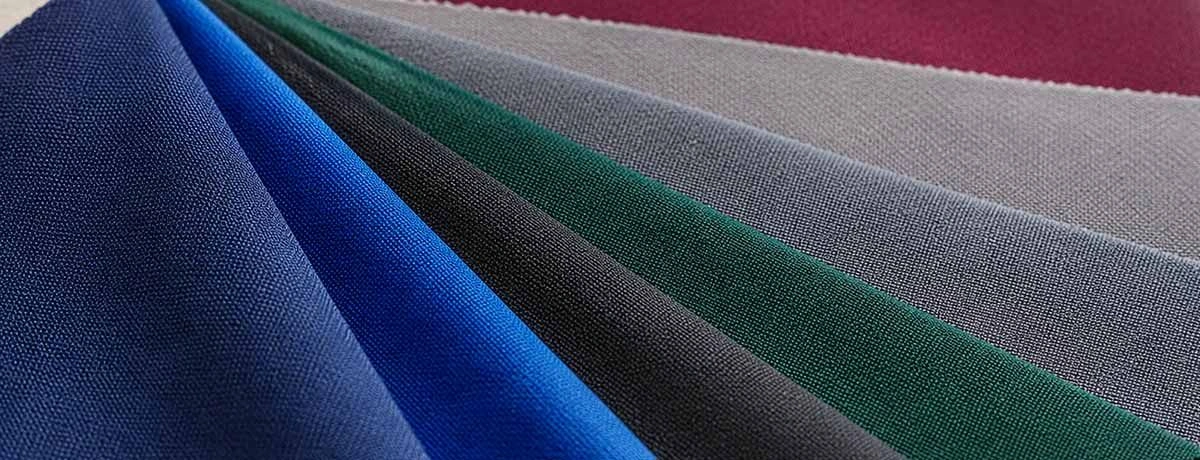
Mini matt is a piece-dyed woven polyester that holds color exceptionally well, which is why it dominates uniform and workwear programs. Most mills carry a 50–100+ shade stock card (navy, black, royal, bottle green, grey lead the orders) plus custom Pantone matching above a dye minimum.
For B2B buyers, the two decisions that actually matter are color fastness grade and dye-lot consistency across reorders. Color drives 87% of product-selection decisions — for uniforms, that means your brand color has to survive the wash, not just the sample swatch.
Why Mini Matt Fabric Colors Are a Sourcing Decision, Not a Style Choice
In 2026, 87% of consumers cite color as the primary factor in product selection. For a B2B buyer sourcing mini matt fabric, that statistic translates into a hard requirement: the color you approve on a swatch must be the color that arrives, ship after ship, wash after wash.
This guide is written for the people who own that risk — uniform manufacturers, workwear wholesalers, procurement managers running multi-site programs, and garment factories buying greige-to-finished mini matt in volume who typically partner with large global garment-accessory suppliers like Ningbo MH.


The pain is familiar. A sample looks perfect, the bulk arrives a half-shade off, and a 5,000-meter order is suddenly a negotiation instead of a delivery. Color is where most uniform-fabric disputes start.
Quick Recommendation
For most uniform and workwear programs, order piece-dyed mini matt at 200–240 GSM in a stock shade, and specify minimum color fastness of Grade 4 to washing (ISO 105-C06) and Grade 4–5 to light (ISO 105-B02). That covers the overwhelming majority of institutional needs without paying a custom-dye premium.
- Standard colors (navy, black, royal, bottle green, grey) → order from the stock shade card. Fast lead time, no dye minimum, proven fastness.
- Brand / Pantone color → request a custom dye, expect a dye minimum (commonly 300–500 m per color), and approve a lab dip before bulk.
- Outdoor / high-UV use → push light fastness to Grade 5 and wash-test at your actual laundry temperature.
- Multi-site / repeat programs → the priority is dye-lot tolerance. Lock a Delta E ≤ 1.0 agreement before the first run.
Mini matt fabric is piece-dyed polyester, which holds disperse dye deep in the fiber and delivers strong wash and light fastness — typically Grade 4 to 5 on the ISO 105 scale when properly processed. For B2B uniform buyers, that fastness is the core reason mini matt outsells cheaper rigid polyester in institutional programs.
What Determines Mini Matt Fabric Color Quality?
Mini matt color quality comes down to three controllable factors: the dye chemistry, the dyeing method, and the fastness result. Because mini matt is woven from polyester, it is dyed with disperse dyes — the only class that bonds reliably to polyester fiber, and a core feature of high-quality 100% polyester mini matt fabric.
1. Piece dyeing vs yarn dyeing. Standard mini matt is piece-dyed: the woven fabric goes into the dye bath as a finished roll. This gives even, solid color across the full width and is cost-efficient at volume, which is why it dominates uniform-grade polyester mini matt fabric supply. Yarn-dyed or solution-dyed variants exist for extreme fastness needs but carry a higher price and longer lead time.
2. Disperse dye and heat-set. Disperse dyes are driven into the polyester at high temperature (typically 130°C), then heat-set. A correctly heat-set mini matt resists the migration and crocking that plague under-processed polyester. This is why a cheap shade can rub off onto a white shirt while a properly dyed one does not.
3. The fastness result. Color quality is ultimately measured, not described. The ISO 105 series grades color resistance to washing, rubbing, light, and perspiration on a 1–5 scale, where 5 is best. A buyer who specifies grades buys predictable color. A buyer who specifies only a Pantone number buys a gamble.
The Standard Mini Matt Color Palette
Most mini matt mills carry a stock shade card of 50 to 100+ colours, and roughly a dozen shades account for the bulk of B2B order volume. In 2026, blue remains the most-preferred color at 36%, with a measurable rise in deep green among younger demographics — a preference that shows up directly in uniform order data.
| Shade family | Common colors | Typical application |
|---|---|---|
| Navy / blue | Navy, royal blue, sky blue, air-force blue | Corporate, school, security, healthcare |
| Black / grey | Jet black, charcoal, lead grey, silver grey | Hospitality, corporate, formal workwear |
| Green | Bottle/forest green, olive, sage | Medical, school, food service |
| Red / maroon | Red, maroon, wine | School blazers, branded retail, events |
| Earth / neutral | Beige, khaki, brown, stone | Workwear, transport, outdoor staff |
| Hi-vis adjacent | Royal orange, bright yellow (lined) | Safety-adjacent and event roles |
Navy and black alone often represent more than half of total mini matt order volume in uniform programs, because they read as professional, hide soiling, and photograph cleanly under institutional lighting. Lighter mini matt shades reflect more light than darker ones, which can change their visual appearance under the same institutional lighting. High-volume stock colors usually have the shortest lead times, the most consistent dye-lot history, and no custom-dye minimum.
Applications: How Color Choice Maps to Sector
Color choice in mini matt is rarely free — it's dictated by sector convention, brand rules, and visibility needs. The global uniforms and workwear market reached USD 84.5 billion in 2025 and is projected to hit USD 144.1 billion by 2034, and color discipline is what keeps those programs visually coherent at scale.
School uniforms
The largest single mini matt color category. Navy, bottle green, maroon, royal blue, and grey dominate, usually matched to a long-standing school color. Dye-lot consistency matters most here because schools reorder every term and parents notice mismatched blazers.
Corporate and hospitality
Black, charcoal, and navy lead for hospitality uniforms, tablecloths, and other durable garments such as aprons, chosen for a premium, low-soiling presentation — 79% of consumers perceive black as a premium color. Brand-matched custom shades are common here, which raises the importance of Pantone matching.
Security and transport
Navy and black for authority, often paired with hi-vis trim. Light fastness is critical because outdoor exposure fades weaker dyes within a season.
Medical and clinical support
Calming blues and greens, with perspiration and wash fastness pushed up for frequent hot laundering; dress codes sometimes pair solid mini matt with lightweight chiffon fabric for uniforms and accessories in hospitality-adjacent clinical roles.
Comparison and Color Selection Guide
Choosing the right mini matt color path comes down to one question: is your color standard, or is it custom? The table below maps the decision.
| Factor | Stock shade | Custom Pantone match |
|---|---|---|
| Lead time | Shortest (in-stock or quick dye) | Longer (lab dip + bulk dye) |
| Minimum order | Often no dye minimum | Dye minimum per color (commonly 300–500 m) |
| Color risk | Low — proven dye-lot history | Managed via lab-dip approval |
| Cost | Lowest | Premium for custom dyeing |
| Best for | School, corporate, workwear standards | Brand-matched corporate, retail, events |
Request Color Cards and a Quote
The fastest way to de-risk color is to start with the physical shade card and a lab dip — not a screen. Send MH your requirement to receive:
- ✓ The full mini matt stock shade card for your reference
- ✓ A lab dip matched to your Pantone or physical swatch
- ✓ Stated ISO 105 fastness grades for your application
- ✓ A production quote with MOQ, dye-lot terms, and lead time
Tell MH your target colors, GSM, quantity, and end use — and the team will return a color-specific quote and timeline, with custom solutions that create unique designs and help elevate your product range; contact MH for consultation or more information.
Frequently Asked Questions
How many colors does mini matt fabric come in?
Most mini matt mills carry a stock shade card of 50 to 100+ colors, covering the full uniform spectrum — navy, black, royal blue, bottle green, grey, maroon, beige, and more. Beyond the stock card, custom Pantone-matched colors are available above a dye minimum. Navy and black alone typically account for over half of B2B mini matt order volume.
What is the best color fastness grade for uniform mini matt?
Specify Grade 4 minimum for washing (ISO 105-C06) and Grade 4–5 for light (ISO 105-B02), pushing light fastness to Grade 5 for outdoor use. The ISO 105 scale runs 1–5, where 5 is best. Properly dyed and heat-set polyester mini matt reliably achieves Grade 4–5, which is why it suits institutional laundering.
Can mini matt fabric be matched to a custom Pantone color?
Yes. Mini matt is a 100% polyester fabric commonly supplied in 150 cm width, so it can be custom-dyed to a supplied Pantone reference or physical swatch. Best practice is to approve a physical lab dip of the actual polyester fabric before bulk production, because screen and printed Pantone references do not reproduce the fabric's true surface. Custom colors usually carry a dye minimum and a longer lead time than stock shades.
Does dark mini matt color rub off onto skin or other fabrics?
It should not, if rubbing fastness (ISO 105-X12) is specified at Grade 4 or above. Crocking — color transfer through rubbing — happens with under-processed or under-washed dark polyester, especially deep navy and black. A correctly heat-set and reduction-cleared mini matt resists it, and pairing uniforms with high-quality polyester embroidery thread helps maintain logo color integrity under the same conditions. Always specify the crocking grade for dark colors.
Are some mini matt colors faster to source than others?
Yes. High-volume stock colors — navy, black, royal blue, grey, bottle green — usually have the shortest lead times, the most consistent dye-lot history, and no custom-dye minimum. Custom Pantone matches require a lab-dip approval cycle plus bulk dyeing, adding time. For tight deadlines, asking the mill for the closest stock shade is the fastest path.
Conclusion
Mini matt fabric colors are not a finishing detail — for a B2B buyer, they're the part of the order most likely to cause a dispute and most able to build a brand. The fabric itself is forgiving: piece-dyed polyester holds disperse dye deep in the fiber and delivers the Grade 4–5 fastness that institutional uniforms demand.
The work is in the specification. Choose stock shades where you can, demand a lab dip where you can't, write the ISO 105 fastness grades for your application, and lock a dye-lot tolerance for anything you'll reorder. Do those four things and color stops being a risk and becomes a controlled input.
