
Piping for Upholstery: A Practical Guide for Professional Buyers
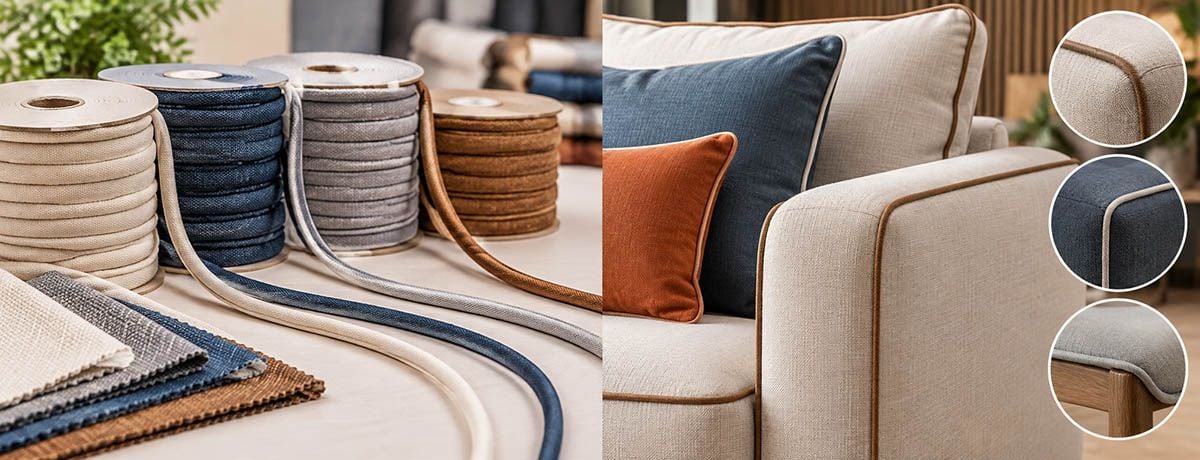
Selecting the right piping for upholstery determines how your finished furniture looks, performs, and holds up over years of use. This guide covers the types, materials, production processes, and sourcing strategies that matter most to furniture manufacturers, wholesalers, and contract buyers ordering at scale.
Key Takeaways
-
Upholstery piping-whether single welt, double welt, or lip trim-is a structural trim that reinforces seams, defines edges, and raises the perceived value of sofas, cushions, and chair programs.
-
Piping cord and welting cord core material (foam, cotton, or polyester) must match the application environment: indoor residential, hospitality, marine, or outdoor furniture collections.
-
MH operates as a make-to-order textile supplier with integrated capacity for both upholstery fabric and piping components, supporting long-term B2B cooperation rather than retail craft projects.
What Is Upholstery Piping and Why It Matters in Production
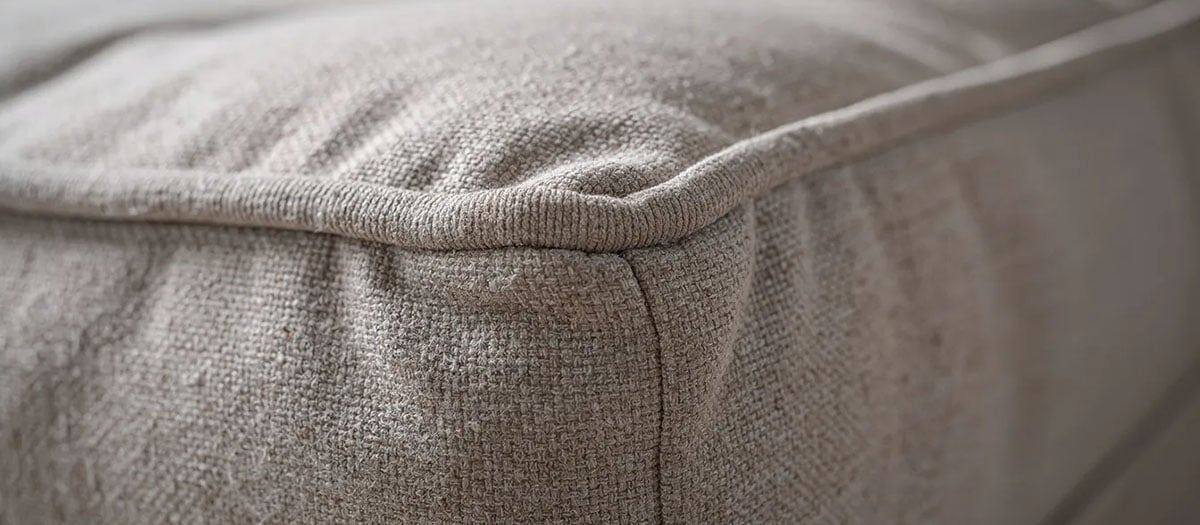
Upholstery piping is basically a cord wrapped in a fabric strip and sewn into seams to create a raised, finished edge on cushions, sofas, armchairs, and headboards. Welting is a cord wrapped in fabric for structure, and piping is used as a border on upholstery pieces-serving double duty as both a visual detail and a seam reinforcement element. Piping reinforces seams and adds a professional finish to upholstery, which is why it remains a non-negotiable specification in contract and hospitality furniture programs.
-
Single piping is commonly used on chair and sofa edges, providing clean lines in residential and mid-range commercial seating.
-
Double welt piping creates a more pronounced decorative effect, frequently specified in premium hospitality and exposed-frame dining chair programs launched between 2020 and 2026.
-
Lip trim attaches where fabric meets a wood or metal frame, concealing staples and tacks for a finished look.
-
Contrast piping highlights the silhouette of furniture and adds decoration, making it a cost-effective way to differentiate product lines.
-
Common B2B end-uses include hotel lobby seating, modular office systems, OEM sofa production for export to Europe and North America, and contract outdoor furniture.
Types of Upholstery Piping: Welting, Piping, Cording & Lip Trims
Terminology varies by region. In North America, "welt cord" and "welting cord" dominate purchase orders, while European and Middle Eastern buyers tend to use "piping cord" or simply "cording." Cording can refer to different types in upholstery depending on context. In buyer terminology, the difference is usually that piping is the finished fabric-covered edge, welting is often used as the interchangeable upholstery term, and cording can mean either the insert or the finished trim depending on the supplier. Buyers should be explicit in PO specifications to avoid misinterpretation.
-
Standard single piping is commonly used on chair edges and cushion seams. Typical cord diameters are 3/32", 5/32", and 6/32"-piping cord is typically 6/32 inches thick for most sofa and accent chair programs.
-
Double welt piping creates a more pronounced finish by joining two cords together. It is commonly used to conceal staples or tacks along exposed wood frames in dining seats and chairs, and its main job is to create a cleaner finished edge.
-
Lip trim features a flat fabric "lip" for stapling or sewing to a frame, offering a round profile similar to gimp but suited to modern production methods; small trim details can also change how the furniture silhouette reads in finished production.
-
Piping materials include cotton, polyester, and polyester sewing threads-each suited to different performance requirements.
-
Traditional gimp trim still appears in heritage or classical furniture ranges, but most contemporary contract lines specify double welt or lip trim instead.
Choosing the Right Core: Foam, Cotton, and Synthetic Piping Cord
The core material you select drives edge definition, durability, and suitability for the end environment. Welting provides structure and a neat appearance in upholstery, and the core is what delivers that structure.
-
Firm foam welt cord produces sharp, consistent edges preferred in contemporary furniture. It holds shape during transit, making it a strong choice for export lines requiring dimensional stability, including in pieces covered with waterproof Oxford fabric for upholstery-adjacent applications.
-
Cotton cord is the industry standard for upholstery piping in higher-end indoor programs. It presses and shapes well around curves, but absorbs moisture, limiting its use in outdoor or marine ranges.
-
Foam or rubber piping is used in marine or outdoor upholstery due to its moisture resistance. Polyester or polypropylene cores are recommended for outdoor furniture, high-humidity markets in Southeast Asia and coastal regions, and any application exposed to UV or salt spray.
-
Diameter tolerances of ±0.1–0.3 mm are typical. Consistent cord density and thickness reduce sewing rework and speed up production lines. Proper cord diameter and fabric strip width depend on the scale of furniture being upholstered.
Fabric Coverings for Piping: Matching Industrial Upholstery Needs
Piping is usually covered with the same fabric as the main piece (self-piping) or a specified contrast upholstery fabric for design pop. How much fabric you allocate to piping depends on the number of seams, cord diameter, and cut method, so measure the area needing piping before calculating strip quantities.
-
Bias-cut fabric strips allow piping to stretch and curve smoothly around armrests, seat corners, and rolled edges. Cutting fabric on the bias minimizes puckering and allows curves to be shaped. Before sewing, fabric strips for piping must be joined at a 45-degree angle to maintain smooth transitions.
-
Straight-cut strips are used where pattern alignment matters-stripes, checks, or geometric prints that must run consistently along a seam.
-
Industrial upholstery fabric groups for piping include woven jacquards, faux leather, microfibers, and solution-dyed acrylics meeting ACT performance standards for outdoor programs.
-
Fabric weight between 250 and 450 g/m² is standard for heavy-duty production. Heavier backings or high-pile fabrics (velvet, chenille) may require increased seam allowance and larger cord diameter. Proper cord diameter and fabric strip width should also match the scale of the furniture being upholstered.
-
Cut fabric strips 2 inches wide for piping in most applications; 1.5 inches wide for single piping on thinner profiles. Use your measurements to confirm strip width and total piping length, check them before cutting to reduce waste, and always cut fabric strips longer than the piping cord for ease of handling, adding 3 to 5 inches to your piping length for wiggle room.
Applications: From Indoor Seating to Outdoor Furniture and Craft Lines
Upholstery piping appears in virtually every furniture category where seam definition and durability matter in an upholstery project. Here is where bulk contracts tend to concentrate.
-
Core applications: sofa and sectional programs, recliners, dining chairs, hotel headboards, office seating, slipcovers for hospitality refurbishment, and pillows for contract interior projects, with piping often used to border a cushion or outside panel depending on the furniture design.
-
Outdoor furniture and marine seating have been key growth areas since around 2021. The Textilene market alone derives nearly 49.4% of its revenue from outdoor furniture applications, signaling sustained demand for UV-stable, mildew-resistant welting cord and coverings as well as lightweight chiffon fabric accents in décor accessories.
-
While some buyers use piping cord for craft projects, quilting accessories, or clothing trims, MH is positioned for wholesale quantities and repeat B2B orders rather than small retail packs, similar to how it supports bulk sourcing of bag and luggage accessories for manufacturers.
-
Adding contrast welt or double welt to an established best seller model is frequently the most efficient way to create a refreshed SKU without altering frame or foam specifications. This approach tends to pop on showroom floors, differentiating product lines with minimal tooling changes.
-
Regional style differences matter: bold contrast piping is specified frequently in Middle Eastern markets, while Northern European ranges favor subtle, tone-on-tone welting in thinner cord profiles. Green and neutral earth tones have gained traction in outdoor collections targeting Southern European hospitality.
Working With MH as Your Upholstery Piping Partner
MH is an integrated textile manufacturing and trading company specializing in B2B supply of upholstery-related products, including piping cord, welting cord, and upholstery fabric, backed by large-scale garment accessories and textile manufacturing capabilities.
-
Large-scale production capacity supports OEM furniture factories, upholstery workshops, and wholesale distributors requiring stable volumes with repeatable quality across seasons, leveraging MH’s experience in producing high-quality embroidery thread at scale.
-
MH coordinates fabric and piping production together, ensuring consistent dye lots and finishes when clients place combined orders-eliminating the excess color variation that comes from sourcing covered cord and body fabric separately, which is the same discipline applied to its 120D/2 polyester embroidery thread with strong color fastness and polyester-spandex stretch woven fabric programs.
-
Long-term cooperation yields better pricing, reduced sample and setup costs, improved color matching, and more reliable lead times-benefits that compound with every repeat order.


FAQ:
Below are answers to questions that upholstery manufacturers and wholesalers frequently raise when sourcing piping at scale.
What cord diameter is most commonly specified for sofa and chair piping?
Most production lines standardize on 5/32" and 6/32" welt cord for sofas and accent chairs. For more delicate profiles or tight corners, 3/32" firm foam piping cord is common. MH can produce other diameters to order, but standardizing sizes across models simplifies machine setup and inventory management.
Can the same piping specification be used for both indoor and outdoor furniture?
Typically no. Indoor applications can use cotton or foam cores with standard upholstery fabric coverings, while outdoor furniture requires synthetic cores and UV-stable, solution-dyed fabric coverings. Buyers developing mixed collections should create separate piping SKUs for indoor and outdoor ranges to maintain durability and avoid warranty issues.
What information does MH need to quote and produce custom piping cord?
Key data points include cord diameter, core material, covering fabric type and weight, intended application, and target order quantity per color. Sharing expected annual volume and destination markets allows MH to propose cost-effective constructions and logistics options tailored to your supply chain.
Is there an easy way to upgrade an existing furniture line using piping?
Adding contrast welt or double welt to an established model is often the most efficient path to a refreshed SKU without changing frames or foams. MH can help match or contrast colors so factories introduce new looks with minimal disruption to current upholstery processes and attach trim cleanly as part of the existing build. When upgrading exposed-frame models, factories may attach trim with a staple gun or hot glue gun depending on the construction method.
