
Plaid vs Check: What’s the Difference and Which Pattern Is Better for Bulk Fabric Orders?
Key Takeaways
-
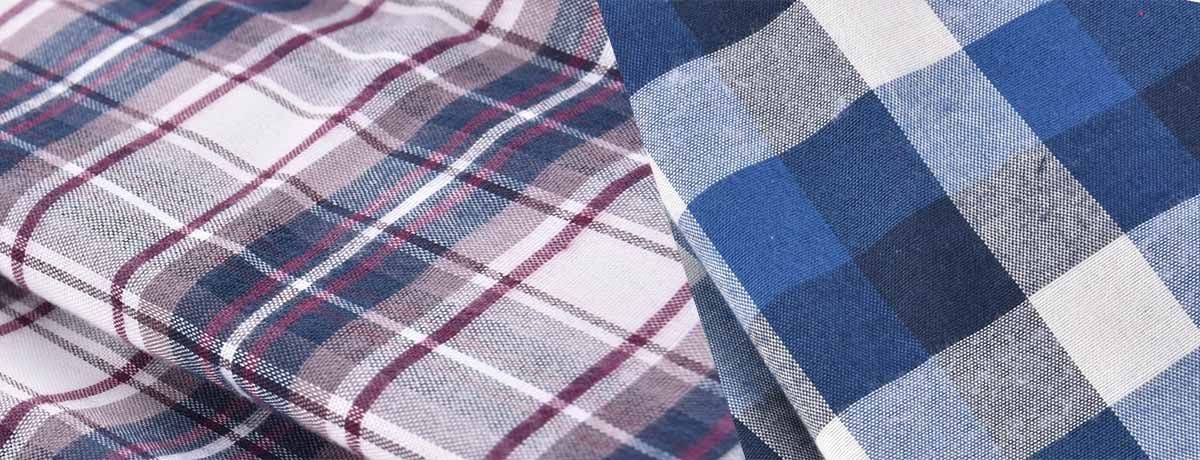
Plaid patterns feature multiple colors and intersecting stripes of varying widths, creating visually dynamic designs ideal for fashion garments, casual shirts, dresses, and outerwear.
-
Check patterns use regular, evenly spaced grids with typically two colors, making them preferred for uniforms, workwear, school wear, and corporate apparel where consistency matters.
-
From a production standpoint, checks are simpler to weave, easier to align in cutting, and more cost-efficient for large-volume orders, while plaids demand more complex yarn-dyed processes and careful pattern matching.
-
MH supplies both plaid fabrics and check fabrics in bulk quantities with stable quality, available in polyester, cotton, poly-cotton, and flannel constructions to support OEM and customized orders.
-
Understanding the technical and practical differences between plaids and checks helps fabric buyers, garment manufacturers, and uniform producers make informed sourcing decisions for their specific applications.
Plaid vs Check: Quick Overview for Fabric Buyers
Both plaid and check are woven patterns created by intersecting vertical and horizontal lines in the warp and weft, but they differ significantly in color complexity, stripe arrangement, and visual effect. For wholesale fabric purchasing, understanding these differences is essential for accurate specification and efficient production.
-
Plaid fabrics typically feature three or more colors with varied stripe widths and larger pattern repeats, making them popular in fashion shirts, casual dresses, outerwear, and flannel garments where a visually dynamic appearance adds value.
-
Check patterns usually incorporate two to three colors with evenly spaced, symmetrical grids, making them ideal for shirts, school uniforms, workwear, and corporate apparel where consistency, formality, and ease of production are priorities.
-
In sourcing and production contexts, “plaid” and “check” are not interchangeable terms. Mills and buyers must specify pattern type, repeat size, colorways, and construction details to avoid mismatched bulk orders.
-
This distinction affects everything from yarn planning and loom setup to cutting efficiency and garment assembly, making it critical for fabric buyers and production planners to understand the technical differences before placing orders.
Technical Definition: What Is a Plaid Pattern?
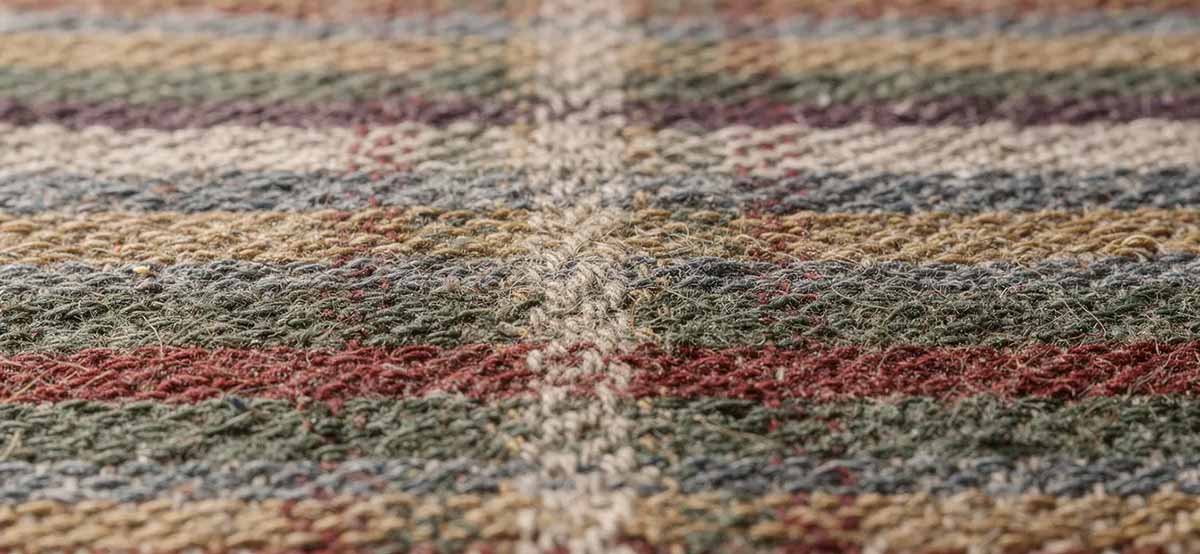
A plaid pattern consists of intersecting stripes of varying widths and multiple colors in both warp and weft directions, creating rectangles and bands rather than perfectly uniform squares. This pattern structure produces a cross hatched effect that appears more complex and visually dynamic than simpler grid designs.
-
Plaid designs often have larger pattern repeats, typically ranging from 6 to 12 centimeters or more. These repeats can be symmetrical or asymmetrical, giving more visual movement and complexity compared to checks.
-
Traditional tartan plaid, originating in Scotland with roots traced to Scottish clans, represents a subset of plaid with formally recorded “setts” where warp and weft color sequences are typically identical. Modern fashion plaids extend far beyond classic tartan worn layouts, encompassing many variations for contemporary garments.
-
From a production standpoint, yarn-dyed plaids require careful stripe design for both warp and weft, exact color matching, and precise loom setting to achieve clear, non-blurred intersections. The term plaid in manufacturing contexts implies this level of design complexity.
-
Plaid fabrics are commonly produced in twill weave and plain weave constructions, as well as brushed flannel for autumn and winter shirts and jackets. A good example is a red, navy, and white brushed flannel plaid shirting used in FW collections.
-
The coloured lines in plaid patterns alternate in specific sequences that must be reproduced exactly in both warp and weft to maintain pattern integrity, demanding careful quality control throughout bulk production runs.
Technical Definition: What Is a Check Pattern?
Check patterns are designs based on a regular, evenly spaced grid of intersecting lines that form consistent squares, usually in two colors (often including a white background) and sometimes a third accent color. This creates a checkered pattern with a balanced, orderly appearance.
-
The stripe layout in warp and weft is typically identical or mirrored, creating a symmetric and balanced effect that resembles graph paper. This regularity makes checks easy to align, cut, and sew in mass production environments.
-
Checks generally have smaller and more predictable repeats than plaids, typically ranging from 0.5 to 3 centimeters. This makes sense for standardized garments like school shirts and company uniforms where consistency across multiple production runs is essential.
-
From a technical angle, check patterns are often woven cloth produced in plain weave or simple twill with yarn-dyed stripes. This enables high-speed weaving and consistent quality across large yardage, with production speeds reaching 150 to 200 meters per hour compared to 50 to 100 for complex plaids.
-
Compared with plaid patterns, checks are simpler to specify, easier to quality-control, and more stable visually when scaled across multiple factories or large uniform programs. The horizontal and vertical stripes maintain their appearance reliably across production lots.
-
The pattern consisting of regular squares in a checkered layout has made checks a staple in professional and institutional garment programs worldwide.
Common Types of Check Patterns Used in Bulk Orders
The term “check” encompasses a broad category of patterns, and buyers frequently request specific sub-types such as gingham, buffalo check, windowpane check, and tattersall for their shirt and uniform programs. Each type has distinct characteristics that affect its suitability for different applications.
-
Gingham check: This small, two-color checkered pattern typically features white plus another color like navy, red, blue, or green, forming clear, even squares. Gingham is commonly used in men’s and women’s shirts, children’s clothing, and light uniforms due to its clean, classic appearance. Typical constructions include lightweight cotton or poly-cotton plain weave at 90 to 150 GSM, making it ideal for warm-weather garments. Historically, gingham evolved from 17th-century Indian striped imports and developed into the checked patterns produced in mid-18th-century Manchester mills.
-
Buffalo check: This large-scale, two-color pattern traditionally features red and black squares with bold, high-contrast visual impact. The buffalo check pattern traces its origins to Woolrich Woolen Mills, where a designer reportedly named it after his buffalo herd. It became popular with lumberjacks for its visibility and warmth. Buffalo check appears extensively in flannel shirts, jackets, and outerwear, especially in autumn and winter collections. While often marketed as “buffalo plaid,” it is technically a type of check pattern, though the line between plaids and checks blurs in this example due to its traditional wool fiber and twill weave origins.
-
Windowpane check: This pattern features thin lines widely spaced to create large squares that resemble a window pane or graph check. Windowpane is popular in more formal shirts, suiting, and corporate wear where a subtle pattern is desired. These checks often use fine yarns and careful line definition to maintain a sharp grid, with the graph or window pane effect providing understated elegance.
-
Tattersall check: This pattern presents thin, regularly spaced vertical and horizontal stripes in two or more different colours on a light ground, often white or cream, forming neat, small-scale squares. Tattersall is used in shirting for both casual and semi-formal wear, as well as in equestrian and country-inspired collections. The lines alternate at right angles to create a refined, traditional appearance.
-
Pin checks: These feature very fine, closely spaced thin lines creating tiny squares, offering a subtle texture that reads almost as a solid from a distance while providing visual interest up close. Pin checks work well for professional shirting and corporate uniforms.
Common Types of Plaid Patterns for Garment Manufacturing
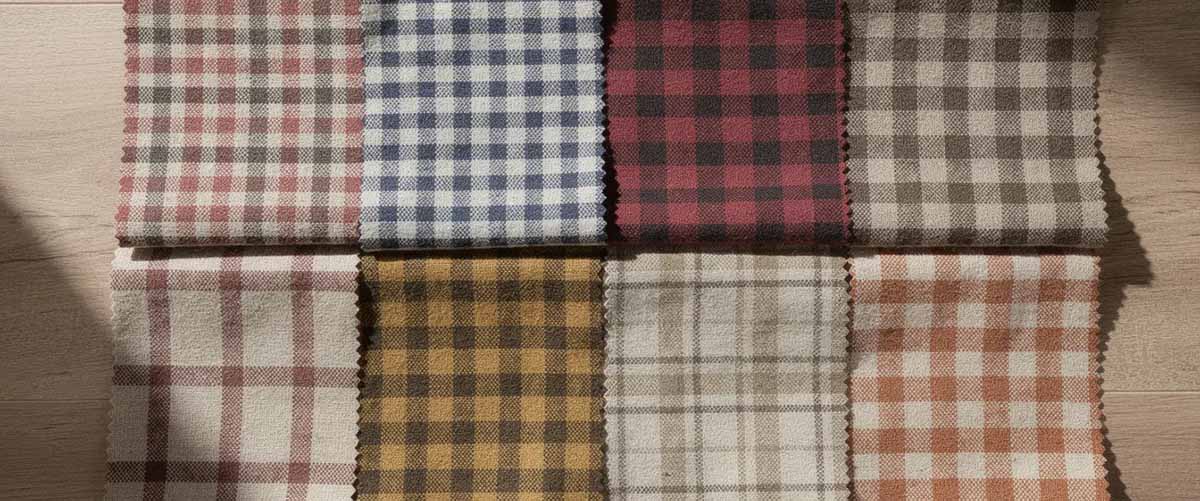
Plaid includes many established designs like tartan, madras plaid, and glen plaid, each suited to different markets ranging from casual shirts and dresses to light outerwear. Understanding these variations helps buyers specify the right plaid for their garment programs.
-
Tartan plaid: This multicolor pattern features a repeated “sett” where warp and weft color sequences are typically in the same order, producing balanced blocks of color with crossed horizontal and intersecting vertical lines. Originating from Scotland, tartan patterns have been associated with Scottish clans since at least the 16th century, with designs like Royal Stewart representing specific clan identities. Today, tartan is used globally in shirts, skirts, and winter scarves, traditionally woven in wool but also produced in cotton or brushed flannel for broader applications.
-
Madras plaid: This bright, lightweight cotton plaid originated from the Madras (now Chennai) region of India and became widely adopted in summer menswear and womenswear by the mid-20th century. Madras plaid features vibrant, often pastel or bright colors in a variety of stripe patterns and is typically produced in lightweight cotton plain weave at 80 to 130 GSM with a soft, breathable hand feel. The pattern works well for warm-weather casual garments.
-
Glen plaid (Prince of Wales style): This more formal plaid combines a complex mix of small and large checks, sometimes incorporating subtle houndstooth effects in a repeating pattern. Glen plaid, worn by figures like Winston Churchill, is frequently used in tailored garments including blazers, trousers, and skirts. It is typically woven in suiting-weight fabrics in muted greys and browns, offering sophistication for professional settings.
-
Casual flannel plaids: Brushed flannel plaids dominate autumn and winter casual shirts and overshirts, typically produced in 120 to 200 GSM cotton or poly-cotton flannel. Pattern scales vary from small to oversized, and softness, warmth, and color fastness are key criteria for buyers. These plaids often feature three to six different colors with varying widths of stripe patterns, creating a warm, inviting aesthetic.
Design & Weaving Differences: Complexity, Color, and Scale
Although both plaid and check patterns rely on intersecting stripes, the design logic of each affects CAD work, yarn planning, and loom setup in ways that impact production efficiency and cost.
Color usage:
-
Plaids commonly use three to six colors with varied stripe widths, while checks typically limit to two to three colors with repetitive stripes
-
More colors require more yarn inventory, more complex warping sequences, and more demanding quality control on shade consistency across bulk runs
-
The interplay of colours in plaid creates visual depth, while checks maintain cleaner, more uniform appearance
Pattern complexity:
-
Plaid layouts often have irregular or layered stripe sequences that must be mirrored in warp and weft, increasing the risk of design or alignment errors
-
Checks use simpler, repeated sequences, making them easier to reproduce exactly across multiple machines and production lots
-
Plaids are traditionally woven with precise attention to how horizontal stripes and vertical stripes intersect
Pattern scale:
-
Plaid repeats are often larger, requiring careful marker planning for garment cutting to ensure pattern matching at seams, pockets, and plackets
-
Large-scale plaids can waste 5 to 10 percent of fabric during cutting due to alignment requirements
-
Smaller, regular checks simplify cutting and sewing, saving time and reducing fabric wastage in large-scale production
Weaving considerations:
-
Both plaids and checks are mostly produced as yarn-dyed woven fabrics, though printed pattern alternatives exist for cost-sensitive or lightweight applications
-
For yarn-dyed versions, production teams must synchronize yarn counts, density, and stripe orders precisely to avoid distortion or skew
-
Complex plaids may require specialized jacquard setups, while checks suit simpler dobby looms, enabling higher production speeds
|
Factor |
Plaid |
Check |
|---|---|---|
|
Typical colors |
3-6 |
2-3 |
|
Pattern repeat |
6-12+ cm |
0.5-3 cm |
|
Production speed |
50-100 m/hr |
150-200 m/hr |
|
Cutting waste |
5-10% |
2-5% |
|
Design complexity |
High |
Low-Medium |
Fabric Constructions & Materials for Plaid and Check
MH supplies both plaid and check fabrics in a wide range of constructions and fibers, each suited to different garment categories and performance requirements. Understanding these options helps buyers specify the right fabric for their applications.
Cotton and cotton-rich fabrics:
-
100% cotton and high-cotton blends are preferred for breathable shirts, summer wear, and school uniforms, often produced in plain weave or twill
-
Both plaid and check patterns are common in 100 to 160 GSM shirting fabrics and medium-weight casualwear fabrics
-
Cotton provides excellent comfort and natural hand feel, making it ideal for garments worn close to the skin
Polyester and poly-cotton blends:
-
Polyester and poly-cotton fabrics offer better crease resistance, faster drying, and enhanced durability, making them ideal for corporate uniforms, workwear, and hospitality garments
-
Check patterns are especially popular in these segments due to their clean, professional look and ease of care
-
Typical blends include 65/35 or 60/40 poly-cotton, balancing comfort with performance
Flannel and brushed fabrics:
-
Brushed cotton or poly-cotton flannel is strongly associated with plaid designs, especially buffalo and tartan-inspired patterns for autumn and winter shirts, pajamas, and light jackets
-
Typical weight ranges span 120 to 220 GSM, with balanced brushing essential to maintain pattern clarity
-
The form of flannel construction adds warmth and soft hand feel while showcasing the visual complexity of plaid designs
Special finishes:
-
MH can supply plaid and check fabrics with functional finishes including anti-pilling, easy-care, and soft wash treatments depending on buyer requirements
-
Buyers should specify finishing needs along with pattern, weight, and width when placing OEM orders to ensure the fabric meets end-use performance standards
Application Focus: When to Choose Plaid vs Check
The choice between plaid and check is driven by brand identity, target market, garment category, and required production efficiency. Different applications demand different pattern approaches.
For fashion and casual garments: If you are new to making clothes or want to improve your skills, check out this beginner's guide to sewing and textiles for essential tips and techniques on fabric selection and crafting success.
-
Recommend plaid for casual shirts, dresses, skirts, and outerwear where a more dynamic and colorful appearance is desired
-
FW casual flannel shirts and SS madras dresses represent typical applications where plaid adds visual interest
-
Designers may select larger-scale plaids as statement patterns within seasonal collections, leveraging the many variations available
For uniforms and school wear:
-
Checks, especially gingham and tattersall, are preferred for school shirts and lighter uniforms due to their regular, disciplined appearance and easy pattern matching
-
The chess board-like regularity of checks projects professionalism and conformity appropriate for institutional settings
-
Some schools and institutions specify particular check layouts or colors, which MH can reproduce via custom yarn-dyed designs
For workwear and corporate apparel:
-
Small or medium checks in hard-wearing poly-cotton offer a neat look, high durability, and good wash performance for demanding work environments
-
Subtle checks in neutral colors are common in hospitality, retail, and service-industry uniform applications
-
The uniform appearance of checks supports consistent branding across large employee populations
Cost and efficiency considerations:
-
Simpler, smaller-scale checks often reduce cutting waste and sewing alignment time, beneficial for very large-volume orders where efficiency directly impacts profitability
-
Complex plaids may have slightly higher design and production costs but can deliver higher perceived value in fashion-oriented products
-
Buyers should weigh the visual impact of plaids against the production advantages of checks based on their specific program requirements
MH’s Plaid and Check Fabric Capabilities for Wholesale Buyers
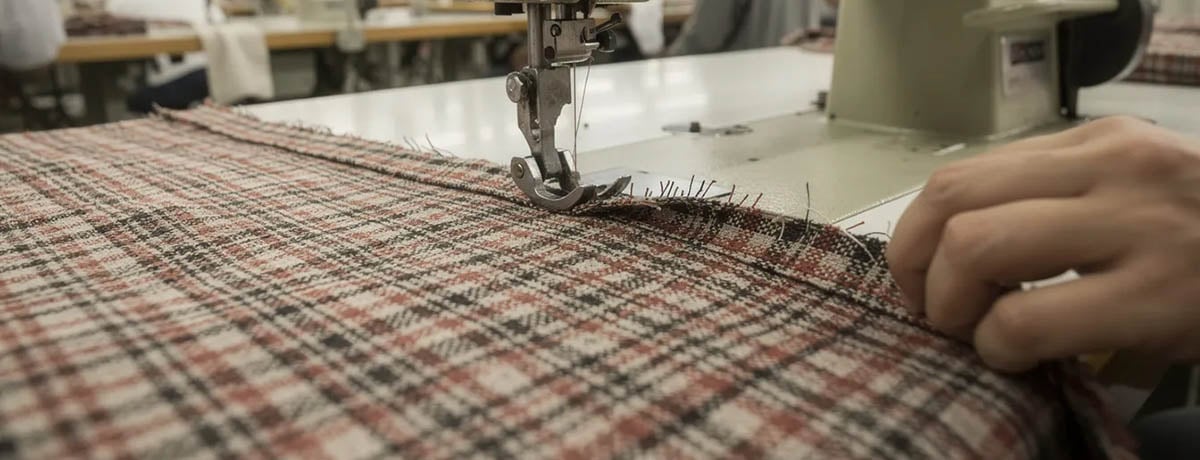
MH specializes in wholesale supply of plaid and check fabrics, serving garment factories, uniform manufacturers, and fabric wholesalers worldwide. Our focus on bulk production with stable quality makes us a reliable partner for large-scale garment programs.
Product range:
-
MH offers yarn-dyed and printed plaids and checks in polyester, cotton, and poly-cotton blends, as well as flannel constructions suitable for all-season and seasonal programs
-
Available in multiple weights from approximately 90 to 250 GSM, widths from 44 to 60 inches (112 to 152 cm), and extensive color combinations
-
The example of our range includes everything from lightweight gingham shirting to heavyweight buffalo plaid flannel
Bulk and OEM service:
-
MH focuses on bulk yardage with stable quality, supporting OEM development from design creation through lab dips and pre-production samples
-
We can adjust pattern scale, colorways, and constructions to meet brand-specific or uniform program specifications
-
Minimum order quantities are structured for wholesale production, not retail or individual buyers
Quality and consistency:
-
Strict control over yarn quality, color fastness, shrinkage, and fabric hand feel ensures repeatable performance across reorders and multi-factory production
-
Our quality systems address the differences between plaid and check production requirements to maintain pattern integrity
Support for development:
-
MH’s technical team helps buyers choose between plaid or check designs based on garment category, price point, and performance requirements
-
We provide professional specification guidance rather than style tips, focusing on production feasibility and quality outcomes


FAQ: Plaid vs Check for Wholesale Fabric Purchasing
Q1: Are plaid fabrics always more expensive than check fabrics in bulk orders?
Cost depends on factors including yarn count, number of colors, weave structure, and finishing requirements. Plaids can be slightly more expensive when they involve more colors or complex repeats due to increased yarn inventory and slower production speeds. However, simple plaids in basic constructions may be priced similarly to checks of comparable quality. Request quotes for specific constructions to compare accurately.
Q2: Can the same fabric construction be used for both plaid and check designs?
Yes, the base fabric construction, such as 65/35 poly-cotton twill at 150 GSM, can be woven in either plaid or check patterns. The main differences lie in stripe design and color arrangement, not necessarily in the underlying fabric structure. This allows buyers to maintain consistent base quality while changing pattern type for different product lines or seasonal variations.
Q3: Is it better to specify yarn-dyed or printed patterns for large uniform programs?
Yarn-dyed checks and plaids provide better pattern definition, superior wash durability, and longer color fastness, making them preferred for uniforms subjected to frequent industrial laundering. Printed alternatives may be chosen for lighter fabrics or when cost and lead-time are critical factors. MH can supply both options and help evaluate the best approach for each specific project based on end-use requirements.
Q4: How should I communicate my plaid or check requirements to ensure accurate production?
Provide a clear reference including a physical swatch or high-resolution artwork showing the exact pattern. Specify desired repeat size, fabric composition, weight, width, and color standards using Pantone references where possible. Detail any special requirements for vertical lines spacing, horizontal lines width, or overall scale. MH will confirm all details via strike-offs or sample yardage before bulk production begins.
Q5: Can MH customize existing plaid or check patterns for my brand or institution?
MH supports customized designs including adjusting colorways, scaling the pattern, or modifying line weights to meet specific branding or school and uniform guidelines. Customization is available for both plaid and check patterns, subject to minimum order quantities appropriate for wholesale production. Our development team can work from your existing designs or help create new patterns based on your specifications.
