
Which Applications Are Best Suited for Polar Fleece Fabric in Garment and Textile Manufacturing?
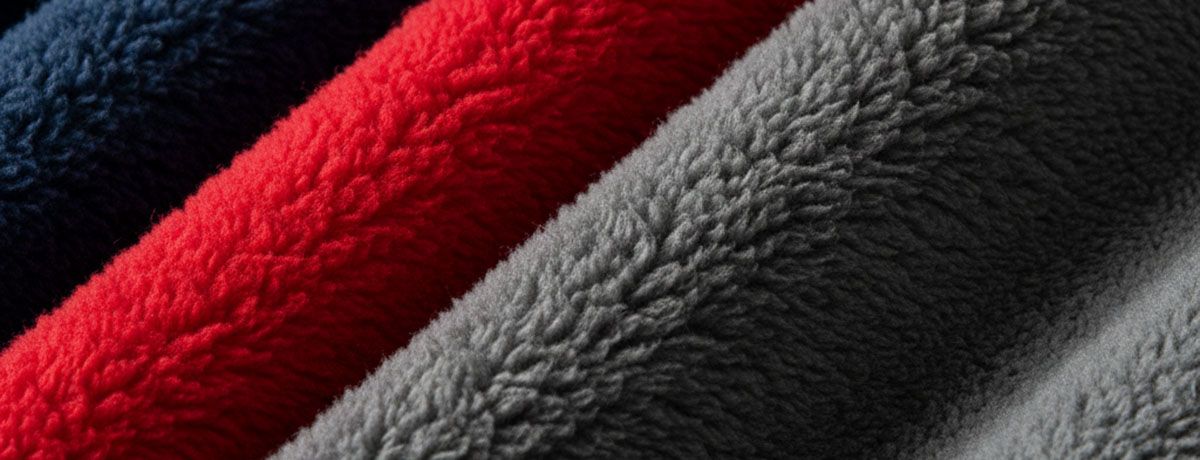
Polar fleece fabric is a synthetic, brushed knit textile engineered for warmth, durability, and efficient mass production. Widely used across apparel, workwear, and home textile categories, this material has become a staple for manufacturers seeking reliable performance at scale. Polar fleece is generally less expensive than natural alternatives like wool, and is widely sold by the yard or in bulk by the roll for commercial buyers. It is known for exceptional warmth, breathability, and moisture resistance, and it resists wear, pilling, shrinking, and fading, making it long-lasting for outdoor use. Its versatility allows it to be used in base layers, blankets, and pet products.
This article is written for B2B buyers—garment manufacturers, workwear producers, wholesalers, and importers—who need to evaluate polar fleece for bulk sourcing decisions. We’ll cover composition, technical specifications, manufacturing processes, performance characteristics, and practical production considerations to help you find the right product for your requirements.
Overview of Polar Fleece Fabric
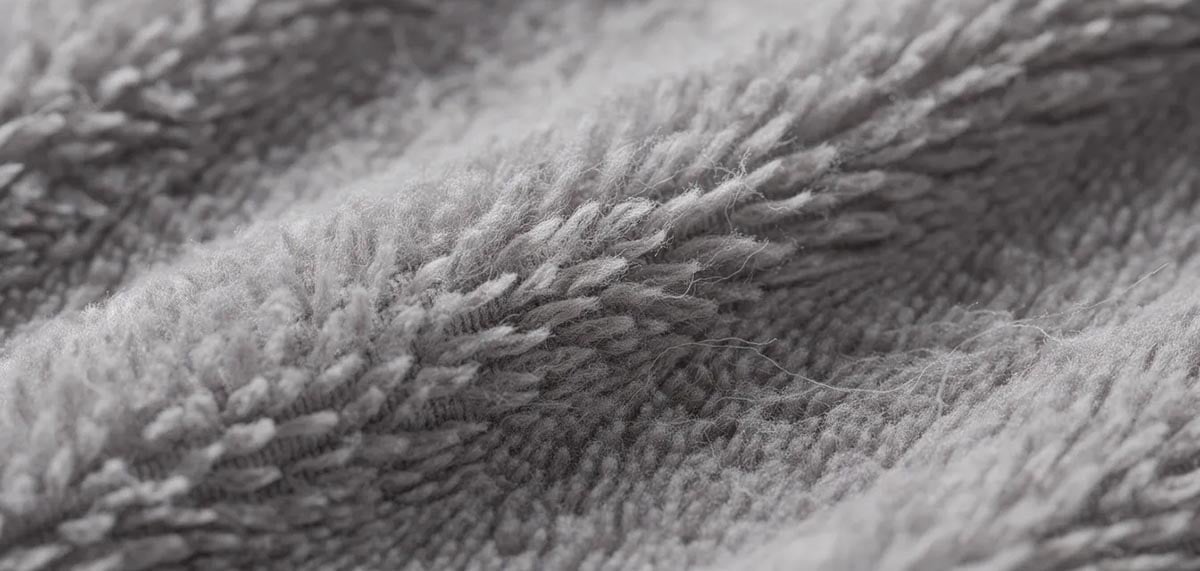
Polar fleece is a synthetic fabric constructed through circular or warp knitting, followed by heavy brushing on one or both sides to create a raised pile surface. This construction method produces a great fabric that delivers excellent thermal properties while remaining lightweight and easy to process in factory environments.
Technical Definition
From a textile engineering perspective, polar fleece begins as a polyester knit base—typically a double-sided knit structure—that undergoes mechanical brushing to extract fibers from the surface loops. This brushing creates the characteristic fluffy, plush appearance and traps air within the fabric structure, which provides insulation.
Standard Fiber Basis
The material is usually composed of 100% polyester, including both virgin polyester and recycled PET sourced from post-consumer materials like plastic bottles. This makes recycled fleece increasingly available for buyers with sustainability requirements or certification needs.
Common weight ranges for polar fleece span approximately 150–350 gsm, with variations designed for different end uses from lightweight linings to heavy outer mid-layers.
Key Performance Aspects for Manufacturing
|
Performance Factor |
Relevance to Bulk Production |
|---|---|
|
Warmth-to-weight ratio |
Enables warm garments without excessive material weight |
|
Dimensional stability |
Maintains size and shape through production and end-use |
|
Color consistency |
Supports uniform appearance across large orders |
|
Bulk production feasibility |
Scalable manufacturing with controllable parameters |
MH, as a vertically integrated manufacturer, supplies polar fleece alongside related garment accessories and trims—including sewing thread, zippers, and interlining—enabling full-package sourcing for production programs.
Fiber Composition and Technical Specifications
Composition, weight, and width are critical parameters for industrial buyers evaluating polar fleece. These specifications directly impact garment performance, production efficiency, and final product positioning.
Typical Fiber Compositions
100% Polyester (Most Common)
-
Standard construction for polar fleece
-
Offers durability, colorfastness, and easy care properties
-
Available in virgin and recycled polyester options
Polyester/Spandex Blends
-
Typically 95/5 or 97/3 ratios
-
Provides enhanced stretch and recovery for activewear applications
-
Soft hand feel with improved body conformity
Recycled Polyester Options
-
Supports sustainability certifications and brand requirements
-
Performance comparable to virgin polyester when properly processed
-
Growing availability for bulk orders
Standard Technical Ranges
|
Specification |
Standard Range |
Notes |
|---|---|---|
|
Fabric width |
58/60 inches (147–152 cm) |
Wider widths available on request |
|
Micro fleece weight |
150–180 gsm |
Ideal for linings, base layers |
|
Mid-weight |
200–260 gsm |
Suitable for jackets, vests, mid-layers |
|
Heavy polar fleece |
280–350+ gsm |
Used for blankets, outer mid-layers, workwear |
|
Thickness |
0.8–1.5 mm |
Varies with pile height and brushing intensity |
Weight Selection by Garment Category
The GSM you select affects which product categories the fabric supports:
-
Lightweight (150–180 gsm): Base layers, jacket linings, lightweight accessories
-
Mid-weight (200–260 gsm): Casual jackets, pullovers, scarves, hats
-
Heavy (280–350+ gsm): Workwear layers, outdoor jackets, blankets, throws
Quality Tolerances for Bulk Orders
Industrial buyers should specify and verify these tolerances:
-
GSM variation: Typically ±5% from target weight
-
Width variation: ±1–2 cm from stated width
-
Color difference (ΔE): Usually ≤1.0 for good quality production
-
Shrinkage rate: Commonly ≤3% after standard wash testing
MH can customize fiber type, GSM, and width according to buyer technical packs and end-use requirements, supporting both stock programs and custom development.
Manufacturing Process of Polar Fleece
The creation of polar fleece fabric is a multi-stage process designed to deliver a super soft, plush, and highly durable material suitable for a wide range of applications. It all begins with the production of polyester fibers, which can be either virgin or recycled. These fibers are then knitted—most commonly using circular or warp knitting—into a thick, double-sided fabric base. This knit structure is what gives polar fleece its signature warmth and flexibility.
Once the base fabric is formed, it undergoes a critical brushing stage. Specialized machines brush both sides of the fabric, raising the fibers to create the fluffy, soft texture that makes polar fleece so comfortable and highly breathable. This process also increases the fabric’s thickness and enhances its insulating properties, making it ideal for jackets, vests, blankets, and scarves.
To ensure the fleece remains looking great over time, anti pill treatments are applied during manufacturing. These treatments help prevent the formation of pills—small fiber balls that can appear on the surface after repeated use or washing—thus maintaining the fabric’s original appearance and feel. Additional finishing treatments may be used to impart water repellency, wrinkle resistance, or other performance characteristics, depending on the end-use requirements.
After finishing, the fleece fabric is carefully cut to the required dimensions and sewn into finished products. Throughout the process, rigorous quality checks are performed to monitor thickness, weight, and overall durability. Leading brands like Polartec utilize proprietary manufacturing techniques to produce fleece fabric with superior plushness, consistent thickness, and long-lasting performance, ensuring that every yard of fabric meets the highest standards for B2B buyers.
Industrial and Commercial Applications
Polar fleece fabric is selected by B2B buyers across apparel, home textile, and promotional product categories. Its combination of warmth, durability, and production efficiency makes it ideal for diverse manufacturing programs.
Apparel Applications
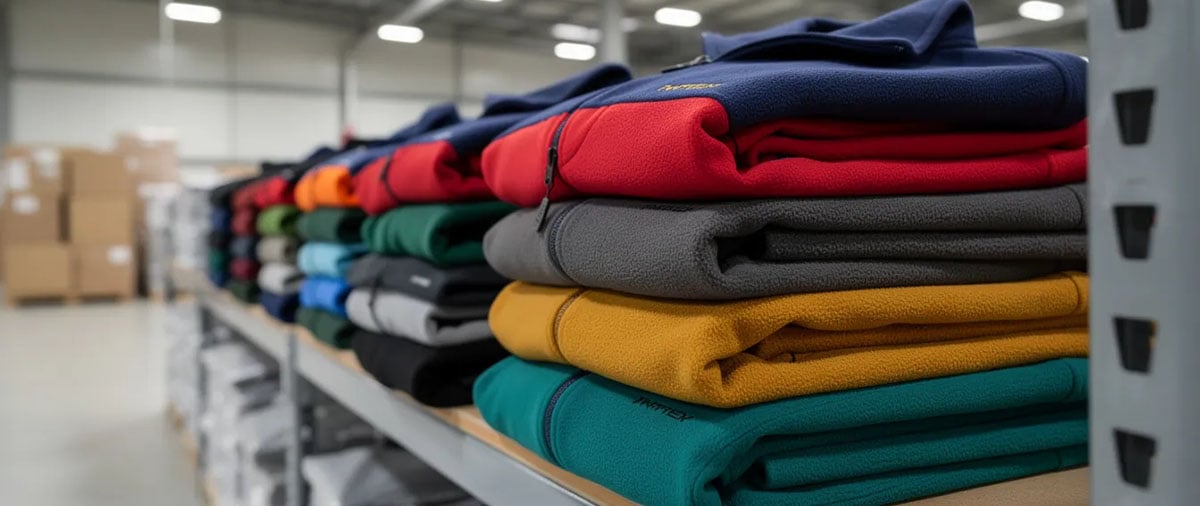
Outerwear and Casual Wear
-
Jackets and pullovers for outdoor and lifestyle brands
-
Vests for layering systems
-
Hoodies and quarter-zip designs
-
Full-zip and half-zip constructions
Activewear and Sportswear
-
Mid-layer garments for running, hiking, and training
-
Teamwear for sports organizations
-
Athletic warm-up and cool-down apparel
Workwear and Uniforms
-
Fleece layers for logistics and warehouse workers
-
Construction site mid-layers
-
Cold-store and refrigerated environment apparel
-
Corporate uniform programs in colors like light blue, burgundy, or lime
Accessories and Home Textiles
Personal Accessories
-
Hats and beanies
-
Gloves and mittens
-
Scarves and neck warmers
-
Balaclavas and headbands
Home and Lifestyle Products
-
Blankets and throws for retail and hospitality
-
Pet beds and pet accessories
-
Cushion covers and soft furnishings
-
Stadium blankets for promotional use
Industrial and Promotional Applications
Corporate and Branded Products
-
Company-branded fleece jackets and vests
-
Employee uniform programs
-
Event giveaway garments
Promotional Items
-
Branded blankets for trade shows and customer gifts
-
Seasonal promotional products
-
Costumes and themed apparel for events
GSM Selection by End Use
|
Application Category |
Recommended GSM |
Fabric Type |
|---|---|---|
|
Jacket linings |
150–180 |
Micro fleece |
|
Light jackets, base layers |
180–220 |
Light to mid-weight |
|
Standard jackets, vests |
220–280 |
Mid-weight |
|
Heavy workwear, blankets |
280–350+ |
Heavy polar fleece |
Color options range from classic white and black to fashion colors like light pink, perfect color matching for brand standards, and custom dye-to-match services.
MH can coordinate polar fleece supply with matching zippers, sewing thread, binding, labels, and other trims to support full collection production—simplifying the order process and reducing vendor count for buyers managing complex programs.


Key Takeaways
For buyers evaluating polar fleece fabric for manufacturing and wholesale use, the following summary points support sourcing decisions:
-
Composition: Primarily 100% polyester, with recycled options increasingly available
-
Weight range: 150–350+ gsm depending on application requirements
-
Structure: Double-sided knit construction with mechanical brushing creates thermal properties
-
Performance: Warm, durable, dimensionally stable, easy to process, and features exceptional moisture-wicking and quick-drying properties—polar fleece is fast-drying and convenient for frequent use
-
Care: Machine washable and can be tumble dried at low temperatures or hung dry for easy maintenance and to preserve insulating properties
-
Applications: Jackets, vests, blankets, workwear, accessories, and promotional products
-
Quality factors: GSM consistency, pilling resistance, colorfastness, and dimensional stability
The time investment in specifying correct parameters—GSM, width, anti-pilling treatment, and compliance requirements—supports successful production outcomes and reduces quality issues in finished goods.
MH, as a fabric and garment materials manufacturer with vertically integrated capabilities, focuses on stable quality, repeatable production, and technical support for long-term B2B partnerships. Buyers can shop for polar fleece alongside zippers, thread, interlining, and other trim categories through a single supplier relationship.
For those ready to buy or looking to review specifications, the next step is to define your technical requirements and request fabric samples to evaluate before placing a bulk order. Visit the MH website or contact the sales team to discuss your production program and find the right polar fleece specifications for your application.
