What Types of Rhinestone Chain Are Best for Garment and Accessories Production?
For garment manufacturers and wholesalers, maintaining production efficiency depends on having a steady supply of high-quality materials. Rhinestone chain offers a continuous setting of crystals used extensively for apparel, accessories, and industrial decor. Sold in both single-row and multi-row lengths, these chains provide manufacturers with a scalable solution for adding reflective accents to bulk product lines.
The most common formats encountered in wholesale procurement include cup chain, claw settings, flat trims, and ready-to-use pre-spooled lengths. For factory owners and sourcing managers, understanding the specific construction, sizing, and material properties of these chains is essential for optimizing assembly line application.
MH, a leading B2B integrated manufacturing and trading textile company and provider of garment accessories and tailoring materials, specializes in providing tailoring materials to global markets, with extensive export expertise in Latin America. Operating strictly as a Make-to-Order (MTO) supplier, MH provides large-scale production capacity without keeping ready stock, ensuring that every order is manufactured to meet precise industrial specifications.
Types and Construction of Rhinestone Chain
Cup Chain and Claw Settings
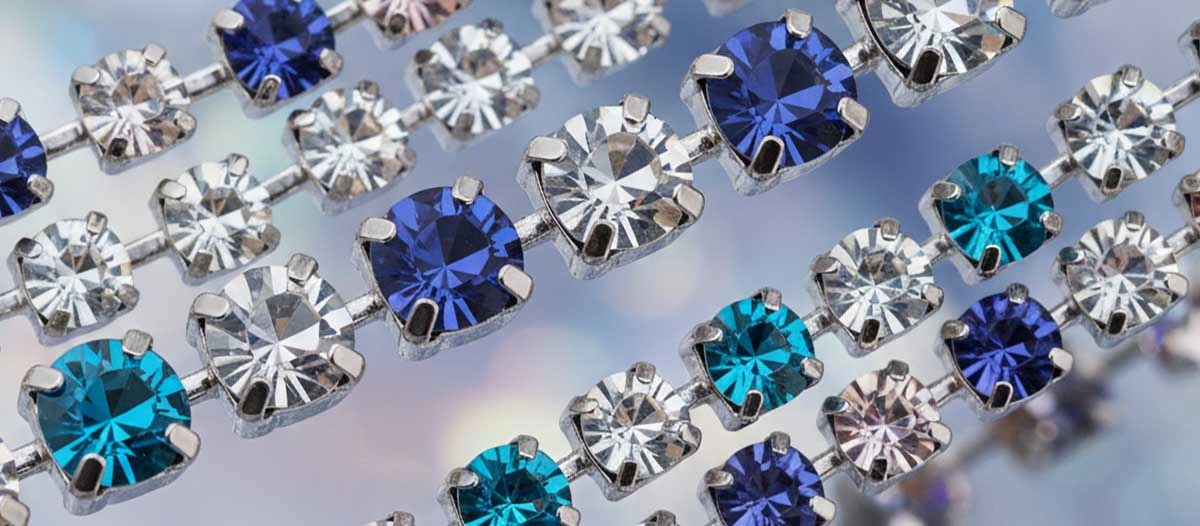
Cup chain features individual crystals set inside metal cups, which are connected by flexible metal links. This construction allows for high drape and fluid movement, making it highly suitable for flexible garments. Claw or claw-claw settings hold the stones securely with small metal prongs. This design offers a flatter profile against the fabric, facilitating easier and more stable sewing attachment during mass production.
Multi-Row and Flat-Back Trims
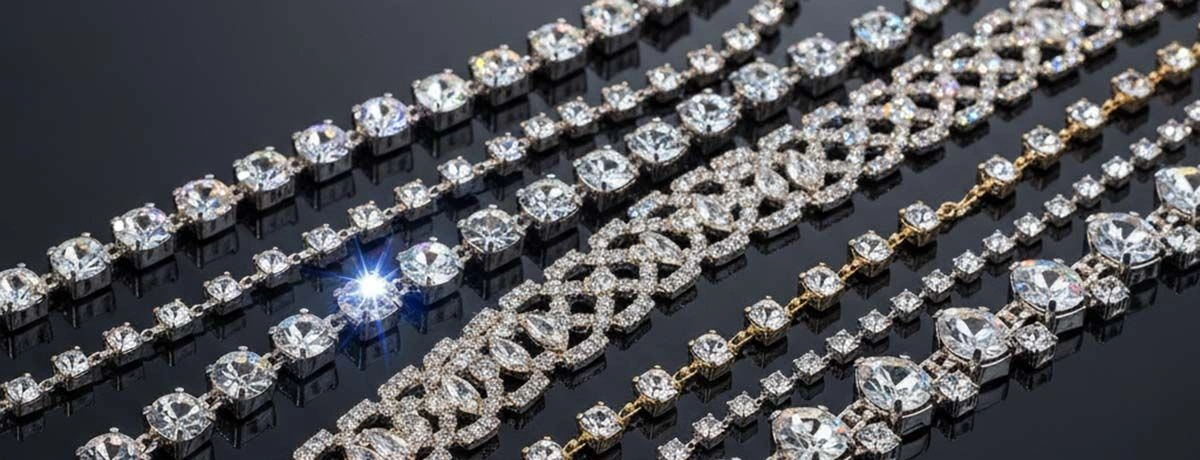
Multi-row and ladder-style chains increase the density of the sparkle. Factories frequently apply these wider formats to hems, belts, and statement trims where a bolder visual impact is required. Flat-back trims provide a different application method; the stones are glued to a tape or mesh carrier, allowing for rapid adhesive application on fabric rather than traditional sewing. Furthermore, high-end machine-set chains utilize uniform cutting and consistent setting tolerances, resulting in predictable behavior during factory application.
Industrial Applications for Rhinestone Trim
Different sectors of the apparel and accessories market rely on specific variations of rhinestone chain:
-
Bridal and Formalwear: Manufacturers of bridal veils, wedding gowns, and headpieces typically utilize fine, single-row rhinestone trim to achieve delicate, consistent detailing.
-
Accessories: The production of handbags, shoes, and belts often integrates multi-row chains or larger 8–11mm chains to create bold, highly reflective accents alongside bag and luggage accessories for wholesale orders.
-
Home Decor and Events: Wholesale event staging suppliers and home decor producers employ durable rhinestone trim on centerpieces, candles, and photo frames to deliver high-impact shine.
Materials, Finishes, and Plating Specifications
Base Metals and Crystal Clarity
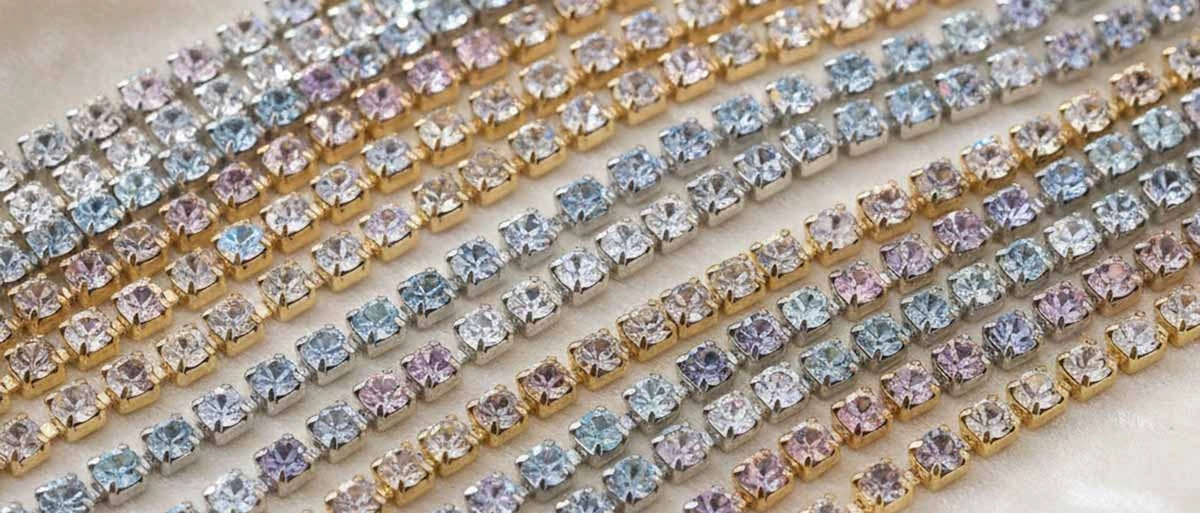
The base metals used in rhinestone chain production typically include brass, nickel, and various plated alloys. The plating process provides specific color options, including gold, antique, and silver finishes. The type of crystal directly influences the brilliance of the finished product. Glass crystals, Austrian crystals, and precision-cut options differ significantly in clarity and light refraction. Protective coatings, such as AB (Aurora Borealis), change the color reflections without altering the underlying base metal. Sourcing chains with high-quality plating and sealed settings reduces the risk of tarnish and improves the long-term visual performance of the retail product, especially when coordinating with durable polyester-spandex stretch woven fabric for garments that require both flexibility and shine.
Silver-Plated vs. Sterling Silver
When specifying silver finishes, buyers must choose between silver-plated and sterling silver options. Silver-plated chains provide the necessary silver aesthetic at a lower cost, though they will eventually wear and reveal the base metal over time. Sterling silver settings resist tarnish more effectively and meet hypoallergenic requirements. However, their higher price point and relative softness make them more suitable for premium, specialized production runs rather than standard bulk apparel.
Partnering with a Reliable B2B Supplier
When procuring tailoring materials, professional buyers must partner with suppliers who transparently disclose stone size, setting types, and exact finish names. Visual verification of settings, edge finishes, and chain flexibility is standard practice before finalizing bulk orders, just as it is when sourcing 100% spun polyester sewing thread in bulk for stitching and assembly.
During the online purchasing process, buyers can easily check their cart to review item count and status before completing the order. Rhinestone chains can be cut to any length and sewn or glued to various items for decorative purposes, offering flexibility for different project needs, particularly when coordinating with wholesale chiffon fabric for dresses and scarves.
MH serves as an ideal partner for large-scale procurement, not only for rhinestone trims but also for custom B2B zipper solutions with quality and reliability. Because MH operates on a Make-to-Order basis rather than pulling from ready stock, every production run is customized to the buyer’s exact specifications. This ensures maximum supply chain reliability and adherence to strict industrial quality standards. By leveraging deep export expertise and massive production capabilities, MH helps wholesalers and garment factory owners optimize their operations and secure long-term partnership value.
Contact the MH team today to discuss your bulk rhinestone chain requirements and streamline your global supply chain.


Tips for Sourcing Rhinestone Chain
When sourcing rhinestone chain for your business, it’s important to prioritize both quality and practicality to ensure your finished products stand out. Start by closely examining the rhinestone trim—look for secure settings, such as well-formed cups or attached prongs, to make sure the crystals stay in place during use. High-quality materials like silver or gold finishes not only enhance the appearance but also add value to your jewelry or craft items.
Price is a key factor, so compare the cost per yard or foot across different suppliers to find the best deal without compromising on quality. Be clear about the quantity you need for your project, whether you’re adding a small accent to a garment or sourcing in bulk for a large production run. Consider the functionality of the rhinestone chain—choose trims that are durable and versatile enough for sewing, crafting, or jewelry making, and ensure they coordinate with high-quality embroidery thread options for embellished designs.
Before making a purchase, visit the supplier’s website and read feedback from other buyers to gauge the reliability of the product and service. Protect your investment by reviewing the return and refund policies, ensuring you can resolve any issues if the item doesn’t meet your expectations. Many websites also offer images and detailed descriptions, which can help you select the right size, color, and finish for your needs, as well as compatible 150D/2 rayon thread for embroidery.
Rhinestone chain is a popular choice for a variety of occasions, from elegant jewelry to festive craft projects. Whether you’re committed to creating bold statement pieces or subtle, delicate accents, there’s a wide variety of rhinestone trims available to add sparkle to any design, especially when paired with 40/2 spun polyester sewing threads for versatile stitching. For inspiration, explore media platforms where you’ll find images, tutorials, and feedback from other creators. With so many options, sourcing the perfect rhinestone chain for your next project is quick, easy, and rewarding.