
What Are Rhinestones and How Are They Used in Manufacturing Applications?
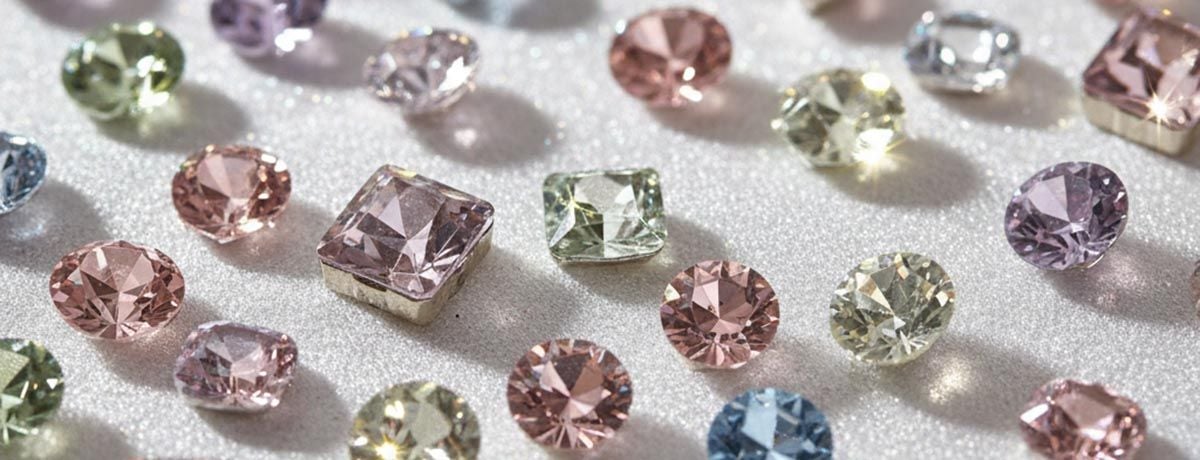
Rhinestones are synthetic gemstone imitations manufactured from glass, crystal, or acrylic materials, designed to replicate the optical properties of natural gems at production-scale volumes. They are machine made crystal stones crafted to resemble jewels and diamonds, and are artificial gemstones designed to mimic the sparkle and luster of diamonds and other precious gems. Modern rhinestones are made from high-quality glass materials and crystals that are shaped perfectly to reflect light, giving them a brilliance similar to genuine diamonds but at a more affordable price point. For garment manufacturers and accessory producers, these stones offer consistent brilliance, controlled sizing, and reliable attachment performance across thousands of units.
Rhinestones are widely used to embellish clothing and accessories due to their jewel-like appearance. This guide covers material specifications, attachment methods, and sourcing considerations relevant to bulk rhinestones purchasing and industrial application requirements.
Rhinestone Categories for Production Requirements
Selecting the right rhinestone type depends on production volume, substrate material, application method, and end-use performance demands. Each category offers distinct advantages for specific manufacturing workflows.
Industrial applications require consistency in optical quality, adhesion performance, color stability, and dimensional accuracy across production batches. Compliance with safety regulations including REACH and CPSIA standards remains essential for products entering European and North American markets.
Hotfix Rhinestones for Apparel Manufacturing
Hotfix rhinestones feature a heat-activated adhesive layer adhered to the flat back surface of each rhinestone, enabling rapid automated application through industrial heat press equipment. The adhesive, which is adhered to the back, bonds to fabric when heated and cures when subjected to specified temperature and pressure conditions, creating durable bonds with fabric substrates.
Standard activation temperatures range from 150-180°C under controlled pressure, with dwell times typically around 20 seconds per application cycle. Production lines require precise temperature control, uniform pressure distribution, and calibrated timing to ensure consistent adhesion without substrate damage.
High quality rhinestones with properly formulated adhesive backing can withstand 50 or more commercial washing cycles while maintaining both adhesion integrity and optical brilliance. This durability makes hot fix rhinestones standard for sportswear, branded apparel, and fashion garments requiring repeated laundering.
Substrate compatibility remains critical—stretch fabrics require tension control during pressing, while delicate materials may need pre-treatment or lower-temperature adhesive formulations now available in the 120-160°C activation range.
Flatback Rhinestones for Accessory Production
Flatback rhinestones present a flat backing surface without integrated adhesive, requiring external bonding agents or mechanical attachment for secure placement. This design offers flexibility across diverse substrate materials including leather, plastics, rubber, and mixed-material assemblies, making them suitable for bag and luggage accessory manufacturing. Flatback rhinestones are ideal for craft projects, allowing for intricate and detailed designs in a wide range of decorative applications.
Flatback rhinestones are the best choice for gluing onto surfaces. For optimal results, a high-quality acrylic glue specifically meant for gems and rhinestones should be used. The flat backs design demands adhesive selection based on substrate properties. Industrial adhesives include polyurethane, epoxy, and cyanoacrylate formulations, each offering different curing profiles, flexibility characteristics, and environmental resistance. Proper adhesive coverage across the entire backing surface prevents air pockets that compromise bond strength.
Applications span footwear embellishment, bags, phone cases, and decorative accessories where substrates cannot tolerate heat application. Quality considerations include long-term adhesion retention, resistance to abrasion, and protection of the metallic foil backing from chemical attack by adhesive components.
Surface preparation significantly affects bonding performance—roughened or primed surfaces typically achieve superior adhesion compared to smooth, untreated materials.
Sew-on Rhinestones for Garment Decoration
Sew on rhinestones incorporate integrated mounting holes or settings enabling attachment through machine or hand stitching operations. This mechanical attachment method eliminates dependence on adhesives or heat, making these stones suitable for substrates incompatible with thermal processing.
Thread compatibility and stitch pattern selection affect both aesthetic appearance and attachment durability. Standard configurations accommodate various thread thicknesses, with stitch patterns including straight, cross, and zigzag options depending on stone shape and application requirements.
Dance costume production, haute couture garments, and stage wear frequently utilize sew-on attachment for its permanence and the ability to remove or replace individual stones during fitting or maintenance. Specialty textile applications requiring adjustable decoration also benefit from this attachment method, especially when combined with lightweight chiffon fabric for dresses and gowns.
The labor-intensive nature of sewing operations increases per-unit application costs compared to hotfix methods, positioning sew-on rhinestones for applications where substrate limitations or design flexibility justify the additional investment.
Material Specifications and Manufacturing Quality
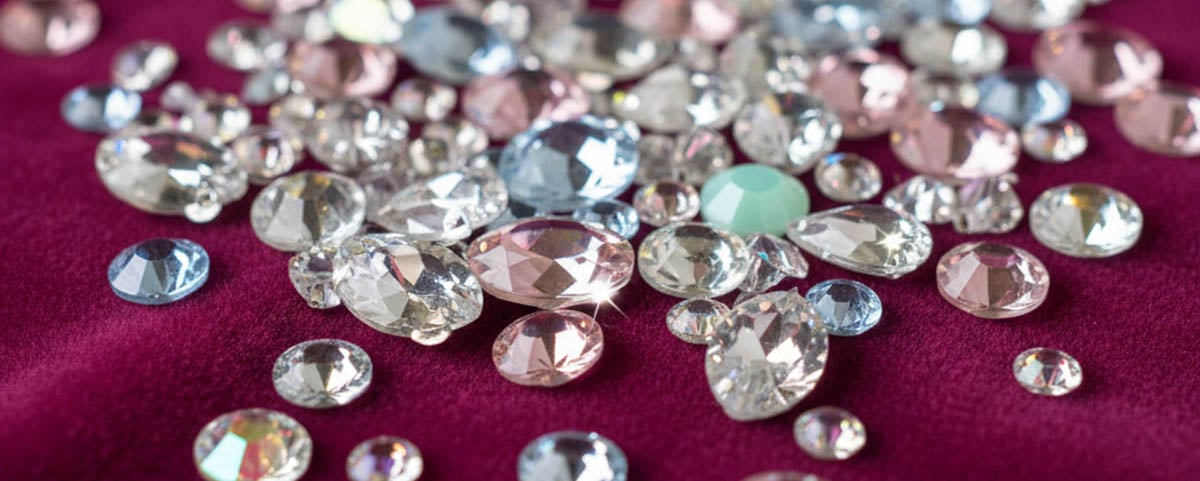
Material composition directly determines optical performance, durability characteristics, and regulatory compliance status. Rhinestones, along with beads and other embellishments, are popular choices for jewelry-making and decorative applications. Manufacturing buyers evaluate these specifications against application requirements and cost parameters to optimize sourcing decisions.
Quality standards for wholesale rhinestones encompass optical clarity, dimensional consistency, coating integrity, and batch-to-batch reproducibility—all factors affecting production efficiency and finished product quality.
Rhinestones are often used in costume jewelry as a cost-effective alternative to precious stones.
Glass Rhinestones for Commercial Durability
Glass rhinestones occupy the mid-to-high tier of the market, offering good optical properties at moderate cost points. Material composition ranges from standard soda-lime glass to leaded formulations with elevated refractive indices.
Lead content specifications require attention for regulatory compliance. EU REACH and US CPSIA establish limits on lead concentration and migration rates, particularly stringent for products intended for children’s apparel. Current compliance thresholds often require lead content below 0.05% by weight or meet specific migration limits under testing protocols.
Optical clarity depends on material purity, foil backing quality, and faceting precision. Silver or aluminum foil backing enhances light reflection; this backing must resist oxidation, moisture penetration, and the chemicals present in washing detergents to maintain sparkle throughout product life.
Glass rhinestones demonstrate good resistance to thermal stress, UV exposure, and chemical processing when properly specified. Faceting quality—whether machine-cut with sharp edges or molded with rounded profiles—affects light refraction consistency and overall brilliance. Cost-performance ratio favors glass for medium to high-volume applications where crystal-grade pricing exceeds budget parameters.
Crystal Rhinestones for Premium Applications
Crystal rhinestones represent the premium segment, traditionally manufactured from lead crystal containing 24-32% lead oxide for maximum brilliance and light dispersion. Swarovski crystal rhinestones are known for their bright and vibrant appearance and come in a wide range of sizes, shapes, and colors. The elevated lead content produces superior refractive index and optical fire compared to standard glass formulations.
Recent innovations include lead-free crystal compositions maintaining comparable optical performance while meeting stringent regulatory requirements without exemptions or special documentation. Preciosa crystals are recognized for their unmatched brilliance and quality.
Precision cutting standards for crystal grades specify high facet counts, mirror-finish polish quality, and tight dimensional tolerances—often ±0.05-0.1mm for diameter measurements. Quality control measures encompass defect rate monitoring for foil integrity, color consistency, and shape uniformity across production batches.
Applications include luxury fashion, rhinestone jewelry, high-end accessories, and markets where consumer awareness of material quality or regulatory restrictions demand documented lead-free compositions. Price positioning and minimum order quantities for crystal grades reflect the manufacturing precision required; tiered pricing typically offers discount break-points at gross, dozen, and thousand-unit thresholds.
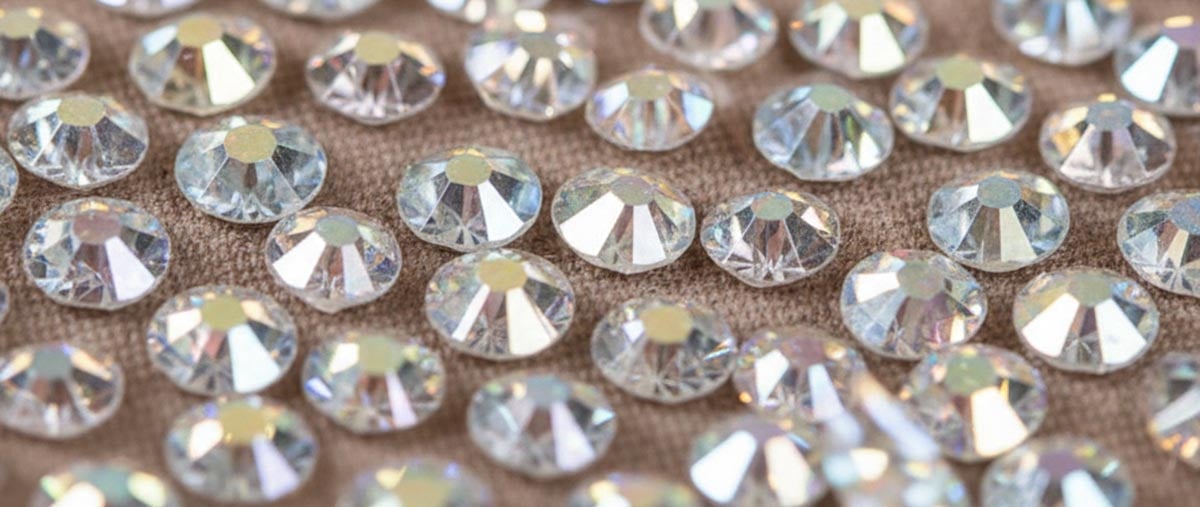
Aurora borealis coatings—named for the northern lights effect they produce—add iridescent surface treatments that enhance visual impact, with AB rhinestones commanding premium pricing relative to standard coated stones.
For bridal wear, crystal or glass stones provide the most brilliant, diamond-like shine.
Acrylic Rhinestones for Cost-Effective Production
Acrylic rhinestones utilize polymer materials offering significant cost and weight advantages for budget-conscious, high-volume projects. Manufacturing processes produce consistent shapes and vivid colors without lead content concerns.
Material properties include lower refractive index compared to glass or crystal—approximately 1.49 versus 1.5+ for glass formulations—resulting in reduced brilliance and optical depth. However, dramatic weight reduction benefits large-scale decorative applications where stones cover extensive surface areas or where shipping cost per unit matters significantly.
Color stability and fade resistance vary with polymer formulation quality. UV exposure and repeated washing may cause yellowing or coating deterioration in lower-grade materials. Buyers should test samples under anticipated use conditions before committing to bulk quantities.
Bulk pricing advantages position acrylic rhinestones for applications including home decor, promotional items, and products where cost parameters outweigh optical performance requirements. Quality grades vary considerably across suppliers; sample evaluation for optical clarity, adhesion compatibility, and durability under use conditions remains essential before volume purchasing.
Size Standards and Technical Specifications
Industry measurement systems enable precise specification and ordering of rhinestones across suppliers and applications. Understanding sizing conventions and tolerance standards supports efficient material planning and consistent production results.
SS Sizing System and Dimensional Standards
The SS (Stone Size) system provides standardized rhinestone sizes from miniature accent stones through large statement pieces. Common conversions include:
-
SS6: approximately 1.9-2.1mm diameter
-
SS10: approximately 2.7-2.9mm diameter
-
SS20: approximately 4.6-4.8mm diameter
-
SS34: approximately 7.0-7.25mm diameter
-
SS40: approximately 8.4-8.65mm diameter
Tolerance specifications for wholesale rhinestones typically allow ±0.1mm variation for standard flatback styles, with slightly wider tolerances acceptable for larger stones. Consistent sizing across batches affects pattern matching accuracy, CAD layout efficiency, and material consumption predictability.
Size selection impacts both material costs and application efficiency. Larger stones cover area faster but cost more per unit; smaller sizes require more placement operations but offer finer design detail capability.
Packaging standards specify count quantities—small sizes typically packed in gross (144 pieces) or multiple gross counts, while larger stones ship by dozens or individual units. Protective packaging prevents foil damage and surface scratching during storage and transport.
Cutting Styles and Faceting Options
Round brilliant cut represents the standard configuration, optimized to reflect light through systematic facet arrangement for maximum sparkle. This diamond cut pattern suits most apparel and accessory applications where consistent optical performance matters.
Fancy cuts including square, oval, marquise, pear, and navette shapes serve specialized design requirements. These shapes require more complex manufacturing tooling and typically command higher per-unit pricing with potentially higher minimum order quantities.
Faceting quality standards address facet uniformity, angle precision, and polish quality. Machine-cut facets with sharp edges produce superior sparkle compared to molded stones with rounded facet transitions. Custom cutting capabilities and non-standard specifications typically require dedicated tooling charges and elevated minimum order commitments.
Industrial Attachment and Application Methods
Production-scale rhinestone application requires equipment selection and process optimization matched to stone type, substrate material, and throughput requirements.
Automated Heat Application Systems
Industrial heat press equipment for hotfix rhinestones must deliver uniform pressure distribution, precise temperature control, and consistent dwell timing across the application surface. Specifications typically include 3-5 bar pressure capability, temperature accuracy within ±5°C of setpoint, and programmable cycle timing.
Production speed depends on press configuration—manual systems for small batches, pneumatic presses for medium volume, and conveyor systems for continuous high-throughput operations. Quality consistency requires calibrated equipment, proper operator training, and regular maintenance including heat platen cleaning and pressure system verification.
Substrate compatibility assessment should precede production commitment. Pre-treatment requirements for stretch fabrics, temperature limitations for synthetic blends, and release sheet selection all affect application success rates and finished quality.
Adhesive Bonding Solutions
Industrial adhesive types for loose rhinestones include polyurethane, epoxy, cyanoacrylate, and specialized rhinestone adhesives formulated for flexibility and environmental resistance. Selection depends on substrate material, required curing speed, and finished product durability requirements.
Curing time requirements affect production line integration—some adhesives achieve handling strength quickly but require extended cure periods before washing or stress testing. Production scheduling must accommodate these cure profiles to avoid premature failures.
Environmental resistance testing verifies adhesive performance under anticipated use conditions. Standard protocols include wash cycle testing, abrasion resistance measurement, UV exposure evaluation, and chemical resistance verification. Suppliers should provide documented test data supporting durability claims.
Application equipment ranges from manual glue pots and dot applicators through automated dispensing systems with programmable placement patterns. Equipment selection depends on production volume, precision requirements, and integration with existing manufacturing workflows.
Sourcing and Supply Chain Considerations
Wholesale purchasing decisions balance quality requirements, cost parameters, supply reliability, and customization capabilities. Ningbo MH is a leading global supplier of garment accessories and tailoring materials, and we carry a wide selection of rhinestone sizes and brands to meet diverse customer needs, ensuring availability for any project.
Volume Purchasing and Lead Time Management
Minimum order quantities for wholesale rhinestones typically start at gross counts for standard items, with substantial volume discounts available at thousand and ten-thousand unit levels. Pricing structures often include tiered break-points encouraging larger order consolidation.
Lead time management requires understanding supplier production cycles, coating and finishing schedules, and logistics timing. Peak season demand—including back-to-school and holiday production periods—may extend standard lead times significantly.
Inventory management strategies should account for seasonal demand fluctuations, new color introductions, and potential supply disruptions. Maintaining safety stock of critical items prevents production stoppages; proper storage conditions protect stones from moisture, heat, and light exposure that could degrade coatings or backings.
Supply chain risk mitigation includes qualifying alternative suppliers, verifying production capacity during peak periods, and maintaining compliance documentation to avoid regulatory delays at customs. Manufacturers sourcing multiple home-textile components may also coordinate rhinestone purchasing with curtain grommets and eyelet ring supply to streamline procurement.
Customization and Private Label Options
Custom color development and color matching capabilities serve applications requiring specific shade matching or proprietary color specifications. Sample panel development and approval processes establish color standards before production commitment.
Special size requirements and non-standard specifications typically require tooling investment and elevated minimum orders. Suppliers with flexible manufacturing capabilities can accommodate unique dimensional or shape requirements for differentiated product applications.
In addition to rhinestones and crystals, pearls are also popular embellishments for jewelry making and decorative accents, expanding the range of customization and design options available.
Private label packaging options include branded containers, custom backing cards, batch identification systems, and display packaging for customer resale. Technical support services may include application parameter recommendations, sample testing protocols, and warranty or replacement policies for documented defects.
MH maintains comprehensive stock of standard sizes, shapes, and finishes while supporting customization requirements for bulk orders. Quality consistency across production runs, reliable supply scheduling, and responsive technical support characterize professional wholesale partnerships serving manufacturing operations with ongoing rhinestone requirements.