
Sofa Leather Fabric: Types, Performance, and Sourcing Guide for Manufacturers
What Sofa Leather Fabric Means for Manufacturers
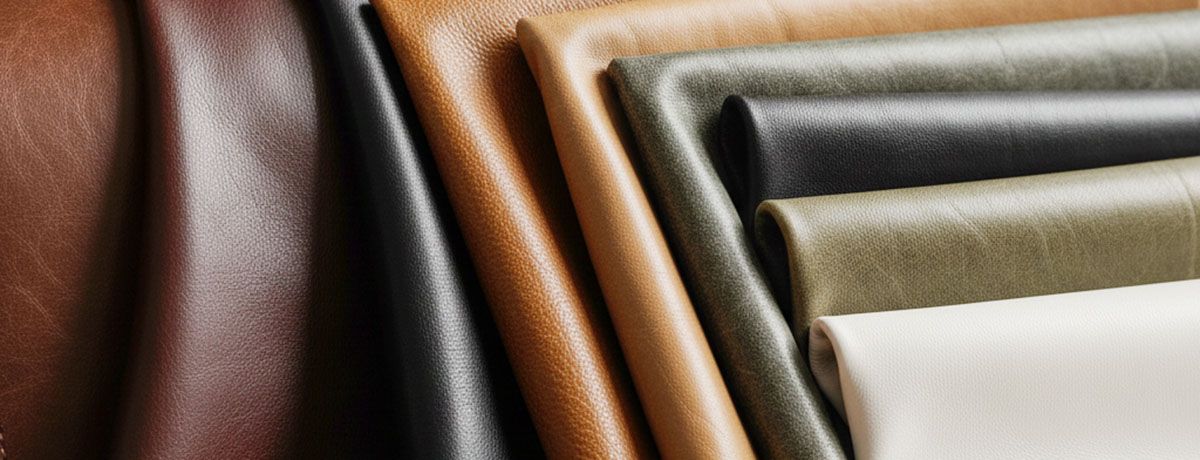
Sofa leather fabric refers to both genuine leather derived from animal hides and synthetic alternatives engineered to replicate leather’s aesthetic and functional properties for upholstery applications in furniture manufacturing. For sofa factories and upholstery producers, this material category represents one of the most critical decisions affecting product quality, production efficiency, and market positioning.
In sofa production, leather fabric typically falls into four main categories:
-
Genuine upholstery leather – Natural hides processed through tanning, available in full grain, top grain, corrected grain, and split variations
-
PU (polyurethane) artificial leather – Polymer-coated textiles offering soft hand and design flexibility
-
PVC (polyvinyl chloride) artificial leather – Rigid, chemical-resistant coatings suited to budget and contract segments
-
Microfiber synthetic leather – High-performance material combining microfiber nonwoven bases with PU for durability approaching real leather
The main decision factors for B2B buyers center on durability measured in Martindale cycles, thickness specifications and cutting yield per sofa model, color consistency across production lots, and long-term supply capability for repeat orders. These considerations differ significantly from consumer purchase criteria.
MH (Ningbo MH Industry Co., Ltd.) focuses on supplying bulk upholstery materials—including sewing threads, zippers, interlining, and fabrics—to sofa and furniture manufacturers worldwide. While MH does not manufacture leather or finished sofas, the company supports production lines with complementary components that must integrate seamlessly with chosen leather fabrics.
This article compares genuine and synthetic sofa leather fabrics, summarizes key performance requirements for industrial use, and highlights production, testing, and sourcing considerations relevant to furniture factories and wholesalers.
Main Categories of Sofa Leather Fabric Used in Upholstery
This section explains the main leather and leather-like materials used in industrial sofa production today, with emphasis on technical specifications rather than consumer-facing marketing claims.
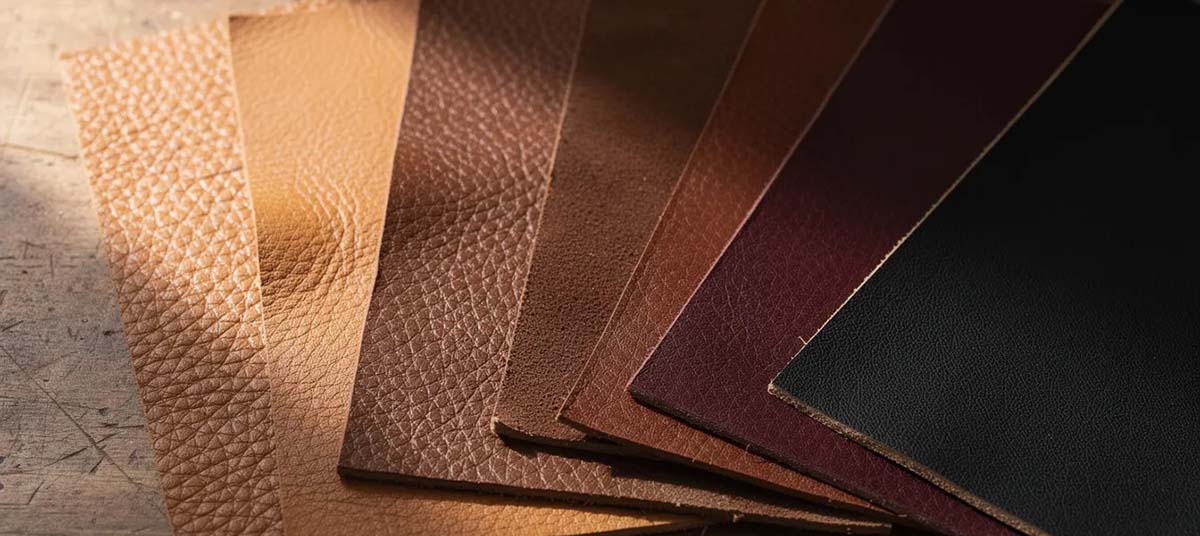
Genuine Upholstery Leather Types
-
Full grain leather – Retains the outermost hide surface with natural grain intact; typically 0.9–1.2mm thickness for sofas; highest tensile strength but shows natural markings
-
Top grain leather – Lightly sanded to remove imperfections; often 1.0–1.4mm; provides more uniform appearance while maintaining good durability
-
Corrected grain leather – Buffed and embossed with artificial grain pattern; accepts pigmented finishes well; offers highest yield per hide
-
Split leather – Derived from lower hide layers; used on non-contact areas or in “leather match” constructions; thickness varies widely
Average cowhide yields 45–55 square feet of usable material, with significant variation based on hide quality and required cutting patterns.
Synthetic Sofa Leather Fabrics
-
PU leather – Polyurethane coating applied to woven or knitted textile base; 0.8–1.2mm standard, up to 1.4mm for heavy-duty applications; softer feel than PVC
-
PVC leather – Polyvinyl chloride coating on fabric or nonwoven backing; higher surface hardness; budget-friendly but can stiffen at low temperatures
-
Microfiber leather – Ultra-fine polyester fiber nonwoven impregnated with PU; high tear strength; increasingly popular for volume production requiring consistent quality
-
Bonded leather – Shredded leather fibers combined with latex or PU binder; lowest cost but prone to delamination; many manufacturers now avoid it for high-wear zones
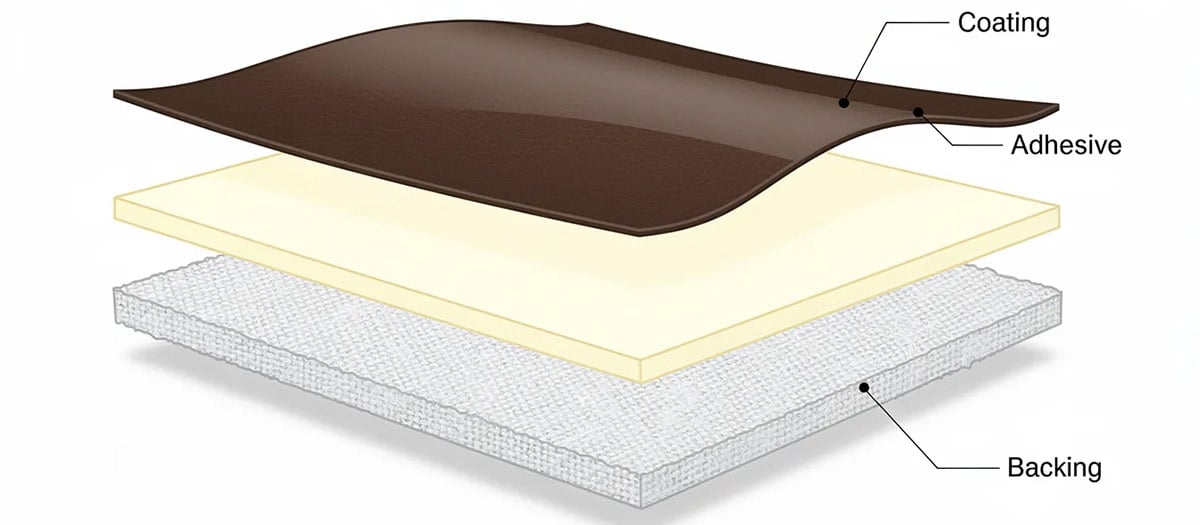
Backing Structure Differences
The backing fabric significantly affects drape, sewing performance, and dimensional stability in finished sofas:
-
Woven polyester backing – Provides excellent dimensional stability and seam strength; preferred for structured cushion applications
-
Knitted backing – Offers superior flexibility and drape; suits curved sofa sections and tight upholstery work
-
Nonwoven backing – Cost-efficient with good coating adhesion; common in PVC and entry-level PU products
Backing choice directly influences thread selection, needle size requirements, and seam slippage resistance on industrial upholstery lines.
Synthetic Sofa Leather Fabric: PU, PVC, and Microfiber
Synthetic leather fabrics dominate many volume sofa segments due to their cost efficiency, batch-to-batch consistency, and design flexibility. For manufacturers producing thousands of units annually, these materials offer predictable yields and simplified quality control.
PU (Polyurethane) Sofa Leather
PU leather consists of a polyurethane coating applied to a woven, knitted, or nonwoven textile base. Standard specifications for residential sofas:
-
Thickness: 0.8–1.2mm for standard applications; up to 1.4mm for recliners and heavy-duty seating
-
Martindale abrasion: 30,000–50,000 cycles for quality products
-
Roll width: typically 137–145cm (54–57 inches)
-
Hydrolysis resistance: modern formulations achieve 3–5 years under accelerated aging tests
PU offers soft hand approaching genuine leather, good flexibility for curved sections, and breathability superior to PVC. Transfer coating methods create grain patterns closely matching natural leather appearance.
PVC (Polyvinyl Chloride) Sofa Leather
PVC leather uses polyvinyl chloride coating, offering different performance characteristics:
-
Higher surface hardness and chemical resistance than PU
-
Better resistance to oils, solvents, and commercial cleaning agents
-
Lower cost per square meter than comparable PU
-
Potential stiffness at low temperatures unless plasticizer-modified
-
VOC emissions during lamination require proper factory ventilation
PVC remains common in budget residential furniture and certain contract applications where chemical resistance matters more than soft feel.
Microfiber Leather
Microfiber leather represents the premium synthetic option, combining ultra-fine polyester fiber nonwoven (typically 0.1 denier or finer) with PU impregnation and coating:
-
Tear strength approaching genuine leather (80–90% of equivalent weight)
-
Fine, consistent grain texture
-
Stable physical properties across large production runs
-
Excellent cutting yield with minimal defects
-
Higher cost than standard PU or PVC, but competitive with mid-grade genuine leather
Factories report microfiber leather reduces material variance by approximately 15% and scrap by 25% compared to genuine leather, making it increasingly popular for intensive-use commercial seating.
Bonded Leather Considerations
Bonded leather combines shredded leather fibers (typically 10–20% by weight) with latex or polyurethane binder, topped with a PU film layer. While it offers the lowest material cost:
-
Prone to peeling and delamination after 2–5 years of use
-
Limited warranty coverage compared to genuine or quality synthetic options
-
Many manufacturers now restrict bonded leather to non-contact areas or avoid it entirely
-
Consumer awareness of bonded leather issues has increased, creating potential brand risk
Backing Fabrics and Their Impact on Upholstery Performance
The substrate beneath the coating significantly influences how sofa leather fabric performs in manufacturing and end use:
Woven polyester backing:
-
Highest dimensional stability
-
Strong seam performance with proper thread selection
-
Resists stretching during upholstery application
-
Preferred for structured cushion work
Knitted polyester backing:
-
Superior flexibility and conformability
-
Excellent drape around curves and corners
-
May require reinforcement at high-stress seams
-
Suits organic sofa shapes and tight upholstery applications
Nonwoven backing:
-
Cost-efficient production
-
Good coating adhesion
-
Moderate dimensional stability
-
Common in entry-level and mid-range products
Backing choice affects sewing thread selection and needle sizing. MH supplies sewing thread types optimized for different backings—bonded polyester threads (20s/3, 30s/3) for heavy synthetic leathers, core-spun threads for genuine leather applications—ensuring seam integrity across material types.
Applications of Sofa Leather Fabrics in Commercial and Industrial Projects
Different leather and synthetic options align with distinct market segments and usage intensities. Material selection must match the specific requirements of each application.
Residential Applications
Typical residential furniture using sofa leather fabric:
-
2- and 3-seater sofas – Volume segment where PU and microfiber leather dominate mass-market retail collections
-
Sectionals – Large surface area makes material cost critical; many use leather match constructions
-
Recliners – Mechanism wear points require flexible, durable materials; PU at 1.2–1.4mm common
-
Sofa beds – Frequent opening/closing demands flex-resistant coatings
For residential products, comfort, appearance, and price point typically drive material choice. A leather sofa positioned as premium uses full grain or top grain genuine leather; mid-market products commonly use quality PU or microfiber that delivers acceptable durability at lower cost.
Commercial and Contract Applications
Commercial environments demand higher performance specifications:
-
Hotel lobbies and guest rooms – 24/7 use requires 40,000+ Martindale; easy-clean finishes essential
-
Restaurant seating – Spill resistance, commercial cleaning chemical compatibility, fire certification
-
Office lounges and reception – Professional appearance with durability for constant use
-
Airport seating – Extreme durability (often 100,000+ Martindale); vandalism resistance
-
Cinema and theater chairs – High flex cycles from folding seats; stain resistance for food/beverage
Contract applications typically specify detailed performance requirements in tender documents, making certified test reports essential for supplier qualification.
Specialized Applications
Certain environments require specific material properties:
-
Medical and care facilities – Disinfectant-resistant coatings; non-porous surfaces; antimicrobial treatments; fluid resistance
-
Educational institutions – Vandalism and stain resistance; easy repair or replacement; fire certification
-
Public transportation – Extreme durability; easy cleaning; fire standards (often more stringent than building codes)
Mixed Material Constructions
Many manufacturers use material combinations within a single sofa model to balance cost and performance:
-
Full grain or top grain leather on seating surfaces and armrests (high-wear, high-visibility areas)
-
Split leather or synthetic on backs, sides, and undersides (lower-wear, less visible)
-
This “leather match” approach reduces material cost by 30–40% while maintaining premium positioning
The key is ensuring color and texture match between materials—a challenge that requires careful specification and sample approval.
Integration with Other Upholstery Materials and Accessories
Sofa leather fabric choice must be coordinated with other components to achieve the desired comfort, durability, and manufacturing efficiency.
Foam and cushioning:
-
Leather type affects heat and moisture transfer through the seat
-
Genuine leather allows more breathability; synthetics may require perforated foams or breathable construction
Interlining and backing:
-
Flame-retardant interlining often required to meet fire codes without FR-treated leather
-
Additional knit or nonwoven lining may enhance comfort or meet specific standards
-
Backing fabric weight affects total material performance
Sewing threads:
-
Thread size must match leather thickness: 20s/3 or 30s/3 bonded polyester common for upholstery
-
Thread color matching critical for visible seams
-
UV resistance needed for leather exposed to sunlight
Zippers and closures:
-
Removable cushion covers require zippers compatible with leather weight
-
Metal or plastic options depending on aesthetic and durability requirements
Decorative elements:
-
Piping, welting, and decorative tapes must coordinate with leather color and texture
-
Material compatibility ensures consistent aging and wear
MH supplies a broad range of these complementary materials globally—sewing threads in various constructions and sizes, zippers for furniture applications, interlining options, and decorative tapes—enabling buyers to source multiple sofa inputs from a single partner while maintaining quality alignment across components.


Key Takeaways
Selecting the right sofa leather fabric requires balancing performance specifications against production efficiency, cost structure, and supply reliability. For manufacturers and wholesalers:
-
Genuine leather offers premium positioning, natural breathability, and long-term durability but presents challenges in yield, consistency, and supply stability for high-volume production
-
Synthetic options (PU, microfiber, PVC) provide predictable yields, tight tolerances, and stable costs that suit mass manufacturing while modern formulations achieve performance levels meeting most commercial requirements
-
Material selection should align with end-use intensity, market positioning, and production capabilities—many successful products combine materials strategically within a single model
-
Supplier qualification demands documented quality systems, comprehensive technical data, and sample evaluation through actual production processes
-
Complementary materials—threads, zippers, interlining, and accessories—must be coordinated with leather fabric choice to achieve consistent quality across the finished product
For manufacturers sourcing multiple upholstery components, working with integrated suppliers can streamline quality alignment and logistics. MH supports furniture factories worldwide with a full range of sewing threads, zippers, interlining, and fabric accessories designed for industrial upholstery applications. Contact MH to discuss your requirements for complementary materials that integrate with your chosen sofa leather fabrics.
