
Ultimate Guide: Understanding Spandex Fabric Material
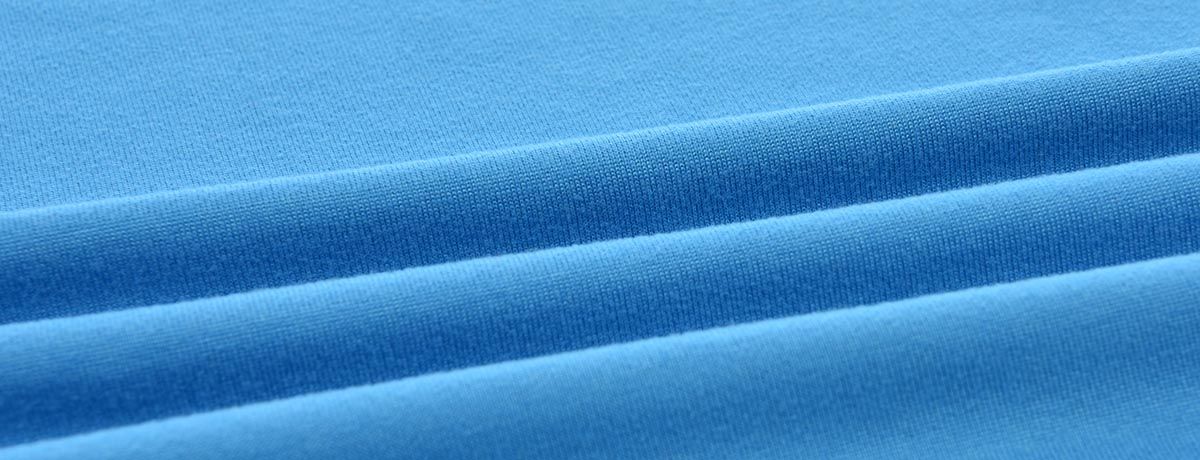
Spandex (also called elastane, or Lycra by brand name) is a polyurethane-based synthetic fiber that stretches 5 to 8 times its original length and recovers its shape. It's almost never used alone: commercial fabrics blend 2-20% spandex into nylon, polyester, or cotton to add stretch without changing the base fabric's hand-feel.
For a buyer, that means "spandex fabric" on a purchase order says very little by itself. What you're really specifying is the base fiber, the blend ratio, the knit construction, and the stretch direction, and this guide covers all four.
Key Takeaways
- Spandex is a polyurethane elastic fiber; "elastane" and "Lycra" refer to the same fiber class.
- It stretches 5–8x its length and is blended at 2–20% into nylon, polyester, or cotton, not used alone.
- 2-way vs 4-way stretch and blend ratio matter more to garment performance than the word "spandex" itself.
- For wholesale orders, spec base fiber, spandex %, GSM, width, stretch direction, MOQ, and lead time.
What Is Spandex Fabric?
Spandex fabric material is a segmented polyurethane fiber engineered for elasticity: it elongates 5-8 times its relaxed length and snaps back without permanent deformation. "Spandex" is the North American term; Europe and Asia list the same fiber as elastane on composition labels, and Lycra is its best-known brand name.
For B2B buyers, garment manufacturers, importers, activewear brands, and wholesalers, the commercial point is simple: spandex is usually a 2-20% blend component added to nylon, polyester, cotton, or rayon to create stretch without radically changing the base fabric's hand-feel. A knit that's 82% nylon / 18% spandex behaves like nylon in hand-feel and durability but moves like an elastic. Blend ratios run roughly 2-5% for wovens with "comfort stretch," 10-20% for compression and swimwear, and 15-25% at the extreme for shapewear.
That is why sourcing decisions hinge on more than the word "stretch." The right spandex fiber content, knit construction, and stretch direction determine comfort, recovery, durability, and cost in activewear, swimwear, lingerie, and fashion apparel, while the wrong spec leads to common buying mistakes.

Spandex vs Elastane vs Lycra: Are They Different? Understanding 4 Way Stretch
No. Elastane and spandex are two names for the same fiber; Lycra is a trademarked brand of it (originally DuPont, now The Lycra Company). A datasheet that says "18% elastane" and one that says "18% spandex" describe identical content. Branded Lycra can command a price premium and comes with the owner's quality certification, but generic spandex from major Asian producers dominates volume production.
Why does this matter on a purchase order? Because paying a Lycra-branded premium only makes sense when your end customer markets that name on the hang tag. If they don't, generic elastane at the same blend ratio delivers the same stretch performance at a lower per-meter cost. Confirm which one the quote actually covers before comparing suppliers.
What Are the Main Spandex Blends and Constructions, Including Nylon Spandex?
For sourcing purposes, spandex fabrics divide by base fiber and by knit construction, though there are other types beyond standard basics, especially decorative and printed options. The base fiber sets the hand-feel, moisture behavior, and price; the construction sets stretch direction and recovery.
| Blend | Typical ratio | Character | Common B2B uses | Relative cost |
|---|---|---|---|---|
| Nylon/spandex | 80/20 – 90/10 | Smooth, cool, strong, chlorine-sensitive | Swimwear, leggings, compression, lingerie | Mid–High |
| Polyester/spandex | 85/15 – 95/5 | Durable, holds prints well, quick-dry | Sportswear, sublimation printing, uniforms | Low–Mid |
| Cotton/spandex | 92/8 – 98/2 | Soft, breathable, natural hand | T-shirts, denim, casualwear | Low–Mid |
| Rayon/spandex | 92/8 – 95/5 | Fluid drape, soft sheen | Dresses, fashion tops | Mid |
Construction is the second axis, and for flowing dresses and tops you might also pair spandex programs with wholesale chiffon fabric supply:
| Construction | Stretch behavior | Best-fit application |
|---|---|---|
| 4-way stretch | Stretches and recovers in both directions | Activewear, yoga wear, swimwear |
| 2-way stretch | Stretches on one axis only | Fitted wovens, trousers, denim |
| Jersey knit | Moderate all-over stretch, light | T-shirts, dresses, linings |
| Rib knit | High widthwise stretch | Cuffs, collars, fitted tops |
| Interlock | Stable, double-faced, moderate stretch | Premium tees, baby wear, polos |
| Stretch velvet / sequin spandex | Decorative face on stretch base | Dancewear, stage costume, eveningwear |
Sequin spandex combines stretchiness with glitzy sequins for stagewear that needs sparkle. Metallic spandex is commonly chosen when a shiny finish is desired. Printed spandex can create a distinct style or texture effect depending on the pattern and base construction.
In our experience quoting stretch fabrics, most mismatches trace back to one error: a buyer orders "spandex fabric" for leggings and receives a 2-way stretch when the pattern was drafted for 4-way. Stretch direction belongs on the spec sheet, in writing, every time.
Where Is Spandex Fabric Used?
Activewear leads, but it's far from the whole picture, with spandex now so present in modern clothing that an estimated 80% of clothing sold in the U.S. contained it in 2010. Sportswear and athleisure drive the largest share of spandex demand, followed by intimate apparel and shapewear, then fashion apparel and medical textiles, with swim programs often built on 85% polyester 15% spandex swimsuit fabric.
-
Sportswear and activewear. Leggings, cycling shorts, swimwear, yoga pants, and compression garments rely on 10-20% spandex blends for muscle support and unrestricted movement. 100% polyester Dri-Fit fabric is another common option because polyester/spandex dominates printed sportswear and performance uniforms thanks to clean sublimation, moisture management, and quick-drying behavior. These lightweight synthetic blends are also favored for their moisture-wicking ability and quick-drying performance, which improves comfort when you're wearing close-fit athletic clothes.
-
Underwear and lingerie. Lower ratios (5-15%) in nylon or cotton bases give next-to-skin comfort and a fit that survives repeated wear and washing, with better resistance to body oils and detergents than natural rubber. That ability helps support socks and other stretch basics that need lasting recovery.
-
Fashion apparel. Small doses of spandex (2-5%) in wovens produce "comfort stretch" denim, chinos, and blazers, a quiet but enormous volume category, often built on polyester spandex stretch woven fabric for durable 4-way comfort. In women’s apparel especially, it also supports form fitting pieces that contour the body with a snug fit.
-
Medical and industrial. Compression stockings, bandages, orthopedic supports, and even motion capture suits in the film industry use spandex for controlled, repeatable elasticity, while non-elastic materials like 60gsm PP nonwoven fabric cover related medical and disposable applications.
For a wholesaler, this spread is an advantage. One stretch-fabric supplier relationship can serve activewear brands, lingerie manufacturers, and fashion labels at once, which consolidates volume and improves your pricing tier.
What Should B2B Buyers Check Before Ordering Spandex Fabric? Considering Environmental Impact
Five specs decide whether a spandex order performs: blend ratio, GSM, stretch percentage and direction, recovery, and colorfastness. Ask for all five on the technical datasheet, not just the composition.
-
Blend ratio. More spandex isn't automatically better. Above ~20%, cost rises and heat-setting gets harder; below the spec, garments bag out at the knees and elbows.
-
Weight (GSM). Leggings typically run 180-280 GSM; swimwear 170-220; fashion jersey 140-180. Weight drives both drape and opacity, and opacity failures on light colors are a top return reason for leggings.
-
Stretch % and direction. A lab stretch test states elongation per axis (e.g., 70% length / 90% width). In low-spandex constructions, woven fabrics are often combined with rigid fibers to add comfort stretch without changing the base structure. Match it to the pattern's negative ease.
-
Recovery. Good stretch fabric returns to within 5-6% of its original size and close to its original shape after elongation. Poor recovery means baggy garments after one wear, and it's the difference between cheap and reliable spandex that a swatch alone won't show.
-
Colorfastness and chlorine resistance. Nylon/spandex degrades in chlorinated water unless specified as chlorine-resistant; for swimwear programs, ask for the rating explicitly.
One more check that costs nothing: request lot-dye consistency terms. Spandex content makes shade matching across dye lots harder than on stable wovens, so a supplier's tolerance standard (and remedy) belongs in the contract, and fabrics mixed with spandex should usually air dry instead of taking high dryer heat.
Sourcing Spandex Fabric from MH (Supplier Overview)
MH (Ningbo MH), established in 1999, is a leading garment-materials and tailoring supplier serving buyers in over 150 countries, and stretch fabrics sit inside a catalog built for wholesale and manufacturing volume.
For B2B buyers evaluating a spandex supplier, the relevant facts are scale, consistency, and range: MH operates nine factories across roughly 350,000 m² with 3,000+ workers, and maintains long-term partnerships with 2,000+ manufacturers offering around 10,000 tailoring materials and fabrics. Known as the "Kingdom of Sewing," that footprint lets a wholesaler consolidate stretch fabric, thread, elastic tape, zippers, and lace under one supplier instead of managing a dozen.
For garment manufacturers, importers, and activewear brands, working at this scale means coordinated sourcing of fabrics alongside core inputs like polyester sewing thread, and:
-
Consistent lots. Nylon/spandex and polyester/spandex knits held to repeatable stretch, GSM, and shade across reorders, the single most common failure point with small stretch-fabric mills.
-
One-stop materials. Pair 4-way stretch, jersey, and rib fabrics with matching thread, elastic, and trims from the same source, or develop specific bases like polyester spandex woven 4-way stretch Maserati fabric for performance apparel.
-
Global logistics experience. A supplier already shipping to 150+ countries, with credentials including "Top 500 China Service Industry" and "AAA Trustworthy Company," under the MH and TWO BIRDS trademarks.
-
Custom specs. Blend ratio, GSM, width, stretch direction, and finish quoted to your production needs, with MOQ and lead time confirmed up front.
If you're comparing spandex quotes, ask every supplier for base fiber, spandex percentage, GSM, width, stretch direction, recovery spec, MOQ, and lead time in writing. MH's team quotes against those same variables so you can compare like-for-like. Browse the stretch fabric range, use MH's contact details and office network, or email sales@mh-chine.com for a spec-based quote.


Frequently Asked Questions
What is spandex fabric made of? Spandex is a synthetic fiber made from segmented polyurethane. In commercial fabric it's blended at roughly 2-20% with nylon, polyester, cotton, or rayon; the polyurethane segments provide 5-8x stretch while the base fiber provides structure, hand-feel, and durability. Additionally, its environmental impact includes highly energy-intensive production, and the fiber is non-biodegradable.
What's the difference between 2-way and 4-way stretch spandex fabric? 2-way stretch elongates on one axis only (usually widthwise); 4-way stretch elongates and recovers in both length and width. Activewear, swimwear, and leggings patterns almost always require 4-way stretch, while fitted wovens like stretch denim use 2-way. Always confirm stretch direction on the spec sheet before ordering.
What blend ratio of spandex should I order for leggings or swimwear? Leggings and compression wear typically use 10-20% spandex in a nylon or polyester base at 180-280 GSM; swimwear runs 15-20% spandex, ideally chlorine-resistant, at 170-220 GSM. Fashion tees and casualwear need only 2-8%. Higher ratios raise cost and heat-setting difficulty without improving everyday garments.
How do I judge spandex fabric quality before a bulk order? Test recovery, not just stretch: quality stretch fabric returns to within about 5-6% of its original dimensions after elongation. Also verify GSM against spec, opacity on light colors under stretch, colorfastness, and lot-to-lot shade tolerance. A supplier like MH quotes these values in writing so bulk lots can be checked against them. Even a 5% inclusion can make blended fabrics difficult to recycle, which affects end-of-life options across the world. No known commercially viable method currently makes it biodegradable.
