
Twill vs Cotton: Which Fabric Is Better for Garment Manufacturing?
Selecting the correct textile serves as the foundation of successful garment production. For procurement managers and factory owners, the distinction between fabric types directly impacts production costs, garment durability, and end-user satisfaction. Two terms often surface in these decisions: twill and cotton. Both twill and cotton fabrics are widely used in apparel and cloth manufacturing, serving as essential materials for garments, workwear, and other textile products.
MH, a leading integrated industrial and trade company, specializes in providing customized textile solutions for these exact scenarios. This guide breaks down the structural and functional differences to assist B2B buyers in making informed sourcing decisions. Twill fabrics are renowned for their durability, opacity, and excellent draping qualities, making them a versatile choice for everything from rugged denim jeans to premium apparel and upholstery.


Quick Overview: Twill Fabric and Cotton
To streamline the procurement process, it is helpful to first establish clear definitions of the materials in question.
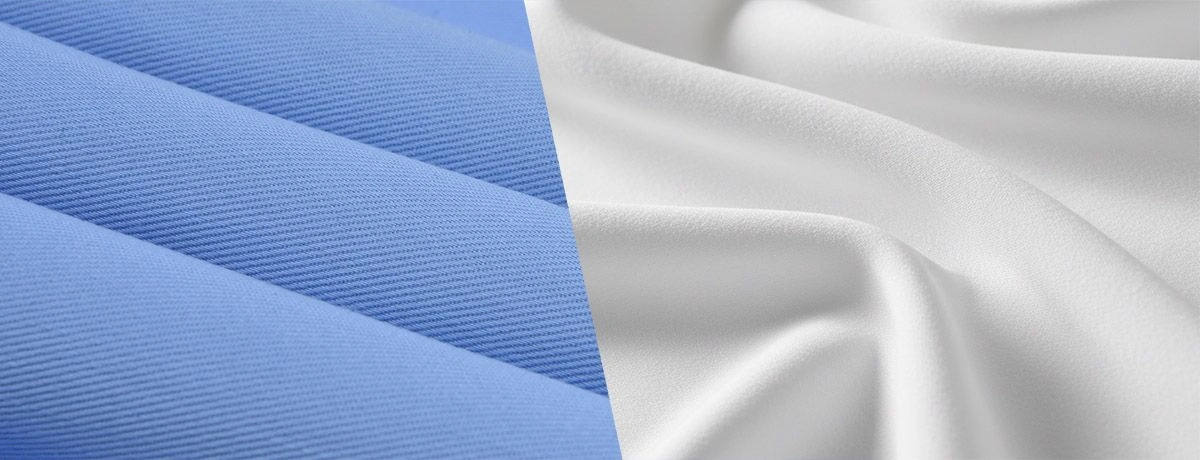
Twill fabric is a textile defined by a specific weave pattern characterized by diagonal lines on the face of the fabric. Cotton twill is a robust, versatile fabric characterized by its distinct diagonal weave.
Cotton is a natural fiber harvested from the boll of the cotton plant, used as the raw material for various weaves. It is processed into cotton fabric and cloth through different weaving methods.
Visually and tactically, twill presents a textured, diagonal surface and a heavier drape, whereas standard plain-weave cotton offers a smooth, uniform surface with a lighter hand feel.
What Is Twill Fabric?
Twill is one of the three original fundamental weaves, alongside plain and satin, and is distinguished by its characteristic diagonal parallel ribs. Twill weave creates a distinctive diagonal pattern or ribs on the fabric surface, which are known technically as a “wale.” These diagonal ribs are a key visual identifier of twill fabrics.
Twill's unique properties—such as enhanced durability, flexibility, and a softer drape—set it apart from the different properties of other weaves like plain and satin. The structure of the twill weave not only gives it a distinctive appearance but also contributes to its performance and suitability for various textile products.
The primary types of twill are distinguished by their material and weave variation. Common examples include denim, chino, herringbone, and gabardine.
The Twill Weave Structure
In a twill weave construction, the weft thread (horizontal) passes over one or more warp yarns (vertical, running lengthwise) and then under two or more warp yarns. This crossing pattern between the weft and warp yarns forms the distinctive twill weave. Twill weave creates visible diagonal ribs on the fabric surface, which serve as a key visual identifier. This structure allows yarns to be packed more tightly together than in a plain weave. Cotton twill is characterized by its distinct diagonal weave, which enhances its durability and resistance to wear.
Resistance to Wear
Because the yarns are packed closely, twill fabric is generally denser and more durable. The high thread count creates a thick, sturdy material that resists wear, tear, and abrasion. This structural integrity makes it the preferred choice for heavy-duty applications.
However, the dense, stiff structure of twill can be challenging for sewing and may require more skill.
Example Garment
The most ubiquitous example of a twill garment in the global market is denim jeans, which utilize a specific twill variation to achieve their renowned durability. Cotton twill is also commonly used for jackets and other apparel, as its durability and ability to drape well make it ideal for a variety of garments. In fact, cotton twill is widely used in the fashion industry for items such as chinos, denim, and jackets due to its resistance to creasing and versatility in apparel manufacturing.
How The Twill Weave Works
Understanding the mechanics of the weave helps in specifying the correct fabric for production lines. In twill fabrics, the twill weave creates distinct diagonal lines or wales on the surface, which are a key visual identifier. This pattern is formed by the way warp yarns (the threads running lengthwise) and weft yarns (the threads running crosswise) are interlaced—typically, the weft yarn passes over one or more warp yarns and then under two or more, shifting by one thread with each row. This crossing pattern results in the characteristic diagonal ribs seen in twill, such as in denim, and can vary in direction, like right-hand or Z-twill. Twill features these diagonal lines or wales, providing a textured, softer, and more flexible feel that drapes well.
Visualizing the Diagonal Wale
If one observes the surface of a denim jacket or a pair of chinos, the diagonal lines are immediately apparent. This is the wale, formed by the distinctive diagonal ribs characteristic of twill weave. These diagonal ribs create a textured surface that enhances the fabric's appearance. The visible diagonal ribs of twill add texture and a sophisticated, classic look to clothing and home furnishings. The angle of this diagonal impacts the fabric’s drape; a steeper angle generally results in a more prominent line and a stiffer drape. Twill often has a better drape than heavier plain weaves, making it comfortable for pants and jackets.
Right-Hand vs. Left-Hand Twill
Twill lines run in two directions. Right-hand twill runs diagonally up to the right, while left-hand twill runs up to the left. While this distinction is subtle, it can influence the softer texture of the finished fabric, as well as its pliability after finishing processes are applied.
Furthermore, twill typically offers greater durability, a softer feel, and a more graceful drape than a standard plain weave. However, it possesses a more distinct texture and less sheen than the smooth, lustrous finish of a satin weave.
What Is Cotton?
When industry professionals compare “twill vs. cotton,” they are typically comparing a twill weave against a standard plain weave made from cotton fibers. Cotton is a natural fiber derived from the cotton plant, which is processed into cotton fabric and cloth in various forms. Cotton is used in various forms, including t-shirts, light shirts, blouses, and bedding, with standard cotton being commonly chosen for these products. Plain weave is the simplest interlacing of warp and weft yarns in a crisscross pattern.
The Processing and Feel
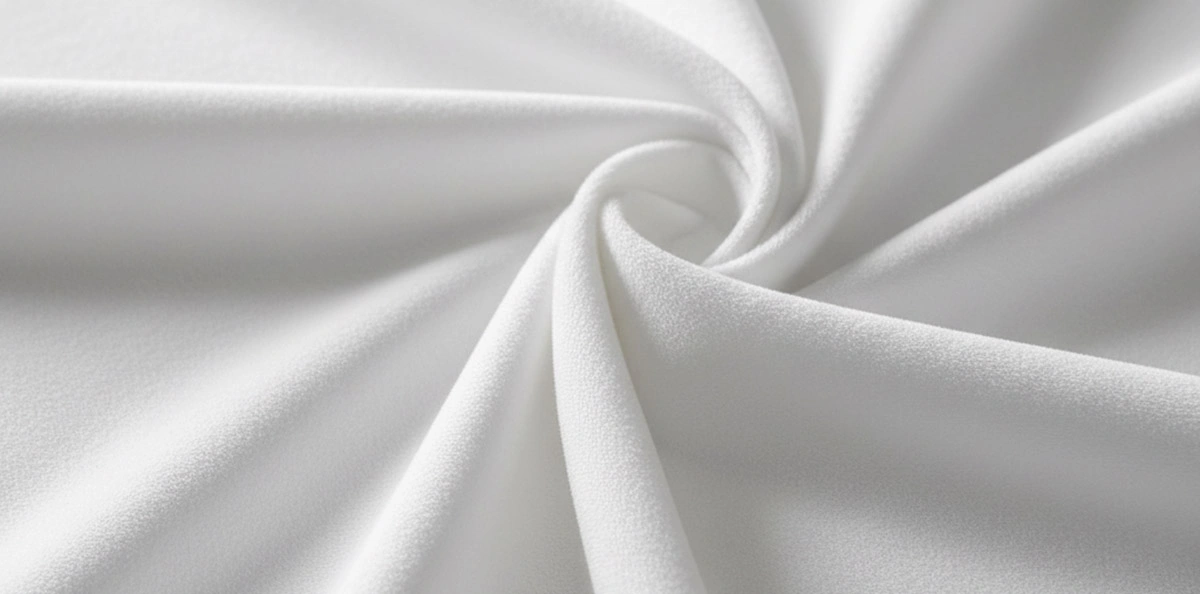
Cotton fibers are spun into yarn and then woven. In a standard plain weave, the fabric undergoes various finishing processes. This may include brushing, where fine metal brushes create raised fibers, resulting in a soft fabric with a fuzzy surface. Brushed cotton is known for its soft, fuzzy surface, achieved through a mechanical brushing process. This makes brushed cotton ideal for colder seasons due to its warmth and comfort. It is often used for items like t-shirts, sweatshirts, and bedding because of its comfort. Brushed cotton is also breathable, allowing air to circulate and enhancing comfort in various temperatures. However, it is prone to shrinkage and pilling if not cared for properly.
Tactile Cues
Standard cotton plain weave offers a crisp, dry hand feel. It lacks the texture of twill, providing a flat, smooth surface that is highly breathable. It feels lighter against the skin compared to the density of twill.
Example Product
A classic example of standard cotton plain weave is a button-down dress shirt or high-quality bed sheets, where smoothness and breathability are prioritized over rugged durability. Compared to other fabrics used for similar applications, cotton plain weave is often lighter, more breathable, and less expensive, while some other fabrics may offer greater durability or a different texture.
Uses and Best Applications
Twill and cotton fabrics are known for their versatility and style, making them popular choices in apparel and a wide range of other uses. MH supplies fabrics for a vast array of end-uses, with these two fabrics available in various forms across the textile industry. Selecting the right weave maximizes the value of the final product.
-
Work Pants: Twill is the industry standard for uniforms and utility trousers due to its abrasion resistance and durability, making it a staple in workwear apparel.
-
Chinos: The drape and structure of twill make it the ideal choice for semi-formal trousers, combining durability with a stylish appearance.
-
Bedding: Plain weave cotton (percale) is preferred for its cool, crisp feel, though cotton twill sheets are gaining popularity for cooler climates.
-
Loungewear: Soft plain weave cotton or jersey knits are preferable for lightweight comfort, showing the versatility of cotton in various forms.
-
Upholstery: Heavier weight twill is frequently used for furniture coverings requiring longevity, and its versatility extends to home decor and high-end apparel.
Both twill and cotton fabrics are used in various forms, from denim jeans to T-shirts and jackets, highlighting their flexibility and essential role in apparel manufacturing and beyond.
FAQs To Address Common Buyer Questions
Is "twill cotton" different from "cotton twill"?
No. These terms are used interchangeably in the industry. Both refer to cotton twill fabric, which is a fabric woven in a twill pattern using cotton yarns. Cotton twill fabric is known for its durability, wrinkle-resistance, stain-hiding properties, and versatility, making it a popular choice for clothing and home textiles.
Does cotton pill easily under normal use?
Pilling is determined more by fiber length and twist than the weave itself. However, because twill has fewer interlacings, longer "floats" of yarn are exposed, which can sometimes lead to pilling if low-quality, short-staple cotton is used. High-quality production minimizes this issue.
