
How Do the Types of Hook and Loop Fasteners Differ in Strength, Backing, and Application?

For garment manufacturers and industrial distributors, sourcing the correct closure system is critical to product performance and longevity. The term 'VELCRO®' is derived from the French words 'velours' (velvet) and 'crochet' (hook), and the VELCRO® Brand has become synonymous with hook and loop fasteners, even though many manufacturers produce similar products under different names. Hook and loop fasteners—often colloquially referred to by popular brand names but technically distinct as a fastening mechanism—are a cornerstone of modern textile engineering. There are different types of hook and loop fasteners designed for various applications, highlighting their versatility across industries.
The history of hook and loop fasteners began with inventor George de Mestral, who was inspired by burrs that stuck to his clothing after a walk in the woods. After observing the natural design of burrs under a microscope, de Mestral spent years perfecting the hook and loop fastening system, leading to the innovative product we know today.
Consisting of two sides—a rigid “hook” side, which is rough and scratchy, and a flexible “loop” side, which is soft and fuzzy—this mechanism offers reliable, reusable closure solutions. The hooks engage with the loops to create a strong bond, yet they can be easily pulled apart when needed. This functional design is used across sectors ranging from apparel and automotive to medical supplies and military gear. This guide explores the technical specifications, material variances, and application-specific types of hook and loop fasteners to assist procurement managers in selecting the ideal solution for mass production.
Understanding the Anatomy: Hook and Loop Construction
At its core, the hook and loop fastener system relies on the temporary mechanical bond between two surfaces. The hook side (male component) typically utilizes stiff, molded, or woven hooks that catch onto the soft, matted fibers of the loop side (female component). Hook and loop fasteners are available in various types, including woven and molded options.
While the basic concept remains consistent, the manufacturing techniques and materials differ significantly based on the intended industrial application. Hook and loop fasteners consist of mated woven or molded nylon or polyester components. For B2B buyers, understanding these distinctions is essential for specifying the correct custom orders.
Core Categories of Fasteners
Industrial procurement generally categorizes these fasteners based on their attachment method and construction style. The way you attach the hook and loop fastener can significantly impact its effectiveness and suitability for specific applications.
Adhesive-Backed Fasteners
These variants feature a pre-applied adhesive coating on the back of the tape, protected by a release liner. Peel and stick varieties of hook and loop fasteners use this adhesive backing for easy application, making them convenient for a wide range of uses. Adhesive-backed hook and loop fasteners use pressure-sensitive adhesives to eliminate the need for sewing or drilling, allowing for quick installation on hard surfaces such as metal, plastic, or glass.
-
Acrylic Adhesive: Offers high bond strength and resistance to temperature fluctuations and plasticizers. It is ideal for automotive interiors and outdoor equipment.
-
Rubber-Based Adhesive: Provides excellent initial tack and is suitable for general-purpose indoor applications.
-
Foam Tape: Utilizes a foam substrate to conform to irregular surfaces, providing better surface contact on textured materials.
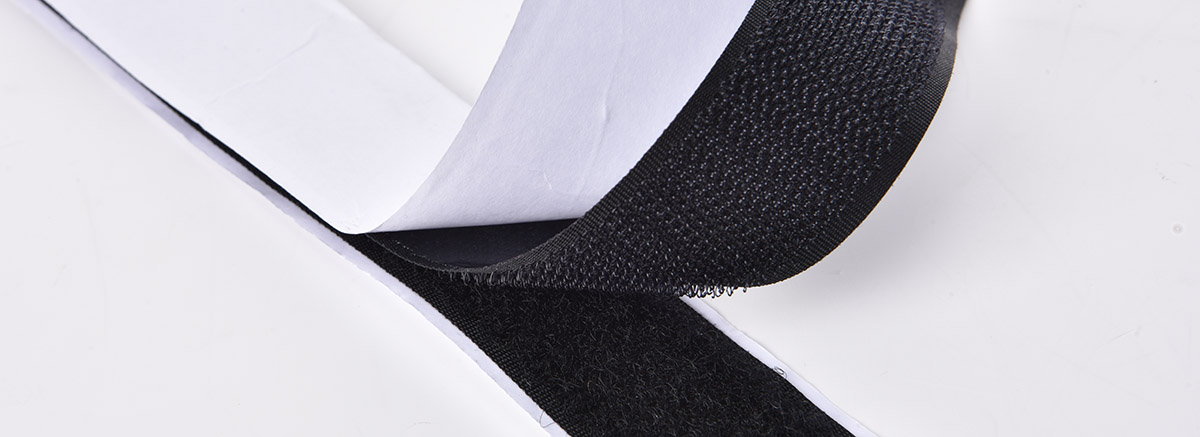
Sew-On Fasteners
The standard for the garment industry, sew-on fasteners are manufactured without adhesive backings. They are designed for machine stitching onto fabrics, leathers, and flexible materials. Fabric compatibility is essential for sew-on fasteners, ensuring secure attachment and optimal performance in textile applications. Woven hook fasteners, in particular, are flexible and easy to sew, making them ideal for use in textiles, uniforms, and upholstery. Durability during laundering and dry cleaning is a primary characteristic of this category.
Snap-Fasteners
Hybrid solutions that combine the adjustability of hook and loop with the mechanical security of snap buttons are often utilized in tactical gear and heavy-duty outerwear.
Hook Variants: Selecting for Performance
The “hook” side determines the grip strength (shear and peel strength), the cycle life of the fastener, and comes in a variety of styles and shapes tailored for specific applications. The shape of the hooks can be customized to improve performance and usability for different needs. Hook density also plays a role in performance; for example, the HTH 805 hook features approximately 900 hooks per square inch, providing high durability and engagement strength.
Key types of hook and loop fasteners include standard woven, adhesive-backed, molded/mushroom, and specialized fire-resistant or low-noise variants.
-
Standard Woven Hook: The most common variety, usually made from nylon, polyester, or NOMEX® fibers. Woven hooks are flexible, easy to sew, and are commonly used for textiles, uniforms, and upholstery. They are softer and more fabric-like compared to molded hooks, generally thicker in profile, and suitable for flexible materials. Woven hooks have a moderate to high cycle life depending on the weave.
-
Molded Hook: Produced through plastic injection molding, these hooks are made from rigid or semi-rigid nylon, polypropylene, or polyethylene resins and keep their shape under pressure. Molded hooks often feature mushroom-shaped or T-shaped hooks that audibly snap into place, providing a tighter, more secure lock and high shear strength—ideal for heavy-duty industrial and high-tech applications where a clean appearance and space efficiency are valued. Molded hooks are strong, durable, and low-profile, making them suitable for industrial, OEM, and product design applications. Molded hook and loop materials provide high initial peel and shear strength for use on rigid surfaces and have a high cycle life with consistent closure over many uses. Lightweight molded plastic hooks and straps are ideal for applications where low profile, portability, or ease of use are important, such as bundling, cable management, and temporary or disposable assemblies. Low-profile, lightweight fasteners are also commonly used in medical devices or wearable electronics due to their thinner, lighter-weight design.
-
Soft Hook: Manufactured to be less abrasive, soft hooks are essential for applications involving skin contact, such as medical braces, infant wear, and automotive seating where snagging must be minimized.
Material Composition
The base material of the fastener dictates its environmental resistance and durability. Woven hooks are made from fabric materials such as nylon or polyester, making them suitable for integration into various textile applications. Woven hooks are generally thicker and more fabric-like in profile compared to molded hooks. MH offers customization based on specific material requirements.
Nylon (Polyamide)
Woven nylon is the industry standard for high-quality fasteners. It provides exceptional cycle life (opening and closing), heat resistance, and consistent peel strength.
Polyester
Polyester fasteners are preferred for outdoor and marine applications due to their superior resistance to moisture, UV radiation, and mildew. While they may have a slightly lower cycle life than nylon, their environmental stability makes them indispensable for specific sectors.
Plastic Resins
Used primarily for molded hooks, various resins can be formulated to achieve specific stiffness or flexibility requirements, often used in automotive and industrial cable management.
Industrial Applications
The versatility of hook and loop systems allows them to function effectively across diverse B2B sectors, supporting business operations and innovation in a wide range of industries. VELCRO® Brand fasteners were first adopted by the aerospace industry to improve the usability of bulky space suits, and today they are used across industries from aerospace and automotive to marine, uniforms, and medical devices.
-
Apparel: Used for adjustable cuffs, pocket closures, and footwear.
-
Automotive & Transportation: Secures headliners, floor mats, and seat covers, and is relied upon in transportation applications for its durability and reliability under vibration, temperature changes, and repeated use.
-
Medical: Utilized in orthopedic braces, blood pressure cuffs, and patient positioning straps where adjustability and hygiene are paramount.
-
Cable Management: Essential for organizing server rooms and industrial wiring harnesses.
-
Outdoor Gear: Critical for tents, backpacks, and weather-resistant clothing.
-
High Temperatures & Flame-Retardant Applications: Flame-retardant hook and loop fasteners, made from specialized fibers like Nomex, are used in safety equipment such as firefighting gear and in aerospace to maintain strength and integrity under extreme heat conditions.
Product Customization and Options
As a make-to-order manufacturer, MH provides tailored solutions rather than generic stock. Hook and loop fasteners can be customized in size, shape, strength, and adhesive backing to meet specific application requirements. Buyers can specify requirements based on:
Custom Assemblies
For large-scale manufacturing, fasteners can be cut to specific lengths, mated, or ultrasonically welded to other components. This reduces assembly time on the client's production line.
Self-Engaging Products
These fasteners feature hooks on one side and loops on the reverse of the same strap. They are widely used for bundling cables and hoses, eliminating the need for separate buckles or hardware.
Back-to-Back Products
Similar to self-engaging types, these involve laminating a separate hook tape to a loop tape back-to-back. This creates a strong, durable strap used for heavy-duty bundling and strapping applications.
Specialty Products
-
Flame-Retardant: Treated to meet industry safety standards (such as FAR 25.853 for aviation or FMVSS 302 for automotive).
-
Elastic Loop: Woven with elastic fibers to allow for stretch and movement, ideal for medical bands and athletic wear.
Selection Criteria for Procurement Managers
When submitting a request for quotation (RFQ) or planning a production run, consider the following technical parameters to ensure the product meets the end-use requirements:
-
Peel Strength: How much force is required to separate the fastener?
-
Shear Strength: How much force can the fastener withstand when pulled parallel to the surface?
-
Cycle Life: How many times must the fastener be opened and closed before losing functionality? (e.g., High cycle for apparel, low cycle for installation panels).
-
Environmental Conditions: Will the product be exposed to UV light, moisture, chemicals, or extreme temperatures?
-
Attachment Method: Will the fastener be sewn, glued, or RF welded?
Sourcing with MH
MH operates as a dedicated partner to the textile and industrial sectors. Our integrated industrial and trade model ensures that wholesalers and factory procurement teams receive consistent quality and competitive pricing. By operating on a make-to-order basis, we ensure that every meter of hook and loop tape is manufactured to the precise specifications of your order, ensuring optimal freshness of adhesives and exact compliance with material standards.


FAQ
What is the difference between woven and molded hooks?
Woven hooks are made by weaving nylon or polyester threads and then cutting the loops to form hooks. They are flexible and durable. Molded hooks are created by injecting liquid plastic into a mold. They are typically thinner, stronger in shear, but less flexible than woven options.
Does MH keep stock of standard hook and loop tape?
MH operates on a make-to-order basis to ensure customization capabilities and product quality. We do not maintain retail-style ready stock, allowing us to cater specifically to B2B bulk requirements.
Can hook and loop fasteners be washed or dry cleaned?
Yes, standard sew-on nylon and polyester fasteners are designed to withstand washing and dry cleaning. However, adhesive-backed fasteners are generally not recommended for laundering as the adhesive may fail or gum up the machine.
What are the width options available for mass production?
Fasteners can be manufactured in a wide range of widths, typically from 10mm up to 150mm or wider, depending on the specific machinery and client requirements.
Are flame-retardant options available?
Yes, MH can manufacture hook and loop fasteners with flame-retardant treatments to meet specific safety regulations for automotive, aviation, and protective clothing sectors.
