
What Is Chiffon Fabric? Complete Guide to Types, Properties & Uses
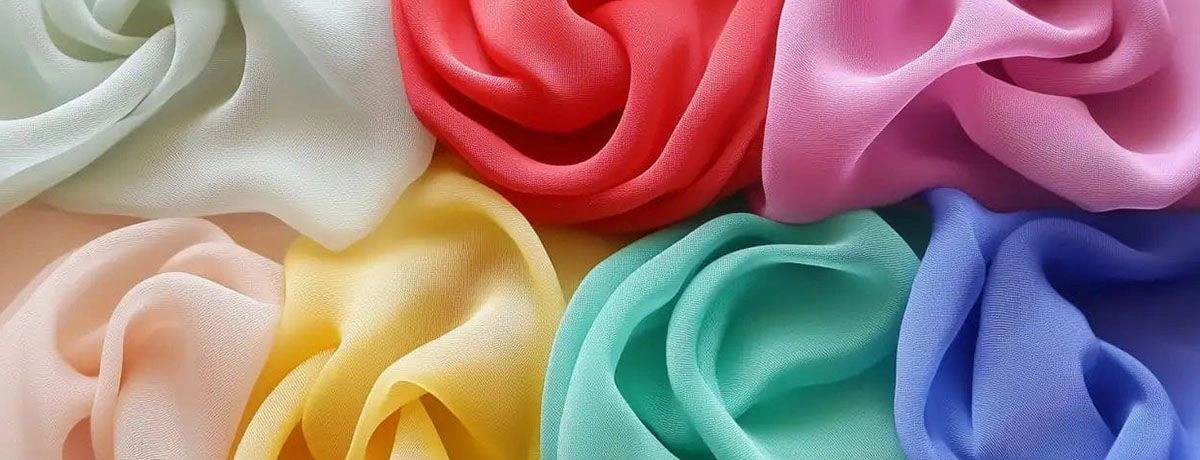
Chiffon fabric has been a go-to material for fashion designers and home decorators for centuries. As a term, it covers a wide range of chiffon fabrics that share the same light, airy qualities, with a shimmery and sheer appearance and elegant drape showing up everywhere — from bridal gowns and red-carpet eveningwear to window curtains and delicate scarves. But what exactly is chiffon, a word derived from French meaning “cloth” or “rag,” and why does it hold such a lasting place in the textile world?
Key Takeaways
-
Chiffon is a lightweight, sheer fabric woven using high-twist crepe yarns in alternating S and Z directions, giving it its distinctive crinkled texture
-
Five main types exist: silk, polyester, cotton, rayon, and nylon chiffon — each suited to different applications and budgets
-
China and India together supply the majority of the world’s commercial chiffon output
-
Chiffon requires hand washing in cold water or dry cleaning; ironing damages the fiber structure
What Is Chiffon Fabric?
Chiffon is a sheer, lightweight woven textile made from tightly twisted crepe yarns in a particular style — recognized by textile standards bodies worldwide. What sets it apart from other sheer fabrics is the weaving method: the alternate S-and Z-twist in both the warp and weft. This same uniform pattern is used regardless of the base material, creating a slight surface pucker — the characteristic texture you feel when you run your hand across good chiffon.
Originally made from silk fabric, chiffon was first produced in France in the mid-19th century and spread worldwide during the Industrial Age. Today it comes in five main fiber variants: silk, polyester, cotton, rayon, and nylon. Each has its own performance profile. silk chiffon fabric and silk chiffons remain a luxury option, while most chiffon is made from synthetic materials, including synthetic chiffons in polyester and rayon, which are more affordable. The fiber you choose shapes everything from how the garment moves to how long it lasts.
Chiffon typically weighs between 30 and 50 GSM (grams per square meter), placing it firmly in the lightweight category. That low weight is exactly what makes it so valued in fashion — layers of chiffon can create volume and movement without adding bulk, with its sheer look long associated with elegance and luxury in formalwear.
Chiffon is distinct from similar sheer fabrics: it is lighter than georgette (30–50 GSM vs. 60–90 GSM), less rigid than organza, and more textured than crepe de chine; structured options like taffeta fabric for formalwear offer a crisper hand and more body. The combination of low weight and high drape is what makes it irreplaceable in bridal and eveningwear design.
At MH Chine, we work with chiffon across all five fiber types for clients ranging from bridal brands to home textile manufacturers, and our wholesale chiffon fabric supply services are geared toward brands that need consistent quality at scale. In our experience, the right choice depends on end use, budget, and washing requirements.
What Are the Key Properties of Chiffon Fabric?
Chiffon combines properties that seem contradictory: it’s delicate-looking yet surprisingly durable; sheer yet capable of layering for opacity; lightweight yet structured enough to hold drape.
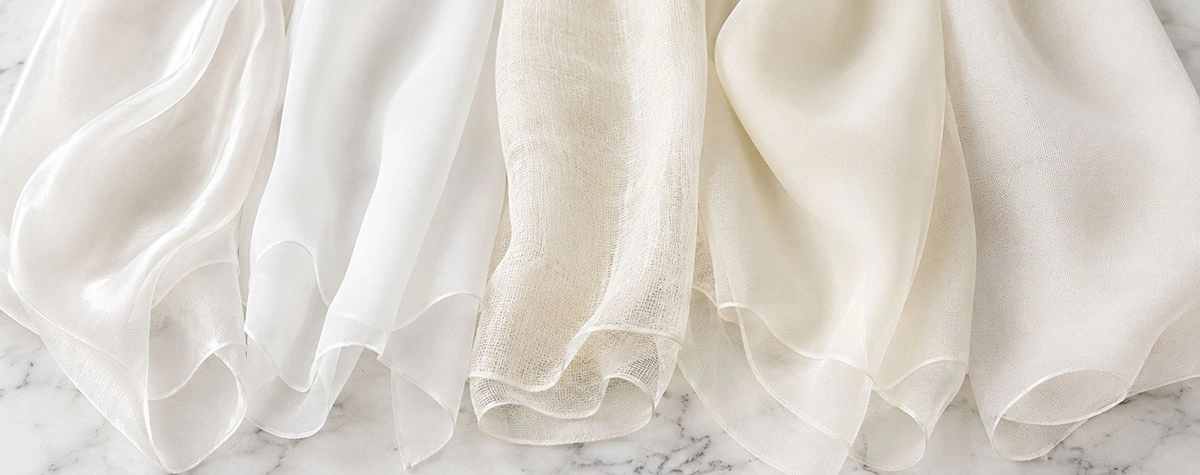
Sheerness and transparency. Chiffon’s open weave structure lets light pass through, giving garments that sought-after ethereal quality and a sheer appearance. A single layer is translucent or semi-transparent; two or three layers read as opaque while keeping the fabric’s airy feel.
Drape and movement. The fabric falls in fluid lines rather than standing out stiffly, with the shimmery and sheer appearance that gives chiffon its elegant drape. This is why designers choose it for flowing skirts, flutter sleeves, and draped necklines — it moves with the wearer rather than against her.
Breathability. Air passes freely through the open weave. In warm climates, this makes chiffon significantly more comfortable than heavier alternatives like satin or velvet.
Durability. Despite its delicate appearance, chiffon resists tearing better than most sheer fabrics. The tight yarn twist creates a stable structure even at low weights. Polyester variants are particularly durable; silk chiffon is stronger than it looks, often has a soft hand, and needs gentler handling.
Dyeability. Chiffon can react differently to dye: silk and rayon take color more readily, with rayon chiffon offering silk-like softness at a lower price, while synthetic chiffon is harder to dye evenly. Silk chiffon also tends to have a shiny finish, unlike the matte look of cotton chiffon.
What Types of Chiffon Fabric Are Available?
Five main types dominate the market, each made from a different base fiber. The comparison table below shows how they differ on the factors that matter most for sourcing and design decisions, with polyester chiffons remaining the most common commercial option today.
|
Type |
Fiber |
Typical GSM |
Price Range (USD/m) |
Best For |
Care |
|---|---|---|---|---|---|
|
Silk Chiffon |
Natural silk |
30–45 |
$20–$100+ |
Luxury bridal, couture, eveningwear |
Dry clean or hand wash cold |
|
Polyester Chiffon |
Synthetic polyester |
40–60 |
$2–$15 |
Everyday wear, accessories, mass market |
Hand wash or gentle machine cycle |
|
Cotton Chiffon |
Natural cotton |
45–65 |
$8–$25 |
Summer garments, casual wear |
Hand wash cold |
|
Rayon Chiffon |
Semi-synthetic (wood pulp) |
35–55 |
$5–$20 |
Drapey blouses, flowy dresses |
Hand wash cold, no wringing |
|
Nylon Chiffon |
Synthetic nylon |
40–55 |
$5–$18 |
Activewear, outdoor apparel, linings |
Hand wash or gentle machine cycle |
Silk chiffon is the benchmark — the fabric all synthetic versions try to approximate. As a natural fiber option, it has the finest hand, a shiny finish, and a richer luster than other fibers. It’s also the most challenging to sew and care for.
Polyester chiffon is what you’ll find in the vast majority of commercial products. Made from synthetic fibers, it wrinkles less, fades less, and costs far less than silk, though chiffon prepared from these materials is harder to dye than versions made from natural fibers. For brands producing at scale, it’s the practical default.
Cotton chiffon, another of the different fibers used for this fabric, has a matte finish and is a more breathable choice than synthetic varieties.
Rayon chiffon sits between silk and polyester in feel and price. Made from natural cellulose, this natural fiber alternative offers softness close to silk at a lower price point. It drapes beautifully — sometimes better than polyester — but it’s more prone to shrinkage and dye bleeding if handled incorrectly.
See our related guide to polyester fabric types and properties for a deeper look at how polyester performs across different fabric constructions.
What Is Chiffon Fabric Used For?
Chiffon’s combination of lightness, drape, and sheerness makes it useful across a wider range of applications than most people realize, including as a popular fabric for evening wear because of its lightweight nature and sheer drape, and for overlays on opaque garments that add texture; designers often combine it with more lustrous options like Paradise satin fabric for gowns to create layered looks.
It also appears in styles such as evening dresses and jumpsuits.
Fashion and Clothing
Bridal and eveningwear remain the dominant use case, and chiffon is still used mainly in garments for women. According to research from the Bridal Fashion Council, sheer overlay fabrics — with chiffon the most common — appear in over 60% of Western bridal gown designs. The fabric’s ability to create volume through layering without weight is the key reason designers keep returning to it.
Beyond formal occasions, chiffon is widely used in:
-
Flowing blouses and wrap tops
-
Flared and pleated skirts for formal attire
-
Lightweight scarves and wraps
-
Lingerie overlays and nightwear
-
Sarongs and beach cover-ups
Home Decor
Chiffon's transparency makes it ideal for window treatments where you want softened light rather than blackout privacy. Sheer curtains and draped valances are the most common home applications. The fabric is also used for decorative table runners, canopy drapes, and event décor.
Accessories and Crafts
Ribbons, gift wrapping, floral arrangement accents, and hair accessories all commonly use chiffon. The fabric cuts cleanly (when properly weighted), holds dye vividly, and layers easily — all properties that craft and accessory designers value, especially when they have a broader understanding of sewing and textile fundamentals for beginners.
How Do You Care for Chiffon Fabric?
Chiffon care varies by fiber type, but three rules apply across all variants: avoid heat, avoid agitation, and avoid wringing, since chiffon requires careful handling because it can easily lose shape if treated roughly.
|
Care Step |
Silk Chiffon |
Polyester Chiffon |
Cotton/Rayon Chiffon |
|---|---|---|---|
|
Washing |
Dry clean or hand wash cold |
Hand wash cold or gentle machine cycle (30°C max) |
Hand wash cold |
|
Detergent |
pH-neutral silk wash |
mild detergent |
mild detergent |
|
Wringing |
Never — roll in a towel to remove water |
Never |
Never |
|
Drying |
Lay flat or hang away from direct sun |
Hang dry; keep away from direct heat |
Lay flat |
|
Ironing |
Do not iron — steam only, lowest setting |
Do not iron polyester directly — use pressing cloth |
Can press lightly on reverse at low heat |
|
Dry cleaning |
Recommended for structured pieces |
Optional |
Optional |
One care note worth emphasizing: never put chiffon in a tumble dryer. The combination of heat and mechanical agitation distorts the yarn twist structure and permanently changes the fabric’s drape. This applies to all fiber types, including polyester. Natural-fiber chiffon may shrink slightly on the first wash.
For stubborn wrinkles, a handheld garment steamer on a low setting is safe for all chiffon types. Hold the steamer 5–8 cm from the fabric and let the steam — not direct contact — do the work.
Is Chiffon Fabric Sustainable?
The sustainability profile of chiffon depends almost entirely on the fiber it’s made from, and fully synthetic options are generally more harmful environmentally than semi synthetic materials or organic ones.
Polyester chiffon is the most common variant but also the most environmentally intensive. Polyester and nylon are derived from petroleum oil, a non-renewable resource, and extracting that feedstock is energy-intensive and harmful to surrounding ecosystems. Polyester production is petrochemical-based and generates roughly 3–4 kg of CO₂ per kilogram of fabric. It also sheds microplastics during washing, and because nylon and polyester are non-biodegradable, they add to landfill and waterway waste — a concern that’s driving increasing demand for recycled PET alternatives.
Recycled polyester chiffon, made from post-consumer plastic bottles, has a substantially lower carbon footprint — approximately 30–50% less CO₂ than virgin polyester, though fiber quality and consistency vary by supplier.
Silk chiffon has a complex sustainability story. Silk production is biodegradable and doesn’t shed microplastics, but conventional sericulture uses significant water and chemicals, and labor conditions in the sector warrant scrutiny.
Cotton and rayon chiffon sit between these poles. Organic cotton chiffon reduces chemical inputs, and cotton production is generally less toxic overall. TENCEL-based rayon uses a closed-loop solvent process that significantly cuts waste versus conventional rayon, though rayon is more biodegradable than polyester or nylon and still relies on chemicals that can harm workers and ecosystems; newer knits such as milk silk fabric for dresses and loungewear show how synthetics and blends can be engineered for comfort while raising fresh sustainability questions.
For buyers with sustainability commitments, asking suppliers for OEKO-TEX Standard 100 certification or GOTS certification for cotton variants is a practical minimum standard. We’d encourage looking beyond certifications to actual fiber traceability where possible.
Frequently Asked Questions About Chiffon Fabric
What is the difference between chiffon and georgette? Both are sheer crepe-weave fabrics, but georgette is heavier and more opaque, with a more pronounced crinkled texture. Georgette typically weighs 60–90 GSM versus chiffon’s 30–50 GSM. Chiffon drapes more fluidly; georgette holds its shape slightly better. Both use twisted yarns, but georgette uses a higher-density weave.
Why does chiffon fray so easily? Chiffon frays at cut edges because its open plain weave has few interlocking threads holding the edge together. The solution is either to finish edges with a rolled hem or serger, use a sharp rotary cutter rather than scissors, or apply a light seam sealant. Because chiffon fabric frays easily, French seams are also commonly used to keep the finished garment neat and prevent fraying. Sewing chiffon with a fine needle (65/9 or 70/10), a high-quality spun polyester sewing thread for apparel, and a small stitch length also reduces fraying.
How do you stop chiffon from slipping when cutting? Place a layer of tissue paper between the fabric and your cutting surface, then cut through both layers. Alternatively, use pattern weights instead of pins and a rotary cutter for precision. Sewing tips: some sewers lightly starch the fabric before cutting to temporarily stabilize it, and any tissue paper used should be removed carefully after sewing, and pairing chiffon with smooth, high-sheen rayon embroidery thread for decorative stitching can also influence how it behaves under the presser foot.
What is the difference between chiffon and organza? Organza is stiffer and more structured than chiffon. It’s woven from silk or synthetic filament yarns without the high-twist crepe construction, giving it a crisp, self-supporting quality. Chiffon drapes and flows; organza holds its shape and is commonly used for structured overlays, ballgown skirts, and ribbon applications.
Request Chiffon Samples from MH
We’ve sourced and supplied chiffon fabric to garment manufacturers, bridal brands, and home textile companies across Europe, North America, and Southeast Asia since 2005. China is the biggest exporter of finished chiffon fabric products, which makes it central to the global textile industry. Chinese producers also supply large quantities of rayon and nylon used in chiffon production. Our silk and cotton variants available by order.
If you’re evaluating chiffon for a current project, request a sample pack and we’ll send swatches of the relevant fiber types for your application. We’re happy to advise on fabric weight, weave density, and finishing options.