
How Do Garment Manufacturers Source Wholesale Clothes Tags for Professional Production?
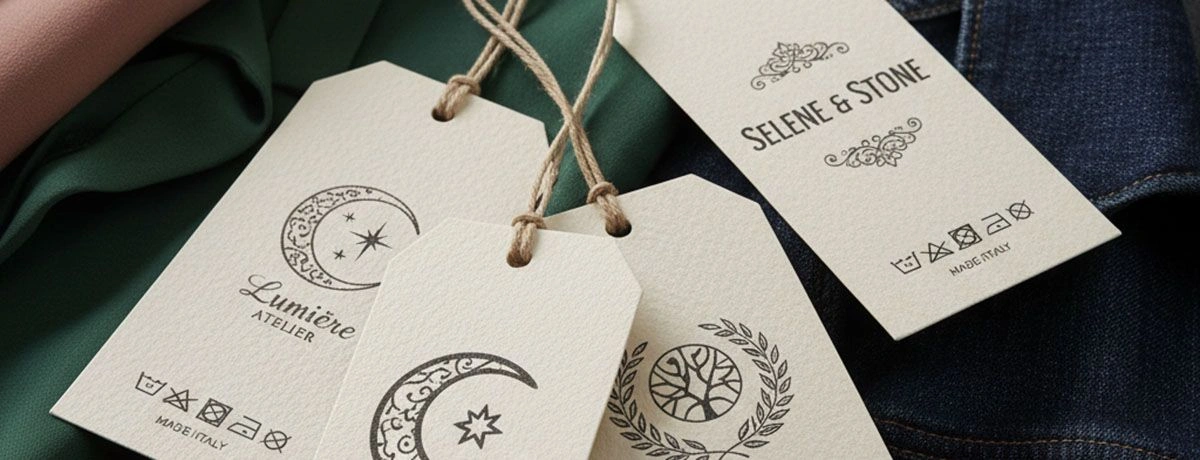
Professional garment manufacturers and wholesalers require reliable, high-quality labeling solutions that meet industrial standards while reinforcing brand identity. Wholesale clothes tags—including custom woven labels, printed fabric labels, hang tags, and care labels—serve as essential components in apparel production, providing product information, brand recognition, and compliance with international textile regulations.
MH, a leading B2B integrated manufacturing and trading textile company, specializes in make-to-order wholesale clothes tags designed for large-scale production. Our solutions cater to professional B2B buyers, wholesalers, and garment factory owners seeking consistent quality, supply chain reliability, and global export expertise. This guide examines the primary categories of wholesale clothes tags, their manufacturing specifications, and their strategic applications in commercial garment production.
Overview of Wholesale Tags and Custom Labels
Procuring wholesale clothes tags offers significant advantages for businesses operating at scale. Volume purchasing reduces per-unit costs while ensuring consistency across production runs. Custom labels allow manufacturers to maintain brand integrity, meet regulatory requirements, and differentiate products in competitive markets.
MH provides comprehensive customization options across multiple product categories. As a make-to-order supplier, we manufacture tags and labels according to precise specifications without maintaining ready stock. Businesses can customize hang tags to include size information, materials, and care instructions, enhancing marketing and product appeal. Suppliers often allow customers to upload their own designs for clothing labels and tags, making the process customizable. This approach ensures that each order meets exact quality standards and design requirements while supporting efficient supply chain management for garment factories and wholesalers.
Our product range encompasses woven labels, printed fabric labels, hang tags, and care labels. Each category serves distinct functions within garment production, from permanent brand identification to temporary pricing and care instruction communication.
Product Types: Custom Woven Labels, Fabric Labels, and Hang Tags
Understanding the differences between tag types enables informed procurement decisions. Woven labels offer durability and a premium aesthetic through textile construction. Printed labels provide full-color capabilities for complex graphics and gradients. Hang tags serve temporary functions such as pricing, storytelling, and barcode display.
Each product type utilizes different manufacturing processes and materials, resulting in varied applications across garment categories. Professional buyers should evaluate these distinctions based on brand positioning, product price points, and target market expectations, coordinating choices with core production inputs such as wholesale 40/2 polyester sewing thread.
Custom Woven Labels
Woven labels are manufactured using specialized looms that interlace threads to create text, logos, and simple graphics directly into the fabric structure. This construction method produces highly durable labels that withstand repeated washing and wear without fading or deteriorating. Woven labels are also designed to be gentle on the skin and reduce irritation, emphasizing comfort and quality in the product's material choice.
Common weave densities range from standard to high-definition, with higher thread counts enabling finer detail reproduction. Standard sizes vary from small center fold labels (10mm x 25mm) to larger straight-cut options (50mm x 70mm), though custom dimensions accommodate specific design requirements.
Woven labels excel in applications requiring long-term durability and a sophisticated appearance. Premium apparel brands frequently specify woven labels for their refined texture and professional presentation. These labels perform reliably in high-temperature washing and commercial laundering environments, making them suitable for workwear, hospitality uniforms, and institutional garments.
Printed Fabric Labels
Printed clothing labels utilize heat transfer or screen printing techniques as a method of branding and identification, applying full-color graphics onto textile substrates. This manufacturing method supports complex color gradients, photographic imagery, and detailed illustrations that exceed the capabilities of woven construction.
Ideal fabrics for printed labels include satin, polyester taffeta, and cotton twill. Material selection depends on the desired finish, with satin providing a smooth, lustrous surface. Satin labels are silky and comfortable, suitable for delicate clothing and luxury branding. Cotton offers a softer, more natural feel. Cotton labels are eco-conscious and soft, ideal for natural, organic, or children’s clothing. Cotton labels are made from organic cotton and provide a soft, natural texture. Organic cotton labels are favored by eco-conscious brands for their natural texture and biodegradable properties. Printed labels accommodate virtually unlimited color options, enabling precise brand color matching and vibrant visual impact, especially when combined with high-color-density decoration using 120D/2 polyester embroidery thread.
These labels suit fashion-forward brands requiring intricate graphics or seasonal designs that change frequently. The flexibility of digital printing allows smaller minimum order quantities compared to woven labels, supporting limited-edition collections and test markets. Heat transfer labels are suitable for sportswear or underwear because they reduce irritation associated with traditional tags. However, printed labels generally exhibit lower wash durability than woven alternatives, making them more appropriate for delicate garments or items with shorter lifecycle expectations, particularly when used alongside functional components such as custom zippers for garments and bags.
Custom Clothing Hang Tags
Hang tags serve multiple commercial functions: displaying pricing information, communicating brand narratives, providing barcode data for inventory management, and showcasing certifications or quality assurances. Unlike sewn-in labels, hang tags are temporary attachments removed before garment use.
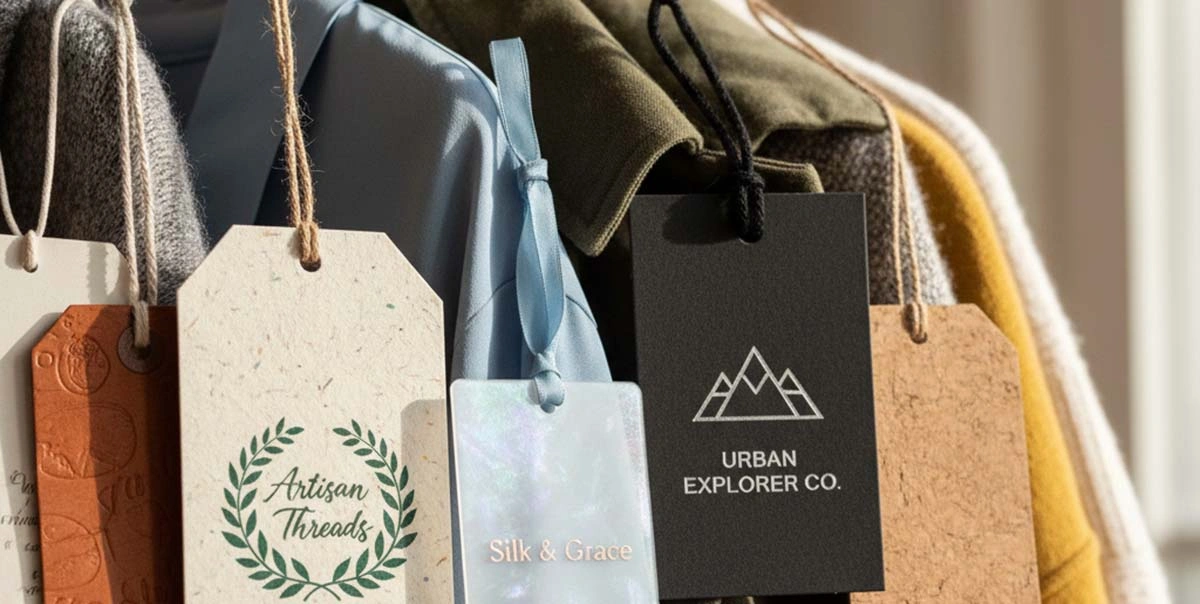
Material options include heavyweight cardstock, rigid plastic, recycled paperboard, and specialty substrates such as wood or metal for premium applications. Material selection should align with brand positioning and environmental commitments. Many wholesalers now specify recycled or FSC-certified paperboard to meet sustainability requirements from retail partners. Custom hang tags can be printed in full color and on various materials to suit different products, and coordinated with complementary bag and luggage accessories for branding. Using silk-like finishes, such as Spot UV coating, can enhance the appearance and feel of hang tags, giving them a luxurious, eye-catching look.
Attachment methods include plastic fasteners, string ties, safety pins, and metal loops. The choice depends on garment type, security requirements, and aesthetic considerations. String options range from economy cotton twine to luxury braided cords, with color customization available to reinforce brand identity.
Hang tags provide valuable real estate for storytelling and marketing messages that exceed the space constraints of sewn-in labels. Custom hang tags can be designed to include size information, materials, and care instructions. A well-designed hang tag can transmit the quality and originality of a product. Using unique hang tags can help your items stand out from competitors on the shelves. Adding personal touches to hang tags can enhance their appeal and effectiveness. Effective hang tag design balances regulatory requirements (fiber content, country of origin) with brand differentiation elements that influence purchasing decisions at the point of sale.
Materials, Label Style, and Full Color Options
Material selection significantly impacts label performance, aesthetic quality, and cost. Fabric labels constructed from polyester, cotton, or blended materials each offer distinct characteristics. Polyester provides excellent wash durability and color retention. Cotton delivers a softer hand feel and natural fiber appeal. Blended materials balance performance with comfort.
Alternative materials such as faux leather, silicone, and metal create distinctive label styles for brands seeking differentiation. Faux leather labels project premium positioning suitable for denim, outerwear, and accessories. Silicone labels offer waterproof properties ideal for activewear and swimwear. Metal labels provide exceptional durability for rugged workwear applications, especially when paired with functional base materials like waterproof Oxford fabric for outdoor products. Sticker tags are also used as promotional tools on clothing items, especially at events and trade shows, where they can effectively boost brand visibility.
Label style encompasses visual design elements including typography, layout, color schemes, and finishing techniques. Damask weaving creates subtle, tone-on-tone effects for understated elegance. Taffeta weaving supports vibrant color contrast for bold brand statements, similar to how 228T polyester Taslon taffeta fabric delivers visual impact and performance in outerwear applications. Edge finishing options—ultrasonic cutting, heat sealing, or merrowed borders—contribute to perceived quality and prevent fraying. High-quality hang tags can increase perceived value and justify higher price points for products.
Full-color printing capabilities enable reproduction of complex graphics, photographs, and gradient effects. However, the number of colors directly impacts manufacturing complexity and cost. Designs utilizing six or fewer colors generally achieve optimal cost efficiency while maintaining visual impact. Brands requiring precise color matching should provide Pantone specifications to ensure consistency across production runs, especially when coordinating tags with core fashion fabrics like wholesale chiffon for dresses and scarves.
Elevate Your Garment Production Standards
Wholesale clothes tags represent a critical intersection of brand identity, regulatory compliance, and product quality. Custom labels, woven labels, and hang tags manufactured to precise specifications enhance perceived value while supporting operational efficiency in garment production and distribution.
MH delivers the manufacturing capacity, technical expertise, and supply chain reliability that professional buyers require. Our make-to-order approach ensures that each label meets exact specifications while our global export experience facilitates seamless cross-border procurement.
Contact our B2B sales team to discuss your wholesale clothes tag requirements and discover how our integrated manufacturing capabilities support your garment production objectives.