
Why Source Wholesale Rib Knit Fabric for Garment Manufacturing?
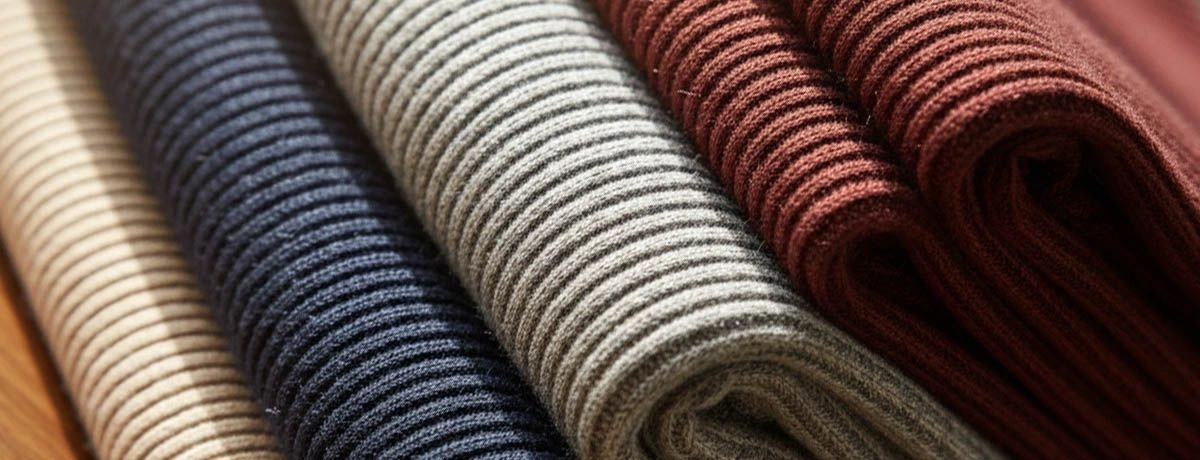
Garment manufacturers and textile wholesalers require reliable access to high-quality materials to maintain efficient production lines. Wholesale rib knit fabric stands out as a popular fabric choice due to its versatility and the wide variety of colors and styles available for different projects. This versatile textile is widely recognized for its excellent stretch recovery and distinct vertical texture. Because of its structural integrity, this fabric is critical for manufacturing cuffs, collars, neckbands, waistbands, and full garments that demand precise fit and durability. Many suppliers, such as Shaoxing Suerte Textile Co., Ltd., offer factory-direct sourcing with options for customization in material composition and rib patterns.
Understanding the technical specifications of rib knits ensures that factories select the right material for their production needs. Buyers can shop for rib knit fabric by the yard or in bulk, providing flexibility for different project sizes. MH, a leading B2B integrated manufacturing and trading textile company within the global garment accessories and tailoring materials market, specializes in providing large-scale, Make-to-Order (MTO) solutions for industrial clients. By focusing on supply chain reliability and extensive global export expertise—particularly within the Latin American market—MH ensures that professional buyers receive consistent, high-quality textiles tailored to their exact specifications. Choosing wholesale rib knit ensures access to a reliable supply of a versatile material that caters to modern fashion trends.
What Is Rib Knit Fabric?
Rib knit fabric is produced using a specific knitting technique that alternates knit and purl stitch columns. Rib knit fabric is classified by the number of purl stitches and knit stitches, such as 1x1 or 2x2, which determines its pattern, appearance, and suitability for different uses. This construction method creates distinct vertical ribs and provides the fabric with significant crosswise elasticity. The distinctive striped look of rib knit fabric is created by the alternating rows of knit and purl stitches during manufacturing. Purl stitches play a key role in forming the ribbed, elastic texture of the fabric, contributing to its stretchy and textured surface.
The physical structure of the knit makes rib knit fabric soft, stretchy, and textured, resulting in a comfortable and visually appealing material. The stitch ratio, such as 1x1 or 2x2, controls the prominence of the ribs and the overall stability of the material. Rib knit fabric can be made from yarn composed of a single fiber—like cotton—or a blend of fibers, such as polyester and spandex. Manufacturers frequently utilize various fiber blends to achieve the desired hand, drape, and durability for specific garment applications. Common compositions include cotton, polyester, viscose, and spandex, each bringing unique performance characteristics to the finished textile.
Types of Rib Knit Fabrics
Rib knit fabrics are available in a variety of types and patterns, each classified by the number of knit and purl stitches, such as 1x1, 2x2, and 4x1. These types offer different levels of stretch and texture, making them suitable for a wide variety of applications in apparel and accessories. The structural variations in rib knits accommodate a wide range of industrial applications. The standard 1x1, 2x2, and 3x3 ribs differ primarily by their stitch repeats, and are classified based on the arrangement of knit and purl stitches. Factory buyers select these variations based on the required visual appearance, crosswise stretch, and edge stability needed for the final garment.
Tubular ribs are manufactured seamlessly and serve as ideal components for cuffs and bands, minimizing the need for side seams during assembly. Conversely, flat ribs are produced in wide panels, making them suitable for bulk cutting and the construction of full garment sections. Additionally, novelty ribs and mock ribs introduce texture variations while successfully retaining the standard stretch and recovery properties expected from this category of textiles, making them suitable for specialized components such as rib knit polo shirt collars in 100% polyester.
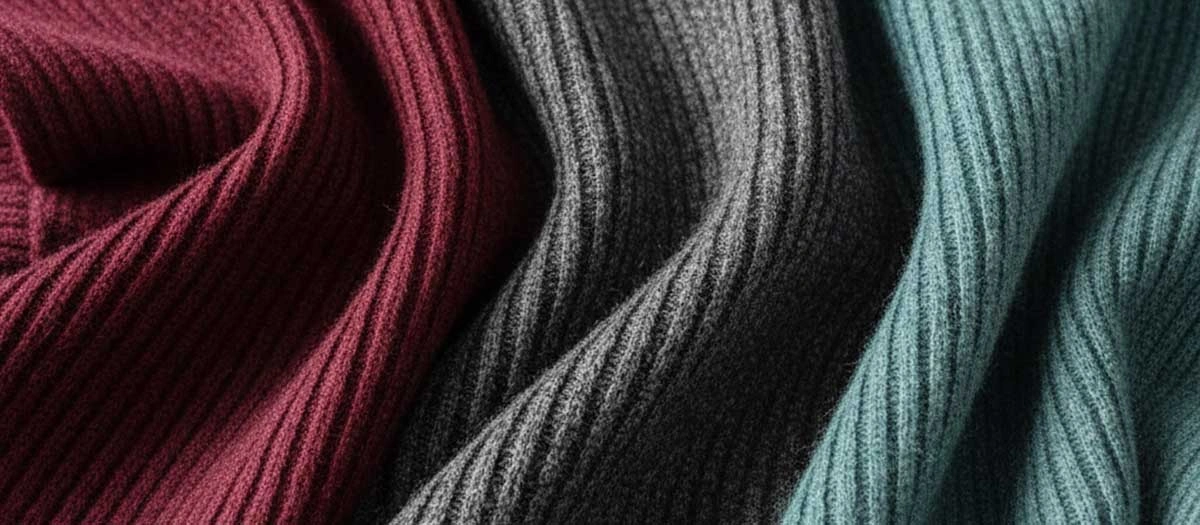
Common Stitch Ratios and Industrial Uses
Selecting the correct stitch ratio is vital for ensuring garment quality and functionality. Each ratio offers distinct mechanical properties suited for specific components.
1x1 Ribs
These fabrics feature the highest crosswise elasticity. Garment factories commonly utilize 1x1 ribs for neckbands, fitted apparel, and lightweight cuffs where maximum stretch and a smooth profile are required.
2x2 Ribs
Offering medium elasticity combined with enhanced structure, 2x2 ribs provide a thicker, more pronounced texture. They are the preferred choice for manufacturing waistbands, heavier cuffs, and structured sweater trims.
3x3 Ribs and Wider Variations
Wider ribs deliver lower crosswise stretch but provide a highly structured, decorative appearance. Manufacturers rely on these fabrics for heavy-duty bands and structured trims, particularly in the outerwear sector.
Weights, Textures, and Knit Fabric Performance
The weight of the rib knit directly impacts its application on the factory floor. Lightweight rib knits exhibit excellent drape and high elasticity, making them suitable for fitted tees, tank tops, and stretch linings. Medium-weight rib knit fabric is often used to create winter tops and bottoms, as well as lightweight cardigans. These medium-weight options balance structure and stretch, heavily utilized in the production of cardigans, dresses, stable cuffs, and are commonly found in sweatshirts due to their warmth and durability.
Heavyweight rib knit fabric is perfect for winter sweaters, jackets, and coats. Heavy rib knits provide crucial insulation and body, making them ideal for sweatshirts, jackets, and heavy-duty waistbands. For garments requiring rigorous wear and shape retention, adding spandex—typically between 3% and 8%—significantly increases recovery and prevents the fabric from bagging under repeated physical stress.
Rib knit fabric's natural breathability and moisture-wicking properties make it a top choice for activewear like yoga pants and compression garments, often paired with four-way stretch polyester-spandex woven fabric in performance-focused collections. Rib knits can stretch up to twice their original width and return to their initial shape without sagging, outperforming standard jersey knits in dimensional stability. High-quality rib fabric should bounce back to at least 90% of its original length after being stretched. Additionally, ribbed fabrics can withstand roughly three times as many wear cycles before distorting compared to similar jersey fabrics.
Buying Wholesale: Rolls, Minimums, and Make-to-Order Procurement
Procuring wholesale rib knit fabric for large-scale manufacturing requires strategic planning, much like sourcing other lightweight apparel textiles such as wholesale chiffon fabric for dresses and linings. MH operates strictly as a Make-to-Order (MTO) supplier. We do not keep ready stock, ensuring that every production run is customized to meet the exact technical requirements of the buyer. While sample yards can be manufactured for quality validation and prototyping, all bulk orders are processed in roll quantities to provide optimal pricing and strict consistency.
Minimum Order Quantities (MOQs) depend on the specific fiber content, fabric weight, spandex percentage, and specialized finishing requirements. Because MH produces fabric to order, factories are guaranteed strict dye-lot matching across diverse product lines, from rib knits to waterproof coated Oxford fabrics for durable applications. This eliminates color variations across bulk yardage, ensuring absolute color consistency for large garment runs.
Key Applications for Rib Knit Fabrics
The targeted stretch and recovery properties of rib knits make them indispensable for garment construction. The primary industrial applications include cuffs, collars, neckbands, waistbands, and stretchable hem finishes, all of which require reliable stitching supported by 100% spun polyester sewing thread for garment production. Rib knit fabric is often used for cuffs, collars, hems, and waistbands on heavy clothes like sweatshirts and jackets.
Beyond component parts, manufacturers use flat rib knits to produce a wide variety of items, which must be matched with high-quality wholesale sewing threads for industrial use to ensure seam durability and production efficiency. Fitted tees, dresses, skirts, and lightweight sweaters greatly benefit from the fabric’s natural drape and cling control. Rib knit fabric works beautifully for everything from cozy pajamas to fitted dresses. Additionally, the accessories market leverages rib knit elasticity to produce beanies, scarves, socks, and glove cuffs that require a snug, comfortable fit, often finished with rayon embroidery thread for decorative detailing.
Partnering with a Reliable B2B Textile Supplier
Optimizing your supply chain begins with selecting a manufacturing partner capable of delivering consistent, industrial-grade materials. Wholesale rib knit fabric remains a foundational element of quality garment production. MH provides the authoritative expertise, large-scale MTO capacity, and global logistics network necessary to support your operational goals, complemented by specialized lines such as 40/2 100% spun polyester sewing threads for high-speed production lines. We invite you to explore our customized textile solutions, designed to empower your manufacturing facility and enhance your final product offerings.


If you have any questions about wholesale rib knit fabric, sewing techniques, or product details, please feel free to contact us for more information.
