
210D vs 420D vs 600D Oxford Fabric: How to Choose the Right Oxford Fabric for Maximum Durability?
When choosing Oxford fabric for bags, outdoor gear, luggage, or tents, one of the most common questions B2B buyers ask is:
Oxford fabric is commonly used in the production of bags, luggage, and tents due to its durability and waterproof properties.
Should I use 210D, 420D, or 600D Oxford fabric?
The answer depends on yarn thickness, abrasion resistance, tear strength, water resistance, coating type, and the end-use application.
Oxford fabric is typically made from polyester yarns, but it is also commonly made from nylon. Both polyester and nylon enhance the fabric's durability and resistance to wear.
Oxford fabric is manufactured using a basket-weaving technique (basketweave structure), which contributes to its strength and durability.
This guide explains how to choose the right Oxford fabric for your business.
What Is Oxford Fabric?
Oxford fabric (also called Oxford cloth) is a plain weave fabric typically made from polyester yarns. It is widely used in:
-
Oxford fabric bags
-
Tote bags
-
Duffel bags
-
Tool bags
-
Travel bags
-
Outdoor gear
-
Camping gear
-
Military gear
-
Industrial covers
-
Heavy duty applications
-
Various applications
Its popularity comes from its tight weave structure, durability, and versatility as a coated fabric. Oxford fabric is known for its strength and versatility, making it suitable for a wide range of applications in outdoor gear and fashion.
Oxford Fabric Types
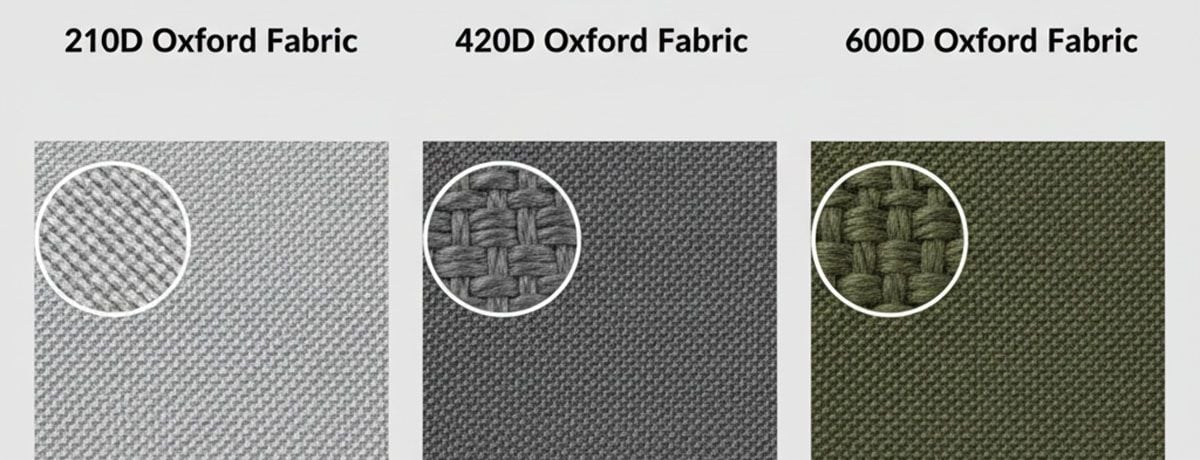
Oxford fabric comes in a variety of types, each designed to meet specific needs across different industries. The most widely used Oxford fabric types are 210D, 420D, and 600D, with the denier rating indicating the thickness and weight of the yarn used in the weave. A higher denier rating, such as 600D Oxford, results in a fabric that is exceptionally durable and strong—perfect for heavy duty applications like outdoor gear, industrial covers, and rugged luggage. This makes 600D Oxford a top choice for products that must withstand tough conditions and frequent use.
For applications where weight is a concern, such as lightweight products or items that require easy portability, 210D and 420D Oxford fabrics offer a balanced durability-to-weight ratio. These fabrics are suitable for tote bags, promotional items, and other products where a lighter fabric is preferred without sacrificing too much strength. By understanding the denier rating and the specific requirements of your end-use, you can select the Oxford fabric type that delivers the right combination of durability, weight, and cost-effectiveness for your business.
What Does “D” Mean in 210D, 420D, and 600D Oxford?
The “D” stands for Denier, which measures yarn thickness.
Denier is defined as the weight in grams of 9,000 meters of yarn.
-
Higher denier yarns = thicker yarn
-
Thicker yarn = stronger and heavier fabric
-
Stronger yarn = better tear resistance and abrasion resistance
For example:
-
210D Oxford uses finer yarn thickness
-
420D uses medium denier yarns
-
600D Oxford uses high denier yarns for maximum durability
Denier directly affects strength, weight, and performance.
210D vs 420D vs 600D Oxford Fabric: Technical Comparison
1. Fabric Weight and Structure
Oxford fabric weight depends on yarn thickness, tight weave construction, and coating type.
Typical ranges:
|
Type |
Typical GSM |
Performance Level |
|---|---|---|
|
210D Oxford |
100–130 gsm |
|
|
420D Oxford |
180–220 gsm |
Balanced durability |
|
600D Oxford |
230–300 gsm |
Higher denier fabrics provide:
-
Higher abrasion resistance
-
Better tear resistance
-
Greater load capacity
-
Longer lifespan
However, they also increase material cost.
2. Abrasion Resistance & Tear Strength
Abrasion resistance is critical for:
-
Outdoor enthusiasts equipment
-
Military gear
-
Rugged bags
-
Tool bags
-
Camping gear
Comparison:
-
210D – Moderate abrasion resistance, suitable for light-duty use
-
420D – Good abrasion resistance with balanced durability
-
600D Oxford – Higher abrasion resistance, suitable for heavy duty applications
If your product requires maximum durability and prolonged sun exposure resistance, higher denier yarns are recommended.
3. Coating Options: PU Coating vs PVC Coating
Oxford fabric performance also depends on coating. Polyurethane (PU) and PVC are common coatings used to enhance Oxford fabric.
Common finishes:
Oxford fabric can be made waterproof through coatings, which is essential for outdoor gear such as raincoats, tents, and bags.
PU Coating
-
Lightweight
-
Flexible
-
Good water resistance
-
Common in tote bags and backpacks
PVC Coating (Polyvinyl Chloride)
-
Thicker coating layer
-
Higher water resistance
-
Better UV resistant performance
-
Suitable for industrial covers and outdoor gear
PU coated Oxford and PVC coating options both improve water resistance and durability.
Choosing the right coating depends on whether you need:
-
Lightweight flexibility
-
Waterproof performance
-
UV resistance
-
Industrial-level strength
Typical Applications by Denier
210D Oxford – Lightweight Fabric Solution
Best for:
-
Promotional tote bags
-
Garment bags
-
Dust covers
-
Lightweight outdoor gear
Advantages:
-
Lower cost
-
Soft hand feel
-
Easy to fold
-
Suitable for price-sensitive markets
Ideal when maximum durability is not required.
420D Oxford – Balanced Durability Choice
Best for:
-
School bags
-
Laptop backpacks
-
Duffel bags
-
Pet products
-
Medium-duty covers
Advantages:
-
Balanced durability
-
Good abrasion resistance
-
Strong yet not overly heavy
-
Versatile material for multiple markets
This is often the most popular choice for Oxford fabric bags manufacturers.
600D Oxford – Heavy Duty & Maximum Durability
Best for:
-
Tool bags
-
Military gear
-
Outdoor gear
-
Camping gear
-
Industrial covers
-
Heavy duty applications
Advantages:
-
High tear resistance
-
High abrasion resistance
-
Excellent structural stability
-
Suitable for rugged bags
-
Strong UV resistant performance
If your customers require maximum durability, 600D Oxford is usually the right Oxford fabric.
How to Choose the Right Oxford Fabric for Your Business
When choosing Oxford fabric, consider:
-
End-use environment
-
Load requirements
-
Abrasion exposure
-
UV resistance needs
-
Budget control
-
Brand positioning
Quick selection guide:
-
Choose 210D for lightweight fabric and cost efficiency
-
Choose 420D for balanced durability
-
Choose 600D Oxford for heavy duty applications and industrial covers
Choosing Oxford fabric depends on matching performance to your market demand.
Why Choose MH as Your Oxford Fabric Supplier?
For B2B buyers, quality control and supply stability are just as important as fabric specification.
professional Oxford fabric supplier with:
-
Strict quality control system
-
Stable yarn sourcing
-
Custom denier options
-
PU coated Oxford and PVC coating production
-
Custom water resistance and UV resistant treatments
-
Reliable bulk production capacity
-
Global export experience
We supply Oxford cloth and Oxford fabric types for:
-
Bag manufacturers
-
Outdoor gear producers
-
Industrial product factories
-
Military equipment suppliers
-
Fabric wholesalers
Our technical team can recommend the right Oxford fabric based on your performance requirements.
Conclusion
The difference between 210D vs 420D vs 600D Oxford fabric lies in:
-
Yarn thickness
-
Abrasion resistance
-
Tear strength
-
Coating options
-
Application suitability
There is no single “best” fabric — only the right fabric for your application.
If you are sourcing Oxford fabric bags, outdoor gear materials, or industrial covers, choosing the right denier ensures product performance and long-term profitability.
Contact MH today for samples and bulk pricing.