
What Is Cotton Twill Material and How Is It Used in Garment Manufacturing?
Overview of Cotton Twill Material
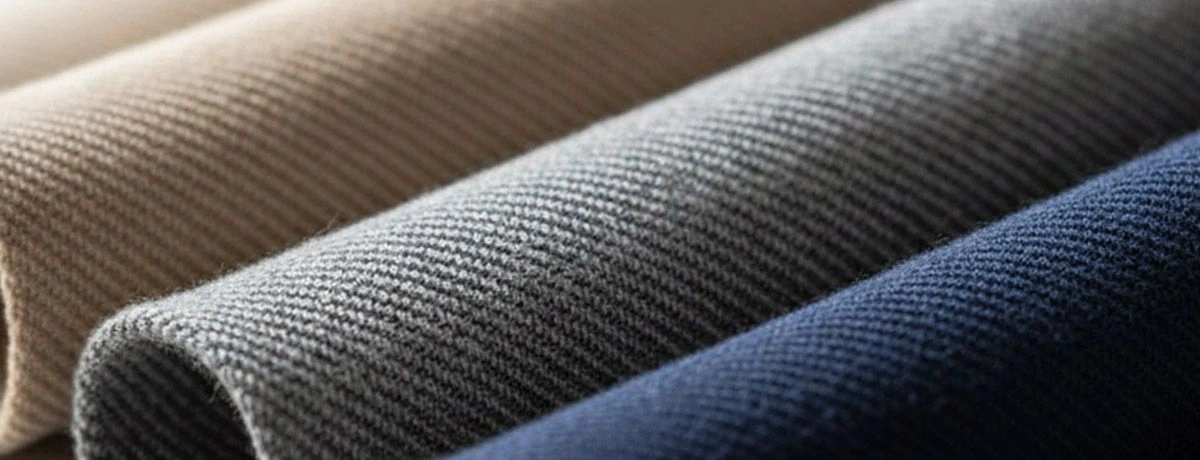
Cotton twill material is a diagonal-weave cotton fabric widely used in industrial apparel, workwear, and uniform production due to its sturdy fabric construction and reliable performance. This guide is written for B2B buyers—garment manufacturers, fabric wholesalers, apparel exporters, and textile importers—seeking to evaluate cotton twill for bulk sourcing.
The focus here is on roll goods and bulk yardage rather than retail by-the-yard sales, with attention to consistency, repeatability, and production efficiency. Cotton twill includes well-known constructions such as denim, chino, drill, and gabardine, all sharing the popular weave pattern principle that creates diagonal lines on the fabric face.
What Is Cotton Twill and How Is It Woven?
Cotton twill is a woven fabric characterized by diagonal ribs (wales) on the surface, formed when the weft yarn passes over two or more warp yarns before going under one, with a regular offset creating the distinctive texture.
|
Twill Type |
Configuration |
Common Use |
|---|---|---|
|
Right-hand (Z-twill) |
Diagonal slants upward left to right |
Denim, workwear |
|
Left-hand (S-twill) |
Diagonal slants upward right to left |
Specialty applications |
The tighter sett and higher pick density—typically 60-80 ends per inch and 50-70 picks per inch—create a more compact, opaque fabric compared with plain weave of similar weight. This thick fabric structure yields superior coverage and reduces show-through in high-wear areas. Cotton twill results in excellent performance whether produced in pure cotton or cotton-rich blends, though this article focuses on cotton-dominant constructions suitable for uniforms, trousers, and jackets.
Typical Fiber Compositions and Yarn Counts
Fiber composition and yarn count are key parameters B2B buyers use to position qualities by end use and price level. Common blends include:
-
100% cotton twill – Breathable workwear, casual pants, industrial laundering programs
-
65% polyester / 35% cotton – Uniforms requiring higher abrasion resistance, color fastness, and faster drying; this is a common poly cotton twill fabric for workwear and uniforms
-
60% cotton / 40% polyester – Balances comfort with strength for cost-sensitive programs, similar in performance expectations to T/C 65/35 twill fabric used in demanding workwear
-
97% cotton / 3% spandex – Fitted trousers and stretch-enabled apparel, where buyers might also evaluate polyester spandex stretch woven fabrics for added recovery
Yarn counts measured in Ne determine handfeel, strength, and pricing:
|
Yarn Count Range |
Weight Class |
Typical Applications |
|---|---|---|
|
Ne 10s–16s |
Heavy |
Drill, industrial workwear |
|
Ne 20s–32s |
Medium |
Chinos, general-purpose trousers |
|
Ne 40s+ |
Light |
Shirting twills, corporate shirts |
Ring-spun yarns deliver 10-15% higher strength and softer handfeel than open-end spun alternatives. For export orders, mills typically provide construction sheets listing warp/weft counts, EPI, PPI, and exact blend ratios to ensure batch-to-batch repeatability.
Weight, Width, and Finishing Options for Cotton Twill
GSM, usable width, and finish directly impact garment patterns, costings, and end-use performance. Buyers should specify these parameters precisely.
Typical Weight Ranges:
|
Category |
GSM |
oz/yd² |
Applications |
|---|---|---|---|
|
Lightweight |
120–180 |
3.5–5.3 |
Shirts, summer uniforms |
|
Medium |
200–260 |
5.9–7.7 |
Chino pants, light jackets, skirts |
|
Heavyweight |
280–360 |
8.3–10.6 |
Drill, protective outerwear, canvas-style shells |
Standard Widths:
-
57–60 inch (145–152 cm) for apparel production
-
Up to 72 inch (183 cm) for industrial applications, curtains, drapes, or upholstery where buyers may also compare taffeta fabric options for lining or decorative use
Cotton twill material is a popular choice for home décor and interior design, especially for curtains and drapes, due to its weight and structure. The fabric's weight provides excellent coverage and a clean, structured appearance for curtains or drapes.
Finishing Options:
-
Piece-dyed and yarn-dyed for solid colors (white, blue, green, red) and melange effects
-
Pre-shrunk/sanforized finishing to maintain residual shrinkage under 3%
-
Mercerization for improved luster and dye uptake on higher-end programs
-
Bio-polish for a smooth, pill-resistant surface
-
Functional finishes: durable press for wrinkle resistance, water/oil repellent, flame-retardant (EN ISO 11612)
Cotton twill fabric is available in a variety of weights, colors, and patterns.
Request test reports for GSM tolerance (±5%), shrinkage, and color fastness before mass production to maintain quality across your project.
Cotton twill fabric is available for purchase by the yard, allowing for flexibility in project sizes.
Key Performance Characteristics of Cotton Twill
Understanding why buyers choose cotton twill over plain weave helps align material selection with product requirements.
Durability:
-
Diagonal structure provides approximately 15% higher tear resistance versus equal-weight plain weave
-
High cover factor resists abrasion in seat, knee, and elbow zones (5,000+ Martindale cycles for 240 gsm qualities)
-
The durable construction makes it a go to choice for workwear requiring 50+ machine wash cycles in cold water or warm, comparable in service life expectations to T/C 80/20 twill fabric for industrial uniforms
Structure and Drape:
-
Holds shape in tailored trousers and uniforms while offering moderate drape
-
Clean diagonal patterns suit industrial pattern grading and high-speed sewing lines
-
Serge or twill tape edges sew cleanly without excessive fraying when paired with suitable industrial sewing thread types and specifications
Comfort:
-
Cotton content delivers moisture absorption (7-8% of fiber weight) for long shifts
-
Blended twills balance breathability with faster drying and enhanced ability to resist wear
Appearance and Maintenance:
-
Diagonal ribs help mask minor stains and dirt—useful for service uniforms and aprons
-
Natural wrinkle resistance reduces pressing time; maintains appearance after tumble drying or iron touch-up
-
Resists wrinkles better than plain weaves, requiring less maintenance to keep clean
Processability:
-
Stable structure minimizes distortion during cutting
-
Suitable for automatic spreading, high marker efficiency, and mass production environments
Industrial and Commercial Applications of Cotton Twill
Cotton twill is a staple fabric family in global uniform and ready-made garment supply chains, offering versatility across multiple product categories.
Key Apparel Applications:
-
Men’s and women’s chinos, casual trousers, shorts, and jeans for retail and private-label programs, often considered alongside TR suiting and uniform fabrics
-
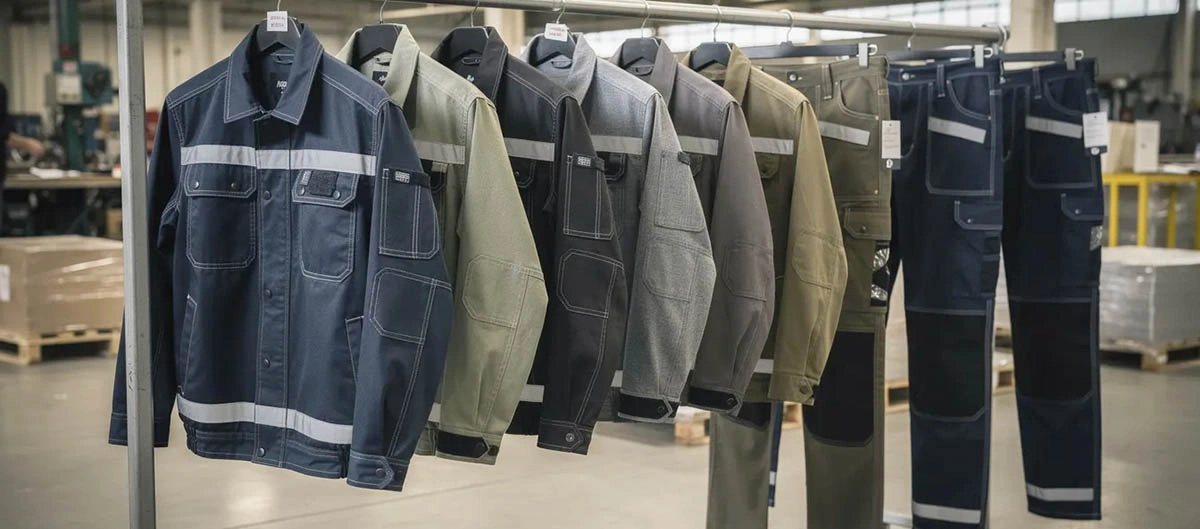
Workwear pants, coveralls, bib overalls, and jackets for construction, logistics, and manufacturing
-
Corporate uniforms for hospitality, retail staff, transport workers—making it a popular pants material
Non-Apparel and Semi-Technical Uses:
-
Light industrial aprons, shop coats, protective sleeves
-
Upholstery, seat covers, sofas, chairs, and cushions where durability meets cost efficiency, while performance stretch needs may be served by nylon spandex 4-way stretch fabrics
-
Tote bags, caps, and accessories in volume runs
|
Fabric Specification |
Recommended Application |
|---|---|
|
240 gsm 65/35 twill |
European-style work pants |
|
180 gsm 100% cotton |
Summer service shirts |
|
320 gsm cotton drill |
Heavy-duty coveralls |
Selection of weight and blend should align with specific demands: industrial washing cycles, UV exposure, and mechanical wear. Designers and product developers should explore these options with suppliers to suit their style requirements and brand positioning.
Quality Evaluation and Sourcing Considerations for B2B Buyers
Evaluating mills and fabric offers requires attention to technical specifications and supply reliability.
Key Tests to Request:
-
Dimensional stability after washing (ISO 6330, 60°C industrial wash)
-
Color fastness to washing, rubbing, and light (ISO/AATCC methods, rating 4+)
-
Tensile and tear strength per workwear standards
-
Pilling resistance (ASTM D3512, grade 4+ for blended twills)
Parameters to Review:
-
GSM tolerance (±5%) and width tolerance (±1 inch) affecting yard consumption
-
Shade consistency across lots—critical for multi-plant or staggered production
-
Thread count and construction details matching approved samples, along with compatible 100% spun polyester sewing thread 40s/2 specifications
Pre-Production Requirements:
-
Clear specification sheets with construction, blend, and finish details
-
Lab dips, handlooms, or sample yardage for bulk approval
-
Exclusive color or finish developments when volumes meet MOQ thresholds, such as customized TC 65/35 twill fabric programs from integrated suppliers
Reliable suppliers support long-term repeat programs with consistent construction and shade range, plus custom developments for special colors or functional coatings, and may also provide related components such as rib knit fabric polo shirt collars. Stable supply, predictable lead times, and consistent quality are as important as fabric characteristics when selecting a cotton twill source for ongoing manufacturing. The perfect supplier delivers not just material but manufacturing confidence—helping you maintain production schedules and meet buyer expectations across seasons.