
Which Industrial Sewing Thread Is Best for Industrial Sewing Machines?
In industrial sewing environments, choosing the right industrial sewing thread is essential for achieving durability, reliability, and consistent sewing quality. Whether used in apparel manufacturing, bedding, automotive interiors, or heavy-duty projects, industrial sewing thread must work seamlessly with industrial sewing machines to deliver strong, clean, and long-lasting seams.
Industrial sewing thread is available in a wide range of types, sizes, and colors to meet the needs of different projects, covering the full end of the product range.
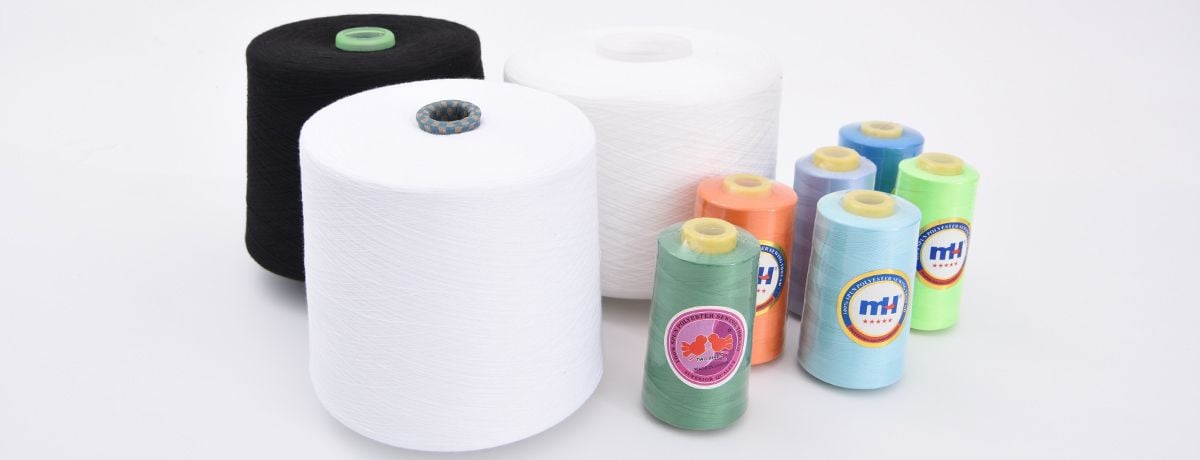
Compared with ordinary sewing thread, industrial sewing thread is manufactured for high-speed industrial sewing, continuous operation, and demanding production conditions. It is commonly supplied on large spools or cones; these cones typically range from 1lb to 6lb and contain 6,000 to 12,000+ yards of thread.
What Is Industrial Sewing Thread?
Industrial sewing thread is a specially manufactured thread designed for use on industrial sewing machines rather than household machines. It is built to handle:
-
High sewing speed
-
Constant tension and friction
-
Thick fabrics and multiple fabric layers
-
Long production hours
Industrial sewing thread is commonly supplied on large spools or cones, ensuring smooth thread delivery and reduced machine stoppages during large-scale production.
Common Types of Industrial Sewing Thread
Polyester Thread – The Most Widely Used Industrial Sewing Thread
Polyester thread is the most popular choice in industrial sewing due to its excellent balance of strength, durability, and cost efficiency.
Key advantages:
-
High tensile strength
-
Excellent durability and flexibility
-
Resistant to chemicals and abrasion
-
Strong color stability with multiple shades available
Applications:
-
Apparel manufacturing
-
Bedding and home textiles
-
Fabrics for daily wear and workwear
Polyester sewing thread is an excellent choice for factories that require reliable performance and consistent quality.
Cotton Sewing Thread for Specific Industrial Uses
Cotton sewing thread is a natural option still used in certain industrial applications.
Characteristics:
-
Soft hand feel
-
Natural fiber composition
-
Good heat resistance
Suitable for:
-
Cotton fabrics
-
Projects requiring natural materials
-
Garments exposed to high-temperature ironing
Although cotton thread offers a softer finish, its durability and resistance are lower than polyester in high-speed industrial sewing.
Bonded Nylon and Nylon Sewing Thread for Heavy-Duty Applications
Bonded nylon sewing thread and standard nylon thread are designed for demanding industrial applications where strength and flexibility are critical.
Key features:
-
Extremely strong and durable
-
High resistance to breakage
-
Excellent flexibility under stress
Typical applications:
-
Applications of sewing and textiles:
-
Automotive interiors
-
Bags, luggage, and upholstery
-
Security and safety-related sewing
-
Bonded nylon thread performs exceptionally well on heavy-duty industrial sewing machines, making it ideal for high-load projects.
Industrial Sewing Thread Performance Requirements
Strength, Durability, and Reliability
Industrial sewing thread must deliver superior quality, consistent strength, and long-term reliability. High-quality thread reduces:
-
Thread breakage
-
Machine downtime
-
Sewing defects
This directly improves productivity and customer satisfaction.
Abrasion and Chemical Resistance
During industrial sewing, thread constantly contacts needles, fabrics, and machine parts. Threads with strong abrasion resistance and chemical stability perform better in:
-
High-speed sewing
-
Long production runs
-
Industrial environments
Flexibility and Smooth Sewing Performance
Smooth, flexible thread allows:
-
-
Stable tension control
-
Clean stitch formation
-
Easy machine setup
-
Low hairiness ensures cleaner sewing and less lint buildup, helping machines operate efficiently.
Industrial Sewing Thread and Sewing Machine Compatibility
Industrial sewing thread must be carefully matched with sewing machines and needles to achieve optimal results.
High-Speed Industrial Sewing Machines
-
Require uniform thread size
-
Stable twist and consistent tension
-
Suitable for polyester and poly core spun thread
Heavy-Duty Sewing Machines
-
Ideal for bonded nylon and nylon thread
-
Designed for thick fabrics and strong seams
Needle and Thread Matching
Correct needle size and thread combination help:
-
Prevent thread breakage
-
Improve stitch quality
-
Extend needle life
Industrial Sewing Thread Applications Across Industries
Industrial sewing thread is widely used in:
-
Bedding and home textile manufacturing
-
Automotive interiors
-
Upholstery and technical fabrics
-
Industrial and commercial projects
Suppliers sell and stock thread in a variety of types, sizes, and colors to meet the needs of different industries. For example, Toledo Industrial Sewing Machines stocks bonded nylon and polyester thread in sizes 69 through 346. Cowboy Thread prices for bonded nylon range from $15.00 for 1/2 pound spools to $28.00 for 1 pound spools. Heavy duty sewing thread made from strong polyester fibers is resistant to fraying and breaking, and each spool contains 1100 meters of high-quality, 100% polyester thread.
With a wide variety of sizes, colors, and materials in stock, manufacturers can easily match thread to fabric and application needs.
Why Quality Industrial Sewing Thread Matters
Using high-quality industrial sewing thread allows manufacturers to:
-
Deliver consistent results
-
Improve sewing efficiency
-
Build a reliable brand reputation
-
Meet customer expectations in professional markets
For factories committed to long-term growth, investing in superior-quality industrial sewing thread is a smart business decision.
Conclusion
Industrial sewing thread is a key component in modern industrial sewing operations. From polyester sewing thread and cotton sewing thread to bonded nylon solutions, selecting the right thread ensures strong seams, smooth sewing, and reliable production performance.
By matching the correct industrial sewing thread with suitable machines, needles, and fabrics, manufacturers can complete projects efficiently while maintaining excellent quality standards. Before making a selection, customers are encouraged to review product images to verify the type, size, and color of industrial sewing thread to ensure it meets their specific requirements.