
How to Customize Bedsheet for Bulk Orders and OEM/ODM Projects?
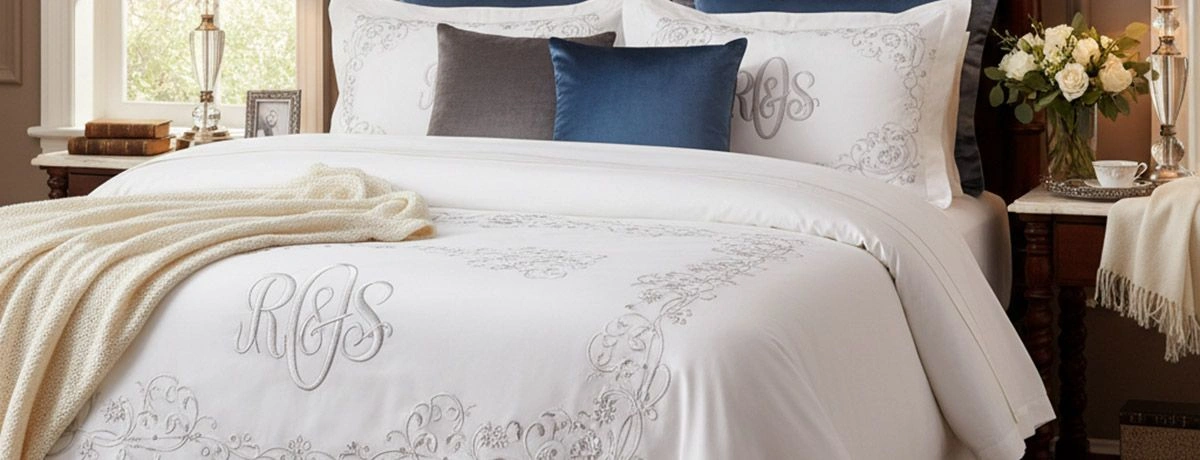
Overview of Customized Bedsheets in Bulk Production
In a B2B manufacturing context, to customize bedsheet means to produce bed sheets in large volumes according to precise commercial specifications—not to personalize a single item for a retail customer or gift. This guide is written for bedding wholesalers, home textile importers, hotel linen suppliers, and procurement managers who source custom bed sheets for institutional, hospitality, or private label programs.
The difference between ordering standard stock bedsheets and running a fully customized bedsheet program is significant. Stock items offer limited control over fabric, size, or branding. A customized program—whether OEM, ODM, or private label—allows buyers to specify every detail from fiber content and construction to dimensions, color, pattern, and packaging, ensuring consistency across thousands of units for long-term supply chains.
MH (Ningbo MH Industry Co., Ltd.) operates as a vertically integrated manufacturer of fabrics, sewing threads, and garment accessories. While MH does not manufacture finished bedsheets directly, the company supports customized bedsheet programs by supplying:
-
Greige and finished fabric in various fiber compositions
-
Sewing and embroidery threads matched to fabric type and washing requirements
-
Trims, ribbons, lace, labels, and packaging materials for branded bedding lines
This article covers the key areas a B2B buyer must understand when planning a customized bedsheet program:
-
Fabric and fiber choices for bulk production
-
Thread count, yarn quality, and construction methods
-
Size customization including custom size sheets and fitted sheet specifications
-
Color, pattern, and branding options including custom printed bed sheets
-
Packaging, labeling, and set configuration
-
Quality control, testing, and certifications
-
Common commercial and institutional applications
-
Planning, documentation, and supply chain coordination
Key Fabric Options for Customized Bedsheets
Fabric selection is the foundation of any customized bedsheet program. The fiber content, weave structure, and finish directly affect comfort, durability, wash performance, and cost—all critical factors for wholesale buyers.
Common Fiber Types for Bulk Production
|
Fiber Type |
Key Properties |
Typical Applications |
|---|---|---|
|
100% Cotton (carded/combed) |
Breathable, soft, durable |
Hotels, hospitals, retail programs |
|
Long-staple Cotton |
Smoother, stronger, less pilling |
Premium hospitality, private label |
|
Polyester |
Wrinkle-resistant, quick-dry, cost-effective |
Budget institutional, easy-care lines |
|
Poly-cotton blends (65/35, 50/50) |
Balance of durability and comfort |
Mid-range hotels, healthcare |
|
Recycled/sustainable fibers |
Eco-friendly positioning |
Sustainability-focused buyers |
Buyers should also consider emerging options like bamboo blends for moisture wicking properties or Tencel for customers seeking eco-friendly attributes and a naturally drape quality.
Fabric Constructions Relevant to Bedsheets
-
Percale (plain weave): A one-over-one-under weave producing a crisp, cool hand feel. Cotton percale at 200TC is common for budget hotel programs where guests want to stay cool.
-
Sateen (satin weave): A four-over-one-under weave that creates a smooth, lustrous surface. 300-400TC cotton sateen suits premium hospitality or branded retail lines.
-
Twill: Diagonal weave pattern offering durability; less common for bedsheets but used in some institutional applications.
-
Brushed/peached finishes: Peached poly sheeting fabric or peached cotton provides a soft, warm hand feel for markets preferring a flannel-like touch.
Performance Requirements for B2B Supply
When specifying fabric for bulk customized bedsheets, buyers should define:
-
Colorfastness to washing at 60-90°C (critical for hospital and hotel laundry)
-
Shrinkage control (typically ±3% after multiple wash cycles)
-
Pilling resistance (especially for poly-cotton blends)
-
Seam strength requirements matched to the stitching patterns used
MH can supply greige and finished fabric, along with sewing thread and accessory items, to support integrated production of customized bedsheets by your manufacturing partners.
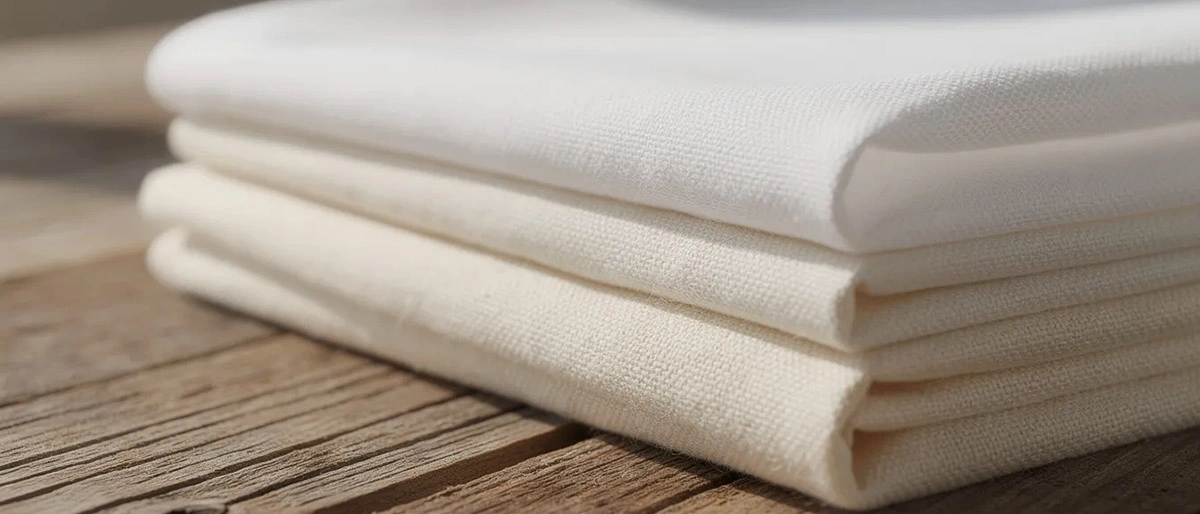
Size Customization: From Standard to Special Dimensions
Bulk customized bedsheets can be produced in any specified size, provided the buyer supplies consistent measurements and tolerances. This flexibility is essential for buyers serving diverse markets with different bed dimensions.
Standard International Sizes
|
Size Name |
Typical Dimensions (cm) |
Notes |
|---|---|---|
|
Single/Twin |
90 × 190 |
Common in EU, student housing |
|
Double/Full |
135 × 190 |
EU residential, some hotels |
|
Queen |
150 × 200 |
Standard in many hotel segments |
|
King |
180 × 200 |
EU king, premium rooms |
|
California King |
183 × 213 |
US market |
|
Cot |
60 × 120 |
Hospitality (infant beds) |
Regional variations exist between US, EU, UK, and Asian markets. Buyers should provide exact mattress dimensions for each target market and consider suitable materials such as PE + SPP coated non-woven fabric for use in mattress protection.
Fitted Sheet Specifications
Fitted sheet customization requires detailed measurements:
-
Mattress length and width: The base dimensions
-
Pocket depth: Standard depths include 25 cm, 30 cm, and 35 cm; deeper pockets accommodate mattress toppers or thick protectors
-
Elastic type: Full elastic all around provides secure fit; corner-only elastic reduces cost but may slip on thicker mattresses
-
Shrinkage allowance: Factor in ±3% after washing
Flat Sheet Specifications
For flat sheet customization, specify:
-
Finished size vs. mattress size: A queen mattress (150 × 200 cm) typically requires a flat sheet of 240 × 280 cm to allow for tuck and draping over edges
-
Extra length and width: Additional material for hospital corners or deep tuck under the mattress
-
Hem style: Single fold, double fold, or decorative edge
Panel Joining for Large Widths
Standard loom width typically ranges from 280-300 cm. For very large custom size duvet cover or king-size flat sheets exceeding this width, separate panels must be sewn together.
When panel joining is necessary:
-
Position the seam to minimize visibility (e.g., along the side edge or under pillows)
-
Use flat-felled or French seams for strength and smooth appearance
-
Ensure seam alignment accuracy (typically within 2-3mm for quality production)
Documentation for Procurement
Provide detailed size charts per market or customer segment. For hotel groups, hospitals, or dormitory projects, prepare measurement tables covering:
-
All bed types in use
-
Mattress thickness ranges
-
Required finished dimensions with tolerances
Color, Pattern, and Branding Customization
Color and pattern customization in bulk bedsheet programs is typically driven by brand identity, property standards, or institutional requirements—not personal style preferences.
Solid Color Customization
Solid colors are achieved through:
-
Piece dyeing: Fabric is woven greige, then dyed to match the specified color
-
Yarn dyeing: Yarns are dyed before weaving for deeper color penetration
Buyers typically specify colors using reference systems:
-
Pantone TPX or TCX codes
-
Physical lab dips for approval before bulk production
-
Strike-offs showing color on actual fabric substrate
Pattern Options
|
Pattern Type |
Method |
Best For |
|---|---|---|
|
Yarn-dyed stripes/checks |
Colored yarns woven in pattern |
Classic hotel looks, uniform programs |
|
Printed designs |
Reactive or pigment print |
Custom printed bed sheets, branding |
|
Jacquard weaves |
Pattern woven into fabric structure |
Subtle tonal patterns, luxury hotels |
While some suppliers focus on personalized bed sheets with photo printing for retail gifts, bulk B2B projects prioritize:
-
Repeatable patterns across production runs
-
Color consistency lot-to-lot
-
Wash durability (colorfastness to repeated laundering)
Unique Designs and Branding Elements
Buyers can create unique designs through:
-
Woven or printed labels: Placed at hem or corner with customer logo
-
Care labels: Customized with buyer’s branding and contact information
-
Colored piping or contrast hems: Adds visual distinction to white hotel linen
-
Branded tapes or ribbons: Supplied by MH for integration during finishing
For certain markets, embroidery and lace trims add decorative value:
-
Minimal embroidery near the top edge of flat sheets
-
Lace borders for regional preferences (e.g., European or Middle Eastern markets)
-
Decorative hem treatments that maintain durability through industrial wash cycles
MH supplies embroidery threads, lace trims, and ribbons to support these branding elements across customized bedsheet programs.
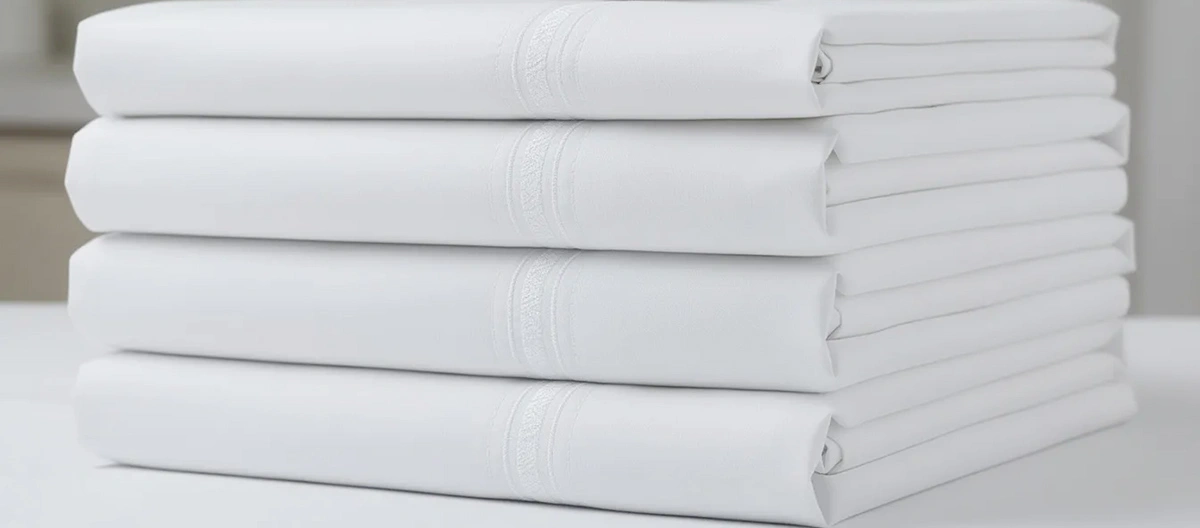
Packaging, Labeling, and Set Configuration
For B2B buyers, customized bedsheets are typically part of coordinated sets with specific packaging and labeling requirements for retail distribution or institutional use.
Typical Set Configurations
-
3-piece set: Flat sheet + fitted sheet + 1 pillowcase
-
4-piece set: Flat sheet + fitted sheet + 2 optional pillowcases
-
Hospital/dormitory configuration: 2 flat sheets + 1 pillowcase (for rotation during laundering)
-
Retail sets: May include matching duvet cover or comforter shell
Configuration depends on end-use sector and regional market expectations.
Bulk Packaging Options
|
Packaging Type |
Application |
Notes |
|---|---|---|
|
Bale packing |
Institutional supply (hotels, hospitals) |
Efficient for high-volume, low-cost distribution |
|
Individual polybags |
Retail programs |
Size stickers, barcodes for inventory management |
|
Carton packing |
Retail logistics |
Master labels, shipping marks, pallet configuration |
|
Gift-style boxes |
Premium retail |
Cardboard inserts with artwork, branded presentation |
Packaging Customization
Buyers can specify:
-
Printed polybags with brand logo and product image
-
Cardboard inserts with artwork provided by the buyer
-
Branded ribbons (supplied by MH) for premium presentation
-
Hangtags showing size, fabric composition, and care instructions
Labeling and Compliance Information
Labels must include:
-
Fiber content (percentage of each fiber)
-
Country of origin
-
Care symbols (washing, drying, ironing per destination market standards)
-
Batch or lot code for traceability
Recommended care for most cotton and poly-cotton bedsheets: wash at appropriate temperature (typically 60°C for hospitality), tumble dry at low tumble dry heat, and low heat iron if needed. Buyers should confirm exact care instructions based on fabric and finish.
MH coordinates production of woven labels, hangtags, ribbons, and care labels to align with buyer bedsheet branding requirements.
Common Commercial and Institutional Applications
Customized bedsheets in bulk serve multiple commercial sectors, each with distinct technical and design requirements. Understanding these applications helps buyers specify appropriate fabric, construction, and finishing.
Hotel and Resort Applications
Hotels represent a major market for custom bed sheets. Typical requirements include:
-
Color palette: Predominantly white or light colors for a clean, crisp bedroom appearance
-
Fabric: Cotton percale (200-300TC) for crisp hand feel; cotton sateen for luxury properties
-
Branding: Subtle jacquard patterns, embroidered logos near top edge, or woven tapes at hem
-
Durability: Must withstand 150-200+ commercial wash cycles
-
Feel: Guests expect sheets that stay cool in warm climates and feel soft against skin
Hospital and Healthcare Applications
Healthcare facilities prioritize durability and infection control:
-
Fabric: Poly-cotton blends (50/50 or 65/35) for strength and quick drying
-
Washing: Must tolerate high-temperature laundering (90°C) and disinfection
-
Color coding: Different colors or patterns for sizes or departments (e.g., pediatric vs. adult)
-
Labeling: Clear size markings and lot codes for inventory control in a busy linen space
-
Construction: Reinforced seams, high-quality thread to prevent failure
Student Housing and Staff Accommodation
Dormitories and staff quarters focus on practicality:
-
Fabric: Mid-range poly-cotton at 180-250TC
-
Easy care: Wrinkle-resistant finish, quick-dry properties, ability to hang dry without excessive creasing
-
Standardization: Single color or simple pattern across large orders
-
Cost efficiency: Balance between durability and budget
Retail and Private Label Programs
Retail buyers creating branded bedding lines require:
-
Coordinated ranges: Matching flat sheet, fitted sheet, pillowcases, duvet cover, quilt covers
-
Seasonal collections: Ability to update colors and patterns annually
-
Packaging: Retail-ready presentation with pictures and product information
-
Integration: Single supply base for all linen and fabric components
MH’s broad product range—fabrics, sewing threads, zippers, buttons, ribbons, lace, and garment accessories—enables unified sourcing for bedding and related textile products from one supplier serving customers around the world.
Key Takeaways
Planning a customized bedsheet program for bulk supply requires attention to multiple technical and commercial factors:
-
Fabric selection (fiber, weave, finish) determines comfort, durability, and cost
-
Thread count matters, but yarn quality and construction are equally important
-
Size customization accommodates regional variations and specific mattress dimensions
-
Color and pattern options range from solid dyes to custom printed bed sheets with brand elements
-
Packaging and labeling must meet retail or institutional distribution requirements
-
Quality control and certifications ensure consistent performance across production batches
For buyers sourcing custom bed sheets, custom size sheets, or coordinated bedding sets including duvet covers and pillowcases, success depends on preparing detailed specifications before engaging manufacturers.
MH supports customized bedsheet programs through supply of fabric, sewing threads, embroidery threads, lace trims, ribbons, labels, and packaging materials—enabling coordinated sourcing from a single B2B partner for long-term supply cooperation.