
Elastane Nylon Fabric Guide
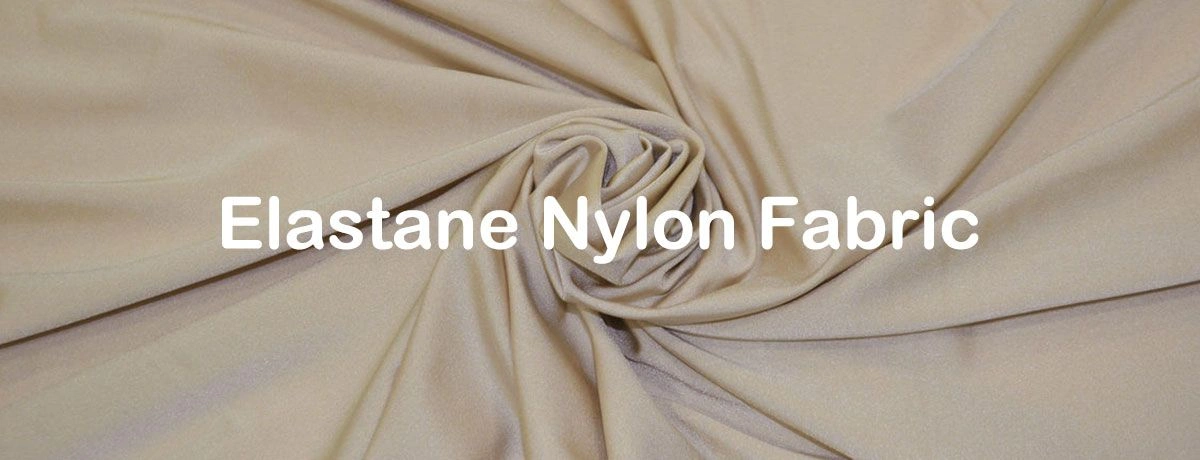
Elastane nylon fabric, usually called nylon spandex, is a knit that blends nylon filament with 8% to 30% elastane to get a soft, strong fabric with four-way stretch and fast recovery. The nylon supplies abrasion resistance and a smooth, cool hand; the elastane supplies the stretch.
Key Takeaways
- Elastane, spandex and LYCRA® describe the same stretch fiber; “elastane nylon” and “nylon spandex” are the same fabric.
- Blend ratio sets the job: 92/8 and 90/10 for light-hold lingerie and tops, 85/15 to 78/22 for swimwear, 75/25 to 70/30 for leggings, shapewear and compression.
- Typical weights run from about 110 GSM for linings and lingerie to 320 GSM for opaque compression fabric.
- Versus polyester spandex, nylon spandex is softer and more abrasion-resistant but absorbs more water (about 4 to 4.5% moisture regain vs 0.4%) and is less resistant to chlorine.
What Is Elastane Nylon Fabric?
Elastane nylon fabric, often sold as nylon spandex or polyamide/elastane, is a knitted stretch material made by combining nylon filament with about 8% to 30% elastane to create a soft, strong fabric with four-way stretch and fast recovery.
That combination is why this fabric is standard in garments where fit and rebound matter—swimwear, lingerie, leggings, shapewear, and performancewear all depend on the balance between stretch, durability, softness, and recovery. If you make or source those products, whether as a swimwear maker, activewear brand, lingerie or shapewear designer, or stretch-fabric wholesaler, the nylon-to-elastane ratio directly affects how the fabric feels, performs, and holds its shape in use. A quality blend returns close to its original size.
Most nylon spandex is knitted rather than woven:
-
Warp knits (tricot, raschel): smooth, run-resistant and dimensionally stable. Tricot is the classic swimwear and lingerie base; raschel builds power mesh.
-
Weft or circular knits (single jersey, interlock): softer and more fluid, common in leggings, bodysuits and base layers.
-
Stretch wovens: a smaller group, such as nylon spandex taslan, used in outdoor and travel trousers.
How Do Nylon-to-Spandex Ratios Change Performance?
The higher the elastane share, the greater the fabric’s ability to stretch and recover, along with its compression power, and the more it costs, since elastane is the pricier fiber. A 92/8 knit moves comfortably but holds lightly; a 70/30 knit grips and shapes. Weight rises with elastane content too, because denser elastane coverage and heavier constructions are what make compression fabric opaque.
| Nylon / spandex | Stretch & hold | Typical weight | Common uses |
|---|---|---|---|
| 92/8 | Moderate stretch, light hold | 110–180 GSM | Lingerie, linings, fitted tops, tights |
| 90/10 | Moderate stretch, smooth recovery | 130–200 GSM | T-shirts, dancewear, base layers |
| 85/15 | Firm four-way stretch | 170–220 GSM | Swimwear, bodysuits |
| 80/20 | High stretch, good compression | 130–280 GSM | Swimwear, leggings, sports bras |
| 75/25 | High stretch, firm compression | 220–300 GSM | Performance leggings, cycling shorts |
| 70/30 | Maximum stretch and power | 200–320 GSM | Shapewear, medical-style compression |
Typical ranges. Construction (tricot, jersey, interlock) and yarn denier shift both the weight and the stretch of any given ratio. The ratio also changes key performance properties and characteristics of the finished material.
Ratios near the middle of the table are the busiest in production. An 80/20 nylon spandex fabric, for example, can be knitted light at about 130 GSM for swim linings or heavy at about 280 GSM for leggings, which is why the weight always travels with the ratio on a spec sheet. Blends can also carry a third fiber: an elastane nylon swimwear fabric at 70% nylon, 3% polyester and 27% spandex uses the polyester for a striped yarn-dyed effect while keeping swimwear-level stretch.
Is 92% Nylon and 8% Spandex Stretchy?
Yes. A 92/8 nylon spandex stretches comfortably in both directions and recovers well, but it holds the body lightly rather than compressing it. That makes it a strong fit for clothing that should move with the wearer without squeezing: bras and underwear, fitted tops, tights, linings and everyday dresses.
What 92/8 won't do well is sculpt. Leggings or shapewear in this ratio tend to feel thin and can lose opacity when stretched over the knee or seat, which is why performance bottoms usually step up to 20% elastane or more. For everyday clothes, it can maintain fit, but it is not ideal for shapewear-level hold. Garments in 92/8 still hold their shape through repeated wear and washing, provided they're kept away from high heat.
What Are the Pros and Cons of Nylon Spandex Fabric?
Nylon spandex earns its place as an ideal choice for premium swim, dance and activewear through a soft hand and toughness, while its weak points are cost, heat sensitivity and chlorine exposure. How much each matters depends on the end use: a pool-training suit and a studio legging stress the fabric in very different ways.
In suiting or uniform programs that sit alongside stretch activewear, mills may also offer TTR 90/10 shiny suiting fabrics so jackets and trousers echo the performance story without relying on elastane.
Advantages
Nylon has high abrasion and tear resistance, so it stands up to friction from gym equipment, pool edges and repeated wear.
Nylon filament feels cooler and silkier against skin than most polyester, a big reason it's favored for lingerie and yoga wear.
Elastane lets the fabric extend and snap back, so garments move freely and keep their fit.
Even compression-grade nylon spandex stays lighter than cotton knits of similar opacity.
One of its useful characteristics is its quick drying properties, which help improve comfort during wear, though it dries somewhat slower than polyester spandex.
As a synthetic, it doesn't rot or mildew the way natural fibers can in damp conditions.
Nylon takes acid dyes deeply, giving saturated solids.
Disadvantages
Nylon spandex generally prices above polyester spandex at the same weight and ratio.
Elastane loses elasticity under high heat, and nylon glazes or melts well before cotton would scorch.
Chlorine, strong sunlight, repeated exposure to cosmetic products, natural oils, and sweat can make the fabric maintain its integrity less well over time and may also fade nylon colors.
Neither fiber is biodegradable, and nylon-elastane is less breathable than natural fibers, so synthetic fibers can trap body heat and odors, although recycled nylon options are increasingly common.
That mix makes it a common and often perfect option when stretch, durability, and comfort all matter.
Nylon Spandex vs Polyester Spandex: Which Fits Your Line?
Nylon spandex wins on softness and abrasion resistance; polyester spandex with Dri-Fit style moisture management wins on drying speed, chlorine resistance, print options and price. The single biggest technical difference is water uptake: nylon 6,6 has a standard moisture regain of about 4 to 4.5%, while polyester sits near 0.4%. So nylon holds more water, feels less clammy against skin, and dries a little slower. Additionally, polyester spandex may be the ideal choice where faster dry time matters most.
| Property | Nylon spandex | Polyester spandex |
|---|---|---|
| Hand | Softer, smoother, cooler touch | Slightly crisper, more synthetic feel |
| Moisture regain (base fiber) | About 4–4.5% | About 0.4% |
| Drying speed | Fast, but slower than polyester | Faster |
| Abrasion & tear strength | Higher | Good |
| Chlorine & UV resistance | Lower; colors can fade in pool use | Higher; common for chlorine-resistant training swimwear |
| Coloration | Acid dyes, deep saturated solids | Disperse dyes; excellent for sublimation printing |
| Relative cost | Higher | Lower |
| Typical uses | Premium swimwear, shapewear, lingerie, yoga leggings | Team sportswear, printed activewear, pool-training suits |
You'll often read that nylon spandex dries faster than polyester spandex. The fiber data points the other way: polyester's lower moisture regain makes it the quicker-drying of the two. Nylon's real advantages are hand and durability.
In practice, many brands split their range: nylon spandex for fashion swimwear, lingerie and studio wear where touch matters, polyester spandex woven 4-way stretch fabrics for printed kits and chlorine-heavy use, though nylon spandex remains ideal when softness and next-to-skin comfort matter most. If you're comparing broader stretch options, our guide to fabrics that stretch covers cotton and rayon blends too.
Where Is Nylon Spandex Used?
Nylon spandex shows up wherever close-fitting clothing has to stretch to the body and still feel good after hours of wear, especially in items like undergarments. Swimwear, leggings, sports bras, shapewear and lingerie are the core volume categories, with high-performance polyester spandex swimwear fabrics complementing nylon options in many collections, and dancewear, cycling apparel, hosiery and medical compression close behind. It is also used for socks, costumes, and some specialty furniture covers and tablecloths, alongside technical uses like nylon fishing twine and utility cordage where strength and abrasion resistance matter. Each one pulls toward a different ratio and weight.
| End use | Typical blend | Typical weight | Why nylon spandex fits |
|---|---|---|---|
| Fashion swimwear | 78/22–85/15 tricot | 170–220 GSM | Smooth face, strong recovery, rich color for stylish results, often combined with 85% polyester 15% spandex matt swimsuit fabric in coordinated pieces |
| Leggings & yoga pants | 75/25–80/20 jersey or interlock | 220–300 GSM | Opacity, soft hand, abrasion resistance, with some brands mixing in polyester-spandex four-way stretch wovens for panels and trims |
| Sports bras | 75/25–80/20 | 200–260 GSM | Support with comfortable next-to-skin feel |
| Shapewear & compression | 70/30–75/25, power mesh | 200–320 GSM | High holding power; linings or uniforms may instead use TC 65/35 twill fabric where structure matters more than stretch |
| Lingerie & linings | 90/10–92/8 tricot | 110–180 GSM | Light, silky, run-resistant |
| Dancewear & cycling | 80/20–85/15 | 180–260 GSM | Four-way stretch, friction resistance that is perfect for repeated movement |
These uses show the variety of clothes this material can accommodate.
Where a garment also needs airflow zones, nylon spandex is often paired with a matching stretch mesh fabric in the same ratio family, or with polyester spandex four-way stretch wovens in outer panels that need more structure. Brands building out a full sportswear program can see related materials in the sportswear accessories and athletic fabric ranges.
Stretch direction matters as well. Four-way stretch suits swimwear and leggings; a nylon spandex two-way stretch knit at around 230 GSM gives lengthwise stability for waistbands, panels and garments that shouldn't grow in one direction.
Nylon Spandex from MH: The Shell Fabric and the Stretch Parts Around It
MH (Ningbo MH), founded in 1999 and shipping to buyers in more than 150 countries, is a global supplier of garment accessories and tailoring materials and keeps nylon spandex knits in the same catalog as the parts that have to stretch with them: swimwear and lingerie elastics, stretch sewing thread, linings, lace and closures, drawn from roughly 10,000 tailoring materials and fabrics.
With 9 factories across about 350,000 m², a 3,000+ strong workforce and 2,000+ partner manufacturers, MH can hold an 80/20 tricot to the same spandex content, weight and shade when a spring swim collection comes back for its autumn reorder. Swimwear makers, activewear brands and stretch-fabric wholesalers can browse current 4-way stretch fabrics, match them with polyester sewing threads for stretch garments, or contact MH for a quote built on ratio, GSM and width; micro nylon spandex is available in fourteen colors.


Frequently Asked Questions
Is elastane nylon the same as nylon spandex?
Yes. Elastane and spandex are two names for the same polyurethane-based stretch fiber, "elastane" in Europe and most of Asia and "spandex" in North America, while LYCRA® is a brand. A fabric labeled nylon elastane, polyamide/elastane or nylon spandex is the same blend, defined further by its ratio and GSM.
Is nylon spandex better than polyester spandex?
It depends on the end use. Nylon spandex is softer and more abrasion-resistant, which suits fashion swimwear, lingerie and yoga wear. Polyester spandex dries faster, resists chlorine better, prints well by sublimation and costs less, which suits team sportswear and pool-training suits.
What GSM nylon spandex is used for leggings?
Most leggings use nylon spandex between about 220 and 300 GSM in a 75/25 to 80/20 ratio. Weights toward the top of that range give better opacity when the fabric is stretched over the knee and seat, while lighter 180 to 220 GSM fabrics suit summer and lounge leggings.
Is nylon spandex good for swimwear?
Yes. Nylon spandex in roughly 78/22 to 85/15 tricot at 170 to 220 GSM is a standard fashion swimwear fabric thanks to its smooth face, rich color and strong recovery. For suits exposed to chlorine every day, polyester or PBT-based stretch fabrics generally last longer.
