
How Do Manufacturers Choose the Right Fabric for Pants Production?
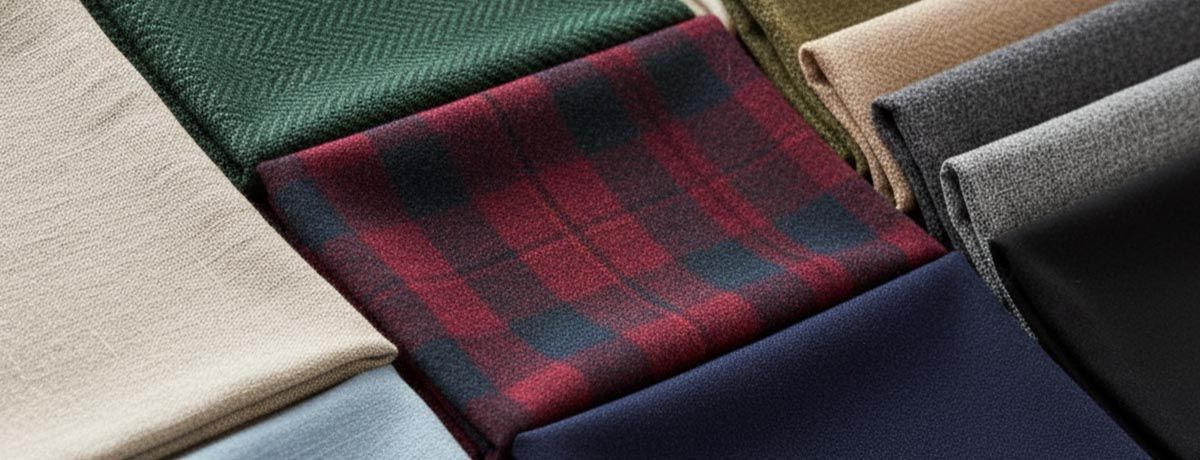
Selecting the right fabric for pants production requires balancing durability, comfort, and manufacturing compatibility. This guide addresses the technical and commercial considerations that garment factories, apparel brands, and textile procurement professionals face when sourcing pant fabrics in volume.
The focus here is on measurable performance—tensile strength, dimensional stability, shrinkage control, pilling resistance, and colorfastness—rather than fashion styling advice. Whether you’re producing casual pants, denim jeans, tailored trousers, or athleisure joggers, understanding fabric specifications helps you place smarter bulk orders and avoid costly production issues. Different fabrics—such as cotton, linen, wool, polyester, or denim—require tailored care and washing methods to ensure longevity and maintain their appearance.
At a glance: best fabric families for pants manufacturing
|
Pant Category |
Common Base Fabrics |
Typical Weight Range |
|---|---|---|
|
Casual woven (chinos, office) |
Cotton twill, poly-cotton twill, gabardine |
220–320 gsm |
|
Denim/jeans |
Ring-spun cotton denim, stretch denim |
340–475 gsm (10–14 oz) |
|
Formal/suiting |
Wool blend, polyester-viscose-elastane |
200–280 gsm |
|
Workwear/industrial |
Heavy twill, cotton-nylon blends |
320–450 gsm |
|
Knit pants (joggers, athleisure) |
Ponte di Roma, French terry, fleece |
260–360 gsm |
Most programs involve minimum orders from 1,000 meters per color upward, with reproducible quality across multiple seasons being essential for core product lines. Choosing relatively densely woven fabrics contributes to stronger, more durable pants, and to ensure the longevity of your clothes, each fabric needs a different method of washing.
Introduction to Pants Fabric
Selecting the right pants fabric is a foundational step in creating garments that deliver on comfort, durability, and style. Whether you’re designing rugged denim jeans, lightweight linen trousers, or sharp formal trousers, your fabric choice directly impacts the final product’s performance and appeal.
Each fabric type—be it classic cotton, versatile twill fabrics, or breathable linen—offers unique benefits for different applications. For example, cotton is prized for its softness and breathability, making it a great choice for everyday wear, while denim stands out for its durability and timeless style.
Twill fabrics provide a smooth finish and excellent wrinkle resistance, ideal for both casual and office-ready pants. Linen trousers are perfect for summer heat, offering unmatched breathability and a relaxed, stylish look. As you consider making pants for your collection, pay close attention to factors like wrinkle resistance, breathability, and the specific requirements of your target market. By understanding the strengths of each fabric, you can confidently select the best fabric for your needs and ensure every pair of pants meets your standards for quality and style.
Key Performance Requirements for Pants Fabrics
Pants endure significantly higher mechanical stress than upper garments. The seat, knees, and inner thighs face repeated abrasion, flexing, and pressure during sitting, walking, and crouching. This means sourcing criteria must be stricter than for shirts or jackets.
Core specifications for pants fabric tech packs:
- Tensile strength: minimum 300–500 N in warp and weft directions for casual twills
- Tear strength: above 20–30 N (Elmendorf testing)
- Abrasion resistance: Martindale cycles exceeding 20,000 for everyday wear, 35,000–50,000 for workwear
- Seam slippage: under 3–5 mm at 50–100 N load per ASTM D434 or ISO 13936
- Colorfastness: grade 4–5 (gray scale) for washing, rubbing, and perspiration
Stretch and recovery for fitted styles:
- Elongation: 15–25% for slim-fit pants with 1–3% spandex content
- Elastic recovery: 90–95% after 5x elongation to prevent bagging at knees
- Growth after 10 washes: under 5% for consistent fit
Weight guidelines by application:
- Summer chinos: 180–230 gsm (air permeability over 100–200 mm/s)
- All-season chinos: 260–320 gsm
- Denim and workwear: 320–450 gsm
- Dress pants: 220–280 gsm
Comfort parameters including moisture vapor transmission rate (MVTR above 3,000 g/m²/24h for synthetics) and hand feel should also be validated, especially for repeat orders where wearer satisfaction drives reorders.
Common Fabric Types for Woven Casual and Office Pants
This section covers the main woven fabrics used for chinos, casual trousers, and basic office pants—excluding denim and formal suiting.
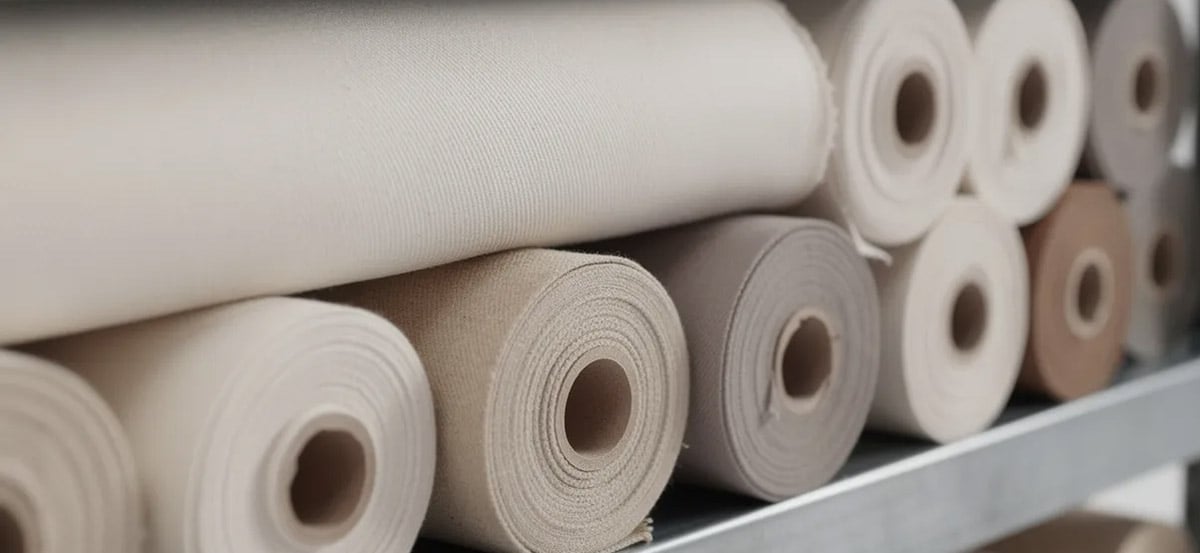
- Cotton twill (3/1 weave): Available as 100% cotton or CVC blends like 60/40 cotton-polyester at 220–320 gsm. This smooth twill fabric delivers breathability and comfort for chinos and uniform pants. Pure cotton shrinks 3–5% without sanforization—factor this into pattern allowances.
- Poly-cotton twill (65/35): A versatile fabric offering better colorfastness (4.5–5 rating), wrinkle resistance with recovery angles over 280 degrees, and dry times under 2 hours. This makes poly cotton twill fabric for workwear and uniforms ideal for corporate uniforms and hospitality pants requiring frequent industrial laundering.
- Poplin: Plain-weave construction at 150–220 gsm creates smoother, light options ideal for loose, flowy summer trousers. Watch for potential seam grin and transparency below 180 gsm—best suited for unlined styles.
- Cotton gabardine: Dense twill with smooth face (8–12 wale/cm) at 230–280 gsm. Offers superior wind resistance and 25,000+ Martindale cycles. A great choice for structured casual pants with clean drape.
- Cotton-nylon blends (88/12): Boost tear strength by 30–50% with quick-drying properties under 1 hour. For teams newer to materials, understanding sewing and textiles fundamentals helps specify these blends for technical casuals like travel pants where durability and more flexibility in performance matter.
Cotton, linen, and wool are popular choices for trouser fabrics due to their comfort and durability.
Denim and Heavy Fabrics for Jeans and Work Pants
Denim dominates global jeans production. From a sourcing perspective, the key distinction is between fashion denim (character, fading, premium hand feel) and utility denim (maximum durability, consistency, cost efficiency).
- Classic ring-spun cotton denim: 3/1 right-hand twill, indigo warp-dyed against ecru weft, 10–14 oz (340–475 gsm). Prized for aging character but requires sanforization to cap residual shrinkage at 1–3% for precise pattern work.
- Stretch denim (98/2 cotton-elastane): Specify 15–25% elongation with 92%+ recovery for slim-fit jeans. Growth after 10 washes must stay under 5% to maintain fit integrity.
- Open-end spun denim: 10–20% cost savings versus ring-spun, with uniform surface suitable for mass-market work pants. Pairing this with the right industrial sewing thread for mass-market apparel supports consistent seam performance, even though it lacks the premium slub texture of high quality cotton ring-spun options.
- Heavy twills and broken twills: Target 40,000+ Martindale cycles and tear strength over 40 N for construction and logistics workwear. This durable fabric construction handles extreme use.
Finishing impacts on production:
- Pre-shrunk denim: reduces cutting allowances to 2%
- Coated/resin finishes: require adjusted needle selection to prevent skips
- Enzyme/stone washes: shrink fabric 5–10% post-garment—build this into pattern allowances
Suiting and Formal Trouser Fabrics
Formal pants prioritize clean drape, crease retention, and refined appearance. These fabrics often require lining and precise pattern cutting.
-
Wool suiting (100% worsted, 80s–120s): Weights at 200–260 gsm deliver crease recovery over 300 degrees and excellent bagging resistance (under 2 mm after 1,000g load). Essential for dress pants and formal trousers requiring dry cleaning.
-
Wool blend (55/45 wool-polyester or 70/30 wool-viscose): Balances wool’s resilience with synthetic durability and cost efficiency, similar in concept to TR suiting fabric blends of polyester and rayon used for uniforms and formal trousers.
-
Polyester-viscose-elastane (64/34/2): Cost-effective option with Martindale 15,000–25,000 and low pilling (grade 4–5). Shiny polyester-viscose suiting fabrics for trousers and uniforms also require quality spinning to avoid shine and static—specify anti-static finishes.
-
Premium cotton sateen: 4–5 shaft satin weaves at 200–260 gsm offer sheen and softness for semi-formal tailored pants.
-
Eco-focused options: Recycled wool, recycled polyester, and Lenzing viscose meet EU REACH requirements while maintaining dimensional stability under 2% post-dry clean.
Testing recommendations: bagging resistance, crease recovery >90%, and solvent fastness grade 4+.
Knit Fabrics for Comfort, Athleisure, and Lounge Pants
Demand for knit pants—joggers, yoga pants, ponte knit trousers—continues growing. Fabric selection differs significantly from wovens.
-
Ponte di Roma: Double-knit construction (poly-viscose-elastane 50/47/3) at 280–360 gsm offers 20–30% stretch with 95% recovery. Stable against spirality (<5% torque), making it stylish for tailored knit trousers.
-
French terry: Cotton loopback at 260–340 gsm provides comfy warmth for joggers and lounge pants. The looped interior adds thermal insulation.
-
Fleece: Brushed-back construction at 280–360 gsm for maximum softness in casual and outerwear-adjacent styles.
-
Nylon/spandex (80/20): 4-way stretch with MVTR 5,000+ for training pants and leggings. Excellent breathability and sweat-wicking properties.
Production challenges: Control 10–15% pre-wash shrinkage, verify pilling resistance (grade 4 after Martindale), and test seam integrity under overlock to avoid needle cutting on dense synthetics.
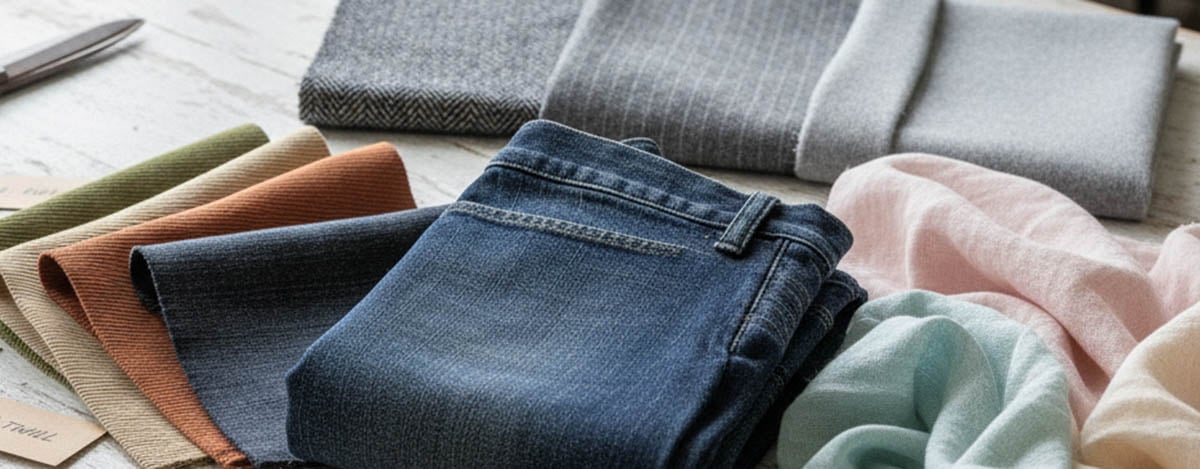
Climate and Seasonality: Matching Fabric Weight and Fiber to Market
Export-oriented manufacturers must align fabric for pants with destination climate and sales season.
Summer weight (for summer heat conditions):
-
Linen trousers and linen blends: 150–220 gsm, breathability 300+ mm/s
-
Cotton poplin: 150–200 gsm
-
Tropical wool: 190–220 gsm
-
TENCEL/viscose: 50% better moisture absorption than cotton
All-season:
-
Midweight cotton twill: 230–280 gsm
-
Medium wool blend suiting: 220–260 gsm
-
Stretch denim: 10–11 oz
Cold-season:
-
Brushed twill and corduroy: 260–350 gsm (8–16 wale)
-
Heavy denim: 12–14 oz
-
Wool flannel with taffeta lining (adds 50–100 gsm insulation)
Brushing finishes can add warm properties without significant gsm increases.
Fiber Composition and Construction: How They Affect Pant Performance
Understanding how fiber content and construction interact helps buyers choose wisely for specific price points and care requirements.
-
Pure cotton fabric: Natural breathability (MVTR 4,000+) but 4–7% shrinkage and low wrinkle resistance. Best for casual styles where comfort trumps low maintenance care.
-
Cotton blends with polyester/spandex: Cut shrinkage to under 2%, improve shape retention, enable wrinkle resistant properties. Versatile T/C 65/35 twill workwear fabric and similar blends are ideal for everyday wear in mass-market pants.
-
Polyester: Adds 20%+ tensile strength, fast drying, superior colorfastness. In blends like TC 65/35 twill fabric for workwear, it can trap heat unless balanced with cotton or viscose—best combined appropriately for comfort.
-
Viscose/lyocell (TENCEL): 15% better moisture management, excellent drape and softness. Requires adequate strength via blending; factor 5–8% shrinkage without pre-treatment.
-
Wool: Natural crimp provides resilience and crease retention. Excellent thermoregulation for formal and winter garments. Blending with polyester improves durability and reduces cost.
Construction impact: Twill fabrics resist abrasion via diagonal floats; plain weave offers crispness at lower cost; satin/sateen provides sheen; double-knits stabilize knit trousers.
Fabric Usage: How Much Fabric Is Needed for Different Pant Styles?
Exact consumption depends on pattern, size run, and cutting efficiency. These approximations help pre-costing for bulk orders using 145–152 cm (57–60 inch) width fabrics:
-
Slim-fit tailored trousers: 1.2–1.6 m (1.3–1.75 yd) per pair
-
Basic chinos and jeans: 1.6–2.0 m (1.75–2.2 yd) per pair
-
Cargo pants, wide-leg, pleated styles: add 10–25% for pockets and extra material
Knit fabrics (often 175–190 cm wide) require shrinkage allowance of 8–12% when calculating gross versus net usage. Target marker efficiency of 80–85% for optimized bulk cutting.
Production Considerations When Sourcing Pant Fabrics in Bulk
Even the best fabric can cause production problems if not aligned with factory capabilities.
-
Cutting/spreading: Specify skewness/bowing under 2 cm/100 cm; no edge curl
-
Sewing: Heavy twills need 16–18 gauge needles versus 14–16 for suiting; use core-spun threads to prevent seam blowout
-
Shrinkage control: Pre-test fabric shrinkage before pattern development; sanforized denim essential for large programs
-
Shade control: Lab dips with 1A tolerance; inline shade checking prevents panel shading within a single garment
-
Post-processing: Garment enzyme washes shrink 7–12%—build allowances into cutting
Quality, Testing, and Compliance for Pant Fabrics
Consistent quality is essential for long-term programs, especially uniforms, corporate clothing, and core product lines.
Standard tests:
-
Tensile strength: >400 N
-
Tear strength: >25 N
-
Martindale abrasion: 20,000+ cycles
-
Pilling: grade 4 minimum
-
Colorfastness (wash/rub/perspiration): 4–5
-
Dimensional stability: <3%
Compliance considerations: REACH compliance for EU markets (no azo dyes), CPSIA flammability where applicable, retailer RSL requirements.
Quality protocols: Proto sampling, test reports, wearer trials (50 cycles for workwear), and lot-by-lot inspection with clear A-grade defect-free definitions.
Aligning Fabric Choices with Business Models and Long-Term Supply
Fabric selection is ultimately a strategic decision affecting price stability, lead times, and program repeatability.
-
Supplier capacity: Evaluate dyeing and finishing capabilities, shade consistency across repeat orders, and ability to maintain quality during replenishment
-
Core fabric library approach: Develop 3–5 base denims, 2–3 chino twills, 2–3 suiting qualities, and 1–2 ponte knits that support multiple product lines with different styling
-
Trade-offs: Using one versatile fabric type like standard 260 gsm twill across several pairs of pant models reduces inventory risk and lead times versus sourcing many specialized fabrics
-
Customization: Mill-level options (water-repellent DWR finishes at 80°+ contact angle, peach finish, mechanical stretch) require validation through sampling and pilot production
-
Eco friendly options: Recycled materials and certified viscose support sustainability requirements for corporate and government procurement, as do durable T/C 80/20 twill fabrics with long color life for uniforms and workwear
Building a great pair of pants starts with making pants from the best fabric for your target market and price point. Long-term supplier partnerships, validated specifications, and consistent testing protocols help ensure that every bulk order delivers the durability, comfort, and appearance your customers expect.