
Fold Over Elastic (FOE) for Lingerie, Activewear & Bag Manufacturing
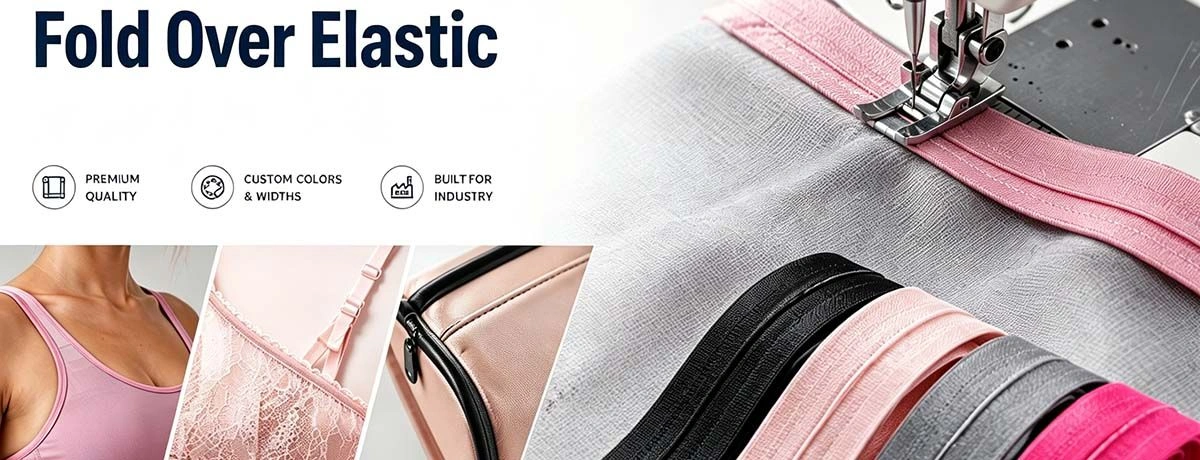
Fold over elastic is one of the most efficient edge-finishing trims available to garment and bag factories today. Yet many sourcing teams still underspecify it, leading to rework, color disputes, and inconsistent stretch across production lots. This guide covers the technical, operational, and procurement essentials that professional buyers need to evaluate and integrate FOE into their manufacturing lines.
Key Takeaways
-
Foldover elastic (FOE) is a specialized type of elastic featuring a center crease, engineered to fold over a raw edge and produce a clean, stretchable finish without traditional binding or facings.
-
Core applications span lingerie (bra edges, panty leg openings), activewear, swimwear, children's clothing, and bag edge binding, all requiring reliable stretch and recovery under industrial sewing conditions.
-
FOE is compatible with common industrial machines, and even a Janome sewing machine in sampling rooms can replicate results using a zigzag stitch or three-step zig zag stitch for secure seams.
-
Purchasing benefits for B2B buyers include customizable width, color, and elasticity, stable lead times, and technical support for integrating FOE into existing production lines.
What Is Fold Over Elastic (FOE)?
Fold over elastic is a soft, flat elastic with a built-in central groove designed to be folded in half lengthwise over raw fabric edges and stitched in place. It is widely used to finish raw edges on garments and accessories, eliminating the need for traditional binding or facings.
-
FOE features one matte side and one slightly shiny side, with a central fold line that provides orientation during application. It offers bidirectional stretch for comfort and recovery.
-
Unlike regular elastic, fold over elastic is designed to finish edges rather than sit inside waistband tunnels. It provides stretch and recovery, keeping edges flat and secure against the body.
-
Common industrial widths range from 3/8" (~10 mm) up to 1" (~25 mm). After folding, the visible bound edge is approximately half the open width-for example, a 5/8" FOE yields roughly a 1/4" binding.
-
It is available in various colors, prints, and finishes for decorative use, making FOE both a functional and aesthetic component.
Main Applications in Garment & Bag Manufacturing
FOE serves as a versatile finishing solution across multiple product categories in mid- to high-volume factories. Its ability to work well around curves without puckering makes it especially suited for contoured garment edges, including delicate styles made from lightweight chiffon fashion fabrics.
-
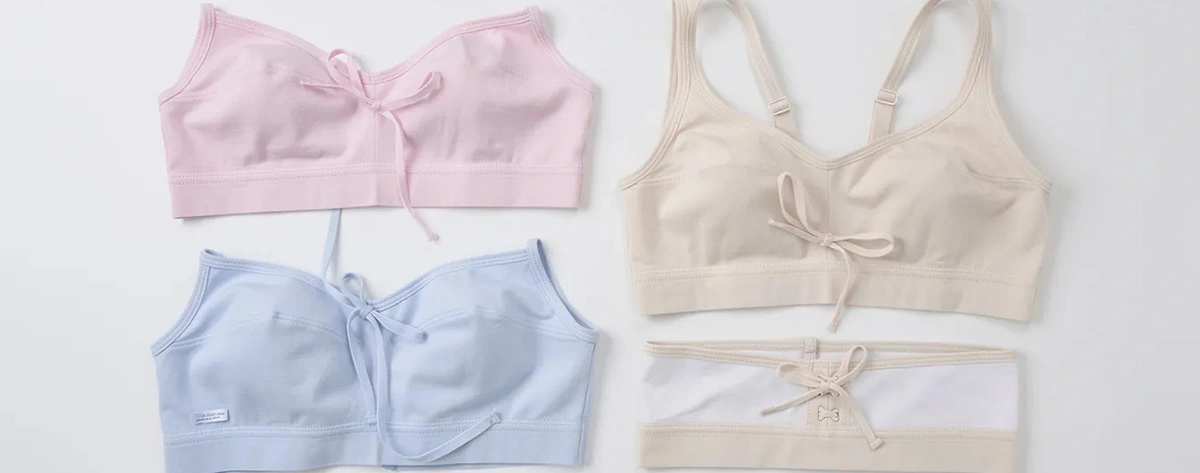
Lingerie and underwear: Fold over elastic is ideal for lingerie and underwear applications-binding upper bra edges, panty leg openings, camisole neckline areas and armholes. It delivers a soft, non-chafing finish while controlling stretch. It helps prevent gaping by contracting back after stretching.
-
Activewear and swimwear: FOE is also used in activewear and swimwear for securing openings on sports bras, yoga tops, and lightweight running shorts. Consistent recovery under movement and perspiration is critical here. Polyester-spandex blends offer superior chlorine and UV resistance for swim programs.
-
Childrenswear and baby items: Fold over elastic is suitable for soft baby items and cloth diapers, where gentle elasticity and certified skin safety (such as OEKO-TEX) are non-negotiable. Narrow widths and low-tension FOE are standard.
-
Bag and accessory manufacturing: A 1" fold over elastic acts as a durable binder for raw edge seams on organizers, camera bags, and laptop sleeves, providing both function and a sharp, professional look. For structured or waterproof shells, FOE often teams with durable coated Oxford fabrics to create robust bag exteriors. Products like BASOKAN fold over elastic, which comes in 20 colors and 20 yards per roll, are also popular in the accessories segment for hair ties and headbands-its 4.6 out of 5 stars rating from 1,457 reviews reflects the broad market demand for quality FOE.
-
MH can tune FOE performance-stretch percentage, modulus, width-to match specific garment categories, giving buyers a single-source advantage across product lines.
FOE Widths, Colors, and Customization Options
MH produces FOE exclusively on a Make-to-Order basis, with full customization over dimension, color, and packaging for OEM programs. We do not keep ready stock. As part of Ningbo MH’s global garment accessories platform, this FOE program is backed by large-scale production capacity and coordinated international support.
-
Widths: 5/8" for lingerie, 3/4" for camisoles and sportswear, 1" for bag making and heavier garments. Metric equivalents (15 mm, 20 mm, 25 mm) are produced for specific export markets.
-
Color matching: Pantone or customer swatch matching, solid shades (from gray to hot pink and beyond), heather effects, and dye-blank FOE for in-house dyeing by large dye-houses. Colors are sold to specification, not from a fixed catalog.
-
Branding and decoration: Jacquard logos, printed motifs, scalloped or contrasting edges for brand-differentiated collections. Christmas or seasonal colorways can be programmed into production calendars.
-
Packaging: Large rolls or spools designed for automated feeding into industrial sewing lines, with carton packing optimized for container loading. Each roll is labeled with width, dye lot, and batch code.
Industrial Sewing Methods: From Raw Edge to Clean Finish
While factories use various machine types and brands, the basic application principles for foldover elastic remain consistent across production floors and sampling rooms, especially when paired with high-strength polyester sewing thread that can withstand continuous stretch and recovery.
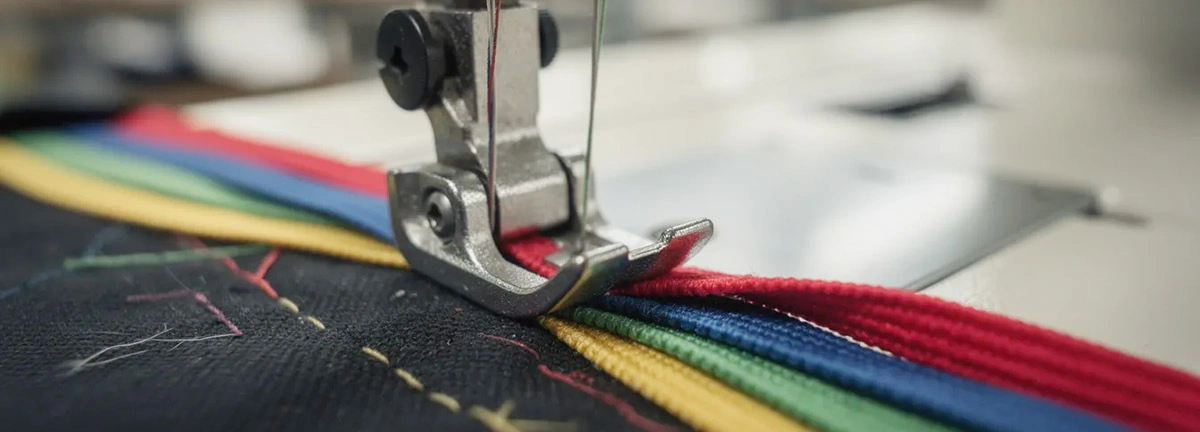
The standard method involves two passes. First, the FOE is stitched to the raw edge while unfolded, with the elastic sandwiched against the fabric. Then it is folded over to fully encase the edge and a second line of stitching secures it in place.
-
A medium zigzag stitch works best for sewing fold over elastic. Choosing industrial sewing thread optimized for zigzag seams and a narrow zig zag stitch or three-step zigzag stitch distributes stress across the seam, keeping the material flat and avoiding tunneling.
-
Even on a sampling-room Janome sewing machine, technicians can replicate production results by adjusting stitch width, stitch length, and tension, which helps for pre-production approvals before committing to a full line run.
-
Fold over elastic should be shorter than garment measurements-stretch the elastic firmly while sewing for best results, keeping the fabric flat to prevent rippling. Fold-over elastic should be measured against the pattern and cut shorter than the corresponding garment edge.
-
Basting the elastic can prevent sewing mistakes. Evenly distribute the elastic by marking key points along both the FOE and the edge before final stitching passes.
-
Pin or clip the FOE at regular intervals; use ballpoint needles for knit bases and fine polyester thread, such as MH’s high-quality embroidery thread ranges when decorative stitching is required. MH's FOE is engineered to minimize skipped stitches and needle heat damage on high-speed lines.
-
A walking foot attachment can improve feed consistency when attaching FOE to heavier or layered materials, reducing drift between layers, and pairs well with 150D/2 rayon embroidery thread when programs call for a soft, lustrous decorative edged.
Why Partner With MH for Foldover Elastic Supply?
MH is a long-term, integrated elastic partner-not a spot-market seller. The priority is stability, security of supply, and collaboration across seasons.
-
MTO flexibility: Tailor-made FOE specifications for different brands, markets, and seasons, avoiding unnecessary inventory for the buyer.
-
Proven scale: Experience supplying large garment groups and wholesalers, including coordinated deliveries across multiple factory locations and countries.
-
Integrated capabilities: MH's broader textile portfolio helps buyers simplify their trim supply base and negotiation processes-a single page of contact points rather than a fragmented vendor pool, including comprehensive bag and luggage accessories solutions for brands running multi-category programs.
-
Sustainability direction: Recycled yarn FOE options (rPET, recycled nylon) are available for brands committed to reducing environmental footprint-an area of growing inspiration for progressive sourcing teams. For hardware and closure choices, equipment like a snap button press machine for industrial fasteners can further streamline on-site attachment processes.
Align early in your development calendar so FOE programs can be color-matched, tested, and booked on time for each season. Contact MH to discuss your next project and request lab dips.


FAQ – Fold Over Elastic for Professional Buyers
Can MH match our existing foldover elastic from another supplier?
MH can typically match color, width, handfeel, and stretch of an existing FOE if physical samples or detailed specifications are provided. Lab dips and test samples are prepared before bulk confirmation to verify compatibility on the buyer's sewing machine and production lines.
How does FOE perform on different fabrics such as jersey, mesh, and woven materials?
FOE performs best on stretch jerseys and meshes but can also be applied to lightweight wovens when the pattern and tension are adjusted correctly. Pre-production trials across all target fabric bases are recommended to confirm appearance and stretch behavior before placing a large-volume order.
Is FOE suitable for high-heat processes like tumble drying and pressing?
Standard FOE withstands domestic washing and tumble drying without issue. However, continuous exposure to excessive industrial pressing temperatures should be avoided-spandex can degrade under sustained heat.
Can foldover elastic run on our existing zig zag stitch machines without new equipment investment?
FOE is designed to work with standard industrial zigzag stitch and three-step zigzag stitch machines, and with basic models like a Janome sewing machine in sampling rooms. Adjustments to stitch width, stitch length, tension, and operator technique are usually sufficient. Most factories suspect they need new capex-in practice, the existing machine fleet handles FOE with minimal modification on this website of changes.
