
How Do You Choose Between Floss, Perle Cotton, and Metallic Threads for Hand Embroidery Thread?
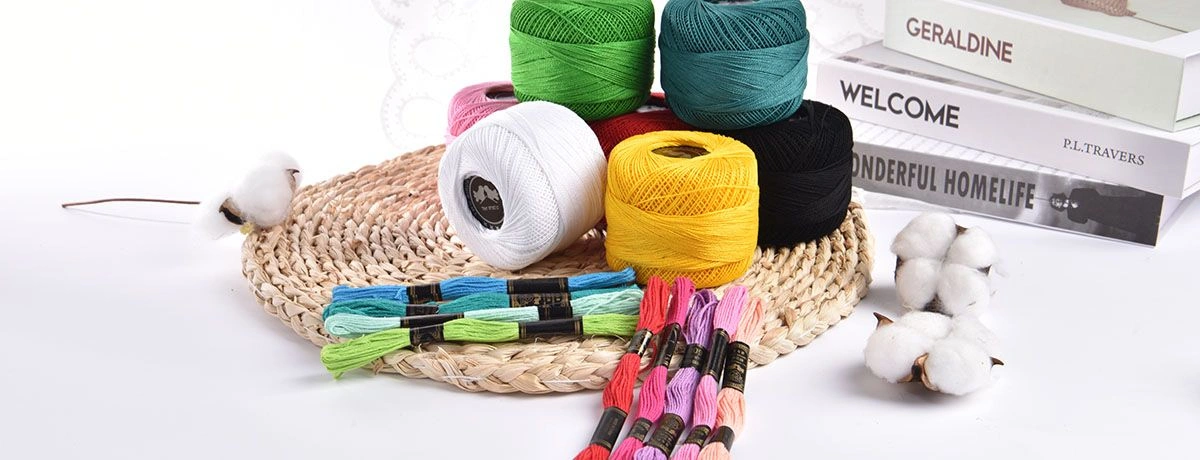
For garment manufacturers, distributors, and textile wholesalers, understanding the nuances of embroidery threads is essential for ensuring product quality and marketability. This article serves as a comprehensive guide to hand embroidery thread, providing detailed insights into the different types available. The choice of thread impacts not only the aesthetic finish of textile goods but also production efficiency and long-term durability.
While machine embroidery dominates mass production, hand embroidery threads remain vital for high-end artisanal garments, specialized textile applications, and the burgeoning DIY craft market supplied by retail distributors. This guide is a fantastic resource for both beginners who may feel unsure about which hand embroidery thread to choose and experienced professionals seeking to refine their sourcing strategies. It examines the technical specifications and commercial applications of key hand embroidery threads, including stranded floss, perle cotton, and metallic varieties, to assist procurement managers in making informed sourcing decisions.
Key Characteristics of Embroidery Threads
When sourcing threads for commercial distribution or manufacturing, it is important to know how to choose the right hand embroidery thread based on fiber composition, weight, sheen, and colorfastness, as these factors determine suitability.
When considering weight, opt for a heavier thread when working with thick or heavy fabrics, and select a finer thread for delicate or lightweight materials, depending on your design requirements.
In the following sections, you will find tips for selecting the best embroidery thread for various applications.
Fiber Types
Cotton, polyester, and rayon are the standard fibers in the industry. Mercerized cotton is preferred for its strength and luster, undergoing a chemical process that swells the fibers to increase dye uptake. Venne is one of the trusted brands known for its mercerised cotton and specialty wool threads. Venne's mercerisation process gives cotton threads a beautiful sheen and added strength. Polyester offers superior tensile strength and colorfastness, making it ideal for items subjected to frequent industrial laundering.
Thread Weight
Weight dictates the coverage and texture of the stitch. In manufacturing, selecting the correct weight ensures that production cost estimates (based on thread consumption) are accurate. Heavier weights provide raised textures, while finer weights allow for detailed precision work. Opting for a thicker thread is ideal for heavier fabrics like denim, as it ensures durability and creates bolder, more textured designs, while finer threads are better suited for detailed, delicate work.
Sheen and Colorfastness
Mercerization imparts a silk-like sheen to cotton, a highly marketable trait for premium goods. Colorfastness is non-negotiable for commercial textiles. Threads must withstand washing, light exposure, and friction without bleeding or fading, meeting international ISO standards for textile durability.
Cotton Threads for Hand Embroidery
A well-curated collection of cotton threads is essential for meeting diverse embroidery needs. Cotton remains the industry standard for hand embroidery due to its pliability and finish. Cotton embroidery floss is widely available and comes in a massive range of colours, making it a popular choice for hand embroidery. It is generally categorized into divisible and non-divisible forms.
Divisible vs. Non-Divisible
Divisible threads, such as standard six-strand embroidery floss, are designed to be divided into six individual strands. This allows the end-user or artisan to adjust thickness by separating the thread and using all six strands together for bold lines, or just a single thread for delicate, fine embroidery and detailed shading. Embroidery floss is a divisible thread that consists of six individual strands that can be separated for varying thicknesses in stitching.
Non-divisible threads, like Perle cotton, are used straight off the skein or ball as a single thread and cannot be divided. Perle cotton features a tight twist that creates a bumpy look, adding texture and durability to embroidery projects. For wholesalers, stocking both varieties is often necessary to meet diverse market demands.
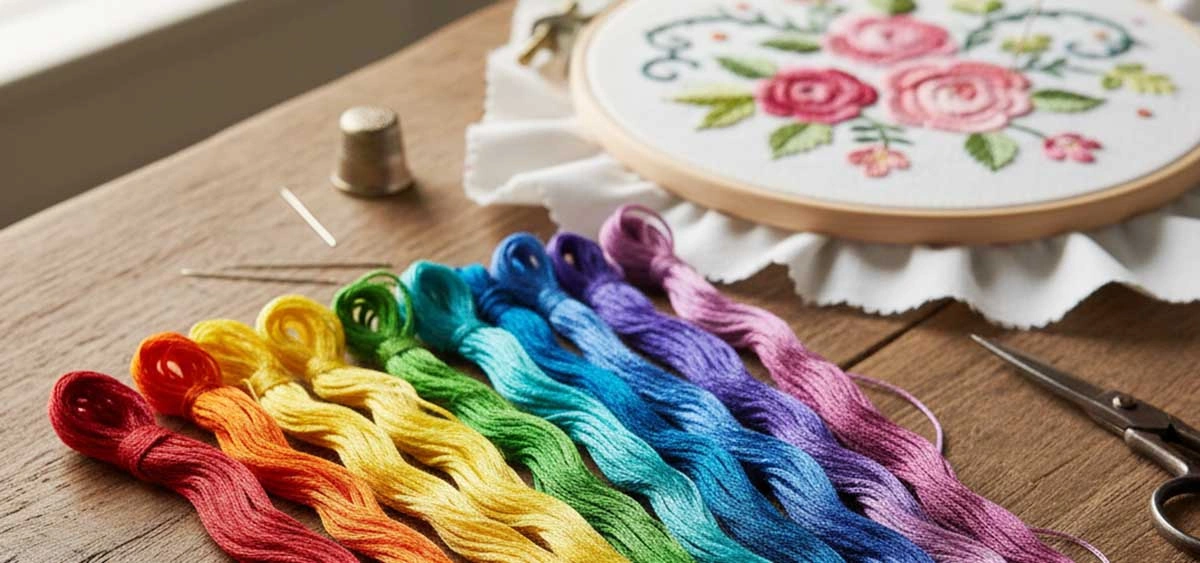
Stranded Cotton (Embroidery Floss)
Stranded cotton, often referred to as embroidery floss, is the most widely traded hand embroidery thread globally. DMC threads are a leading brand for stranded cotton embroidery floss, known for their high quality and popularity among both beginners and experienced embroiderers. DMC stranded cotton floss is sold in skeins and is favored worldwide for its wide range of colours and consistent quality. Embroidery floss is widely available and comes in a massive range of colors, making it a popular choice for hand embroidery. It is comprised of six loosely twisted strands that can be separated.
Commercial Applications
-
Versatility: One inventory SKU serves multiple thickness requirements, reducing stock complexity for retailers.
-
Material: High-quality floss is typically made from long-staple Egyptian cotton, double-mercerized for sheen.
-
Usage: It is the primary material for cross-stitch kits, needlepoint, and surface embroidery.
When searching for the best hand embroidery thread for your projects, be sure to browse the available options to find the ideal match for your needs.
MH supplies stranded cotton that meets rigorous color consistency standards, ensuring that dye lots remain uniform across large-scale orders—a critical requirement for distributors supplying kits or large retail chains.
Perle Cotton
Perle cotton (Pearl cotton) is a non-divisible, S-twisted thread known for its high luster and rope-like texture. Unlike floss, it sits high on the fabric surface, creating a distinct relief effect. Perle cotton is often favored for surface embroidery when a bit of texture is desired in the stitching. While it provides a firm, raised look, for even more textured or fluffy effects—such as in animal motifs or decorative accents—embroiderers may choose fluffy threads like Venne Mohair Embroidery Thread.
Weights and Sizing
Perle cotton is graded by number; the higher the number, the finer the thread.
-
Size 3 & 5: Heavyweight, used for bold surface embroidery and edging. These sizes are equivalent in thickness to about 6 strands of standard embroidery floss.
-
Size 8: Medium weight, often used in quilting and hardanger. Size 8 is roughly equivalent to 3 strands of embroidery floss.
-
Size 12: Fine weight, suitable for delicate embroidery. This is equivalent to about 2 strands of embroidery floss.
For B2B buyers, Perle cotton is a staple product for markets focused on home textiles, quilting, and educational craft supplies.
Less Common Cotton Threads
To offer a comprehensive catalog, distributors may consider niche cottons:
-
Danish Flower Thread: A matte finish thread, unmercerized, offering a rustic, natural aesthetic. Danish flower thread is a soft cotton with a tighter twist than floche and is available in various colors. Its weight and thickness are roughly equivalent to standard embroidery floss, making it suitable for similar techniques. It is available in the UK, Australia, and in the US through Ingebretsen's in Minnesota.
-
Mountmellick Thread: A thick, matte cotton used specifically for traditional Irish Mountmellick embroidery.
Additionally, brands like Weeks Dye Works are known for their specialty and hand-dyed embroidery threads, providing unique and colorful options for hand embroidery projects.
Embroidery Floss and Cross Stitch
Cross stitch remains a significant driver of embroidery thread sales. Stranded cotton is the standard medium for this sector. The commercial viability of floss for cross stitch relies heavily on color range and matching systems.
Most cross-stitch patterns specify stitch counts based on fabric gauge (Aida count). For best results in cross stitch projects, stick to the recommended thread types specified in the pattern to ensure compatibility with your chosen fabric. MH production capabilities allow for the customization of skein length and packaging to suit specific kit requirements or retail branding.
Metallic and Specialty Threads
A well-rounded collection of specialty threads, including metallics, can add value and variety to embroidery projects. Metallic threads add value and visual interest to textile products. However, they present technical challenges in production and handling.
Composition and Handling
Metallic threads typically consist of a polyester core wrapped in metallic foil. Lower-quality metallics are prone to fraying and breaking during high-speed production or vigorous hand stitching. MH prioritizes high-tensile strength in metallic product lines to minimize breakage and maximize production efficiency.
Applications
These are used primarily for accents, borders, and holiday-themed textiles. They are often blended with cotton or polyester strands to improve sewability.
Popular Brands and Market Standards
The global market is benchmarked by established European brands, most notably DMC, as well as other trusted brands such as Anchor, ITO, and Cosmo. Anchor is especially popular in the UK and Europe and is considered to be of similar high quality to DMC, making it a reliable alternative. ITO offers luxurious silk and innovative metallic threads, perfect for detailed and sophisticated projects. Cosmo is known for its very soft, high-quality Japanese cotton.
The DMC Standard
DMC threads are one of the most popular brands for embroidery threads worldwide, known for their high-quality stranded cotton floss, wide color range, and consistent quality for both beginners and experienced practitioners. DMC is recognized for its extensive color palette (over 500 shades) and consistency. For wholesalers and manufacturers, “DMC-compatible” is a common keyword and quality benchmark. Competing products are often judged on their ability to match DMC color codes, facilitating easy substitution for manufacturers and end-users.
MH offers color-matching services to ensure that bulk thread orders align with industry-standard color charts, providing a cost-effective alternative without compromising on color fidelity.
Choosing the Best Embroidery Thread for Production
Selecting the correct hand embroidery thread impacts the bottom line. Procurement managers must choose carefully, balancing cost, quality, and application. Understanding what threads are what may encourage you to try new-to-you threads with a little more confidence.
-
Fabric Weight Compatibility: For heavy fabrics (denim, canvas), opt for lower gauge (thicker) threads like Perle size 3 or 5 for visibility. For lightweight fabrics (silk, lawn), opt for fine strands to prevent puckering.
-
Washability: For apparel and home linens, colorfastness is paramount. Threads must be tested for bleed resistance at high temperatures.
-
Cost vs. Quality: While premium long-staple cotton commands a higher price, it reduces breakage rates and waste, often lowering the total cost of ownership.
Sourcing and Customization with MH
As a B2B supplier, MH understands the specific needs of large-scale buyers. Procurement managers often browse and search for the best suppliers and hand embroidery thread options to meet their requirements. Unlike retail outlets, MH operates on a make-to-order basis, providing significant advantages for wholesalers and brands.


Customization Capabilities
-
Color Matching: Custom dyeing to match specific Pantone or proprietary brand colors.
-
Packaging: OEM packaging options, including custom labeling, branding, and skein sizing.
-
Volume Production: Scalable manufacturing to meet container-load requirements for global distribution.
Direct Supplier Advantage
Sourcing directly from MH eliminates intermediaries, ensuring competitive pricing and direct communication regarding technical specifications.
Final Recommendations for Buyers
For procurement professionals, the embroidery thread market offers a vast array of options. Success lies in matching the technical specifications of the thread—whether it be the sheen of mercerized cotton or the durability of polyester—to the specific requirements of the end product.
MH invites procurement managers and distributors to request technical data sheets and samples. By leveraging MH's manufacturing expertise and customization capabilities, businesses can secure a reliable supply chain for high-quality embroidery threads tailored to their market needs.
