
What Is Polyester Knitted Fabric and How Is It Used in Garment Manufacturing?
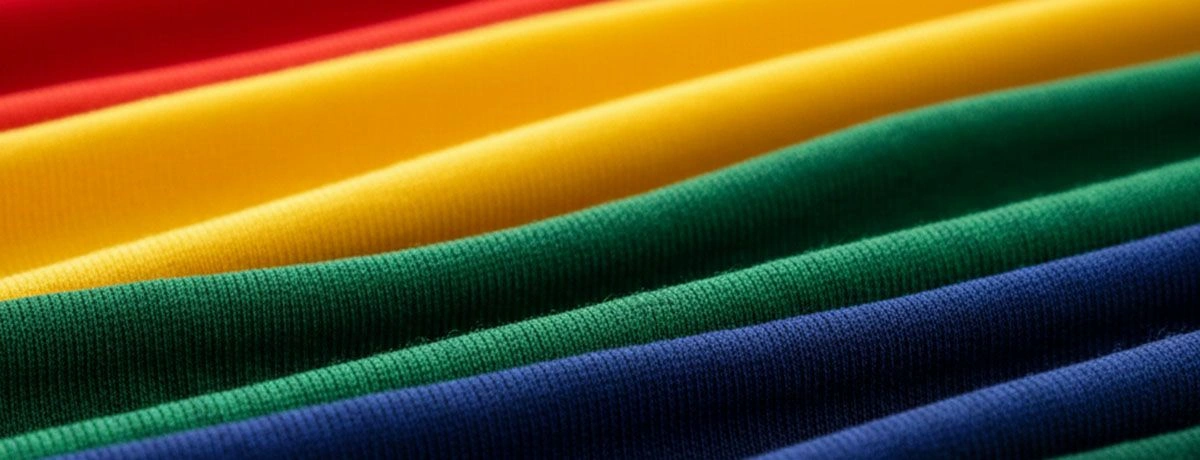
Polyester knitted fabric is one of the most widely used materials in global textile manufacturing—and for good reason. Built from synthetic polyethylene terephthalate (PET) fibers formed into interlocking loops, these fabrics deliver a combination of stretch, durability, and performance that woven constructions simply cannot match. Polyester knitted fabric is primarily used in activewear, performance clothing, t-shirts, dresses, and home textiles. From high-performance activewear to home textiles and automotive interiors, polyester knit serves a remarkable range of end-use applications.
For B2B buyers, wholesalers, and garment factory owners, understanding the technical and commercial dimensions of this fabric category is essential for making sound procurement decisions. Polyester knitted fabric is skillfully crafted to meet the needs of various industries, ensuring quality and durability. Fabric is often sold or specified by the yard, which is important for buyers and wholesalers. This guide covers everything from fiber origin and construction types to sustainability certifications, care protocols, and quality testing standards.
Polyester Fabric Basics
Polyester fiber originates from PET polymer, derived through condensation polymerization of ethylene glycol and terephthalic acid. The resulting polymer is melt-spun into either continuous filament yarns or staple fibers, both of which are suitable for knitting applications.
Polyester is derived from non-renewable resources and is not biodegradable.
The manufacturing process of polyester knitted fabric involves producing polyester fibers through a chemical reaction between petroleum-based substances.
Key fiber properties include:
-
High tensile strength — polyester yarns resist tearing and deformation under load
-
Low moisture absorbency — hydrophobic by nature, polyester repels water rather than absorbing it
-
Excellent colorfastness — resists fading under repeated washing and UV exposure
-
Wrinkle resistance — superior to most natural fibers, reducing finishing requirements in production
-
Resistance to chemicals — polyester knitted fabric withstands exposure to many chemicals, contributing to its durability in industrial and demanding environments
Compared to cotton or wool, polyester dries faster, maintains dimensional stability better over time, and performs more consistently across varying production runs—advantages that matter significantly in large-scale manufacturing.
Knit Fabrics vs. Woven Fabrics
The structural distinction between knitted and woven fabrics is fundamental. Woven fabrics are made by interlacing threads at right angles, producing a stable but relatively rigid structure. Knitted fabrics, by contrast, are created by looping yarn together, forming continuous loops that interlock row by row. This looping yarn technique, rather than interlacing threads, gives knit fabrics their inherent stretch, recovery, and drape qualities, even without elastane blending.
Performance trade-offs at a glance:
|
Property |
Knit Fabrics |
Woven Fabrics |
|---|---|---|
|
Stretch & Recovery |
High |
Low |
|
Dimensional Stability |
Moderate |
High |
|
Comfort & Drape |
Superior |
Stiffer |
|
Tear Resistance |
Moderate |
Higher |
|
Cutting & Sewing |
More complex |
More predictable |
For garments requiring ease of movement—activewear, underwear, casual tops—knit constructions are the standard choice. Knit fabrics are especially ideal for fitted garments due to their stretch and adaptability. Woven fabrics remain preferable for structured garments like tailored jackets and trousers where dimensional precision takes priority.
Types of Polyester Knitted Fabrics
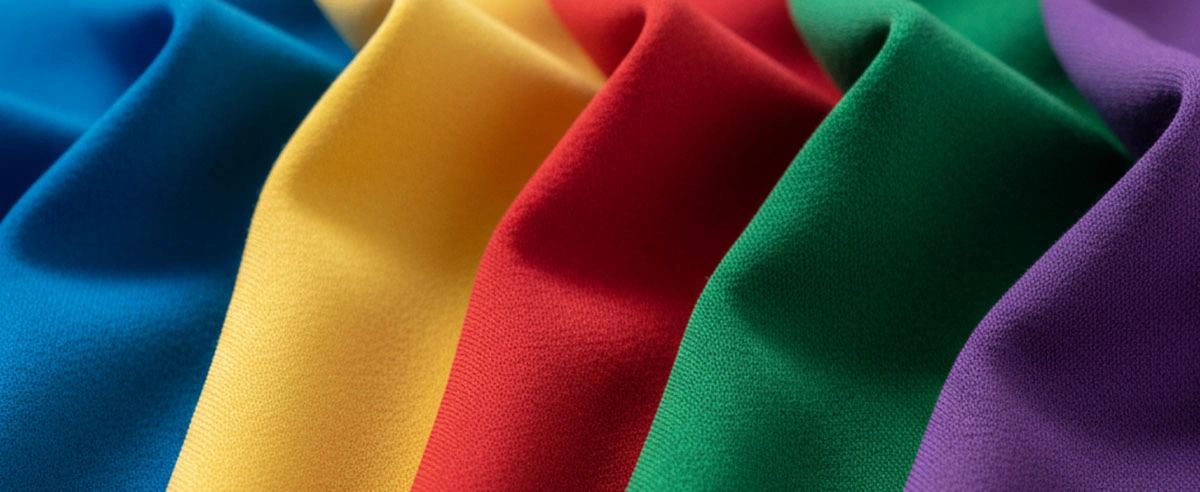
Different knit constructions produce fabrics with distinct properties suited to specific applications. Advanced knitting machinery enables the creation of intricate patterns and diverse knit styles in polyester knitted fabrics, allowing manufacturers to offer a wide range of designs for various uses.
Single-Knit Jersey
Lightweight with a beautiful drape that enhances both the look and comfort of garments, jersey is the most common knit construction globally. It is widely used for dresses, shirts, scarves, and other chiffon fabric applications, as well as T-shirts, base layers, and casual tops. One side is smooth; the other shows visible loops.
Double-Knit and Interlock
Two layers of interlocked loops create a thicker, more stable fabric. Interlock polyester knit fabric is commonly specified for structured polos, children's wear, and casualwear requiring greater body.
Rib and Ponte
Rib knits alternate face and back loops to produce strong lateral stretch and recovery—standard for cuffs, neckbands, and waistbands. Ponte fabrics offer higher dimensional stability with a smoother surface, making them suitable for tailored knit garments and officewear.
Technical Knits: Mesh and Spacer
Engineered knit constructions address specific performance requirements. Mesh fabrics maximize breathability through their open structure, while specialized options like polyester stiff net fabric provide rigidity for structured designs. Spacer fabrics—with two outer layers connected by a monofilament middle layer—provide cushioning and insulation for sportswear and technical apparel.
Applications: Apparel, Home Textiles, and Industry
Activewear and sportswear: The largest end-use category for polyester knit. Moisture management, stretch recovery, and colorfastness make it the standard substrate for performance garments across multiple sports and fitness segments, alongside complementary materials such as 85% nylon 15% spandex 4-way stretch swimwear fabric and 93% polyester 7% spandex stretch woven fabric.
Casual apparel and fast fashion: Polyester knit delivers consistent color results and dimensional stability at competitive cost, making it foundational for high-volume casualwear programs.
Home textiles: Upholstery, bedding, and curtain applications benefit from polyester knit's dimensional stability, easy-care performance, and resistance to fading. Specifying robust heavy duty high tenacity polyester sewing thread alongside versatile 100% spun polyester sewing thread helps ensure seam durability and color consistency. Knit structures also reduce fraying risk in upholstery applications.
Technical and industrial applications: Filtration media, automotive interior trims, and protective liner layers are all served by engineered polyester knit constructions optimized for specific mechanical or thermal properties, often used in combination with lightweight options like 170T polyester pongee fabric.
Care, Durability, and Long-Term Performance
Polyester knitted fabric is durable but sensitive to heat. Recommended care protocols for maintaining fabric integrity:
-
Laundering: Wash garments in cold water (30°C or below) with low-speed spin cycles to preserve knit structure and finishes.
-
Avoid bleach or fabric softeners: Do not use bleach or fabric softeners, as they can damage polyester knitted fabrics.
-
Drying: Tumble dry on low heat or hang to dry to prevent excessive shrinkage; high heat causes fiber deformation and loss of elasticity in elastane blends.
-
Ironing: Polyester knits are naturally machine washable and wrinkle-resistant, often requiring no ironing. If pressing is required, use a pressing cloth and low-temperature settings.
-
Storage: Store polyester knits in a cool, dry place away from direct sunlight to prevent discoloration or fading. Store flat or loosely folded to prevent permanent stretching in knit garments.
Long-term performance depends on yarn quality, stitch density, and finish durability. Specifying these factors precisely during development reduces quality variance across production runs.
Specification and Buying Guide
When sourcing polyester knitted fabric at scale, the following spec sheet items are non-negotiable:
-
GSM (grams per square meter) — governs fabric weight and application suitability
-
Knit construction — jersey, interlock, rib, or technical knit type
-
Fiber content — polyester percentage, elastane content, and whether virgin or recycled fiber is specified
-
Stretch percentage — two-way or four-way stretch and recovery rate
-
Finishing treatments — moisture-wicking, antimicrobial, UV protection, or heat-setting requirements
Assessing hand and drape from samples: Evaluate by comparing fabric weight, stitch gauge, and yarn denier against product requirements. Request lab reports for stretch recovery and pilling resistance before approving bulk production.
Cost drivers to account for in procurement:
-
Virgin vs. recycled fiber pricing differential
-
Elastane content (spandex commands a premium)
-
Certification costs (GRS, OEKO-TEX, bluesign)
-
Custom finishing complexity and minimum quantities
MH operates as a Make-to-Order (MTO) supplier—all fabric is produced against confirmed specifications without ready stock. This model ensures every production run meets buyer-defined standards, eliminates generic inventory, and supports consistent quality across repeat orders. For high-volume programs targeting Latin America and other export markets, MH's integrated manufacturing infrastructure supports scalable production with reliable lead times.


Frequently Asked Questions
Can polyester knitted fabric be recycled after use, and what recycling streams accept it?
Post-consumer polyester knit garments can be mechanically recycled into fiber for non-woven applications or chemically recycled back to PET monomer. Acceptance depends on regional recycling infrastructure. Blended fabrics containing elastane are more difficult to recycle and present greater end-of-life challenges.
How does polyester knitted fabric compare to cotton knits for breathability and comfort?
Cotton knits absorb moisture; polyester knits wick it. In low-intensity or sedentary use, cotton often feels more comfortable against skin. In athletic applications, moisture-wicking polyester performs better by keeping the skin surface drier. Performance finishes narrow the comfort gap, but fiber composition remains a meaningful distinction for end-use specification.
What percentage of elastane is typical for a durable, stretchy knit used in activewear?
Most activewear constructions use 10–20% elastane for strong four-way stretch and recovery. Lighter stretch applications (base layers, casual sportswear) typically use 5–10% elastane. Higher elastane content increases cost and complicates recycling but significantly enhances compression performance.
