
What Happens Inside MH’s Professional Sewing Thread Factory from Yarn to Finished Thread?
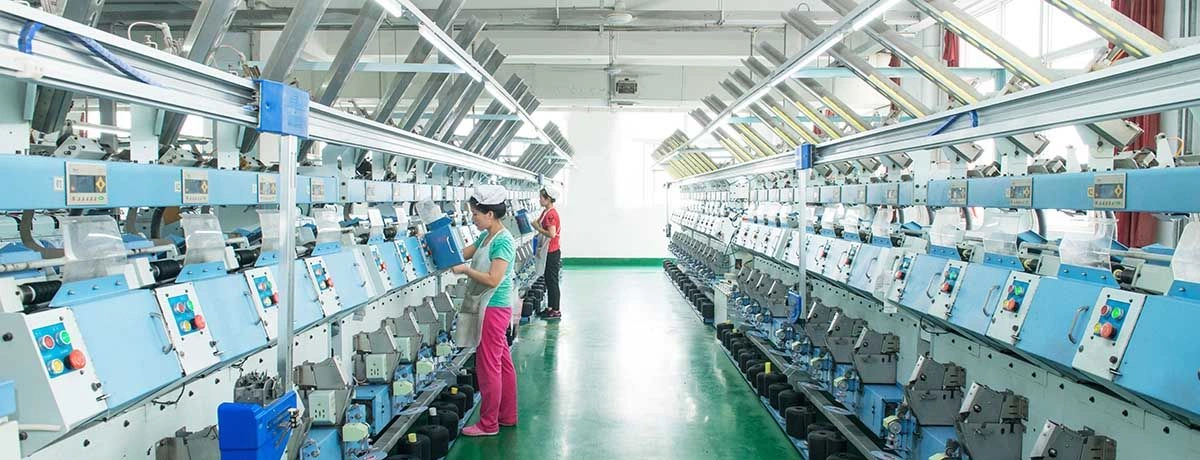
A modern sewing thread factory is not just a place where threads are produced. It is a controlled production environment where yarn selection, processing technology, automation, and quality verification come together to ensure sewing threads perform consistently in real manufacturing conditions.
From the very beginning of its operations, MH has been committed to quality and innovation, establishing a strong foundation for reliable and high-performance sewing thread manufacturing.
At MH, sewing threads are manufactured for industrial use, including garments, embroidery, leather goods, footwear, uniforms, and other textile applications. This article explores how MH operates its sewing thread factory, step by step, with a strong focus on automation, material control, and quality assurance.
What Is a Sewing Thread Factory and Why It Matters
A professional sewing thread factory is responsible for converting raw yarn into finished sewing threads that can withstand needle friction, machine speed, abrasion, and repeated stitching.
There are several reasons why the factory’s capabilities matter for customers sourcing industrial sewing thread:
-
Thread strength and uniformity
-
Sewing efficiency and breakage rate
-
Color consistency across batches
-
Long-term supply reliability
This is especially important for polyester threads, nylon threads, rayon embroidery threads, and other specific thread types used in mass production.
Overview of MH Sewing Thread Factory
MH is a manufacturer and supplier of sewing threads with large-scale production facilities dedicated to polyester sewing threads, industrial sewing thread, and embroidery threads.
MH is committed to delivering high-quality products, with a sewing thread product range known for its reliability and consistency.
Key characteristics of the MH sewing thread factory include:
-
Integrated production from yarn processing to finished threads
-
Automated manufacturing lines designed for bulk production
-
Capacity to serve global customers with stable lead times
MH sewing threads are exported to markets including Africa, the Middle East, Latin America, Eastern Europe, the USA, and other industrial regions.
Raw Materials Used in Sewing Thread Production
Yarn Selection and Material Control
The quality of sewing threads begins with yarn. MH selects and processes multiple yarn types depending on application and purpose:
-
Polyester yarn – for general sewing, uniforms, and garments
-
Nylon (polyamide) yarn – for higher flexibility and abrasion resistance
-
Rayon yarn – mainly used in machine embroidery threads
In some cases, different fibers or slivers are combined during yarn processing to enhance uniformity and strength, ensuring a more consistent and high-quality sewing thread.
All yarns are inspected to ensure uniform structure, suitable tensile strength, and stable performance before entering production.
Sewing Thread Manufacturing Process at MH
Spinning, Twisting, and Thread Formation
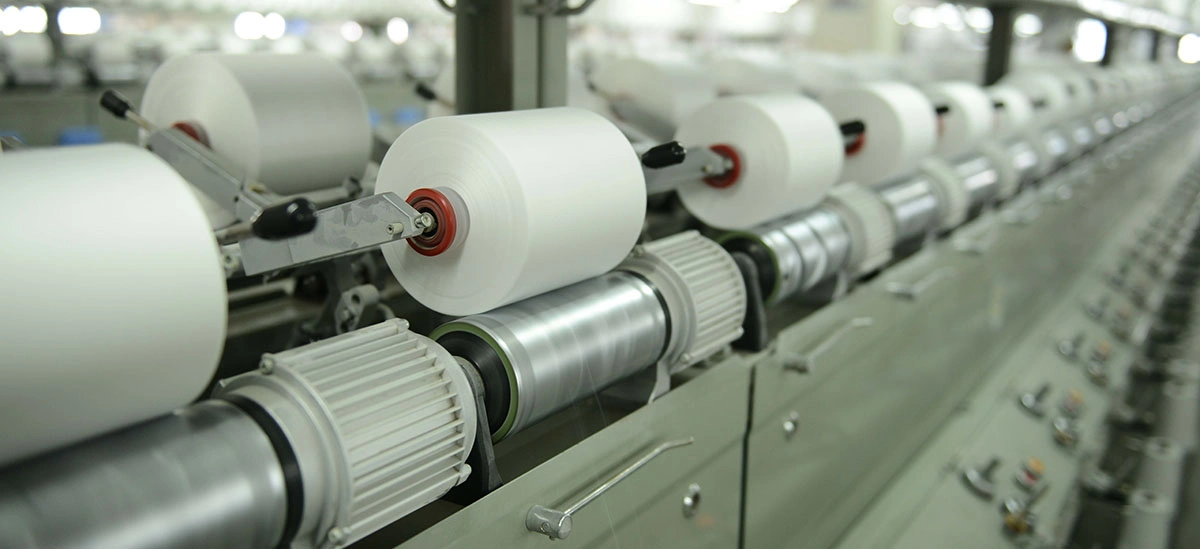
In the spinning and twisting stage, yarn is transformed into sewing threads with controlled structure and performance.
MH sewing thread factory uses:
-
Automated spinning equipment
-
Precision twisting systems to achieve uniform twist levels
-
Process controls to ensure consistency across production batches
This stage directly affects thread handling, lustre, and resistance to abrasion during sewing.
Dyeing and Chemical Processing
Dyeing is a critical part of sewing thread processing, especially for polyester threads and embroidery threads.
MH applies controlled dyeing and chemical processing to:
-
Achieve stable and repeatable colors
-
Improve color fastness
-
Ensure threads meet industry and customer requirements
Each color batch is verified before moving to the next production step.
Oiling, Rewinding, and Size Control
To improve sewing performance, threads undergo oiling and rewinding.
Oiling and rewinding not only enhance thread performance but also influence the handle, or tactile feel, of the thread, affecting its softness, stiffness, and ease of use during sewing.
This step helps:
-
Reduce friction between thread and needle
-
Improve performance in high-speed industrial sewing machines
-
Ensure uniform sizes and tension
Certain treatments during these processes can result in a soft finish, which is preferred for specific sewing applications requiring flexibility and ease of handling.
Proper oiling and rewinding are essential for applications such as embroidery, leather goods, and footwear manufacturing.
Automation in Sewing Thread Factory Production
Automation plays a key role in maintaining consistency and efficiency.
At MH sewing thread factory, automation is applied in:
-
Production and processing lines
-
Quality monitoring during manufacturing
-
Packaging and warehouse handling
Automation allows MH to produce sewing threads at scale, respond efficiently to customer orders, and deliver consistent quality with competitive prices.
Quality Control and Verification System
In-Process Quality Control
Quality control is integrated throughout production, not limited to final inspection.
MH monitors:
-
Thread strength and elongation
-
Uniformity and twist balance
-
Surface smoothness and abrasion resistance
These checks ensure sewing threads remain suitable for industrial applications.
Finished Thread Testing
Before delivery, sewing threads are tested to ensure they:
-
Meet strength and performance requirements
-
Perform reliably during sewing and embroidery
-
Match approved specifications
This verification process reduces risks for customers using the threads in mass production.
Batch Traceability and Customer Assurance
Each batch of sewing threads manufactured at MH is traceable, allowing:
-
Quality verification
-
Process review
-
Long-term consistency for repeat orders
This system supports professional customers who depend on stable supply and predictable performance.
Applications of MH Sewing Threads
MH sewing threads are suitable for:
-
Garment manufacturing
-
Machine embroidery
-
Leather goods and footwear
-
Uniforms and workwear
-
Industrial textile applications
MH assists customers in taking the right thread for their specific application needs by providing expert guidance and recommendations based on required strength, flexibility, and surface finish.
Different thread types are produced to meet specific application needs, including strength, flexibility, and surface finish.
Why Customers Choose MH Sewing Thread Factory
Customers choose MH because the company is:
-
Committed to industrial-level quality
-
Focused on standardized production
-
Capable of delivering large volumes
-
Experienced in serving global textile industries
Customers benefit from working with MH through reliable supply, responsive support, and a partnership approach that adds value to their textile and sewn products manufacturing operations.
MH does not focus on short-term events or one-time orders, but on long-term cooperation and service.
Sewing Thread Factory Focused on Global Industry Needs
With extensive export experience, MH understands how sewing threads are applied differently across markets and industries.
By combining material expertise, automated production, and strict quality control, MH ensures sewing threads meet the demands of modern manufacturing.
Contact MH Sewing Thread Factory
Explore MH's extensive range of sewing threads and related products—whether you need polyester threads, industrial sewing thread, or solutions for embroidery applications, our sewing thread factory is ready to support your production needs.
Contact MH to learn more about our sewing thread manufacturing, production capacity, and service capabilities.