
How Is Sewing Thread Made and What Are the Key Steps in Modern Manufacturing?
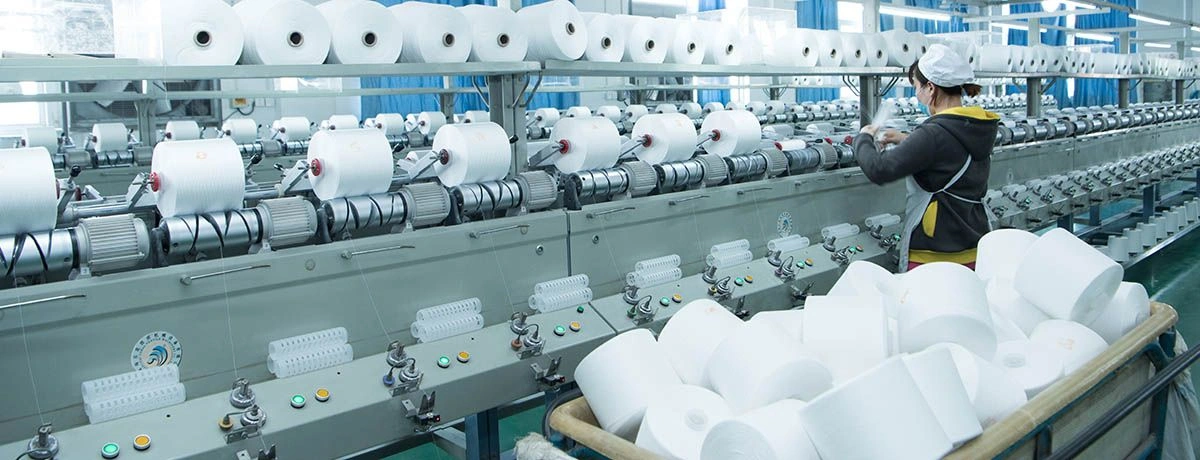
Sewing thread may appear simple, but behind every smooth seam lies a highly engineered product built to withstand tension, abrasion, heat, and long-term wear. Today’s sewing thread manufacturing combines advanced fiber science, precision engineering, and automated production technology. Whether used in apparel, leather goods, upholstery, or industrial sewing applications, high-quality sewing thread must meet strict performance standards. In fact, the total length of thread dyed in a single day at leading factories is enough to circle the Earth's equator approximately five times, illustrating the immense scale and efficiency of modern production.
In this article, we walk through the complete manufacturing process—from fiber to finished cone—while integrating essential industry concepts such as polyester tow, slightly twisted yarn, single yarn, cross-section, and more. We also highlight the world-class capabilities of Ningbo MH, a global leader in thread production.
Understanding Sewing Thread and Its Origins
Sewing thread is a specially engineered yarn designed to hold stitches securely, move smoothly through a sewing machine, and remain friction-free during high-speed stitching. Historically, people relied on natural fibers such as cotton plants, silk fibers, animal hide, or even threads from spin cocoons—including mulberry leaves-fed silkworms—to create early stitching materials.
The industrial revolution transformed thread production, enabling mass consumption of cotton thread, silk thread, and later synthetic threads like polyester and nylon. During this period, thread moved from manual, cottage-based production to industrial manufacturing in factories, greatly improving the uniformity, strength, and quality of sewing thread.
Today’s advanced industrial sewing thread requires controlled strength, elongation, and durability achieved through a modern multi-stage manufacturing process.
Step 1: Fiber Preparation & Spinning
1. Raw material preparation
Modern sewing thread begins with raw fibers such as polyester staple fibers, polyester tow, nylon, or natural fibers like cotton and silk. Polyester is the most widely used due to its high strength, colorfastness, and resistance to open flame and chemicals.
After raw material preparation, the thread is manufactured through controlled processes such as spinning, twisting, and finishing to ensure consistent quality and performance.
2. Cleaning & blending
Fibers are opened, mixed, and cleaned. Any crude oil residue or impurities are removed using mild chemicals, sometimes including caustic soda, depending on the fiber type. In the case of corespun threads, different components such as polyester and cotton may be blended or require separate processing to ensure uniform quality and optimal dyeing results.
3. Drawing & formation of slivers
Fibers pass through rotating rollers, aligning into uniform slivers with controlled cross section. Combing is then used to further align and refine the cotton fibers, removing short fibers and impurities to produce long, straight fibers ideal for high-quality sewing thread. Maintaining sliver uniformity is essential for later processes.
4. Spinning into yarn
Using ring spinning, air-jet spinning, or rotor spinning, fibers are first processed into roving, a loose, slightly twisted strand that serves as an intermediate stage before final spinning. The roving is then further spun into a single thread, which is the final product of the spinning process. For some lines, short fibers (short lengths) are blended with long fibers (long filaments) to enhance strength and smoothness.
In the production of synthetic fibers such as polyester, the filaments are extruded through spinnerets whose holes are typically circular, determining the cross-sectional shape and reflective qualities of the resulting filaments. After extrusion, polyester filaments are stretched to improve molecular alignment and strength before being spun into thread.
The spun yarn must meet strict parameters:
-
Evenness
-
Breaking point (tensile strength)
-
Hairiness
-
Elongation
Only well-balanced yarn can ensure high-quality sewing performance.
Step 2: Twisting – Building Strength and Stability
Sewing thread typically consists of two or three slightly twisted yarns combined into a balanced structure. Twisting binds fibers tightly, reduces hairiness, and enhances durability.
Key twist types
-
S-twist
-
Z-twist(most common for final sewing thread)
Thermal setting stabilizes the twisted structure to prevent untwisting during high-speed sewing machine operation.
Different applications may use:
-
Two-ply for general sewing
-
Three-ply for stronger industrial sewing thread
-
Core-spun yarn (cotton-wrapped polyester) for premium stitching
Step 3: Dyeing – Color Precision & Fastness
Before dyeing, the yarn is rewound to ensure smooth winding process and consistent dye penetration.
Cotton thread dyeing typically generates more waste compared to other types of thread, as unusable cotton parts and imperfect fibers are removed during the process.
1. Dyeing techniques
Polyester threads are dyed in high-temperature high-pressure systems. Natural fibers such as silk (from schappe silk), cotton, or rayon use alternative dyeing methods, with rayon often chosen for embroidery or decorative threads.
2. Dye mixing & color control
Advanced dye mixing systems and computer-controlled laboratories ensure accurate color matching. This is critical for products like:
-
Fashion apparel
-
Decorative stitching
Color fastness is tested for:
-
Washing
-
Rubbing
-
Light exposure
-
Heat
-
Chemical resistance
Step 4: Lubrication & Finishing
To achieve smooth, friction-free performance, sewing thread undergoes lubrication and finishing.
In addition, special treatment processes such as singeing, immersion in special solutions, or polishing are applied to further enhance the thread's strength, shine, and abrasion resistance before final winding.
Lubrication benefits
-
Reduces needle heat
-
Minimizes thread breaks
-
Ensures stable stitch formation
-
Helps thread move smoothly through fabric
Lubricants include silicone oils, special heat-resistant agents, and resin finishes. Some specialty threads are formulated to resist open flame or chemicals.
Step 5: Winding & Final Packaging
The finished thread is wound onto cones, spools, or king spools while maintaining perfect tension and density. This step prevents entanglement and ensures that the thread moves smoothly during sewing.
Final quality checks include:
-
Breaking point test
-
Abrasion resistance
-
Seam strength
-
Machine sewing simulation
Only threads that pass all tests are packaged and shipped.
MH — Global Leader in Sewing Thread Manufacturing
As one of the most reputable thread manufacturers in China, Ningbo MH operates an industry-leading production system shaped by over two decades of specialization in garment materials. As a thread manufacturer, MH transforms raw materials such as polyester chips into high-quality sewing thread, ensuring every stage from fiber processing to finished product meets strict quality standards.
World-Class Production Scale
MH owns 9 factories, covering 350,000 m² with 3,000+ employees.
Its annual capacity includes:
-
35,000 tons of sewing thread
-
3,500 tons of embroidery thread
-
A massive global distribution network across 150+ countries
MH’s facilities feature:
-
Automated twisting lines
-
Intelligent dyeing and dye mixing systems
-
High-precision winding machines
-
Full laboratory testing for breaking strength, color assessment, and friction performance
Complete Product Portfolio
MH produces nearly every major thread category:
-
Polyester spun sewing thread
-
Polyester filament thread
-
Core-spun thread
-
Nylon industrial sewing thread
-
Cotton thread
-
Embroidery thread
-
Linen thread, valued for its historical and practical use as a natural fiber in sewing and textile arts
-
Special threads for leather goods, upholstery, and flame-resistant applications
Whether for fine garments, heavy-duty upholstery, outdoor gear, or decorative embroidery, MH provides customized solutions.
Trusted Worldwide
With 2,000+ manufacturing partners and over USD 743 million annual sales, MH is recognized as a reliable supplier in both fashion and industrial sectors. Its commitment to quality, sustainability, and global service reflects its brand vision: “Kingdom of Sewing.”
Why Professional Sewing Thread Manufacturing Matters
High-quality sewing thread ensures:
-
Strong, consistent seams
-
Stable color across batches
-
Reduced breakage at high speed
-
Smooth stitching with minimal heat buildup
-
Compatibility with all types of sewing applications
-
Flexible performance, allowing the thread to adapt to different fabrics and sewing techniques for optimal seam integrity
Whether sewing light fabrics or leather animal hide, whether using a domestic or industrial sewing machine, selecting the right thread is essential.
Conclusion
From fiber preparation to spinning, twisting, dyeing, lubrication, and final winding, sewing thread manufacturing is a sophisticated craft combining science and engineering. Each step influences the final thread’s strength, performance, and usability. The position of the thread during seam formation is crucial, as proper alignment ensures seam integrity, optimal tension, and long-lasting performance.
With its advanced facilities, massive production capacity, and extensive product range, Ningbo MH stands at the forefront of global thread production—delivering reliable solutions for apparel, embroidery, leatherwork, and industrial applications.
For brands, garment factories, and wholesalers seeking dependable quality and long-term supply stability, MH remains a trusted partner in the world of sewing threads.