
How Should Sewing Thread Storage to Protect Quality and Prevent Damage?
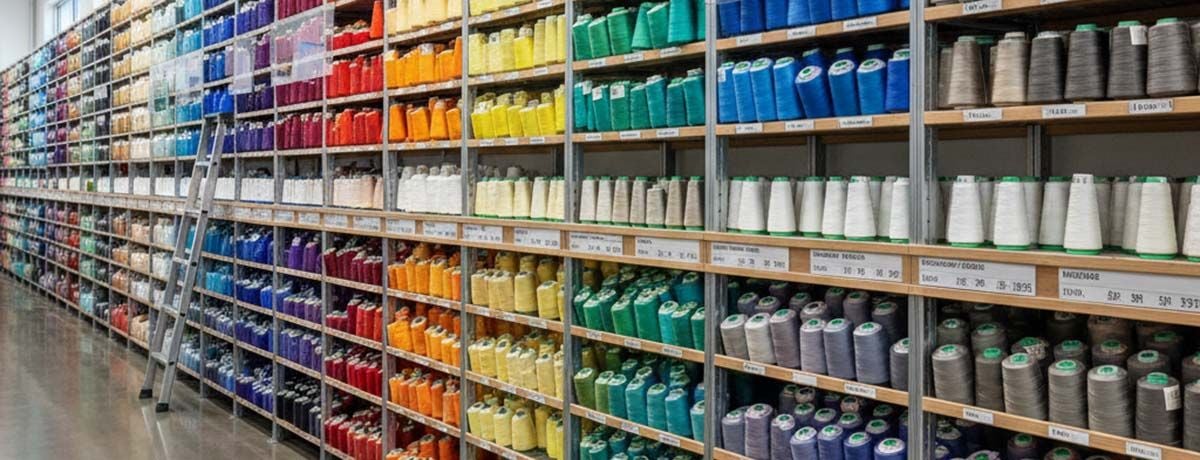
As your thread stash and sewing production scale continue to grow, proper sewing thread storage becomes more important than ever. Whether you manage larger Aurifil spools, smaller thread spools, or a mixed ever-growing thread collection, the right thread storage system directly affects sewing quality, efficiency, and product lifespan.
At the beginning of organizing or re-organizing your sewing thread storage, it is essential to assess your current setup and plan for future growth to ensure an efficient workflow.
At MH, a global supplier of sewing threads and garment accessories since 1999, we treat sewing thread storage as a critical part of quality control. In this guide, we share professional storage principles that apply to industrial warehouses, sewing rooms, embroidery spaces, and production floors.
Why Sewing Thread Storage Matters in Any Sewing Space
Thread is a textile material that reacts to humidity, dust, temperature, pressure, and the surrounding environment. Poor storage can lead to:
-
Weakened thread strength
-
Increased thread breakage on the sewing machine
-
Dust contamination affecting stitch quality
-
Mold or discoloration in humid environments
Dust on threads can clog sewing machine tension discs, making dust protection essential.
Whether you are quilting, embroidery floss handling, or garment mass production, good thread storage protects both thread spools and finished fabric quality.
Organizing Thread Spools: From Smaller Spools to Larger Spools
Proper Placement of Thread Spools
-
Store thread spools upright to prevent deformation. A stand can be used to store thread spools vertically for easy access.
-
Avoid stacking larger spools directly on smaller spools
-
Ensure enough space between stacks for airflow
When customizing storage solutions, always measure the length of dowels or pegboards to ensure a precise fit and tidy arrangement. Using a pegboard in drawers can keep thread storage tidy and organized. The Thread Grid Storage System is another option that helps organize spools in a single, tidy drawer.
At MH warehouses, thread cones are organized on pallets or shelves with more clearance, preventing long-term pressure damage.
Storage Solutions for Different Thread Sizes
-
Smaller thread spools: drawers, bins, or drawer-based systems. Using two drawers can help organize different types or sizes of thread for easy access and categorization. Custom drawer dividers can keep spools organized by color or brand while protecting them from light. The Thread Grid Storage System is designed for Best Craft Organizer Storage Cabinets.
-
Larger Aurifil spools or industrial cones: racks or pallet storage. There are storage solutions and thread cases specifically designed for Aurifil thread, offering compatibility with large spools or cones. Key features of these storage solutions include compatibility with existing furniture, high material quality, and ease of assembly.
-
Mixed collections: separate zones by size and material.
Clear classification improves inventory visibility and sewing efficiency.
Dust-Free Thread Storage Is Essential
Dust is a hidden enemy in sewing environments.
-
Dust particles can enter thread fibers
-
Dust buildup affects tension and smooth feeding on sewing machines
-
Dust transfers easily from thread to fabric
Sturdy storage solutions help protect threads from dust and damage, ensuring long-term reliability. Dust and light can damage threads, so storing them in protective containers is beneficial. Storing threads in opaque containers protects them from harmful UV rays and dust. Enclosed systems like ArtBin Super Satchel provide dust and UV protection for threads. Clear stackable bins, such as Art Bin or tackle boxes, offer both dust protection and visibility. Using clear containers for thread storage allows for easy visibility of the contents while keeping them organized.
MH recommends dust-free storage, including:
-
Plastic film or PE bag protection
-
Covered thread racks or enclosed drawers
-
Avoiding open wall storage in dusty production areas
For embroidery floss and pretty threads used in visible stitching, dust control is especially important.
Humidity Control for Thread Storage
Ideal Storage Conditions
Based on MH’s long-term export and warehouse management experience:
-
Relative humidity: 40%–65%
-
Stable temperature, avoiding extreme heat or cold
High humidity encourages mold, while overly dry air reduces thread flexibility.
Practical Humidity Solutions
-
Dehumidifiers during rainy seasons
-
Avoid storing thread near walls or floors
-
Use moisture barriers and desiccants for export cartons
These measures are crucial for customers in Africa, Southeast Asia, the Middle East, and coastal regions.
Packaging and Storage Methods Used by MH
Individual Thread Packaging
MH protects each thread spool with individual plastic wrapping, which:
-
Keeps thread dust-free
-
Reduces moisture absorption
-
Protects thread during long-distance shipping
Outer Packaging and Storage
-
Strong cartons designed for stacking
-
Palletized storage for warehouse safety
-
Optional moisture protection based on destination market
This packaging approach ensures thread quality from MH’s warehouse to your sewing room.
Thread Storage in Sewing Rooms and Production Areas
For sewing rooms, quilting spaces, or embroidery workshops:
-
Use drawers, small plastic storage drawers, or two-drawer cabinets for smaller spools, as plastic storage drawers are a common solution for organizing sewing threads
-
Place thread racks away from direct sunlight; thread racks can be wall-mounted, hung, or rotating for easy access and visibility
-
Pegboards or thread boards can be mounted to organize thread and supplies efficiently
-
Wooden thread racks can be wall-mounted or free-standing for easy access
-
A table provides a practical surface for organizing thread racks and tools, offering a convenient workspace for projects and storage solutions
-
Ensure enough space around sewing machines for clean thread feeding
Avoid storing thread directly on walls exposed to moisture or temperature changes.
Shelf Life and Thread Inventory Management
Managing Thread Shelf Life
With proper sewing thread storage, polyester thread can maintain stable performance for long periods. MH recommends:
-
Keeping unopened packaging intact
-
Resealing thread after partial use
-
Testing older thread before critical production runs
Inventory Best Practices
-
FIFO (First In, First Out) management
-
Clear labeling by batch and production date
-
Regular checks for dust, humidity, and packaging integrity
These practices are standard in MH’s global supply chain.
Common Thread Storage Mistakes to Avoid
-
Leaving thread exposed on open walls
-
Mixing old and new thread spools without tracking
-
Storing thread directly on the floor
-
Ignoring dust buildup in sewing spaces
Correcting these issues improves both sewing efficiency and product quality.
Conclusion: Sewing Thread Storage Is a Long-Term Investment
Whether you’ve just started sewing or manage an industrial production line, smart sewing thread storage protects your materials, machines, and finished products.
At MH, we believe that thread quality is preserved not only through manufacturing but also through professional thread storage, packaging, and inventory control.
We hope this post helps you achieve efficient and organized sewing thread storage. For further inspiration, explore creative storage ideas to make your workspace both functional and motivating.
MH – Supplying Reliable Sewing Threads, Protected from Warehouse to Sewing Machine.