
Shoulder Pad for Garment Manufacturing: Types, Applications, and Bulk Sourcing
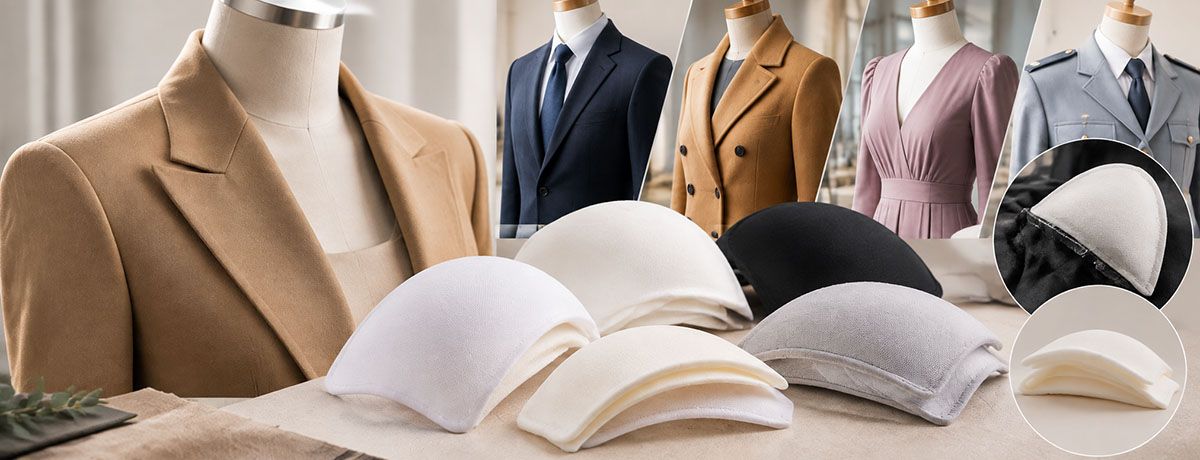
Key Takeaways
This article is written for B2B buyers, garment factory owners, and wholesalers sourcing shoulder pads at production scale. Here is what you need to know before placing your next order.
-
Shoulder pads are structural inserts designed to add breadth and definition to garments, not fashion accessories sold individually. They shape jackets, coats, dresses, uniforms, and protective sports equipment.
-
MH operates on a Make-to-Order (MTO) basis, producing customized shoulder pads per confirmed order and specification rather than maintaining ready stock. Every profile, density, and cover fabric is built to your tech pack.
-
Material choice, density, and profile (from subtle shaping to huge shoulder pads for statement collections) must align with your brand's fit standards and target market expectations.
Introduction to Shoulder Pads in Modern Apparel Manufacturing
A shoulder pad is an internal structural support sewn or tacked into a garment at the shoulder seam to build and control the shoulder line. These components shape the body of tailored jackets, uniforms, coats, and dresses; separate categories exist for protective sports applications. Shoulder pads are designed to change the shape and appearance of clothing in fashion contexts, while in contact sports they absorb and distribute impact forces.
Shoulder Pad Functions: Structure, Silhouette, and Performance in Fashion and Football Shoulder Pads
Shoulder pads do more than fill space inside a garment. Their functional roles span fit correction, silhouette control, garment support, and performance under wear; in sports, they can also serve a life-saving protective function.
Shoulder pads manipulate the silhouette by shifting visual proportions. In jackets, blazers, and corporate suiting, they correct sloping shoulders and asymmetry to create balanced, straight lines across the body, creating sharp architectural silhouettes that counteract natural slumping. They visually broaden narrow shoulders and create an idealized V-shaped silhouette, and their purpose in fashion is to create a V-shape that makes the waist look smaller. Shoulder pads balance wider hips or fuller midsections by adding visual weight to the upper body.
In sport, modern pads are engineered to allow full range of arm motion and freedom of movement during play while protecting joints. Football shoulder pads have also become smaller for better mobility, with lighter padding used for agility in some sports and heavier versions chosen when maximum coverage is the priority. Shoulder pads prevent heavy fabrics from collapsing around the shoulder joint.
In fully lined wool coats, embellished dresses, structured uniforms, and travel outerwear, the pad supports garment weight and maintains hanger appeal in showrooms, just as bag and luggage accessories for wholesale orders support load and durability in luggage design. Without the pad, a lined coat shoulder collapses under its own fabric layers within hours on a hanger.
Psychologically, structured shoulders project authority and strength. This is why shoulder pads are standard in corporate suiting, military uniforms, and hospitality workwear. For workers in security, hospitality, and corporate environments, pads also add stability: garments stay in position through repetitive movement, reducing the need to adjust clothing during a shift.
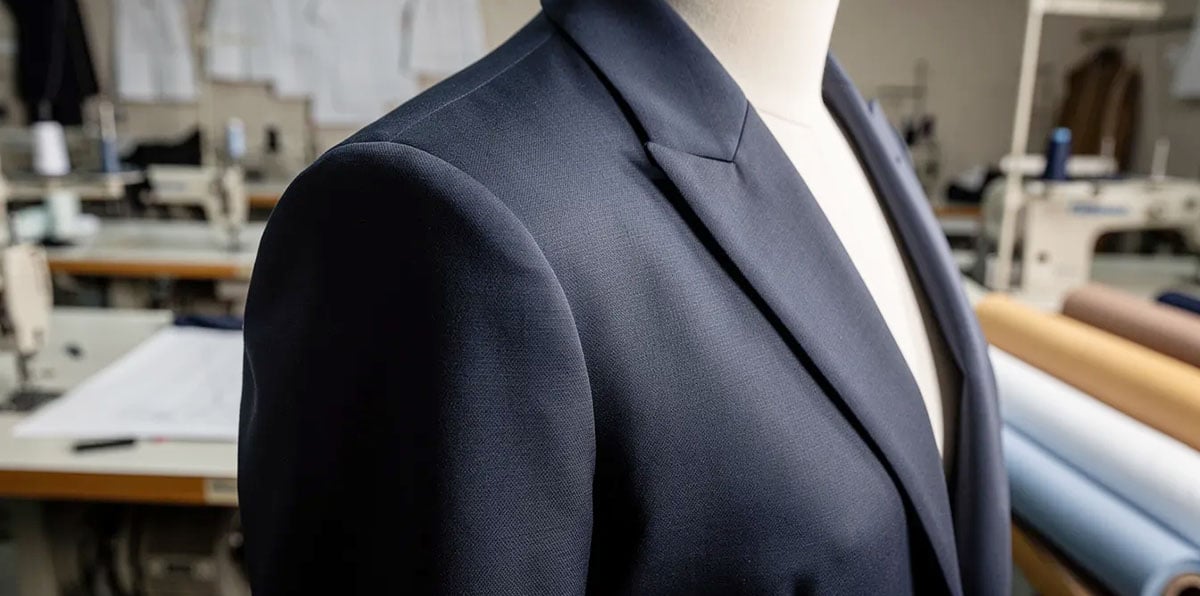
Key Types of Fashion Shoulder Pads, Including Huge Shoulder Pads, Used in Garment Production
The choice of pad type depends on the garment category, sleeve construction, and brand fit standards. A blazer shoulder pad differs from a dress pad in profile, core density, and edge finishing.
Common types include:
-
Set-in sleeve tailored pads: The most widely ordered style. Used in suits, blazers, and structured jackets. Available in flat, semi-rounded, and fully rounded profiles.
-
Raglan shoulder pads: Designed for angled shoulder seams. Flatter profiles conform to the raglan construction without creating bulk at the seam intersection.
-
Sleeveless dress pads: Lightweight, low-profile pads with soft covers that avoid marking skin or showing through thin fabrics.
-
Coat pads: Thicker, denser cores (often multi-layered) that smooth heavy fabrics and resist deformation under garment weight.
-
Knitwear-compatible pads: Soft cores with knit or nonwoven covers that flex with the fabric rather than creating rigid lines.
Flat profiles suit minimalist blazers where the shoulder line should appear natural. Semi-rounded pads add definition without drama and remain the most common choice for mid-market suiting. Fully rounded pads build the strong, squared shoulder seen in structured tailoring.
Application by Garment Category and for Sloping Shoulders: Suits, Coats, Dresses, Uniforms
Different product lines need different pad constructions, and a one-size-fits-all approach to shoulder pads creates problems at the fitting stage. They are often integrated into blazers, dresses, coats, and blouses to enhance structure and change the shape and appearance of clothes; the pad specification must match the garment's fabric, construction, and end-use.
Men's suits and blazers: Controlled but not exaggerated shoulder lines. Semi-rounded pads in 8–14 mm thickness are standard, with multiple thickness options across a size range (a size 38 jacket may use a 10 mm pad; a size 48 uses 14 mm). The pad should extend the natural shoulder line without creating a visible shelf.
Women's dresses and blouses: Lighter pads that address sloping shoulders and avoid visible pad outlines under thin fabrics. Silicone options made for fashion use are reusable and comfortable for all-day wear. Low-profile pads (4–8 mm) with beveled edges and soft covers work best, helping a dress or shirt hang better while creating the illusion of a more balanced line by shifting visual proportions under the fabric. This can pull focus away from the bust-line, tummy, hips, or arms, so the effect looks more natural than obvious. Color matching to the garment lining prevents show-through on lightweight or white fabrics, and the improvement is often felt in posture as much as appearance.
Uniforms and workwear: More durable pads that maintain shape over high-use cycles and frequent cleaning. Security, hospitality, and corporate uniforms undergo weekly or biweekly laundering. Pads for these garments need needle-punched nonwoven cores that resist compression fatigue and covers that tolerate industrial washing, and they are often sourced alongside custom B2B zipper solutions for front closures and pockets.
Coats and outerwear: Dense, multi-layer pads that smooth heavy wool, melton, or technical fabrics. Coat pads must resist deformation during extended hanger storage and packed shipping.


Shoulder Pad FAQs
These questions address common B2B sourcing and technical topics that garment factories and wholesalers raise during the procurement process, especially when consolidating multiple garment accessories and tailoring materials with a single supplier.
Can you match existing shoulder pads that our brand already uses?
Yes. The typical matching process starts when the buyer sends physical samples and technical data (density, dimensions, material composition). MH analyzes the pad's materials and geometry, then develops equivalent prototypes. The shoulder pad should sit close to the body and feel secure without excessive gaps.
How do shoulder pads affect our garment grading and pattern-making?
Pad thickness and shape must be factored into shoulder slope, armhole depth, and sleeve-head patterns. This is especially important for large or huge shoulder pads that extend beyond the natural shoulder point. The same fit logic applies to football shoulder pads, which protect the shoulders and upper chest and should sit close to the body so players can change direction without the rest of the gear being thrown off.
Do you support multi-country production for the same shoulder pad specification?
MH supplies identical pad specifications to garment factories in different countries, supporting global brand programs. Documentation, labeling, and packing are coordinated by destination to align with each factory's customs clearance and warehouse requirements.
