
Why Do Garment Manufacturers Choose Taffeta Pocketing Fabric for Pockets and Linings?
Introduction to Garment Manufacturing
Garment manufacturing is a multifaceted process that transforms raw materials into finished clothing and accessories. At the heart of this process is the careful selection of fabric, which determines the look, feel, and performance of the final product.
Taffeta fabric, known for its medium weight and crisp, smooth finish, is a popular choice among manufacturers aiming to achieve both structure and elegance in their garments. Whether purchased by the yard for sampling or in bulk for large-scale production, the perfect fabric must be chosen with attention to details such as weight, texture, and color.
Additionally, manufacturers consider how these fabric characteristics will impact the comfort, durability, and overall quality of the finished garment or accessory, ensuring each piece meets precise specifications.
Introduction to Pocketing Fabric
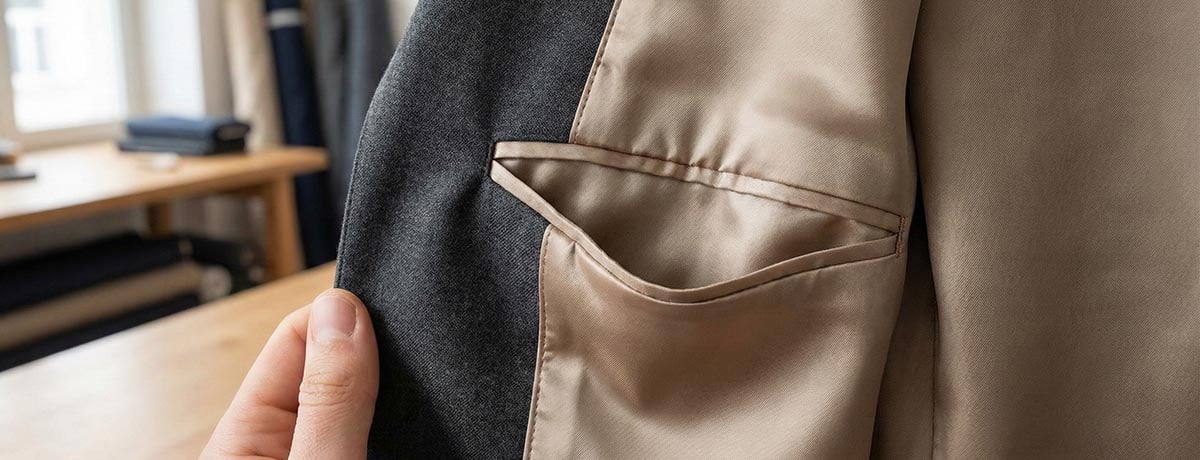
Pocketing fabric is a critical internal component in garment construction. Although it is not visible on the outside, its weight, texture, and durability directly affect the comfort, functionality, and service life of a garment.
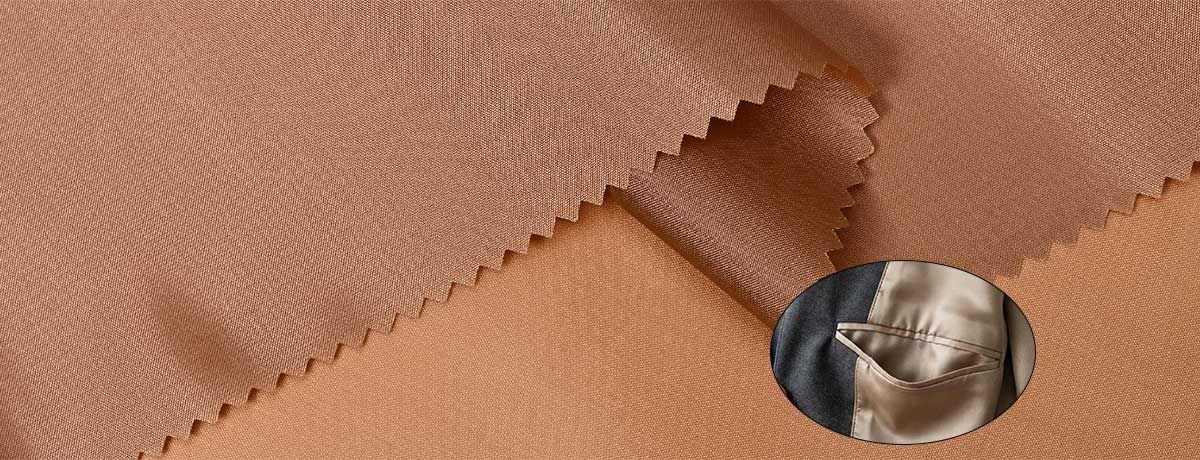
Taffeta pocketing fabric is a popular choice in garment manufacturing due to its medium weight and crisp texture, making it suitable for a wide range of garments and accessories. Produced as a plain woven fabric, polyester taffeta offers the right balance between lightness and strength for pocket structures.
For industrial buyers, taffeta fabric is commonly supplied by the yard for sampling or in rolls for bulk orders, allowing factories to order and receive precise quantities according to production needs. Thanks to its stable quality and versatility, taffeta pocketing fabric is highly rated by garment manufacturers worldwide.
In addition to pocket lining, taffeta fabric can also be used for interlining, adding extra stability and structure to garments that require reinforced internal components.
Characteristics of High-Quality Medium Weight Pocketing Fabric
High-quality pocketing fabric must meet several technical requirements to perform well in industrial garments.
Key characteristics include:
-
A smooth and even texture to reduce friction during use
-
Medium weight that is neither too heavy nor too light
-
Stable woven structure that maintains pocket shape
-
A crisp, clean finish that supports garment structure
Taffeta fabric meets these criteria, which is why it is widely used as pocketing fabric and for other internal garment applications. Depending on end use, taffeta is available in a variety of weights, ranging from lightweight constructions to more durable, heavy-duty options.
Selecting the right weight and texture is essential, as pocketing fabric plays a direct role in the overall quality and durability of the finished garment.
Why Taffeta Fabric Is Ideal for Pocketing Applications
As a type of polyester fabric, taffeta offers consistent performance in mass production environments.
Its main advantages include:
-
Smooth surface for comfortable pocket use
-
Crisp texture that helps pockets retain shape
-
Good durability under frequent wear
-
Easy cutting and sewing on production lines
These features make taffeta pocketing fabric a reliable choice for garments designed for everyday use, such as workwear, uniforms, and functional apparel.
Customization Options for Pocketing Fabric (B2B Supply)
For industrial buyers, customization is often an important requirement. Many manufacturers offer factory-level customization options for pocketing fabric, including:
-
Custom colors and dyeing specifications
-
Customized packing methods
-
Private labeling or logo marking on packaging
-
Special weight or width requirements
With a typical minimum order quantity of around 1,000 meters, garment factories and wholesalers can receive pocketing fabric tailored to their production needs.
Flexible customization services allow buyers to standardize pocketing fabric across multiple garment styles while maintaining consistent quality and appearance.
Uses of Pocketing Fabric and Interlining in Garment Construction
Pocketing fabric is used in various stages of garment construction, including:
-
Trouser and jacket pockets
-
Inner pockets in outerwear
-
Linings and partial interlinings
-
Internal components of accessories such as bags or caps
Taffeta fabric is particularly suitable for these applications because its medium weight and crisp texture provide both structure and comfort. In interlining applications, taffeta can add an extra layer of stability without significantly increasing garment weight.
Its versatility makes pocketing fabric an essential material in industrial garment manufacturing.
Benefits of Using the Right Pocketing Fabric
Choosing the correct pocketing fabric can significantly improve garment performance and production efficiency.
Key benefits include:
-
Improved garment durability and longer service life
-
Better pocket structure and shape retention
-
Reduced risk of tearing or deformation
-
Lower repair and after-sales costs
-
More consistent quality across large quantities
By using high-quality pocketing fabric such as polyester taffeta, garment manufacturers can ensure that the fabric received in bulk orders performs consistently with what was originally ordered and approved.
Supply, Ordering & Quality Consistency
In B2B garment manufacturing, pocketing fabric is not selected through a shopping cart process, but through planned ordering and long-term supply relationships.
Taffeta pocketing fabric is typically:
-
Ordered by the yard for development and testing
-
Ordered in bulk quantities for mass production
-
Produced under controlled processes
-
Shipped in rolls with standard export packing
Consistency between what is ordered, produced, shipped, and received is essential for factories managing repeat production programs. Polyester taffeta offers reliable quality that can be evaluated, rated, and reordered with confidence.
Conclusion
Taffeta pocketing fabric is a practical and highly versatile solution for garment manufacturing. Its medium weight, crisp texture, and durability make it suitable for pockets, linings, interlinings, and internal components across a wide range of garments.
By considering factors such as weight, texture, material, and customization options, buyers can select the right pocketing fabric to meet their production requirements. For industrial garment constructors, polyester taffeta remains a cost-effective, stable, and highly rated choice that supports both quality and efficiency in bulk manufacturing.