
What Do Machine Embroidery Thread Sizes Mean and How Do You Choose the Right One?
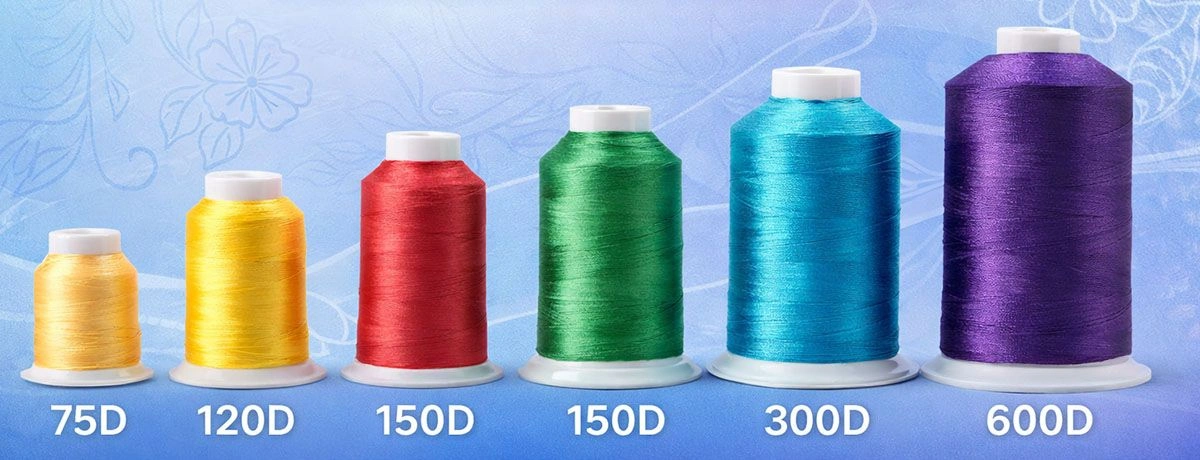
Choosing the right machine embroidery thread sizes is one of the most important decisions for embroidery factories, garment manufacturers, and textile wholesalers. The right thread weight not only affects the final appearance of your embroidery designs, but also impacts machine performance, stitching efficiency, and product durability.
In this guide, we’ll explain embroidery thread sizing (75D–600D), compare different thread weights, and help you find the best machine embroidery thread for your production needs.
What Is Thread Weight in Machine Embroidery?
In machine embroidery, thread size is commonly measured in denier (D), which indicates the thickness of the thread.
-
Finer threads (lower denier) → better for intricate stitches and fine lettering
-
Thicker thread (higher denier) → ideal for decorative stitching and heavy fabrics
Simply put: The higher the weight number, the finer the thread, and the lower the thread weight number, the thicker the thread. For example, most embroidery threads follow this rule: a higher weight number indicates a thinner thread, while a lower weight number means a thicker thread.
Understanding thread sizing helps prevent:
-
Thread breakage
-
Uneven stitches
-
Stitching problems in high-speed embroidery machines
Common Machine Embroidery Thread Sizes Overview
|
Thread Size |
Thread Type |
Application |
|---|---|---|
|
75D |
Finer threads |
Intricate designs, delicate fabrics |
|
120D |
Standard embroidery thread |
Most embroidery projects |
|
150D |
Medium thicker thread |
Workwear, denim |
|
300D |
Heavy thread |
Bags, shoes |
|
600D |
Specialty threads |
Upholstery, leather |
Common weight measurements for machine embroidery threads include 30 wt, 40 wt, and 60 wt.
Some machine embroidery threads are constructed as a single strand, which can be important for achieving specific embroidery effects such as shading and dimension.
Understanding Different Thread Types in Embroidery
Before selecting the right size, it’s important to understand common thread types:
-
Polyester thread → Most widely used, strong, colorfast, ideal for most fabrics. Polyester thread is popular and economical for embroidery, provides an effect similar to rayon, comes in various colors, and is known for its strength and colorfastness, making it suitable for items that require frequent washing and can withstand chlorine bleach.
-
Rayon thread → Soft with natural sheen, suitable for decorative embroidery. Rayon thread is the most popular choice overall because of its attractive high sheen, lustrous finish, and consistent trouble-free performance, giving projects an elegant and sophisticated look.
-
Cotton thread → Matte finish, used for traditional embroidery work. Cotton thread is considered the best thread for vintage or rustic embroidery designs due to its natural matte finish and strength. It is ideal for traditional, durable, and sophisticated embroidery projects, especially on natural fabrics, and has a lovely, soft sheen. Although often overlooked for use in automatic embroidery machines, it performs beautifully.
-
Metallic thread → Decorative, adds shine but requires slower stitching speeds. Metallic threads are popular for adding sparkling accents to embroidery designs but require careful handling.
-
Silk threads → Premium option for luxury embroidery.
-
Monofilament thread → Translucent and often used for invisible stitching or appliqué.
-
Specialty threads → Specialty threads can be more challenging to work with, but they are useful for special effects or to add glitter to your work. Machine embroiderers often use specialty threads like silk, metallic, and glittery mylar for luxurious or sparkling designs, which may require specialized handling.
-
Variegated thread → Variegated thread is characterized by changing colors along its length. It is used to add depth and vibrancy to embroidery designs, create realistic textures, and enhance visual interest in decorative and natural-themed embroidery.
For industrial use, polyester embroidery thread from MH’s factory remains the most reliable choice due to its durability and consistent quality.
Detailed Guide to Embroidery Thread Sizes
75D – Best for Fine Details and Delicate Fabrics
75D is a finer thread designed for precision.
Best for:
-
Intricate embroidery designs
-
Fine lettering
-
Delicate fabrics like silk
Benefits:
-
Smooth stitching
-
High detail accuracy
-
Minimal fabric stress
120D – The Most Popular Machine Embroidery Thread
120D is considered the standard embroidery thread in the industry, and MH supplies wholesale 120D/2 polyester embroidery thread designed for high-speed industrial production.
Best for:
-
Most fabrics
-
General embroidery work
-
High-speed stitching
Why it’s widely used:
-
Balanced performance
-
Compatible with most embroidery machines
-
Reliable choice for bulk production
150D – Stronger Thread for Durable Applications
150D is slightly thicker than 120D and offers improved strength, and MH’s 150D/2 rayon thread for embroidery is widely used where a durable yet lustrous finish is needed.
Best for:
-
Workwear
-
Denim
-
Outdoor garments
Advantages:
-
Better resistance to wear
-
More stable stitching
-
Reduced thread breakage
300D – Heavy Thread for Industrial Use
300D is a thicker thread designed for heavy-duty embroidery.
Best for:
-
Bags and backpacks
-
Shoes
-
Industrial embroidery projects
Features of heavy-duty threads like MH’s 250D/3 high tenacity polyester sewing thread include:
-
Strong coverage
-
Bold stitching effect
-
Suitable for heavy fabrics
600D – Extra Thick Specialty Thread
600D belongs to specialty threads used for maximum durability and visual impact.
Best for:
-
Upholstery
-
Leather goods
-
Decorative stitching
Benefits:
-
Extremely durable
-
Adds depth and bold texture
-
Ideal for heavy-duty applications
How to Choose the Right Thread for Your Embroidery Projects
1. Match Thread Size with Fabric
- Delicate fabrics → finer threads (75D, 120D)
- Medium fabrics → 120D, 150D
- Heavy fabrics → 300D, 600D
2. Consider Design Complexity
- Intricate stitches → finer thread
- Bold logos → thicker thread
3. Machine Performance Factors
To ensure smooth stitching, adjust:
- Needle size
- Bobbin thread compatibility
- Bobbin tension
- Top thread tension (tension discs)
When working with thicker threads, using a larger needle is important to ensure smooth passage through the fabric and prevent damage. Using the correct needle size for your thread weight is crucial to prevent thread fraying and breaking during stitching.
Proper setup helps avoid:
- Uneven stitches
- Thread breakage
- Stitching problems
Tips to Improve Embroidery Machine Performance
- Use the correct needle size for different thread weights
- Replace needles regularly
- Adjust bobbin tension for even stitches
- Use high-quality bobbin thread such as MH’s 40/2 100% spun polyester sewing thread
- Reduce speed for metallic or specialty threads
These steps are especially important for high-speed stitching environments.
Why Consistent Quality Matters for B2B Buyers
For embroidery factories and wholesalers, consistent quality threads are essential:
- Stable performance on embroidery machines
- Even stitches across large production runs
- Resistance to multiple washes
- Reliable color consistency (solid and variegated colors)
Low-quality threads often lead to:
- Machine downtime
- Higher defect rates
- Increased production costs
MH – Your Reliable Embroidery Thread Supplier
MH is a global supplier specializing in garment accessories and high-quality embroidery threads, backed by large-scale garment accessories manufacturing operations and a global sales network.
Why Choose MH?
- Full range of machine embroidery thread sizes: 75D, 120D, 150D, 300D, 600D
- Premium polyester thread with high strength and color fastness
- Suitable for most embroidery machines and most fabrics
- Consistent quality for bulk orders
- Support for OEM and customized packaging
With years of experience serving global B2B buyers, MH provides a reliable choice for factories, distributors, and importers.
Conclusion: Choosing the Best Embroidery Thread for Your Business
Understanding thread weight, thread types, and different thread sizes helps you optimize both quality and efficiency.
- Use finer threads for intricate designs
- Choose standard threads (120D) for most embroidery work
- Select thicker threads for heavy fabrics and durability
If you are looking for a trusted supplier of machine embroidery thread, MH offers a complete solution for your business.
Contact us today for samples, pricing, or technical support.