
Polyester vs Rayon Embroidery Thread: Which Is Better for Your Application?
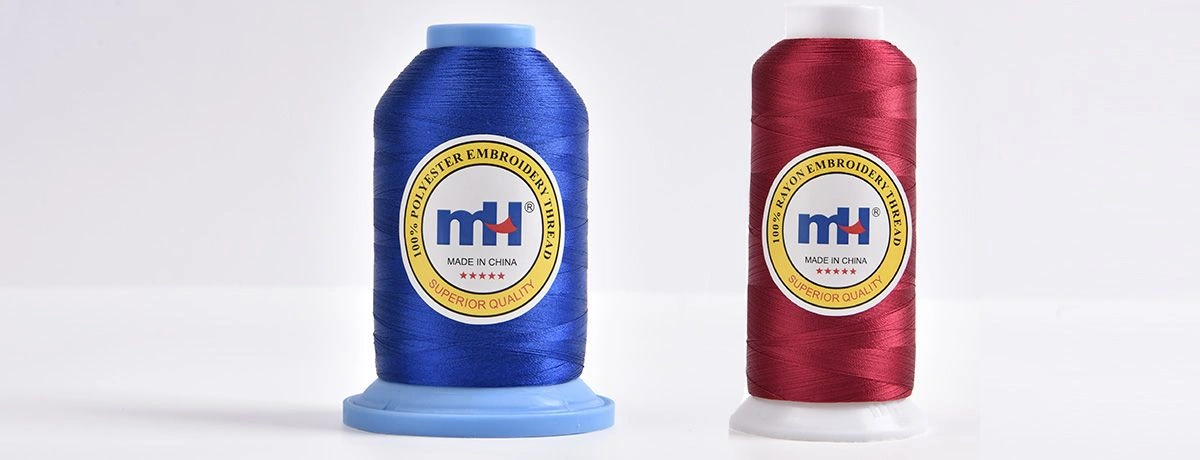
Machine Embroidery Thread-0When selecting the right embroidery thread for your business, understanding the difference between polyester vs rayon embroidery thread is essential. There are various thread types and materials available for embroidery, and factors such as personal preference and the choice of brand can significantly influence the final result.
For embroidery factories, garment manufacturers, and textile wholesalers, the choice between rayon thread and polyester thread affects not only appearance, but also durability, machine performance, and cost, similar to how selecting the best industrial sewing thread for different manufacturing applications influences product quality and efficiency. Both rayon and polyester threads are popular choices for different embroidery applications.
In this guide, we’ll compare rayon embroidery thread vs polyester embroidery thread in detail to help you make the best choice.
What Is Polyester Embroidery Thread?
Polyester embroidery thread is a synthetic thread widely used in machine embroidery and industrial production. Polyester thread is a synthetic product made from oil and undergoes chemical processing to achieve its durability. Commonly referred to as 'poly thread' or simply 'poly,' this type of thread is valued for its strength, colorfastness, and versatility. Polyester is the modern standard for embroidery due to its reliability and ease of use.
It is especially popular in high speed embroidery machines due to its strength and stability. Polyester thread is recommended for items that will be subjected to chlorine bleach or constant sun exposure, and it is especially suitable for uniforms, sportswear, and children's clothing due to its durability; for example, MH’s 120D/2 polyester embroidery thread for industrial use is designed to deliver excellent color fastness and wear resistance in these demanding applications.
Key Features of Polyester Thread
-
High durability and wear resistance
-
Excellent resistance to harsh chemicals, bleach, and commercial laundering
-
Strong colorfastness (no easy fade after washing)
-
Fewer issues with thread breaks during embroidery
-
Available in trilobal polyester for improved sheen
Best Applications
-
Workwear and uniforms
-
Children’s clothing (frequent washing required)
-
Outdoor and industrial fabrics
-
Bulk embroidery production
Polyester thread is often the go-to choice when durability and efficiency matter.
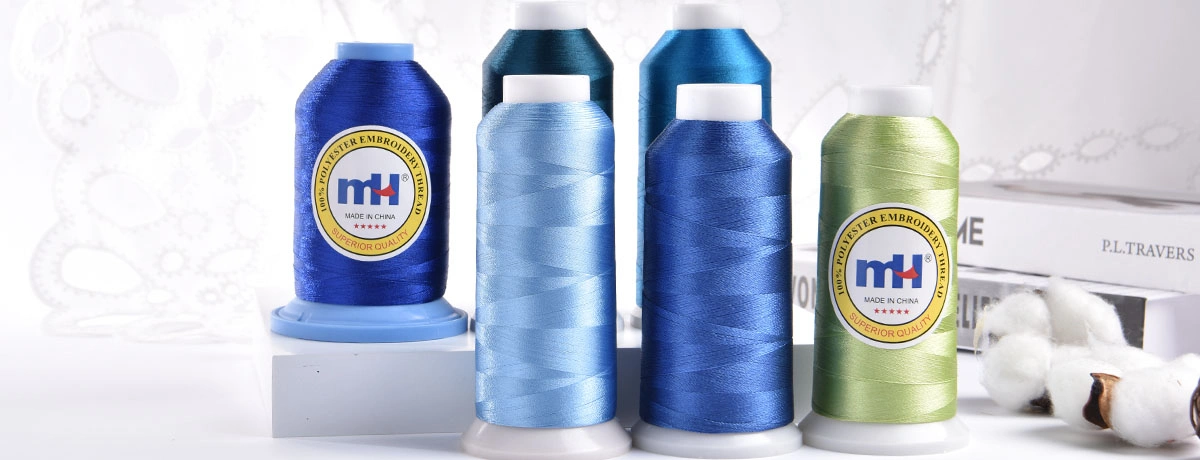
What Is Rayon Embroidery Thread?
Rayon embroidery thread is made from cellulose pulp (wood pulp) and is known for its soft, smooth finish. Rayon is a hybrid thread made from wood pulp that undergoes chemical processing to create viscose, which gives it a natural, silky appearance and sheen. Unlike synthetic polyester, rayon (also called viscose) is derived from natural cellulose, making it distinct in both origin and feel. While cotton is another natural fiber used in embroidery, rayon is often preferred for its silk-like qualities and superior sheen, particularly in high-quality 150D/2 rayon embroidery thread for decorative work.
It is commonly used in decorative embroidery where visual appeal is important. Rayon is better for decorative items like wall hangings, high-end apparel, and delicate fabrics, and is especially suitable for formal wear and intricate designs due to its soft drape and aesthetic appeal.
Key Features of Rayon Thread
-
High sheen and silky sheen similar to silk thread
-
Smooth texture, ideal for delicate fabrics
-
Bright and vibrant colors
-
Lightweight and flexible
Best Applications
-
Fashion garments
-
Decorative embroidery and appliqué
-
Branding and logo embroidery
-
Quilting and fine embroidery work
Rayon thread is an excellent choice when appearance and softness are priorities.
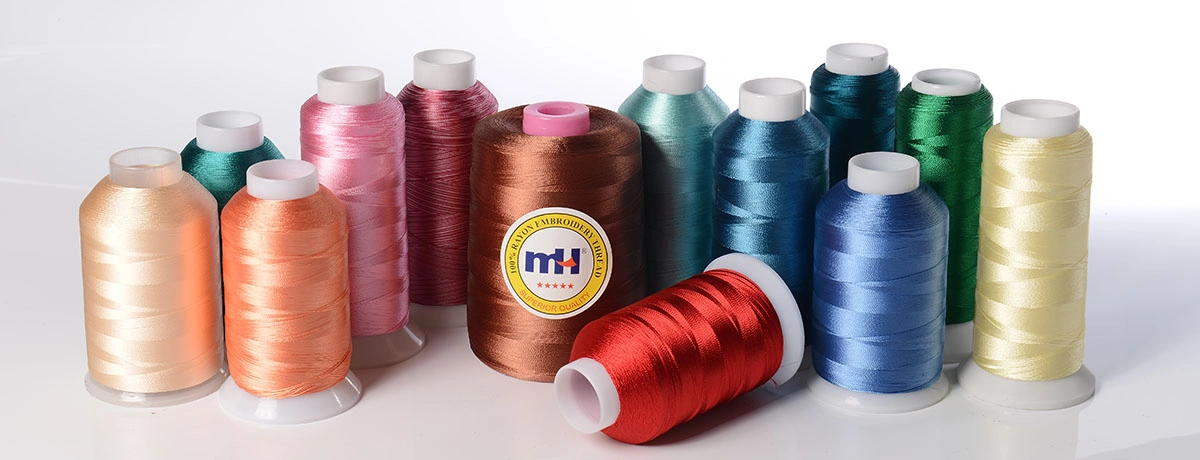
Polyester vs Rayon Embroidery Thread: What’s the Difference?
1. Shine and Appearance
Rayon embroidery thread: high sheen, soft, luxurious look. Rayon threads, such as sulky rayon, are known for their subtle sheen, which adds depth and dimension to embroidery designs. The way light interacts with rayon thread creates a natural luster and visual depth, making embroidery appear more vibrant and dynamic.
Polyester embroidery thread: medium to high sheen (especially trilobal polyester), more consistent. Polyester threads reflect light differently, often resulting in a brighter, more reflective shine that gives embroidery a crisp and vivid appearance. The interaction with light can make polyester designs stand out with a bolder, more pronounced effect.
2. Durability and Strength
-
Polyester: highly durable, resistant to wear
-
Rayon: softer, less resistant to abrasion
3. Washing and Chemical Resistance
-
Polyester: withstands frequent washing, bleach, and most chemicals
-
Rayon: less resistant, may fade or weaken
4. Machine Performance
-
Polyester: ideal for high speed embroidery, fewer thread breaks. Quality embroidery thread should run smoothly with little to no problems on embroidery machines. Using the correct bobbin thread and needle is essential for achieving professional results and avoiding visual imperfections in embroidery projects.
-
Rayon: smooth stitching but may break under high tension
5. Fabric Compatibility
-
Polyester: suitable for most fabrics, including heavy-duty garments where UV‑resistant high‑tenacity polyester sewing thread can offer extra durability for outdoor and industrial products
-
Rayon: better for soft fabrics, decorative stitching, and fine details. Rayon thread is especially well-suited for fine fabrics due to its smoother and softer filament, making it ideal for small elements and intricate embroidery details.
6. Cost and Efficiency
-
Polyester: more cost-effective for bulk production
-
Rayon: slightly higher cost due to premium finish
Thread choice can also depend on personal preference, as some embroiderers may favor the look or feel of one thread over the other. Additionally, certain projects may benefit from using two threads together—such as combining polyester and rayon—to achieve unique visual effects or to match specific fabric and stitch requirements, which is why MH’s range of polyester and viscose rayon embroidery threads includes multiple types and specifications for different design needs.
Rayon vs Polyester Thread: Quick Comparison
|
Feature |
Polyester Embroidery Thread |
Rayon (Viscose) Embroidery Thread |
|---|---|---|
|
Sheen |
Medium to high (trilobal) |
High silky sheen |
|
Durability |
High |
Medium |
|
Colorfastness |
Excellent |
Moderate |
|
Chemical Resistance |
Strong |
Lower |
|
Thread Breaks |
Less frequent |
More likely |
|
Best Use |
Workwear, machine embroidery |
Decorative, fashion |
|
Thread Types |
Synthetic, strong, colorfast |
Natural-based (viscose), soft, lustrous |
Note: The choice of thread type, such as polyester or viscose (rayon), affects the appearance, durability, and application of embroidery. Additionally, selecting a reputable brand is important, as brand quality can impact thread consistency, performance, and the final embroidery results.
How to Choose the Best Embroidery Thread for Your Business
Choosing between rayon and polyester thread depends on your application: sewing and embroidering with different threads can significantly affect the final result, so the choice of materials and specific project requirements should guide your thread selection.
✅ Choose Polyester Thread if:
- You need durability and long wear
- Your products require commercial laundering
- You run high-speed embroidery machines
- You want fewer thread breaks and higher efficiency
✅ Choose Rayon Thread if:
- You focus on decorative embroidery
- You need a soft, shiny finish
- You work with delicate fabrics
- Your products are fashion-oriented
In many cases, businesses use both polyester and rayon threads depending on the project.
Common Questions About Embroidery Threads
Is polyester better than rayon embroidery thread?
Polyester is better for durability and washing resistance, while rayon is better for appearance and softness.
Does rayon thread break more easily?
Yes, compared to polyester, rayon thread is more delicate and may cause more thread breaks in high-speed machines.
Which thread is best for machine embroidery?
Polyester embroidery thread is generally the best choice for machine embroidery, especially in industrial production.
Why Choose MH as Your Embroidery Thread Supplier
As a professional B2B supplier, MH provides high-quality polyester embroidery thread and rayon embroidery thread for global customers.
MH Polyester Embroidery Thread
- High strength and durability, supported by MH’s experience producing heavy‑duty high‑tenacity polyester sewing thread for industrial use
- Resistant to washing, bleach, and harsh chemicals
- Suitable for high-speed embroidery machines
- Stable quality for bulk orders
MH Rayon Embroidery Thread
- Smooth, soft, and flexible
- High sheen and vibrant colors
- Ideal for decorative and premium embroidery
Advantages for B2B Buyers
- ✔ Reliable bulk supply
- ✔ Competitive wholesale pricing
- ✔ Consistent quality control backed by MH’s spun polyester sewing thread factory and global support network
- ✔ Custom thread weight, colors, and packaging, along with access to related textile materials such as wholesale chiffon fabric for fashion garments
- ✔ Fast delivery for global markets
Get the Best Embroidery Thread for Your Business
Looking for a reliable supplier of polyester embroidery thread or rayon embroidery thread?
MH offers both options with stable quality and competitive pricing for B2B buyers, backed by Ningbo MH’s large‑scale global garment accessories operation.
📩 Contact us today.